
Conference paper·Archaeological Research Unit - University of Cyprus·2019·In Greek
Excavation at the Mazotos Shipwreck: Results of the 2018 Field Season
Ανασκαφή στο ναυάγιο Μαζωτού: αποτελέσματα της ανασκαφικής περιόδου 2018
Chapters
About the video
In this paper, given in Greek, Stella Demesticha of the University of Cyprus presents the results of the seventh excavation season at the Mazotos shipwreck, conducted in October 2018 in collaboration with the Department of Antiquities and the photogrammetry laboratory of Dimitrios Skarlatos at the Cyprus University of Technology. Earlier work had established that the ship, originally 18 to 20 metres long, settled on the seabed listing to starboard, preserving at least five strakes of planking in the stern.
The 2018 campaign focused on completing the excavation of the bow, moving seventy transport amphorae. Contrary to expectations, the hull beneath was poorly preserved, with a diminishing keel, missing planking and a single frame uncovered at the end of the season. Because the dense cargo concentration rules out a breakup at the surface, Demesticha suggests that the sides broke away upon impact with the seabed, spilling the jars onto the sand.
Despite the scanty timber preservation, the team identified the lower part of the stempost. Carlos de Juan of the University of Valencia observed tetrahedral notches on either side of the joint between the stempost and the keel, diagnostic of laced shipbuilding, whereas the rest of the hull was assembled with mortise-and-tenon joinery. Demesticha places the vessel, which is of Aegean origin and dates to the first half of the fourth century BC in the Cypro-Classical period, between fifth-century BC hybrid hulls such as Gela and Ma'agan Michael (which had laced reinforcements at the stem and stern) and the later Kyrenia shipwreck, built almost entirely with mortise-and-tenon joints. Following Patrice Pomey, she notes how the Greek sewn tradition and the Phoenician mortise-and-tenon tradition mixed during the Classical period.
The final part of the talk presents a pilot spatial analysis of the bow carried out with postgraduate researcher Irene Katsouri on 42 amphorae excavated before 2018 (32 large Chian, 6 small Chian and 4 of other types) between the stempost and the two anchors. Using 3D photogrammetry and evidence of brushwood dunnage, they reconstruct two tiers of 26 and 16 jars spaced 5 to 10 centimetres apart in a space measuring at least 2.62 metres wide, 2.5 metres long and 1.70 metres high. An irregular stowage arrangement left room under the foredeck for ship's gear, indicated by a possible stone weight and two small fishing weights found in 2018.
From our collection
Pieces in the Drakopoulos collection of the kinds and periods this talk covers: Cypro-Classical.
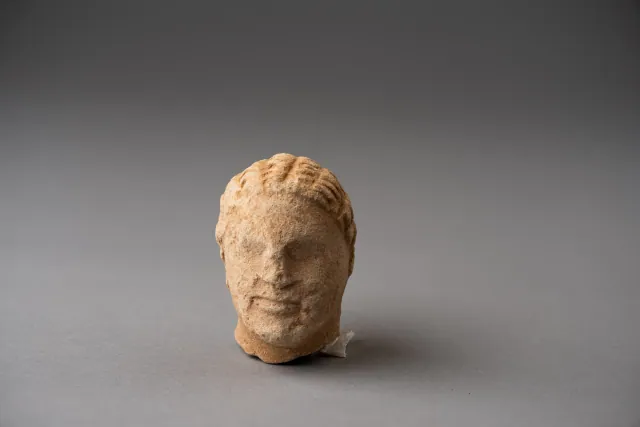
Limestone Head of a Boy, probably from a Temple Boy Statuette
Cypro-Classical
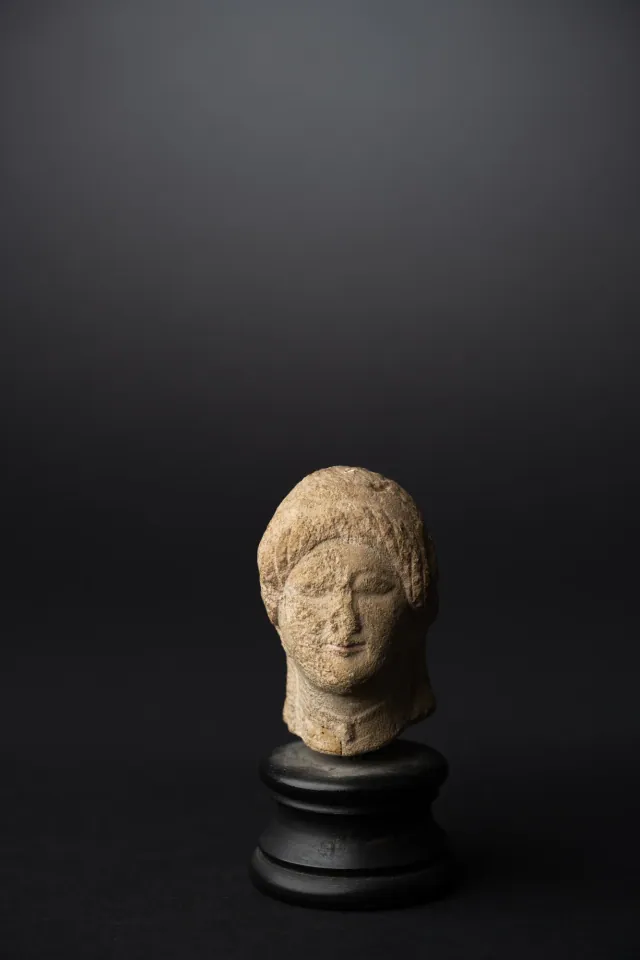
Limestone Head of a Votary with a Wreath
Cypro-Classical
Background
Where to read more on this site before or after watching.
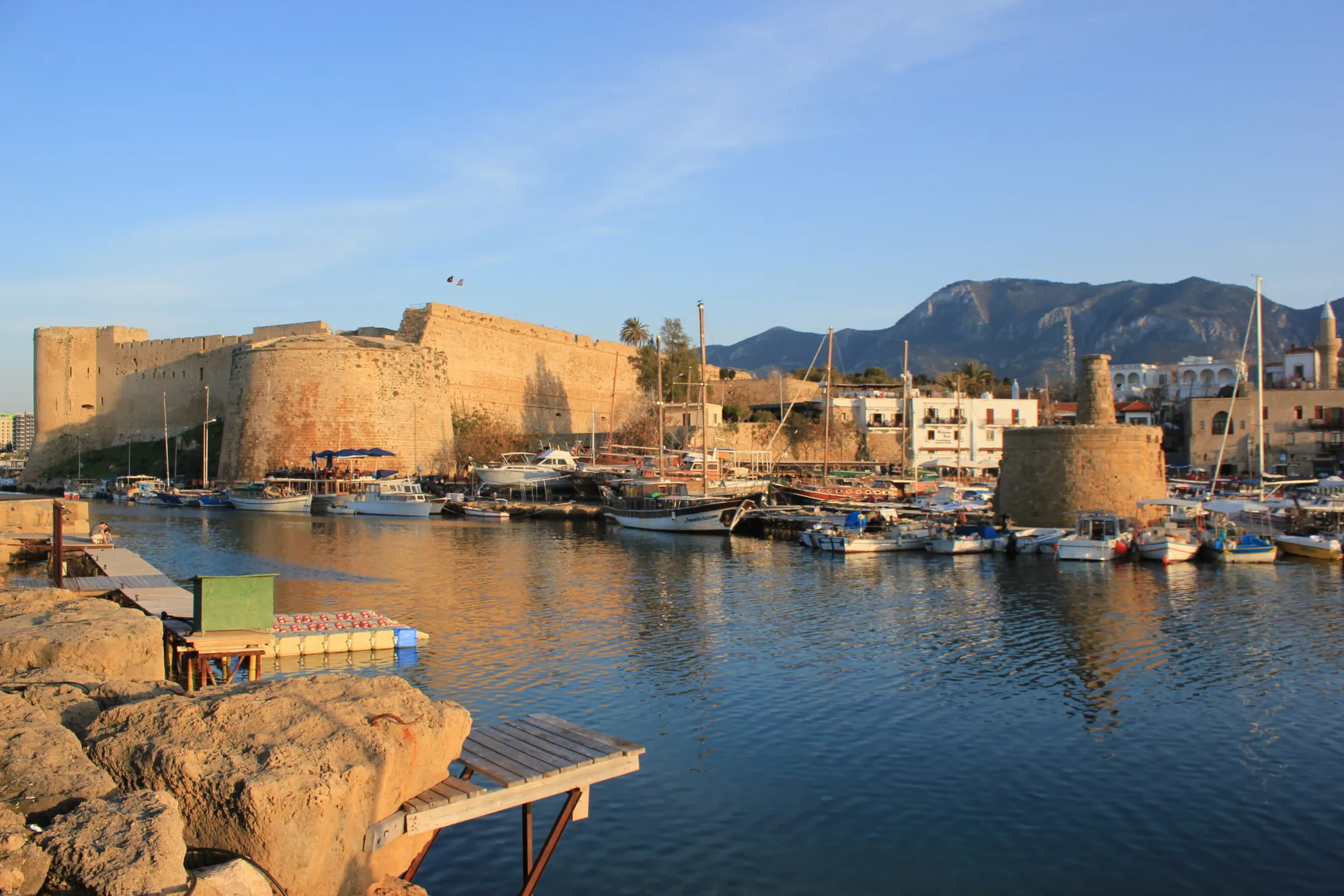
The site
Kyrenia
Ancient Keryneia lies under the old town of Kyrenia (Girne) round its small harbour on the north coast. The town was never excavated: it is known from tombs cleared in the 1960s and early 1970s, from a few texts and inscriptions, and from the merchant ship that sank off it around 300 BC, now shown in Kyrenia Castle.
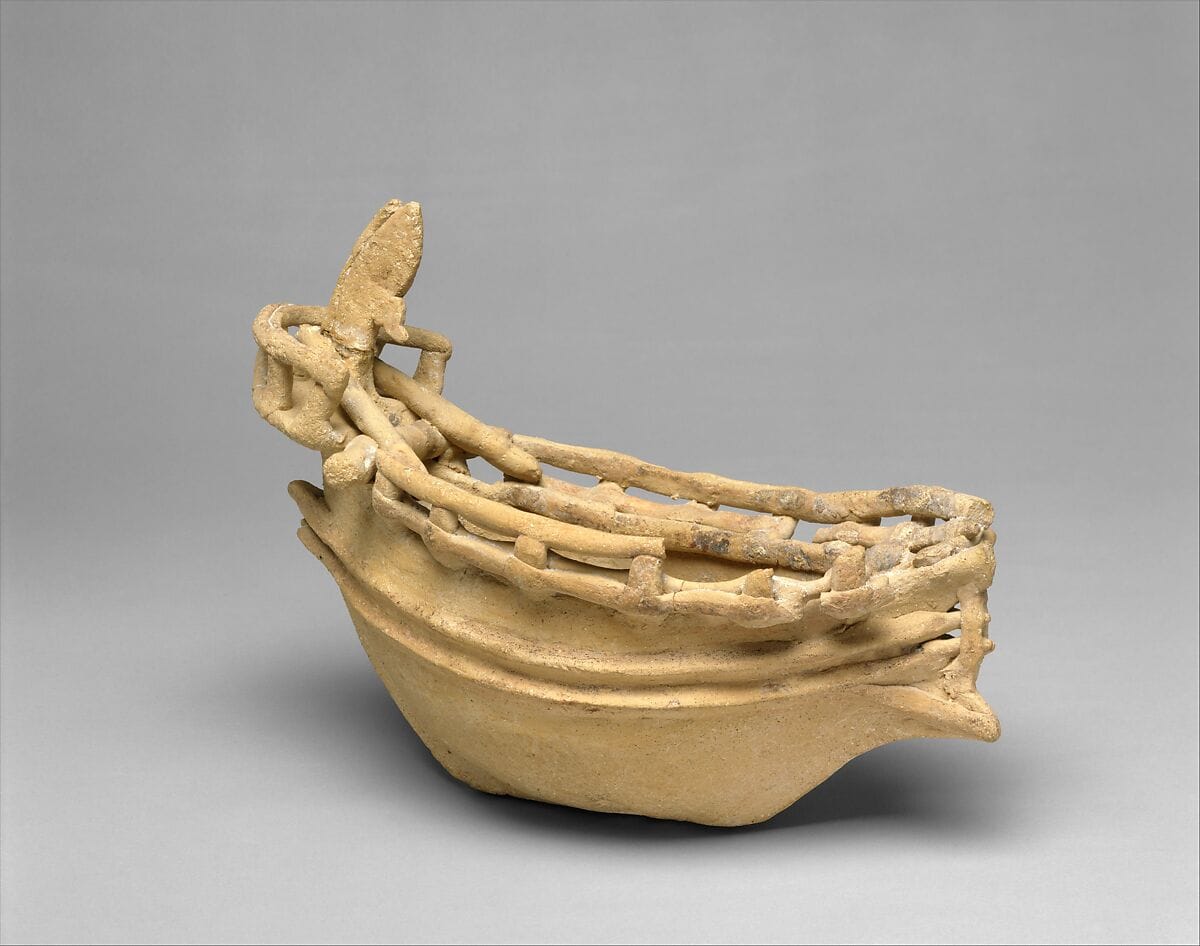
In the compendium
Seafaring and Ships in Ancient Cyprus
The evidence for boats and seafaring around Cyprus from the first crossings to the Classical period, from anchors, models and graffiti to wrecks and shipsheds.
In the compendium
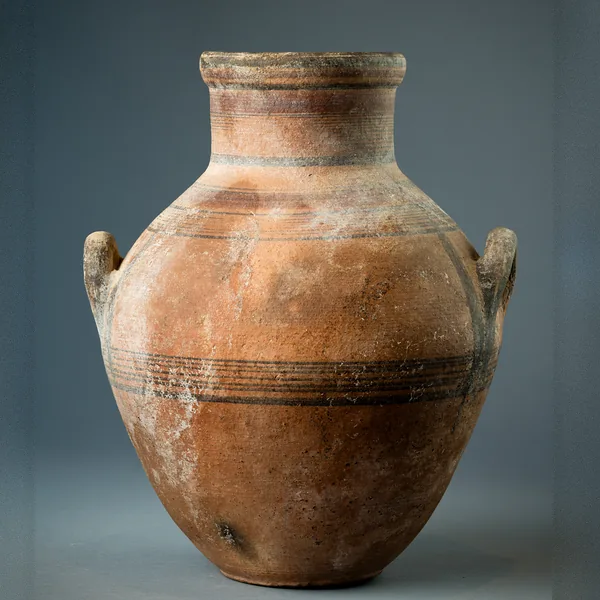
Amphora
A closed jar with two opposed handles, made in Cyprus in belly-handled and vertical-handled painted series and as a basket-handled transport jar.
In the compendium
The Phoenicians
The Iron Age city-states of the Levantine coast, whose traders and settlers made Kition a Phoenician kingdom and shared a hybrid culture with Cyprus.
Map of Cyprus
Places discussed in the talk
- Has a page on this site
- Other places
- Ground above 200, 500, 1,000 m
Places
- 1Mazotos (approx.)
- 2Kyrenia