
Conference paper·Archaeological Research Unit - University of Cyprus·2020·In Greek
To Ergon 2019: Paphos, Byzantine household icons, the ledger of Hadjigeorgakis Kornesios, and the fishing vessel Agios Spyridon
Το Αρχαιολογικό Έργο του Πανεπιστημίου Κύπρου, 2019
Demetrios Michaelides, Maria Parani, Euphrosyne Rizopoulou-Egoumenidou and Irini Katsouri
Chapters
About the video
This fourth recording from the 2019 annual review day of the Archaeological Research Unit at the University of Cyprus, given in Greek, presents four papers covering Roman Nea Paphos, Byzantine household icons, an eighteenth-century Ottoman property ledger, and a traditional fishing boat.
Demetrios Michaelides reports on two collaborative projects at Nea Paphos. In the first, the Department of Antiquities and the Getty Conservation Institute are preparing a conservation and management plan for the site following the Mosaikon programme. A team led by Mario Santana Quintero has mapped the archaeological zone and the underground chambers at Fabrika and the Tombs of the Kings for a GIS database, alongside condition assessments and an international competition for shelters over the House of Orpheus and the Villa of Theseus. The second project, funded by the Polish National Science Centre and directed by Monika Rekowska with Patrizio Pensabene and Eleonora Gasparini, studies the architecture of the House of Orpheus. Scanning and photogrammetry confirm that the late second- or early third-century AD residence united at least three earlier buildings and a street, and was adapted for wine storage in pithoi and amphorae before the fourth-century earthquakes.
Maria Parani examines devotional icons in Byzantine houses from the fourth to the fifteenth century. Leaving aside elite private chapels, she draws on hagiography and marriage contracts to trace how wooden panels and metal or steatite icons were commissioned, given at weddings, and passed down as heirlooms. Placed in bedrooms or dining rooms with a lit lamp, or set into eastern wall niches, they served personal prayer, healing, and protection. In the discussion she addresses eleventh-century evidence from Michael Psellos for aesthetic collecting and painted domestic shrines at Kom el-Dikka in Alexandria and at Mystras.
A third paper analyses the leather binding and the red and black inks of the property ledger begun in 1794 by the Dragoman of Cyprus, Hadjigeorgakis Kornesios. After reviewing eighteenth-century accounts of Nicosia's morocco leather tanneries and the trade in kermes and cochineal dyes, the speaker presents analyses conducted with Ioanna Kakoulli at UCLA and Andreas Charalambous, and at the Cyprus Institute. Both the red leather cover and the red ink of the Dragoman's own entries and signature proved to be insect-derived cochineal rather than kermes or cinnabar, suggesting the notebook was imported, perhaps from Constantinople. Infrared photography and portable X-ray fluorescence showed that the black inks, including additions by a second hand down to 1822, combined carbon soot with iron gall.
Finally, Irini Katsouri, introduced by Stella Demesticha, presents the rescue documentation of the Agios Spyridon, a 24-metre wooden karavoskaro built in Crete in 1950, brought to Cyprus in 1954 as a bottom trawler, and left ashore at Latchi after its decommissioning in 2005. When the Polis Chrysochous municipality ordered its demolition, the Maritime Archaeological Research Laboratory, with Kostas Damianidis and the Cyprus Institute, recorded the hull by laser scanning and photogrammetry during its controlled dismantling in 2019, salvaging structural timbers and gear for study and exhibition.
Background
Where to read more on this site before or after watching.
The site
Nea Paphos
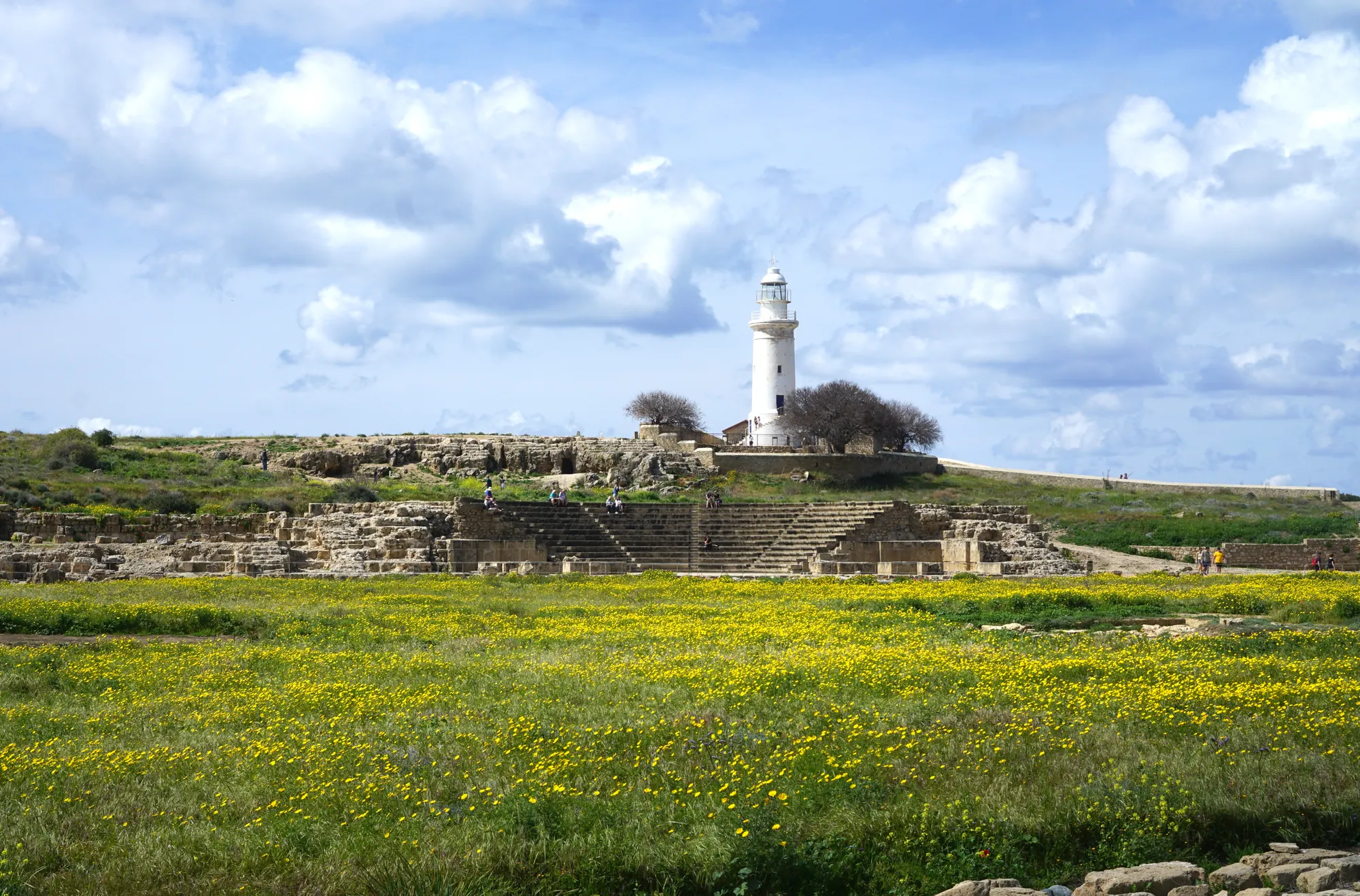
Nea Paphos, New Paphos, lies under Kato Paphos on the south-west coast of Cyprus. Founded about 320 BC as a harbour town for the kingdom of Paphos, it became the seat of the Ptolemaic governors of the island and then the capital of the Roman province until the 4th century AD. Its walls, theatre, civic centre, mosaic-floored houses and rock-cut tombs are part of the UNESCO World Heritage Site of Paphos, inscribed in 1980.
In the compendium
Hellenistic and Roman Houses
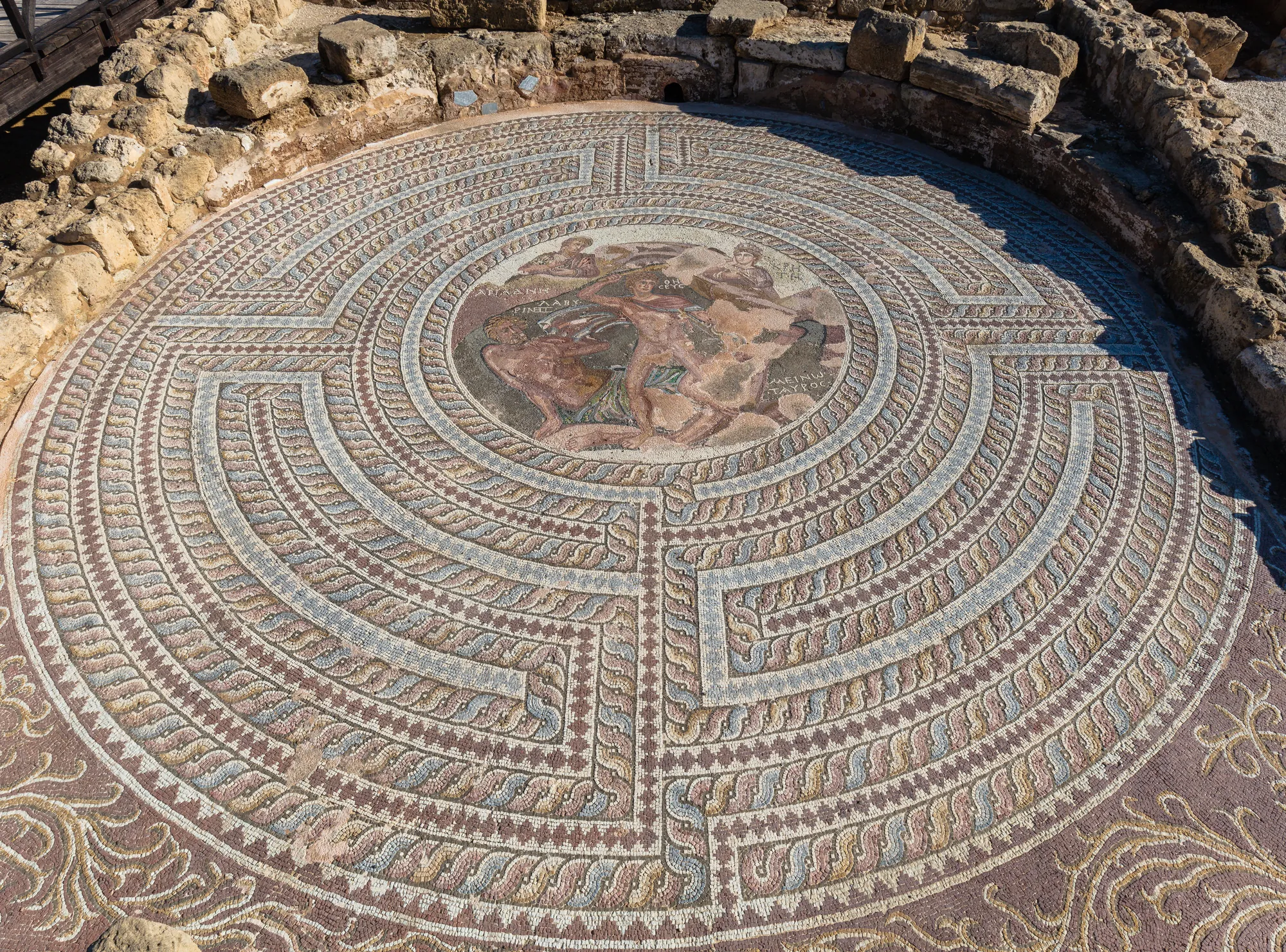
Town houses on Cyprus from the founding of Nea Paphos in the late 4th century BC to the earthquakes of the 4th century AD, from mosaic-floored peristyle houses to a mudbrick house at Kourion.
In the compendium
Royal and Built Tombs
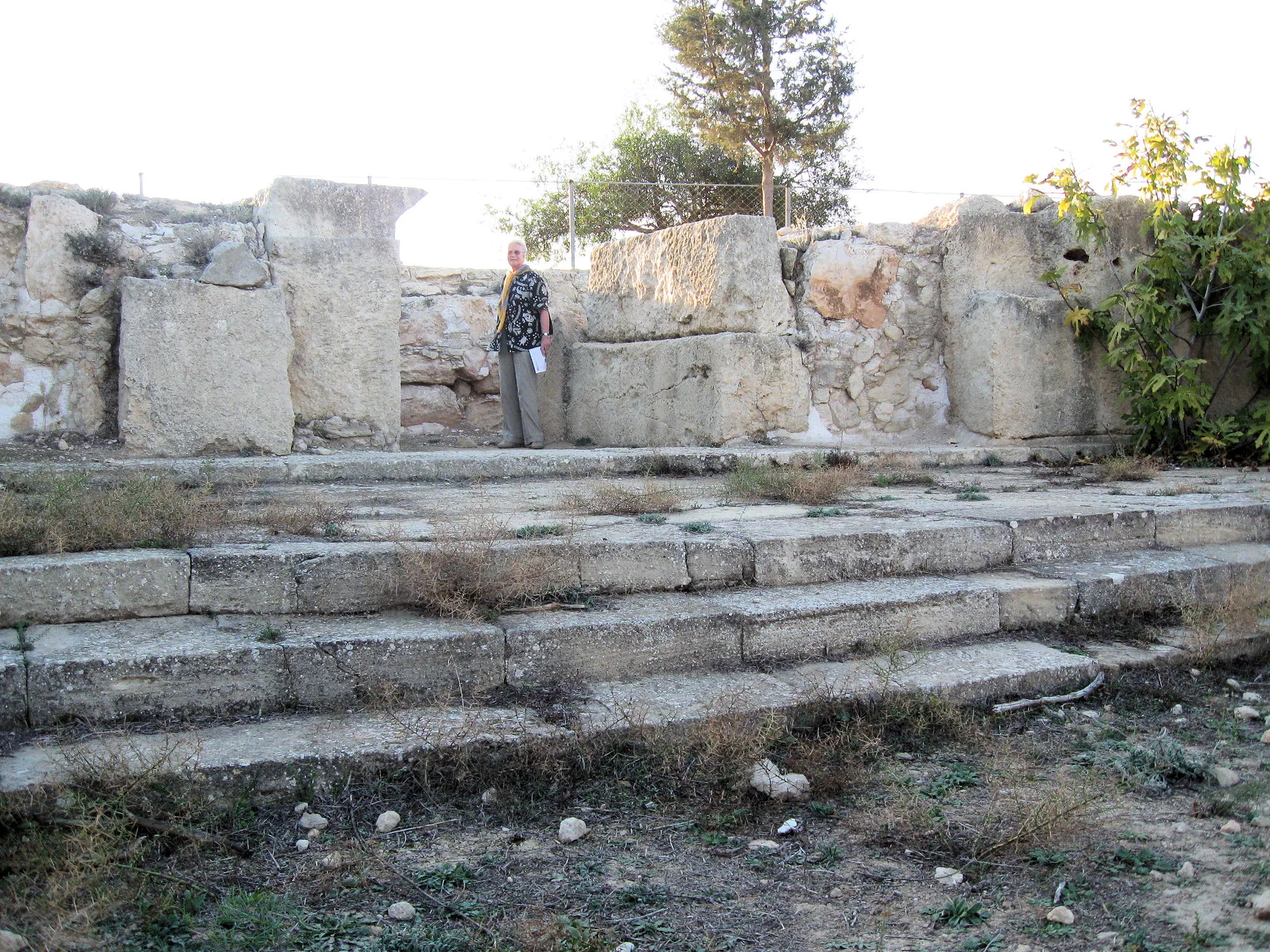
Tombs built of cut stone in Cyprus, from the ashlar tombs under Late Bronze Age houses at Enkomi to the royal tombs of Salamis and Tamassos and the rock-cut courts of Nea Paphos.
In the compendium
Food Storage in Ancient Cyprus: Pits, Pithoi and Storerooms
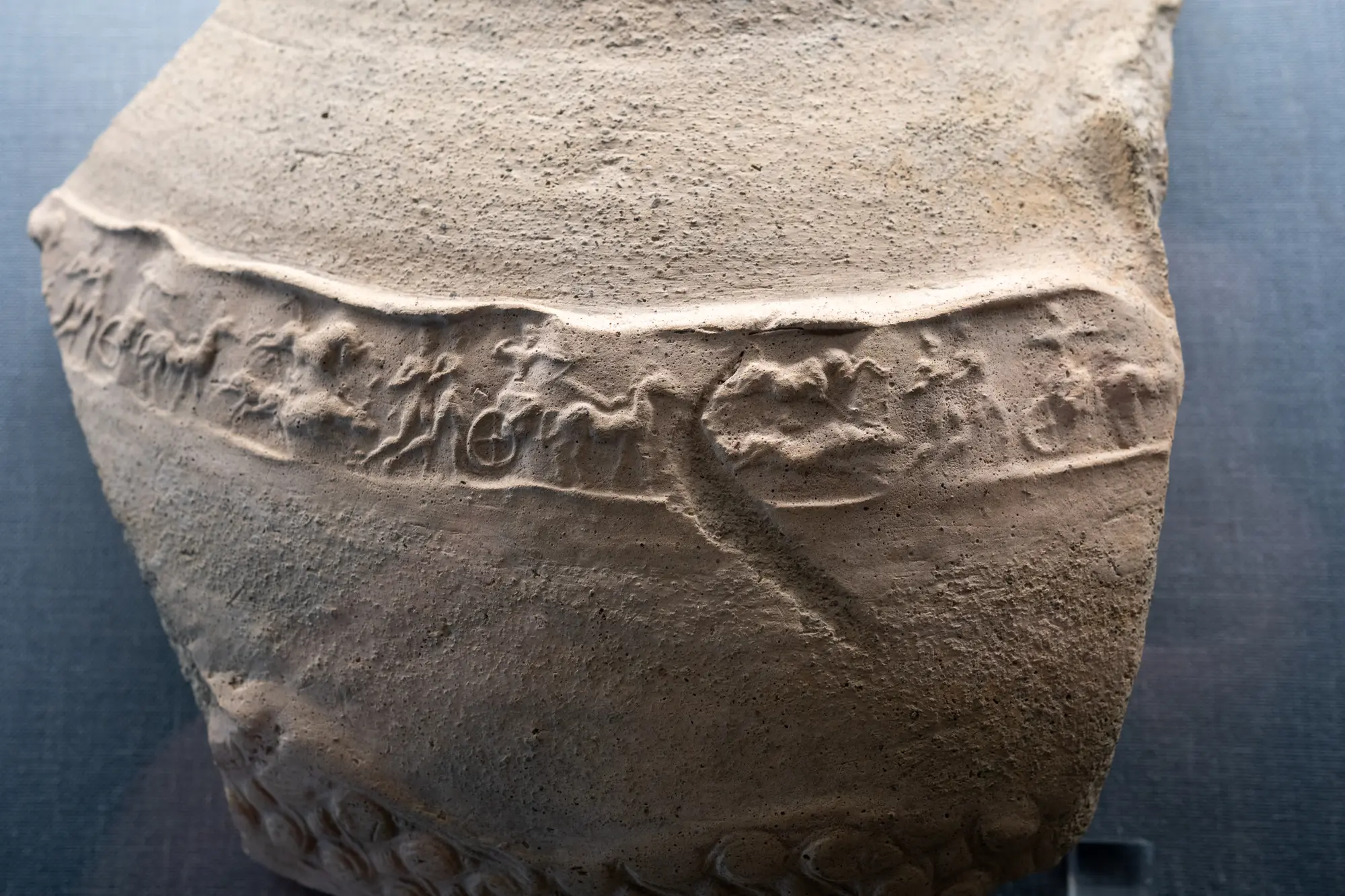
How Cypriots stored grain, oil and wine, from Chalcolithic pits and household jars to the great pithos halls of the Late Bronze Age towns.
Map of Cyprus
Places discussed in the talk
- Has a page on this site
- Other places
- Ground above 200, 500, 1,000 m
Places
- 1Nea Paphos
- 2Latchi (approx.)
- 3Polis