
Lecture·Archaeological Research Unit - University of Cyprus·2021
Contemporary approaches to shipwreck archaeology: the Mazotos shipwreck as a case study
Chapters
About the lecture
Stella Demesticha of the University of Cyprus presents the ongoing investigation of the Mazotos shipwreck, which she has directed since 2007 as the first underwater archaeological excavation conducted by Cypriot institutions. Using theoretical frameworks from maritime archaeology developed by Keith Muckelroy, David Gibbins, and Jonathan Adams, she examines the wreck across its topographical, material, historical, and social contexts.
The ship sank 1.5 miles off the south coast of Cyprus between Cape Petounda and Cape Kiti, with Stavrovouni visible inland as a landmark. Lying at a depth of 43 metres on a flat, sandy seabed, the site has become an artificial reef. Demesticha outlines three environmental and site-formation studies carried out alongside the excavation: marine biological research on the reef ecosystem, core sampling to detect seabed scour, and a photogrammetric analysis of biogenic encrustations on the pottery that allowed Massimiliano Secci to reconstruct two distinct seafloor levels.
The vessel carried a homogeneous cargo estimated at 500 to 800 transport amphorae from Chios, dated around the middle of the 4th century BC during the Cypro-Classical period. The 261 recovered Chian amphorae show standardized capacities clustering around 20 to 21 litres, alongside 18 half-sized vessels holding 9 to 10 litres, and fall into three preliminary fabric groups. Smaller numbers of North Aegean, Solokha I (mushroom-rim), and Lycian amphorae were found at the extremities of the hold. In the bow area, excavation exposed the keel, eight strakes, six frames, and a stringer. Unlike the wine-glass hull sections of the late 5th-century BC Ma'agan Mikhael wreck and the late 4th-century BC Kyrenia ship, the Mazotos vessel had a round bottom with sparsely placed frames and tetrahedral openings for ligatures, showing that archaic shipbuilding features persisted into the 4th century BC. Using 3D spatial analysis by Eleni Katsianouri, the team reconstructed how 42 broken amphorae were stowed in two tiers of six rows under the foredeck, packed with brushwood dunnage.
Turning to the historical context, Demesticha notes that Chian imports to Cyprus and the Levant dropped in the 4th century BC. She suggests that the shipment may not represent routine trade, proposing as a hypothesis that it could have supplied Greek mercenaries and Persian forces assembled at Akko under Iphicrates and Artaxerxes around 378 BC. The lecture concludes with the site's role among local fishermen, volunteer divers, and the public.
In the question-and-answer session, Demesticha discusses measuring amphora volumes with polystyrene beads, brushwood dunnage (afana or mazi), Cypriot antiquities law and the international convention, and analyses by Lisa Briggs identifying wine residues and olive pits in the cargo.
From our collection
Pieces in the Drakopoulos collection of the kinds and periods this talk covers: Cypro-Classical.
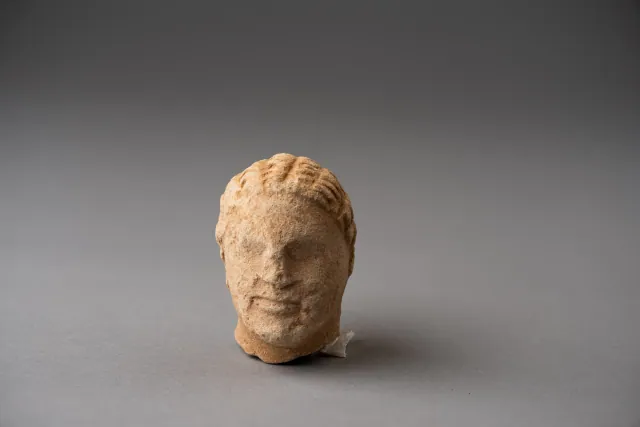
Limestone Head of a Boy, probably from a Temple Boy Statuette
Cypro-Classical
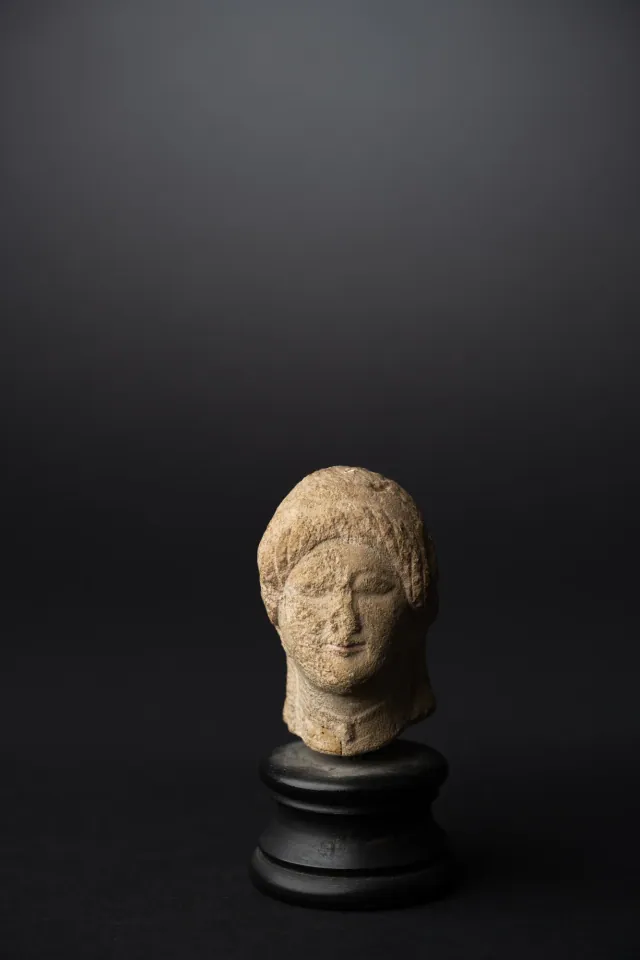
Limestone Head of a Votary with a Wreath
Cypro-Classical
Background
Where to read more on this site before or after watching.
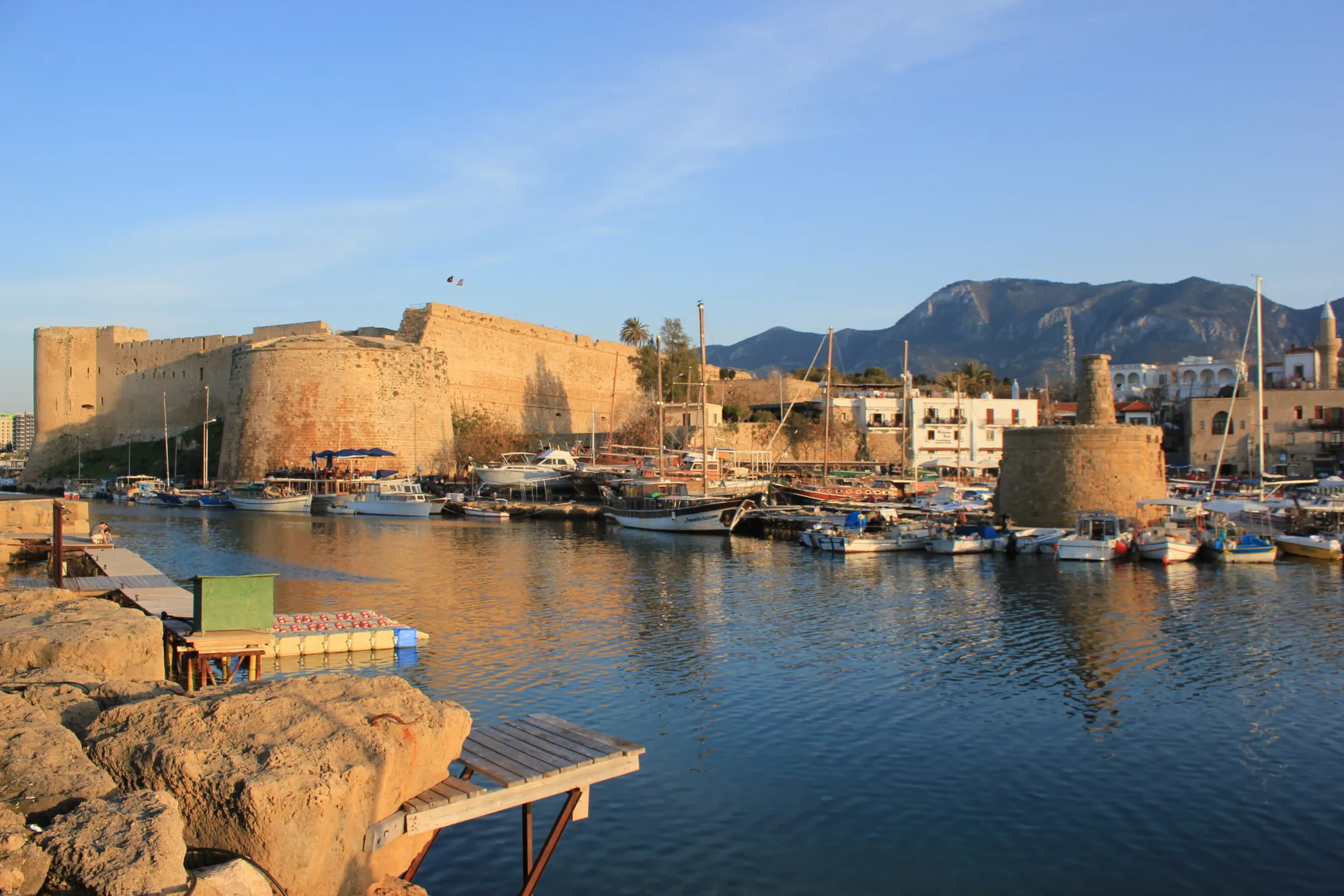
The site
Kyrenia
Ancient Keryneia lies under the old town of Kyrenia (Girne) round its small harbour on the north coast. The town was never excavated: it is known from tombs cleared in the 1960s and early 1970s, from a few texts and inscriptions, and from the merchant ship that sank off it around 300 BC, now shown in Kyrenia Castle.
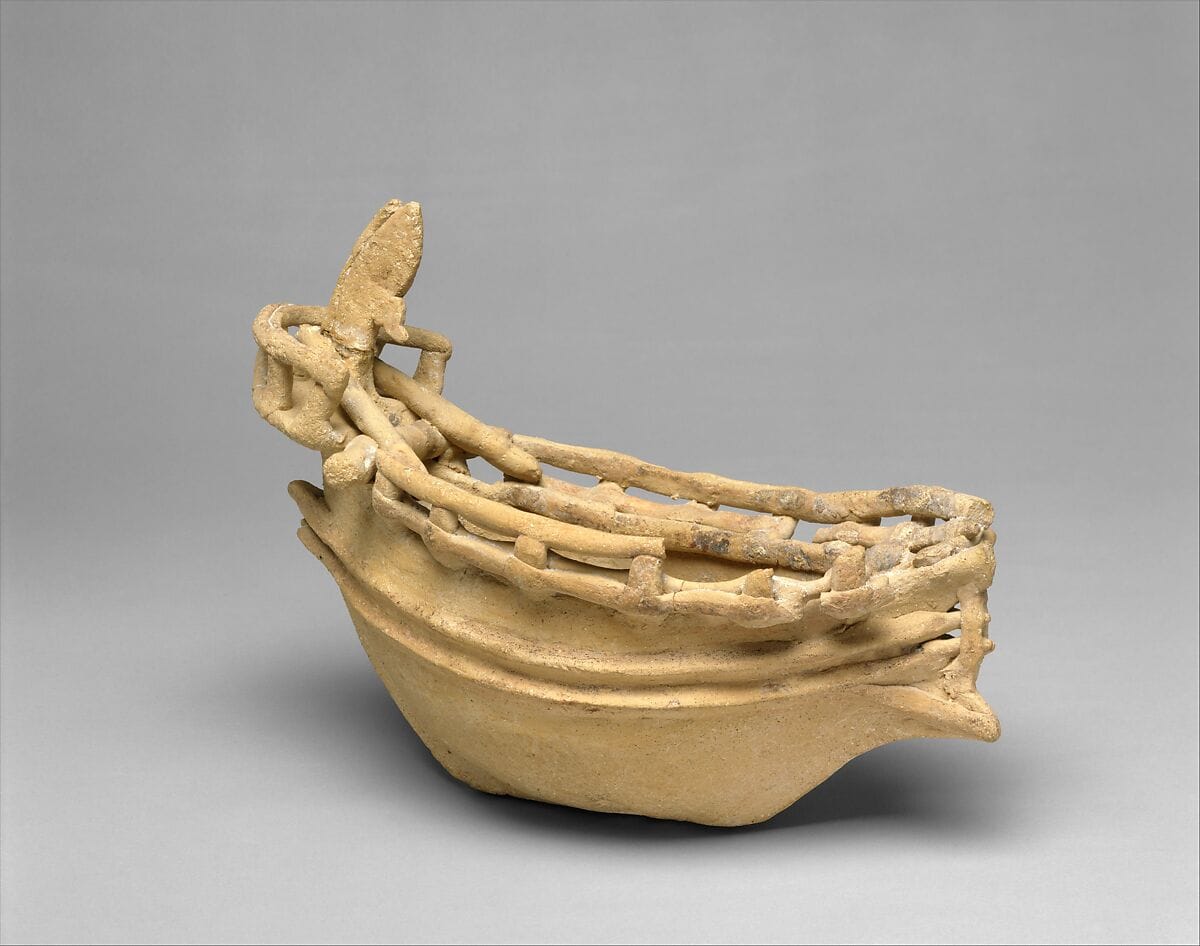
In the compendium
Seafaring and Ships in Ancient Cyprus
The evidence for boats and seafaring around Cyprus from the first crossings to the Classical period, from anchors, models and graffiti to wrecks and shipsheds.
In the compendium
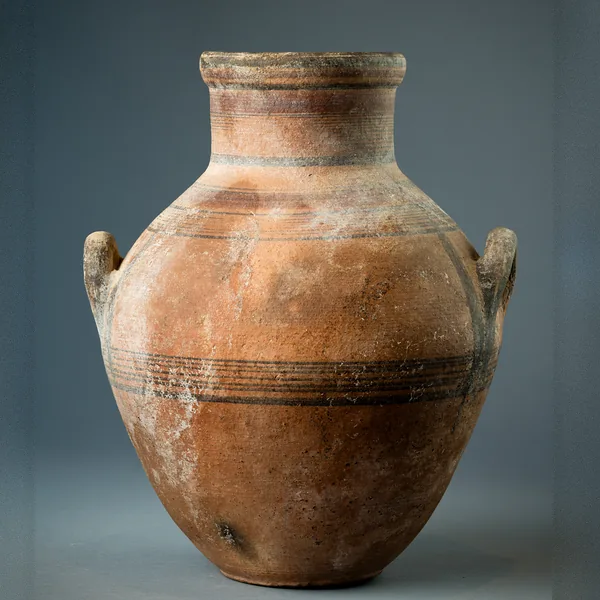
Amphora
A closed jar with two opposed handles, made in Cyprus in belly-handled and vertical-handled painted series and as a basket-handled transport jar.
In the compendium
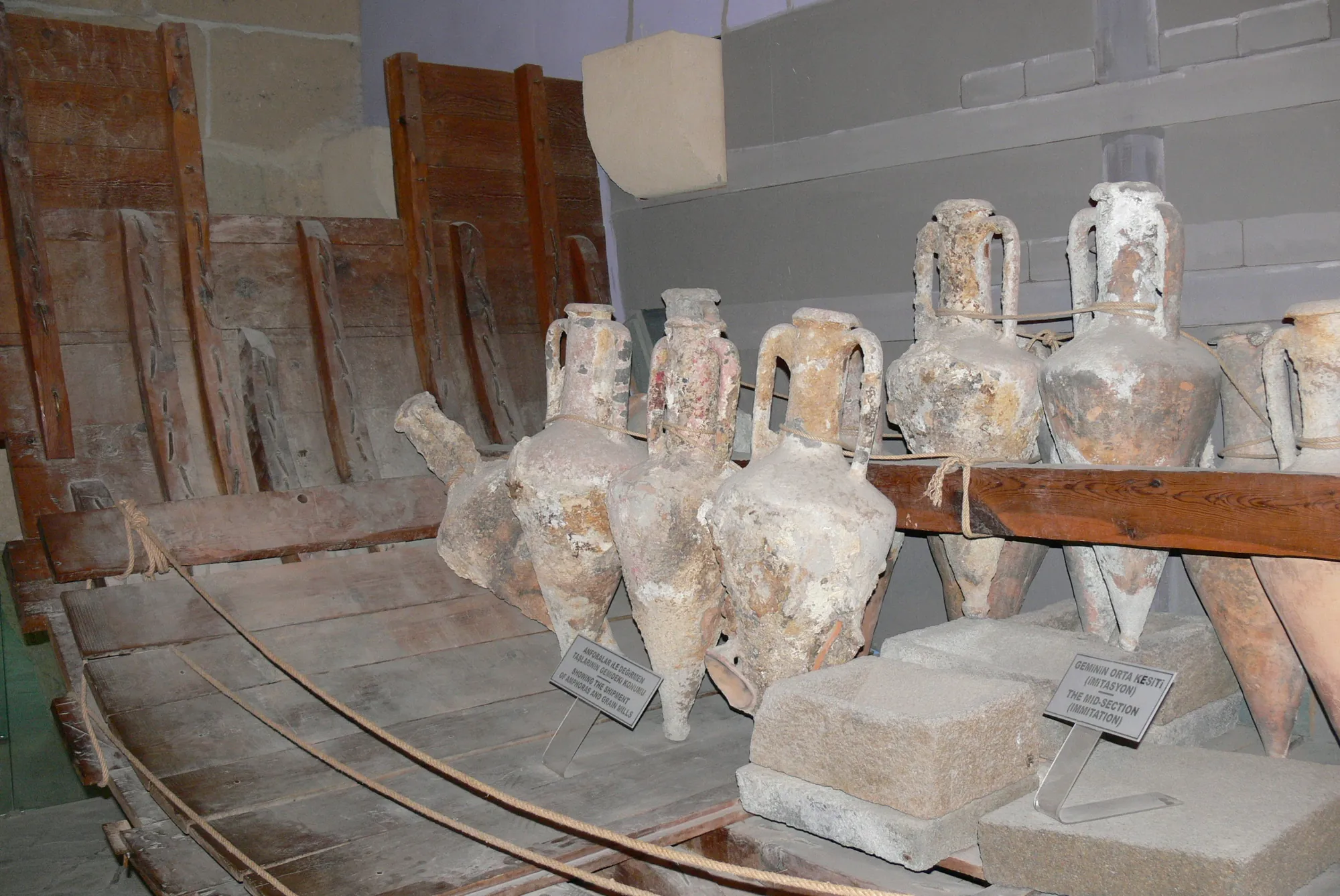
Antiquities from the Sea: Amphorae, Wrecks and Divers off Cyprus
Finds at sea under the Antiquities Law, Cyprus and the 2001 UNESCO convention, the few cases of removal and seizure, sea-found amphorae on the market, and the lawful work beside them.
Map of Cyprus
Places discussed in the talk
- Has a page on this site
- Other places
- Ground above 200, 500, 1,000 m
Places
- 1Mazotos (approx.)
- 2Kyrenia