
Lecture·Archaeological Research Unit - University of Cyprus·2023
Middle and Late Bronze Age Levantine amphorae and maritime trade in the Eastern Mediterranean and Cyprus
Chapters
About the lecture
In this seminar for the ComPAS project at the Archaeological Research Unit of the University of Cyprus, Cydrisse Cateloy presents her doctoral research on Middle Bronze Age and Late Bronze Age Levantine transport amphorae and outlines her work on imported containers in Cyprus.
Cateloy argues that the common label "Canaanite jar" is a misnomer: these vessels were produced across the entire Levant, and their two handles, narrow necks, and tapered bases define them as maritime transport amphorae. Her corpus comprises 200 complete or nearly complete vessels from 46 sites. To record them, she designed a contouring square for profile drawings and tested volumetric protocols on ten intact amphorae from the Grand Ribaud F shipwreck, finding polystyrene beads accurate to within one percent of water measurements and PotUtility to within three percent.
Combining morphology and capacity across 27 types, Cateloy traces shifting second-millennium BC exchange networks. In Middle Bronze II (Middle Cypriot III to Late Cypriot IA), central Levantine Type 3C1 amphorae reached Kommos, Enkomi, and a tomb at Arpera. By Late Bronze IIB (Late Cypriot IIC), earlier networks split: large northern Levantine biconical amphorae (27 to 33 litres) went mainly to Cyprus, while smaller southern conical vessels (10 to 14 litres) went to Egypt. Six of the eight largest amphorae in the corpus came from Cyprus, alongside oversized Type 7B2 examples such as one from Pyla-Kokkinokremos. Within ComPAS, she will expand this study to fragmentary vessels in Cyprus, Early Iron Age material after 1200 BCE, Egyptian amphorae, Aegean stirrup jars, and Tell el-Yahudiyeh juglets.
From our collection
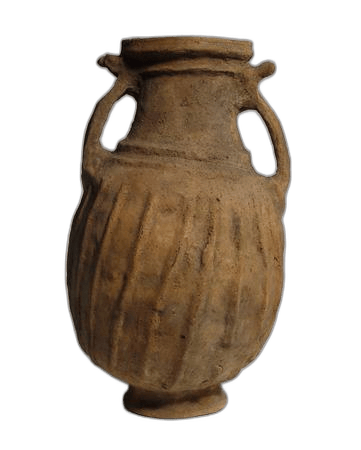
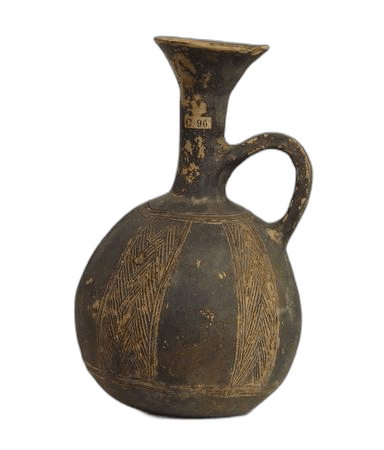
Pieces in the Drakopoulos collection of the kinds and periods this talk covers: Amphora, Jar, Juglet.
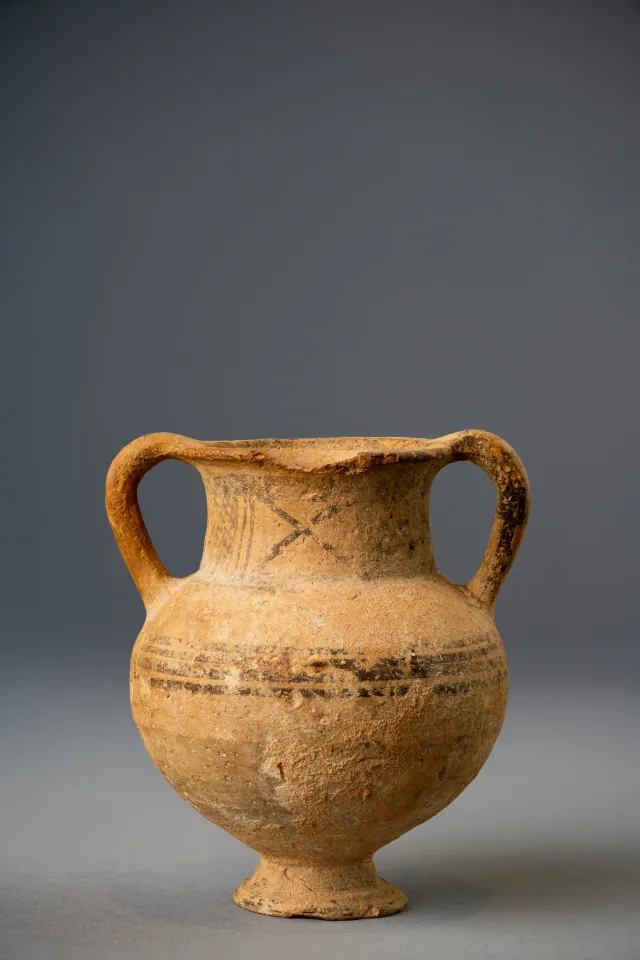
White Painted Amphoriskos on a Conical Foot
Amphora
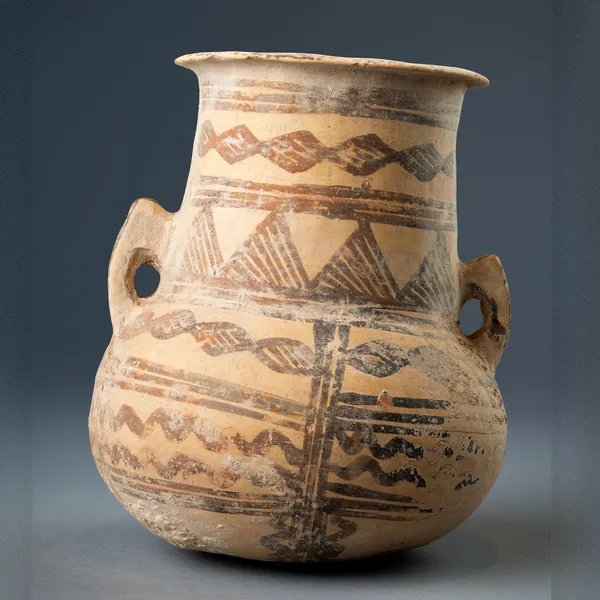
White Painted III-IV Amphora with Lozenge Chains and Hatched Triangles
Amphora
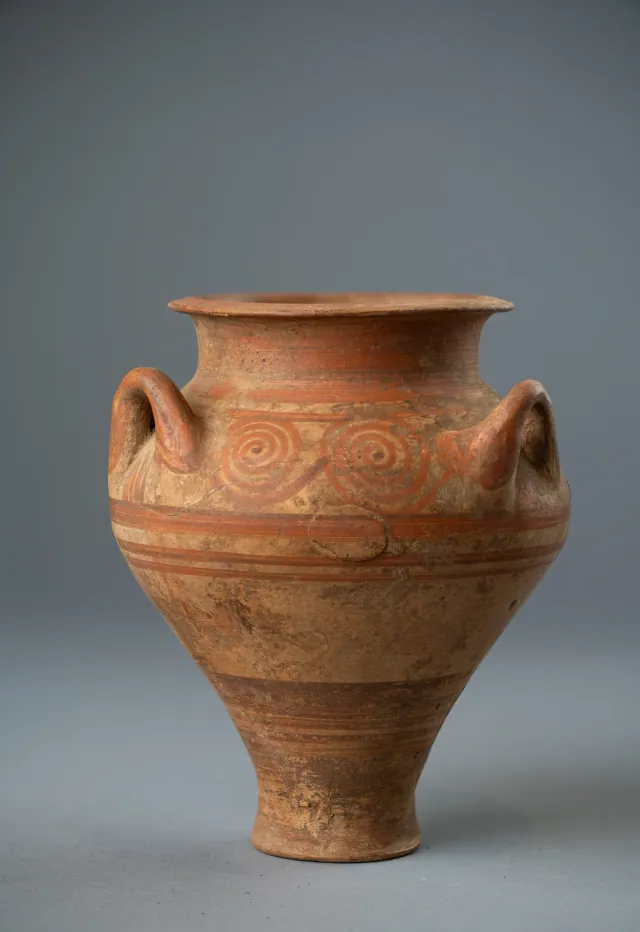
Cypriot Three-Handled Jar in the Mycenaean Style with Running Spirals
Jar
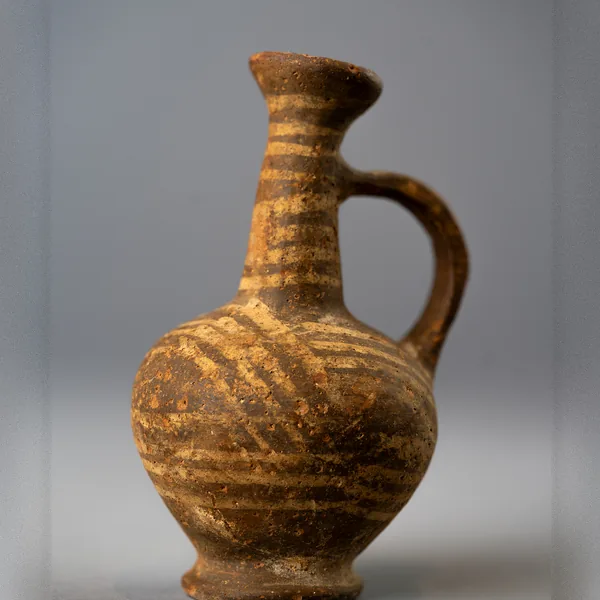
Base Ring II Bilbil Juglet with White-Painted Bands
Juglet
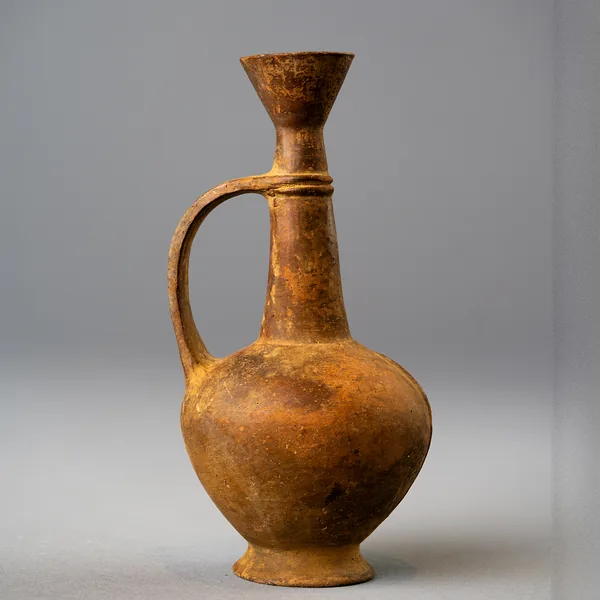
Base Ring Bilbil Juglet with Funnel Mouth and Neck Ridge
Juglet
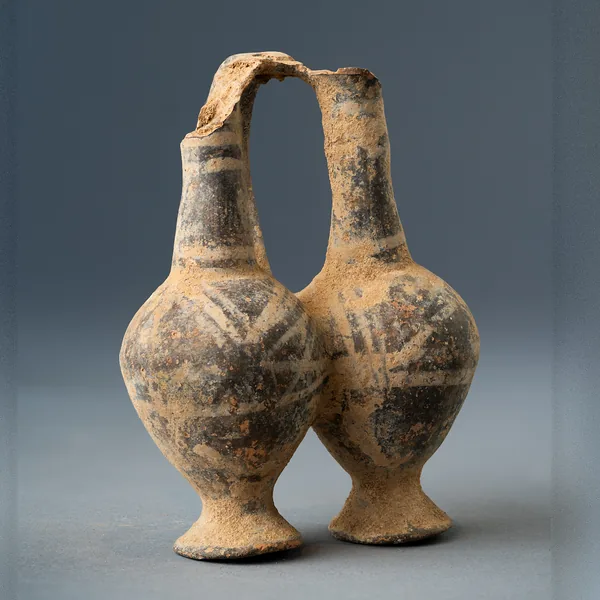
Base Ring II Double Juglet with White-Painted Decoration
Juglet
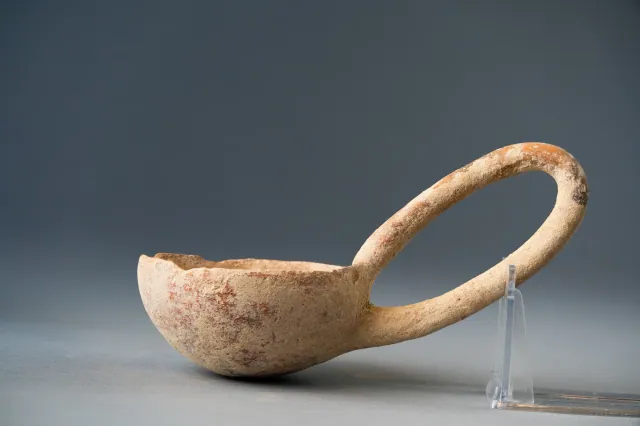
Dipper with High Loop Handle
Juglet
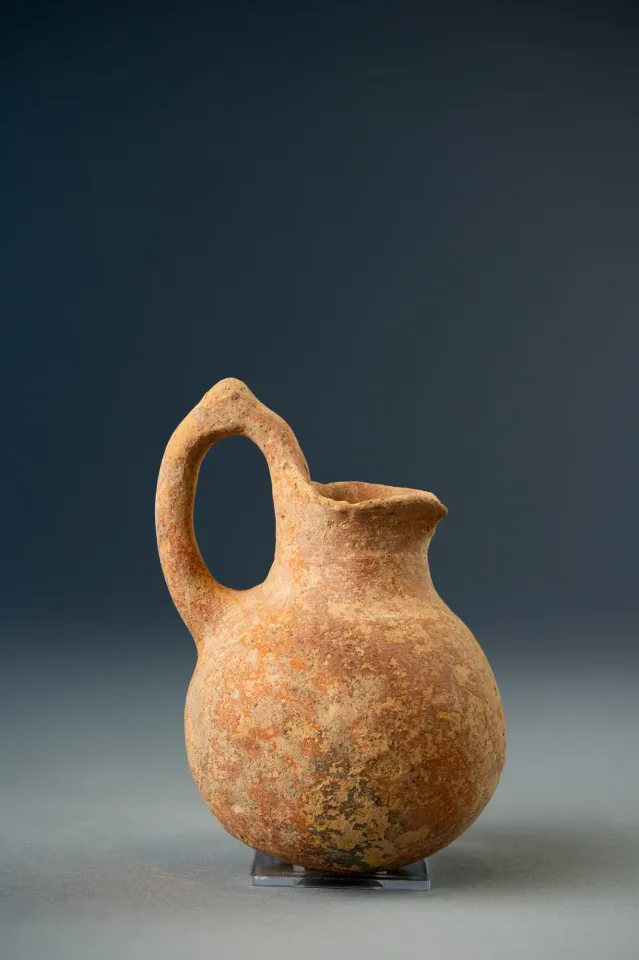
Red Polished Juglet with High-Swung Handle
Juglet
Found at the places discussed
Objects in our catalogue, in museum collections, recorded as found at these sites.


Background
Where to read more on this site before or after watching.
The site
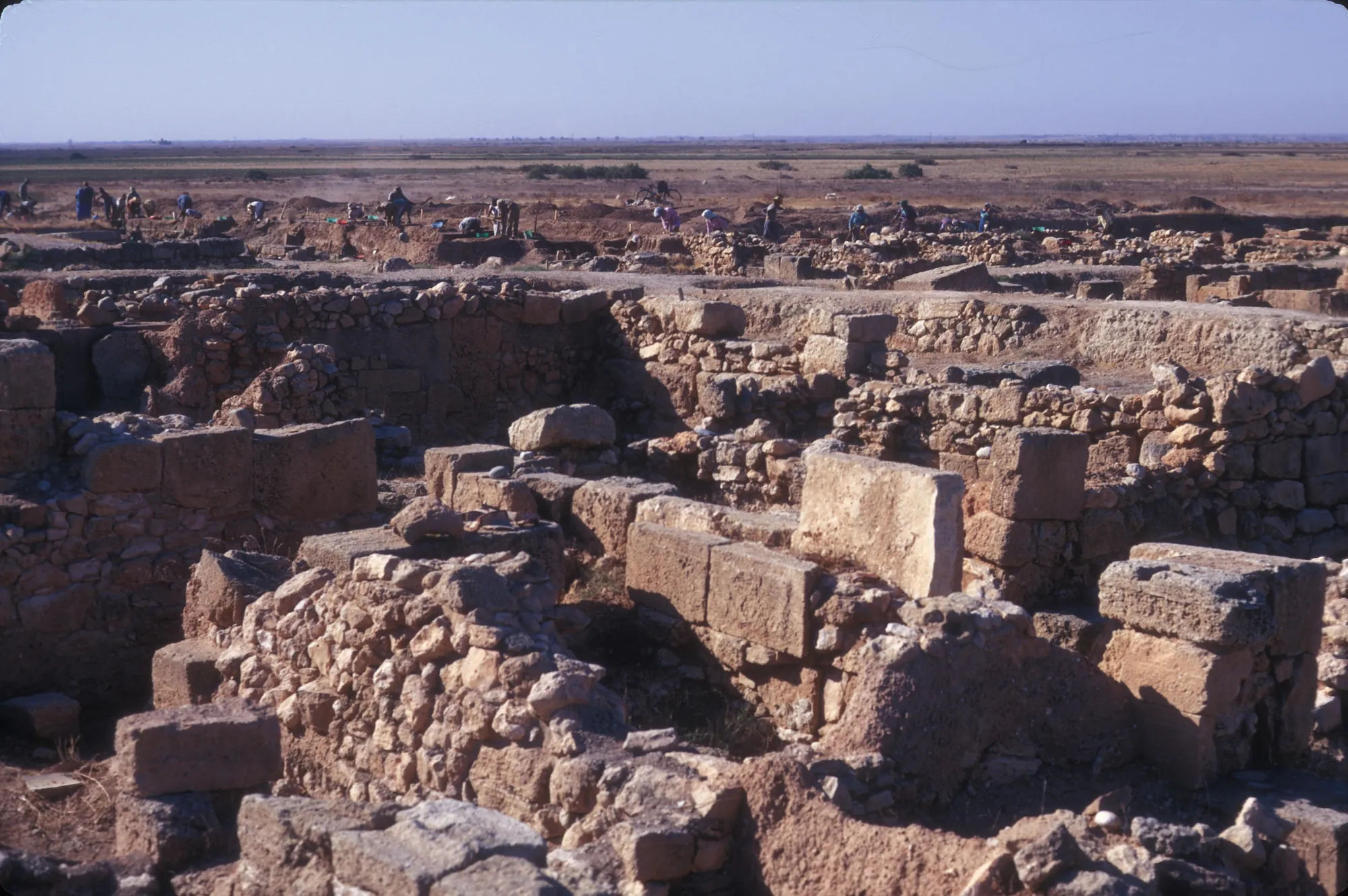
Enkomi
Enkomi is a walled Late Bronze Age town near the mouth of the Pedieos river on the bay of Famagusta, lived in from about 1650 BC until it was gradually abandoned for nearby Salamis. It was a port for Cypriot copper, and its excavations produced metal workshops, sanctuaries with bronze cult statues, rich tombs and the largest group of Cypro-Minoan inscriptions on the island.
In the compendium
Amphora
A closed jar with two opposed handles, made in Cyprus in belly-handled and vertical-handled painted series and as a basket-handled transport jar.
In the compendium
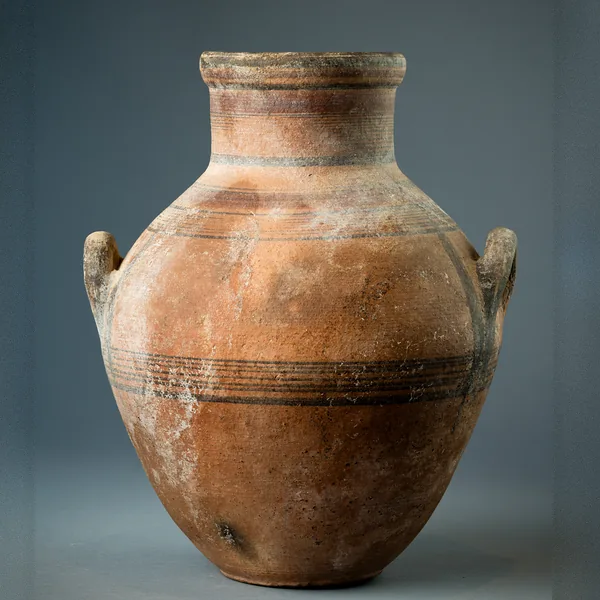
Jars and Pithoi
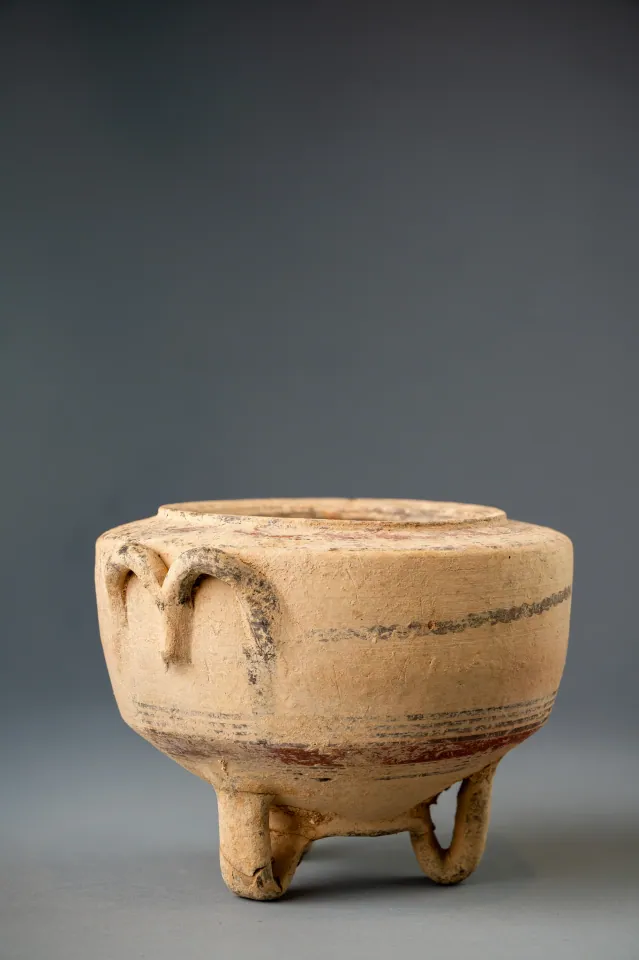
A symmetrical wide-necked vessel, the family of Cypriot storage and transport jars, pithoi and painted jars, including the amphora.
In the compendium
Juglets
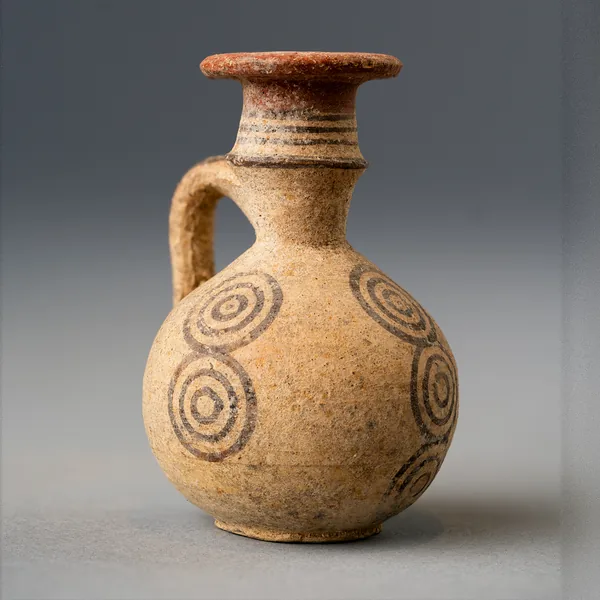
A juglet is a small one-handled jug with a narrow neck, made in Cyprus in most wares and widely exported as a container for perfumed oil.
Map of Cyprus
Places discussed in the talk
- Has a page on this site
- Other places
- Ground above 200, 500, 1,000 m
Places
- 1Enkomi
- 2Pyla-Kokkinokremos