
Conference paper·Archaeological Research Unit - University of Cyprus·2018·In Greek
The University of Cyprus Team's Work for the iMARECULTURE Project
Dimitra Perissiou
Chapters
About the video
Speaking in Greek at the annual review of the archaeological work of the University of Cyprus for 2017, Dimitra Perissiou presents the university team's contribution (with Massimiliano Secci and Stella Demesticha) to the Horizon 2020 project iMARECULTURE. Coordinated by the Cyprus University of Technology with eleven partners across eight countries, the project uses virtual and augmented reality and video games for underwater cultural heritage. Alongside virtual dry visits to the Classical wreck at Mazotos (for the Thalassa Museum), Xlendi in Malta and Roman Baiae in Italy, it builds open-access 3D libraries of Classical amphorae and ships using the Kyrenia and Ma'agan Michael wrecks and the trireme Olympias.
The talk focuses on two educational games developed at the University of Cyprus. The first, in virtual reality for archaeology students, simulates underwater excavation across environments modelled on Tektaş Burnu, Mazotos and Ma'agan Michael. Introductory videos explain Keith Muckelroy's site-formation processes, and an alpha version demonstrates exercises in tagging finds, using an airlift, photogrammetry, scale drawing and safe lifting.
The second game, on ancient seafaring and trade, casts the player as a merchant sailing the eastern Mediterranean in the Classical and Hellenistic periods. It combines a wind-routing algorithm with a database of 150 shipwrecks compiled by Anna Demetriou, piracy zones and 54 ports. Ship tonnages (from a Thasos inscription), bottomry loans from Demosthenes, harbour taxes, currency exchange and seven commodities turn historical sources into game rules. Perissiou closes with the methodological tension between linear archaeological narratives and rule-based game worlds.
From our collection
Pieces in the Drakopoulos collection of the kinds and periods this talk covers: Cypro-Classical, Hellenistic.
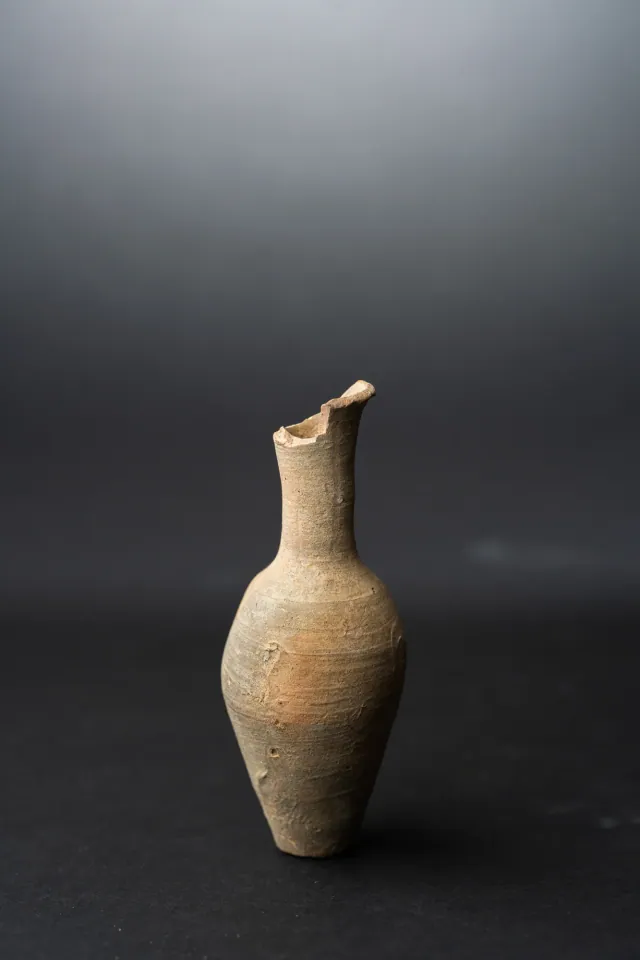
Fusiform Unguentarium
Hellenistic
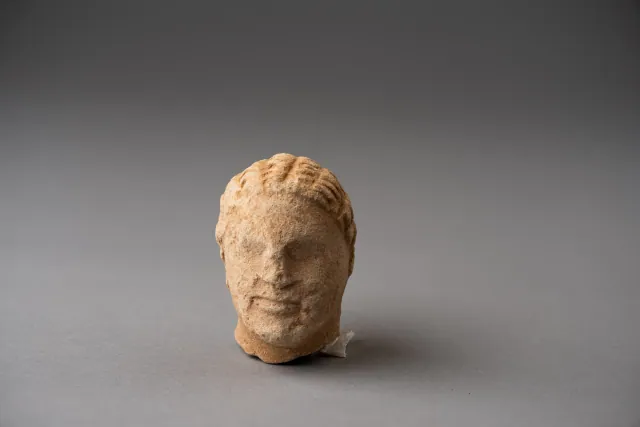
Limestone Head of a Boy, probably from a Temple Boy Statuette
Cypro-Classical
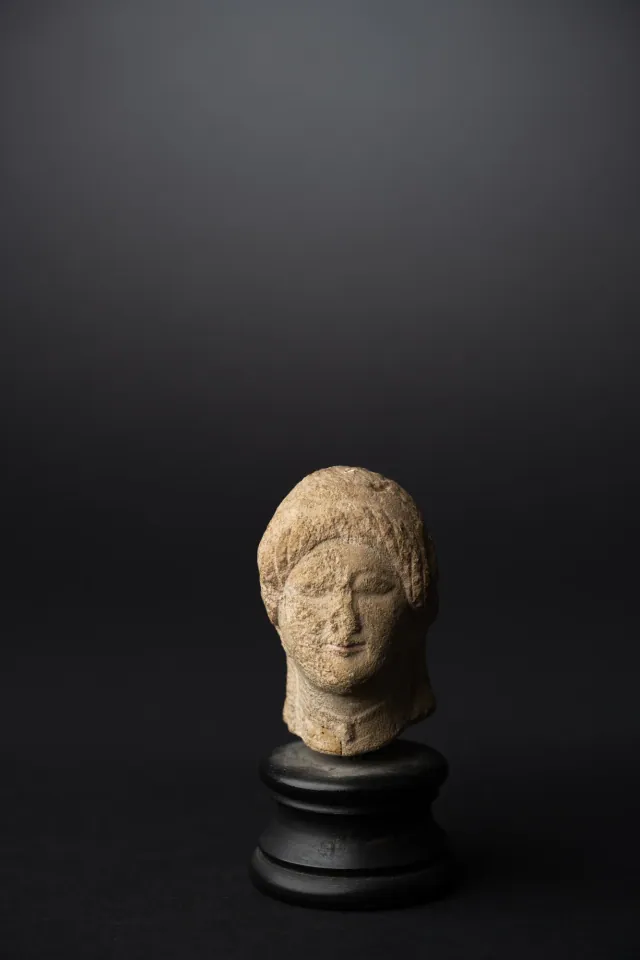
Limestone Head of a Votary with a Wreath
Cypro-Classical
Background
Where to read more on this site before or after watching.
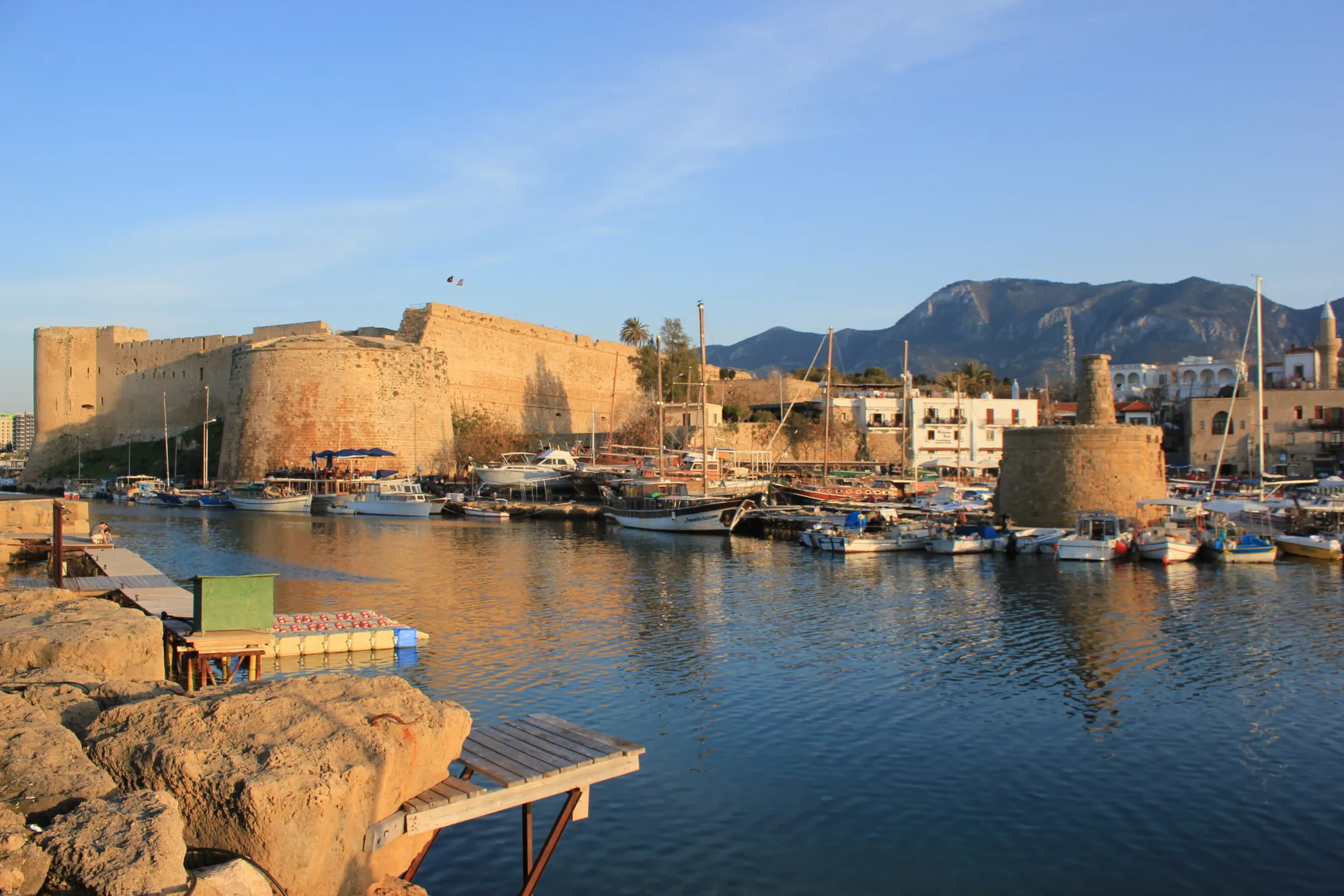
The site
Kyrenia
Ancient Keryneia lies under the old town of Kyrenia (Girne) round its small harbour on the north coast. The town was never excavated: it is known from tombs cleared in the 1960s and early 1970s, from a few texts and inscriptions, and from the merchant ship that sank off it around 300 BC, now shown in Kyrenia Castle.
In the compendium
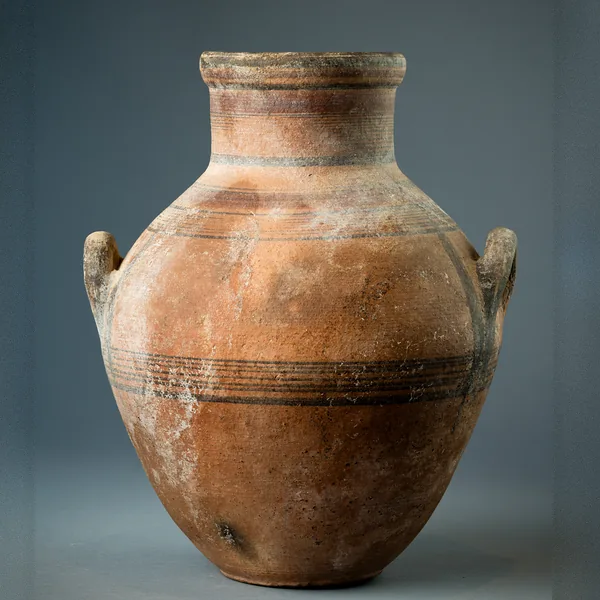
Amphora
A closed jar with two opposed handles, made in Cyprus in belly-handled and vertical-handled painted series and as a basket-handled transport jar.
In the compendium
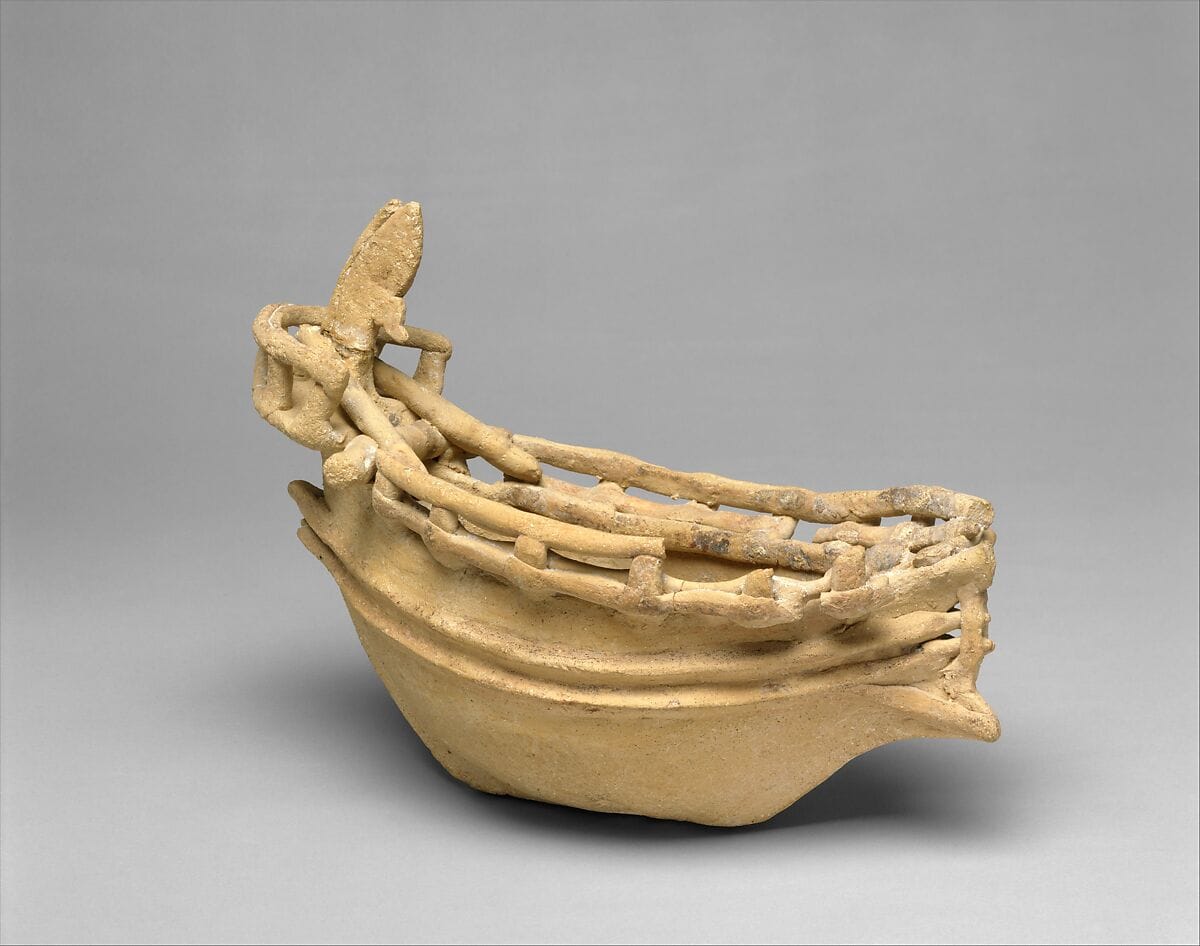
Seafaring and Ships in Ancient Cyprus
The evidence for boats and seafaring around Cyprus from the first crossings to the Classical period, from anchors, models and graffiti to wrecks and shipsheds.

The period
Cypro-Classical
The last phase of the Cypriot city-kingdoms, c. 480–310 BCE, under loose Persian overlordship, ending when Ptolemy I abolished the kings.
Map of Cyprus
Places discussed in the talk
- Has a page on this site
- Other places
- Ground above 200, 500, 1,000 m
Places
- 1Mazotos (approx.)
- 2Kyrenia