
Contents
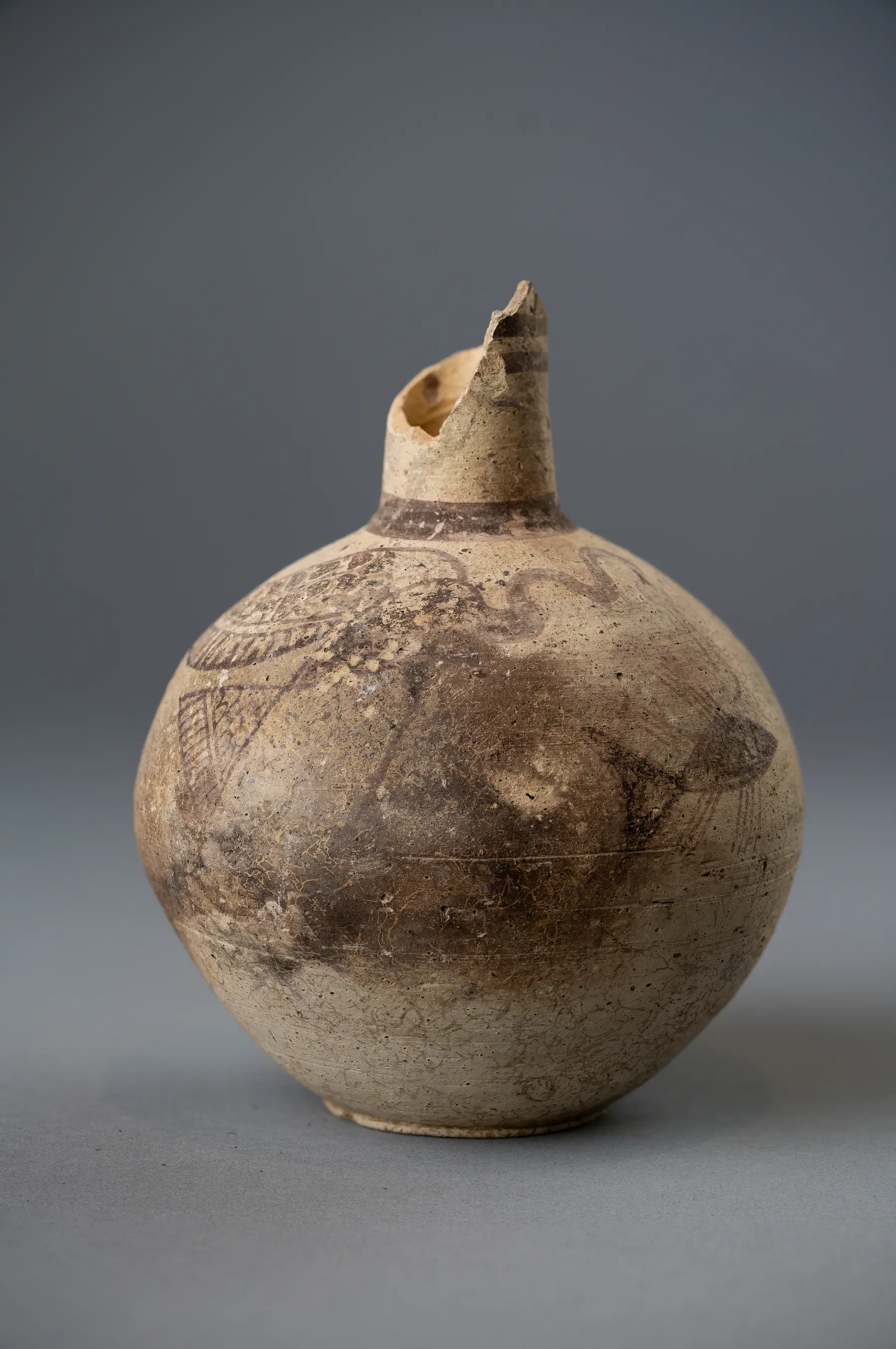
On a small Bichrome IV jug in the Drakopoulos collection, a waterfowl stretches its neck across the shoulder in tight S-bends and drops its beak toward a fish with a forked tail and fins drawn as bundles of purple-red strokes. The scene belongs to the Cypro-Archaic free-field style, and it is the best-known way a fish appears on Cypriot pottery. Fish were never the main subject of Cypriot painters: in the Bichrome IV group that Annie Caubet assigned to Salamis, birds dominate and fish "come a good second" ("viennent en bons seconds") [1, p. 92]. Earlier, in the Late Bronze Age, the island imported Aegean pots painted with fish, octopus and dolphin-like creatures, and these imports, together with a handful of local pieces, form the second strand of this entry.
This page covers fish and other sea animals as motifs on pottery, with a short look at the same subjects on jewellery, seals and terracottas. The wider free-field style, with its counts of motifs and its workshops, is treated in Free-Field Art; the bird half of the bird-and-fish scene is in Birds. You can see all fish in the catalogue and see all octopus and marine creatures in the catalogue.
Identifying fish
Cypriot painters drew fish and birds from the same starting shape. Caubet, following an observation by Marguerite Yon, described the method: the painter traced a bold ovoid outline, round at one end and pointed at the other, and filled it with blocks of red and hatching; legs and a beak turned it into a bird, while wings and fins were laid out in the same places on both [1, p. 92]. The fish are generic and cannot be assigned to a species, though some details recur: spiny fins and barbels under the lower jaw [1, p. 92]. When the body has no legs and the fins are drawn like wings, birds and fish can be hard to tell apart.
Two cases show the problem. A Bichrome IV jug in the Cyprus Museum (1981/V-4/5, H. 19 cm) has a one-winged bird with a vertical row of parallel chevrons in front of its beak, "giving the impression of fish bones"; the catalogue reads it as "an aquatic bird with the remains of its catch" and notes that "the composition of a bird catching fish is common in the 'freefield' style" [2, p. 76, no. 39]. In Athens, the National Archaeological Museum has a Bichrome IV juglet (inv. 12214, H. 16.3 cm, Cypro-Archaic I) with creatures that Vassos Karageorghis identified as flying fish because they have no legs; he added that "the representation of flying fish, if the identification is correct, is unique in Cypriote vase-painting" [3, p. 67, no. 124]. A White Painted IV juglet in the same museum (inv. 19537, H. 17.4 cm) has "two antithetic flying fish facing a central large X-motif" on the shoulder [3, p. 67, no. 123].
| Period | Fish and sea creatures in Cyprus | Examples |
|---|---|---|
| Late Cypriot II (c. 1400-1200 BCE) | Imported Mycenaean pictorial kraters with fish; octopus vases labelled Minoan; fish on gold and seals | Kalavasos-Ayios Dhimitrios T.11 krater; Met gold frontlet |
| Late Cypriot III (c. 1200-1050 BCE) | Modelled fish-shaped askos | Met 74.51.788 |
| Cypro-Geometric I (c. 1050-950 BCE) | A man between two fish on a terracotta tripod | Met 74.51.437 |
| Cypro-Archaic I (c. 750-600 BCE) | Bird catching a fish; lone fish; flying fish; Black-on-Red fish-cups around Paphos | Drakopoulos JUG-AR-002; Met 74.51.527, 74.51.534; Ashmolean 1888.1513 |
| Cypro-Archaic II (c. 600-480 BCE) | Fish friezes; fish on a clay votive shield | Met 74.51.524, 74.51.5882 |
Late Bronze Age: fish on Aegean pictorial pottery
The earliest securely dated fish in the catalogue come from the Late Bronze Age and are Aegean in style. The clearest example is a Mycenaean krater from Tomb 11 at Kalavasos-Ayios Dhimitrios, now in the Larnaca District Museum (K-AD 690). It is a conical krater on a ring base, 31 cm high and 33 cm across, holding about 18.5 litres, painted in red on a light beige slip and dated LC IIA2 / LH IIIA2 (1400-1375 BCE); it was found with a Base Ring cup inside it [4, p. 230, cat. 219]. Its frieze shows "swimming fish with wavy lines on their bodies". The catalogue observes that "the fish do not have the correct anatomical features for dolphins" but recall Aegean dolphin scenes, which "evolved from the Minoan Marine Style", and that while birds, bulls, octopus and fish were all part of Mycenaean pictorial painting, "fish on a krater are unusual" [4, p. 230]. Pictorial kraters were mostly made in Greece, yet most of them have been found in Cyprus, where they were a prestige item in tombs [4, p. 230]. A Mycenaean krater in the Cyprus Museum, 25 cm high, carries a dolphin or fish-like animal of the same family. For the class as a whole, see Mycenaean Imports and Local Imitations.
Albert Leonard's index of Aegean pottery from the Levant traces the fish motif (Furumark's FM 20) to an "obvious Minoan pedigree". Furumark gave it a range from LH IIIA:1 to IIIC:1, but Penelope Mountjoy narrowed its main use to LH IIIC Middle, "commonly as a subsidiary motive on stirrup jars of the Octopus Style, and less frequently on kraters decorated in the Pictorial Style" [5, p. 82]. Fish and octopus therefore travelled together in the Aegean repertoire, a point taken up below.
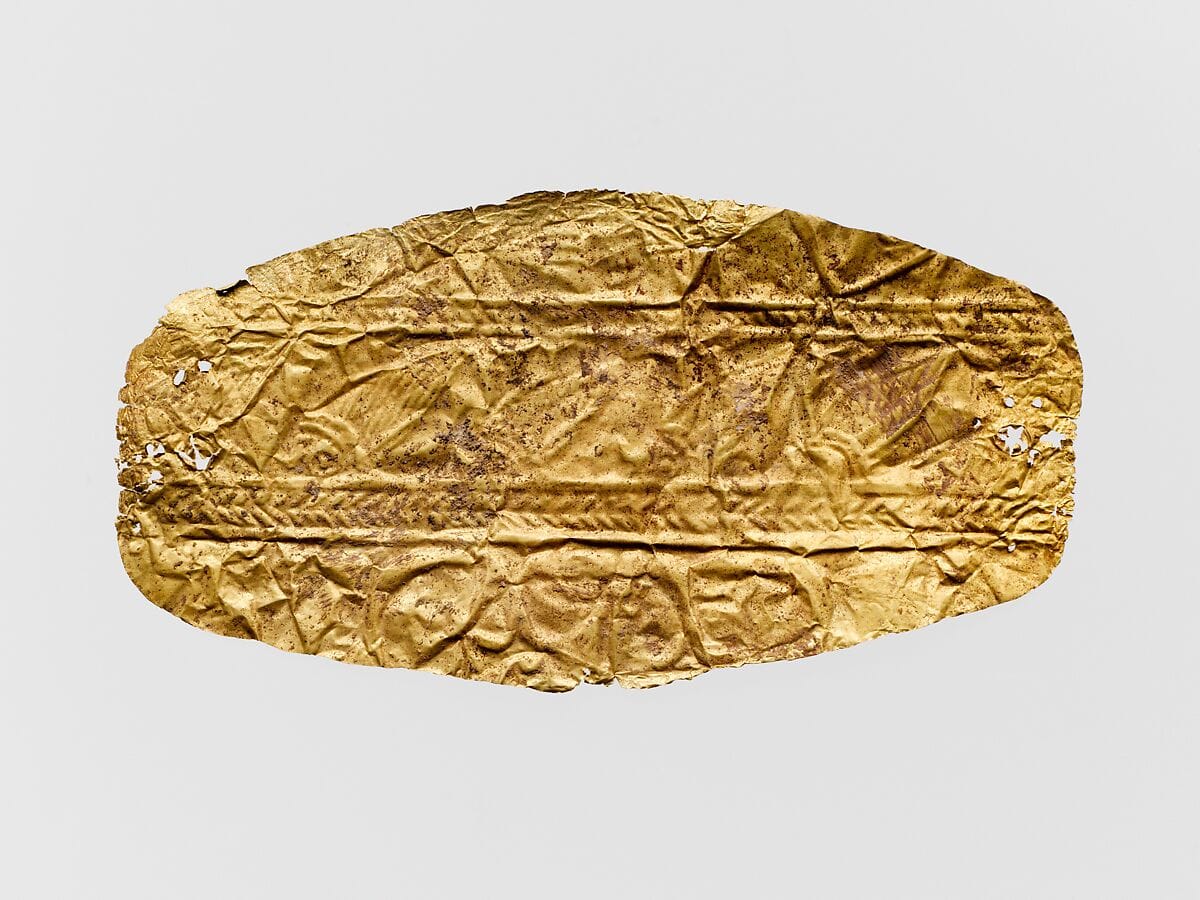
Fish also appear off the pot in Late Cypriot Cyprus. A Cesnola gold leaf frontlet in the Metropolitan Museum, 7.9 cm long and catalogued as possibly Late Cypriot II, has three rows of ornament with leaping fish in the central one. A chlorite cylinder seal from Maroni in the British Museum (1898,1201.11) shows a man with upraised arms, a recumbent goat and a bird-headed winged monster, with a fish above them.
Late Cypriot III and the early Iron Age
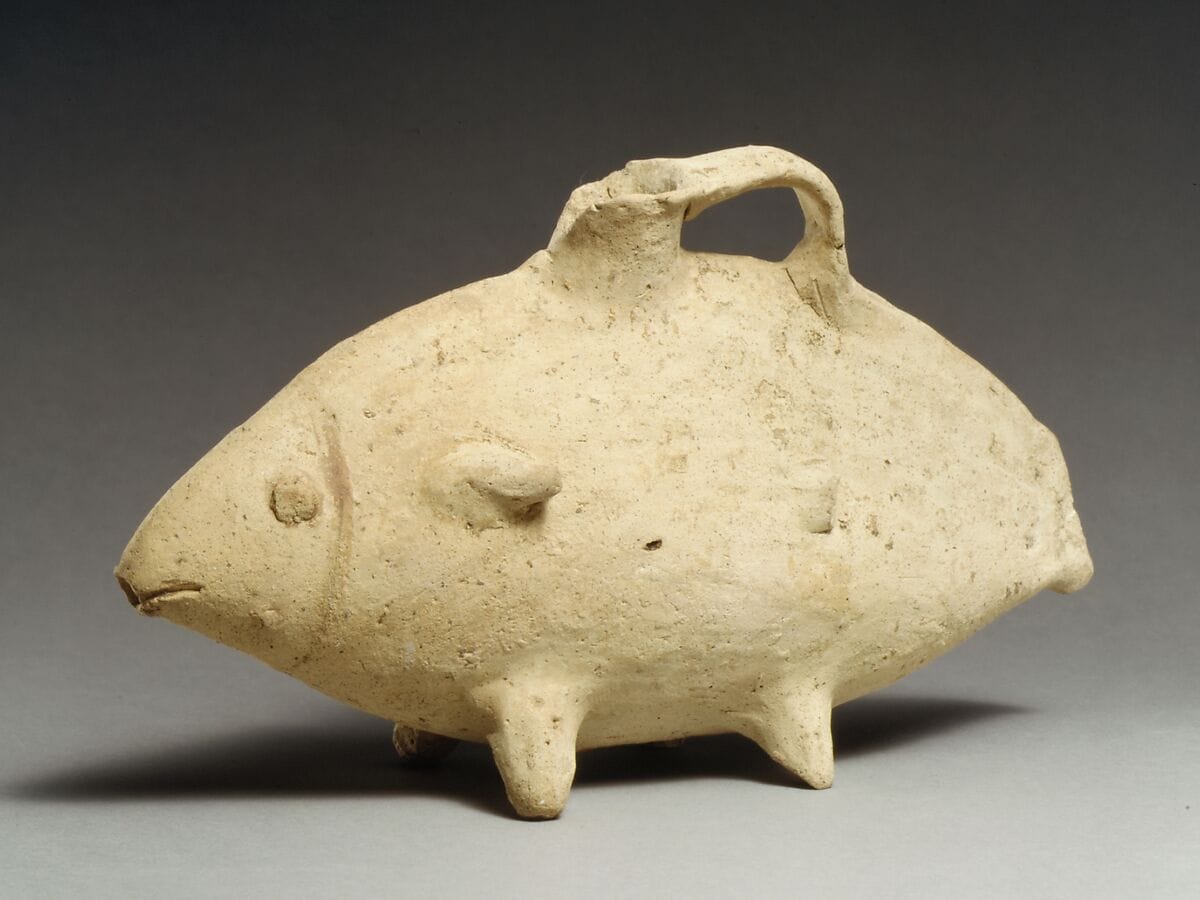
At the end of the Bronze Age a potter modelled a whole vessel as a fish. The Met's terracotta askos in the form of a fish (74.51.788), 27.8 cm long and 15.9 cm high, is dated Late Cypriot III, c. 1200-1175 BCE. It came from the Cesnola collection without a findspot. In Cypro-Geometric I, a Met terracotta tripod (74.51.437) has a man between two fish on one of its legs and a man between two small quadrupeds on another; the Met's label links it to the four-sided bronze stands made in Cyprus at the very end of the Bronze Age, which combine local and Aegean imagery.
The motif had a parallel afterlife further east. Laura Meiberg notes that birds and fish "have a long history in the ceramic traditions of the Minoans and Mycenaeans in the Late Bronze Age Aegean", and both reappear in the figural repertoire of Philistine pottery, where the fish is much rarer than the bird [6, p. 14].
The bird and the fish in Cypro-Archaic painting
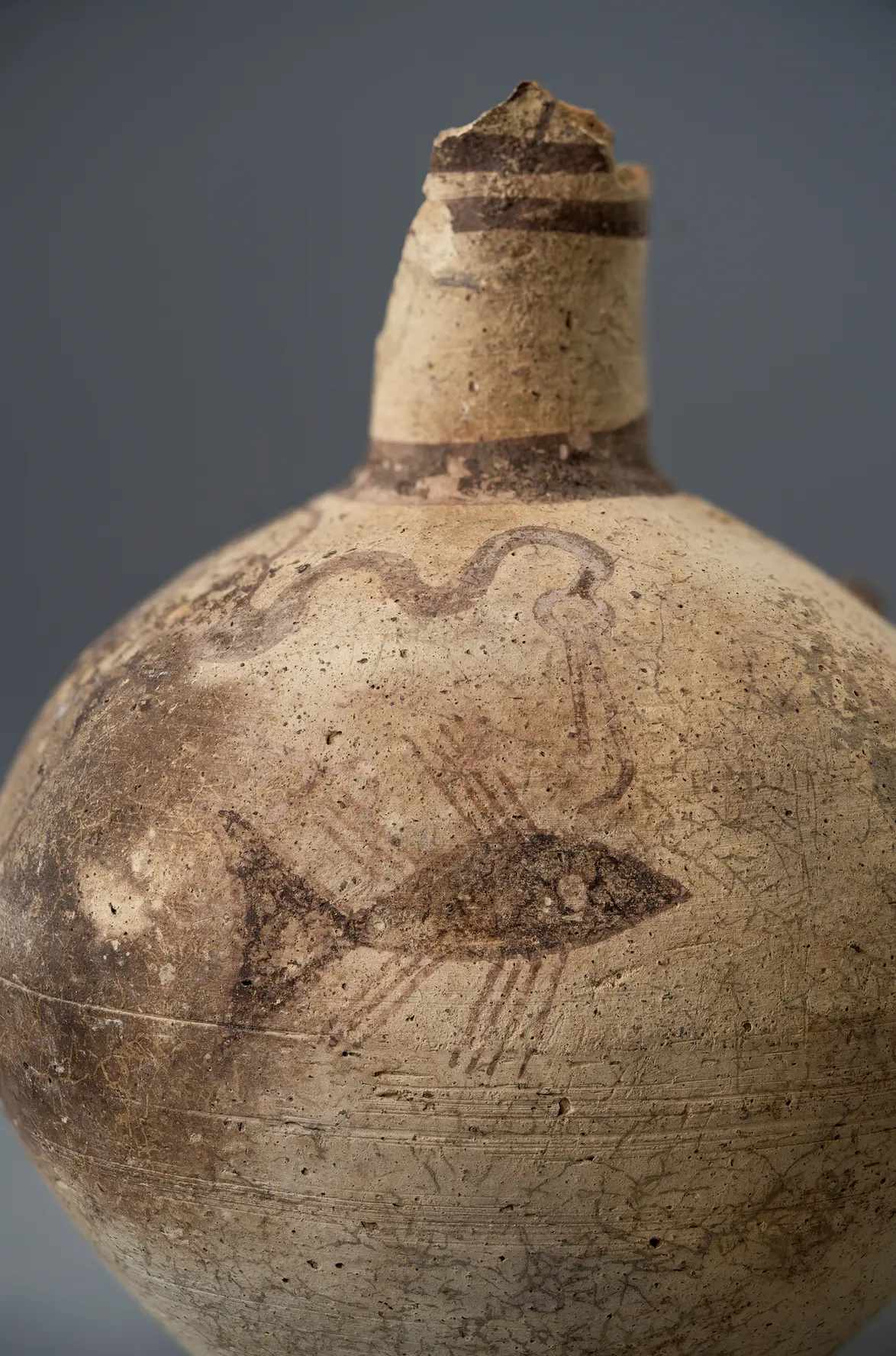
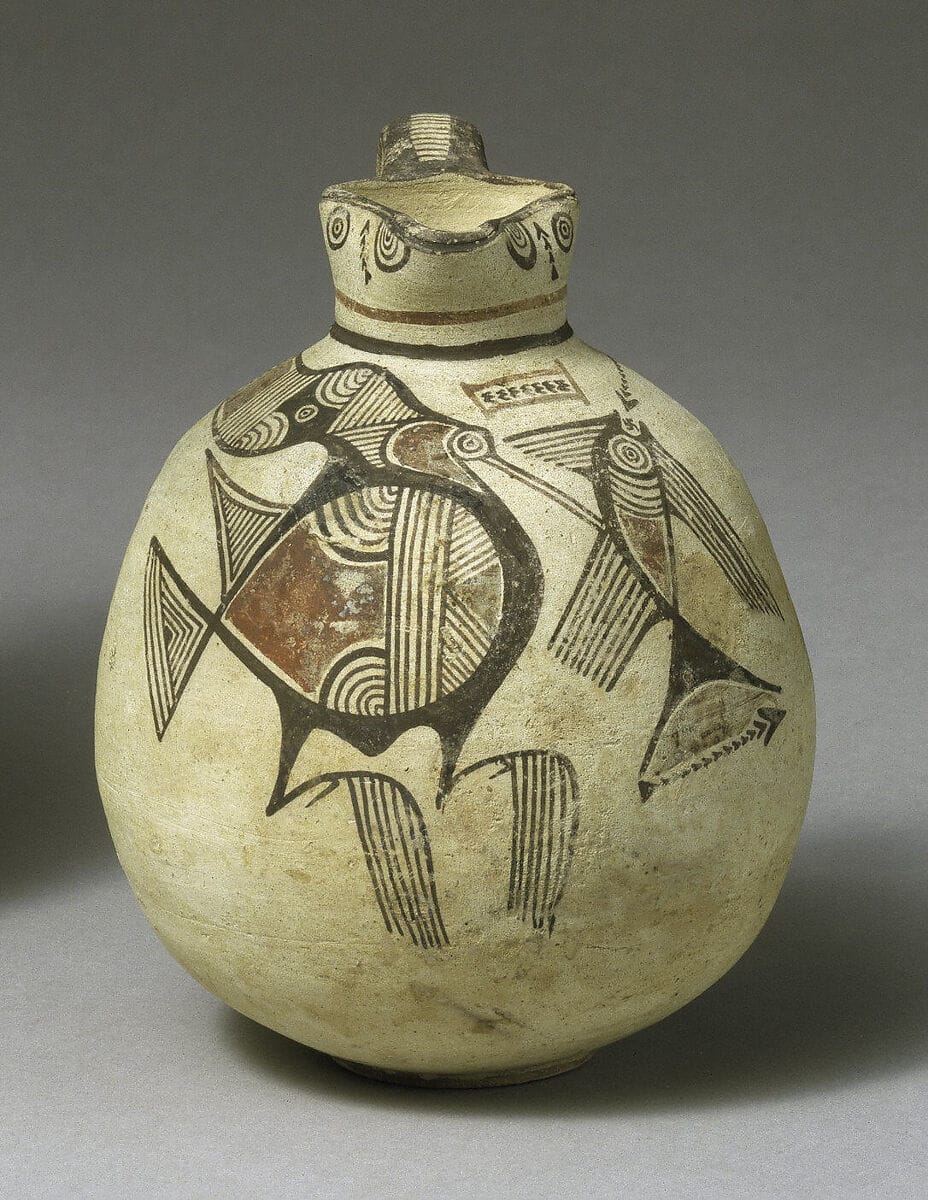
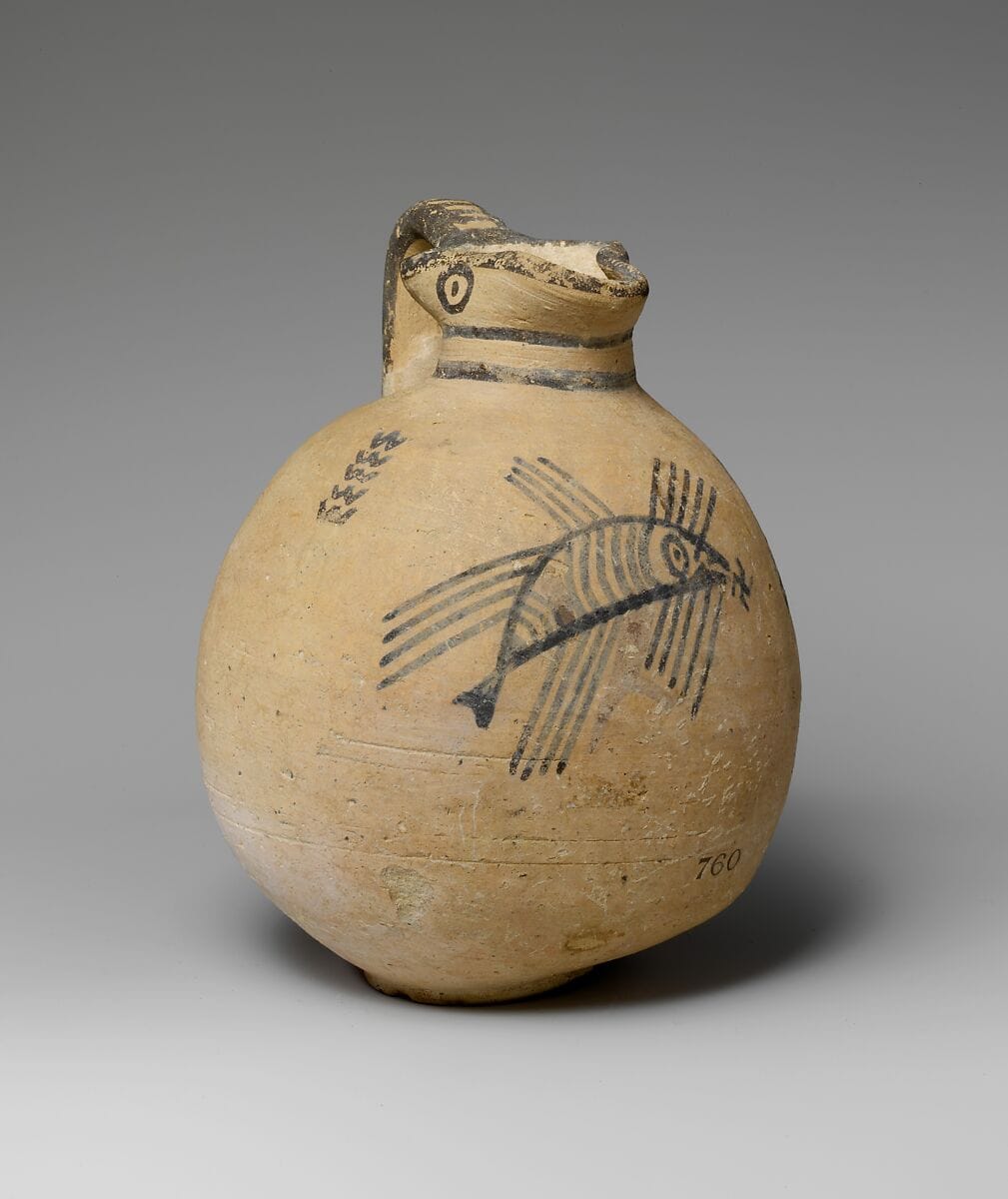
Fish return in strength in Cypro-Archaic I (c. 750-600 BCE), on Bichrome IV and White Painted IV jugs. The commonest composition is a bird catching a fish. The Drakopoulos Bichrome IV jug with a waterfowl catching a fish, 15 cm high, has a long-necked waterbird with a hatched and cross-hatched body reaching across the shoulder toward a dark-bodied fish; the two animals sit far apart and the bird's neck joins them. The Met's Cesnola jug 74.51.527 (record), 26.8 cm high, shows the same encounter, and a second Met jug, 74.51.534 (record), 18.9 cm high, carries a fish on its own. The guide to the Cyprus Museum lists, among the free-field "bird-jugs" from a cemetery near Ayios Iakovos, one that "shows a bird catching fish", and describes the style as "conventional but vigorous and extremely decorative", in black enhanced with red on a white ground to give "a trichrome effect" [7, p. 76].
Caubet looked closely at the fish of the Salamis group. On a krater in the Louvre, the body proportions, the profile of the fins and the two barbels identify the fish as a red mullet, the popular barbouni of Cypriot tables [1, pp. 92-93]. On a series of small Bichrome IV kraters or footed bowls, bird and fish are interchangeable: the central metope holds a bird, a fish or an open lotus, with small birds in the side metopes and a palmette or lotus at the edges of the central panel, so that the painter produced combinations of fish or bird with palmette or lotus [1, p. 93]. Fish with palmette is the commoner pairing; fish with lotus is the rarer one [1, p. 93]. For the lotus itself, see Lotus Flowers.
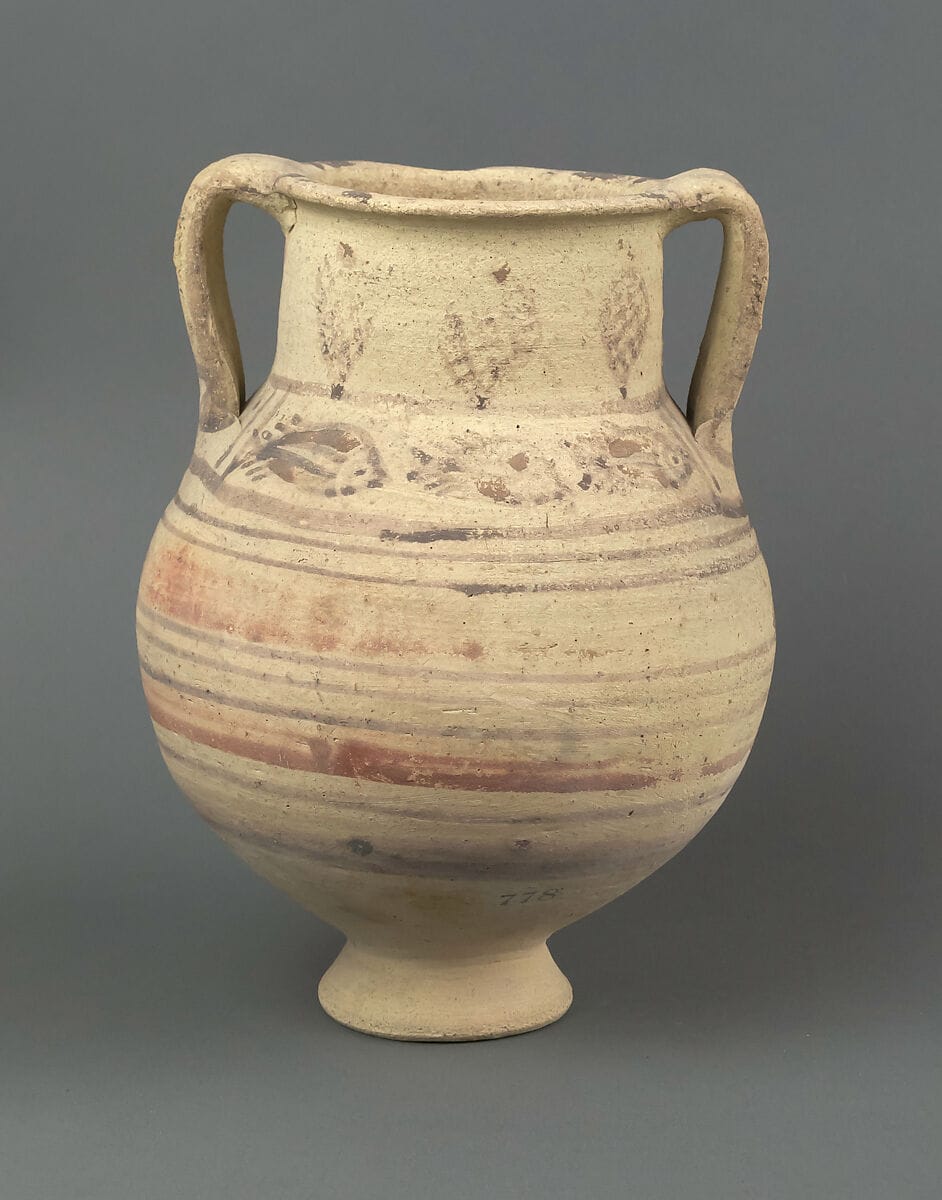
Fish run on into Cypro-Archaic II (c. 600-480 BCE). A Met wide-mouthed amphora (74.51.524), 20.5 cm high, has a frieze of fish on the shoulder. A clay votive shield (74.51.5882), 16.5 cm across, belongs to a class of shield models placed in sanctuaries and tombs; the Met describes it as unique because it is decorated with fish. The site's articles on Cypriot free-field art and the journey of a free-field bird follow the bird side of the scene in more detail.
Black-on-Red fish-cups of the Paphos area
A separate group of fish belongs to the west of the island. Andres Reyes, mapping workshop groups in Archaic Cyprus, singled out "a group of Cypriot, Black-on-Red-ware cups" that "uses outline drawings of fish as the principal decorative motif". The cups are distinctive to the area around Paphos: besides Kouklia (Palaepaphos), examples are known from nearby Tala and from Soloi [8, p. 63]. His illustrated example is a fish-cup from Palaepaphos in the Ashmolean Museum (1888.1513), 28.5 cm high, in Black-on-Red I (III) ware [8, pl. 27]. The group matters to Reyes as a diagnostic regional product: Gjerstad had observed that eastern Cypriot potters relied on figured decoration and western potters on geometric ornament, and the fish-cups are one of the groups that show figured work being made in the west as well [8, p. 63]. The ware is described in Black-on-Red Ware.
Octopus and other sea creatures
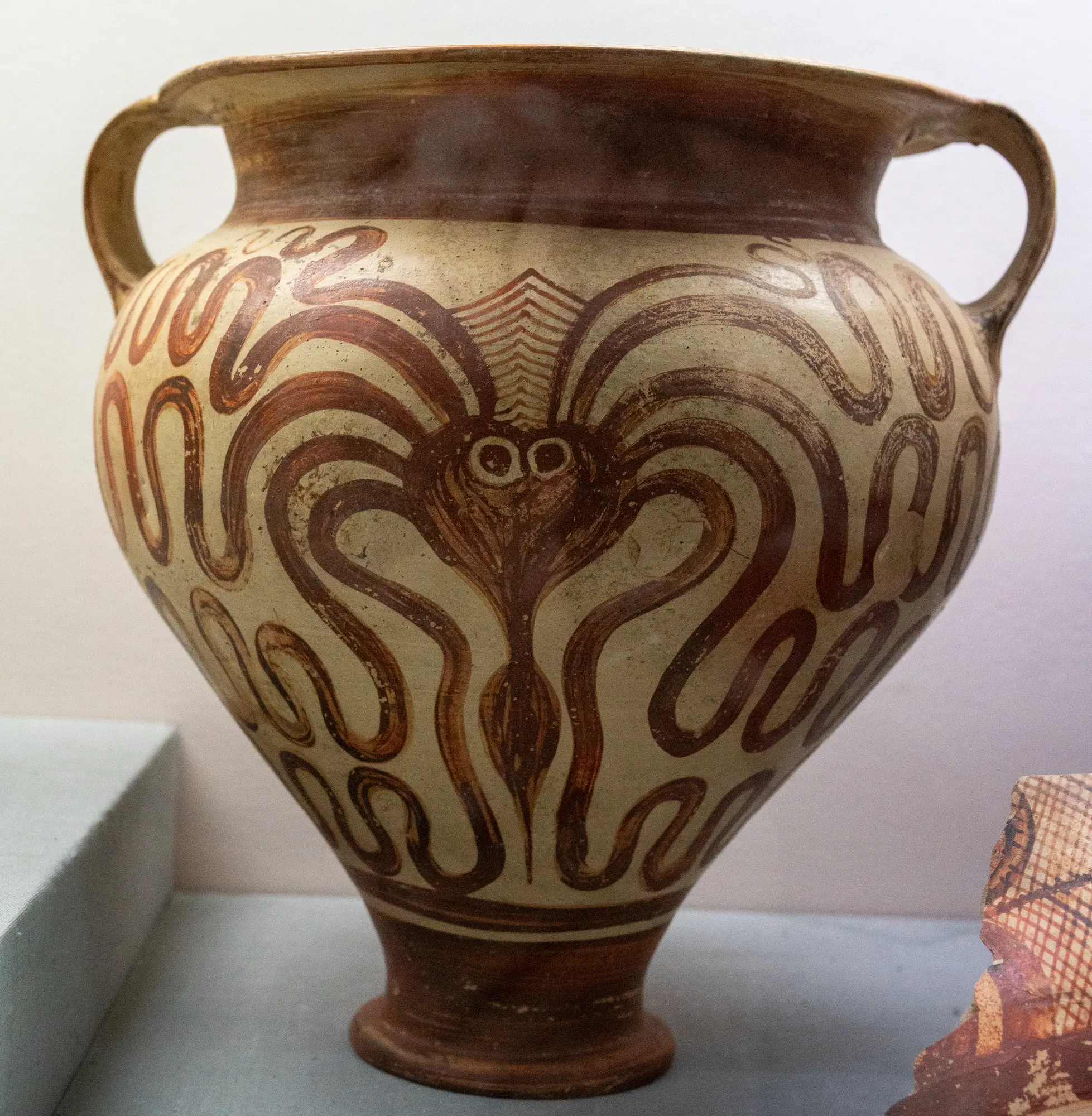
The octopus in Cyprus is an Aegean import. Leonard sums up the Aegean background: "the Cuttlefish (or Octopus) Motive is of Minoan origin". Minoan painters drew it in two ways, either with the tentacles spread naturally and the creature's face kept, or with two tentacles on each side stretched round the vessel as wavy lines to form a zone. Both versions reached the Greek mainland in LH IIIA; LH IIIB favoured the zonal version; and in LH IIIC the motif "takes on a new and more elaborate life, especially on stirrup jars of the (LH IIIC Middle) 'Octopus Style'" [5, p. 82]. Because the octopus was so popular on both Crete and the mainland, Leonard warns that "it is often quite difficult to confidently assign a particular vessel to a workshop in either" [5, p. 82]. R. E. Jones, reviewing the scientific evidence, notes that octopus-decorated stirrup jars appear at the end of the period and that "in LM IIIC the Octopus Style takes root in the Aegean" [9, p. 246].
The octopus vases in the catalogue are museum pieces from Cyprus whose labels call them Minoan, an attribution that Leonard's caution makes hard to test from a photograph. The Larnaca District Archaeological Museum displays a jar with a finely detailed octopus found on Cyprus, a damaged kylix with an octopus, and a further imported jar with an octopus. The Cyprus Museum in Nicosia shows a krater with an octopus labelled Minoan. These belong with the Aegean imports discussed in Minoans and Mycenaeans.
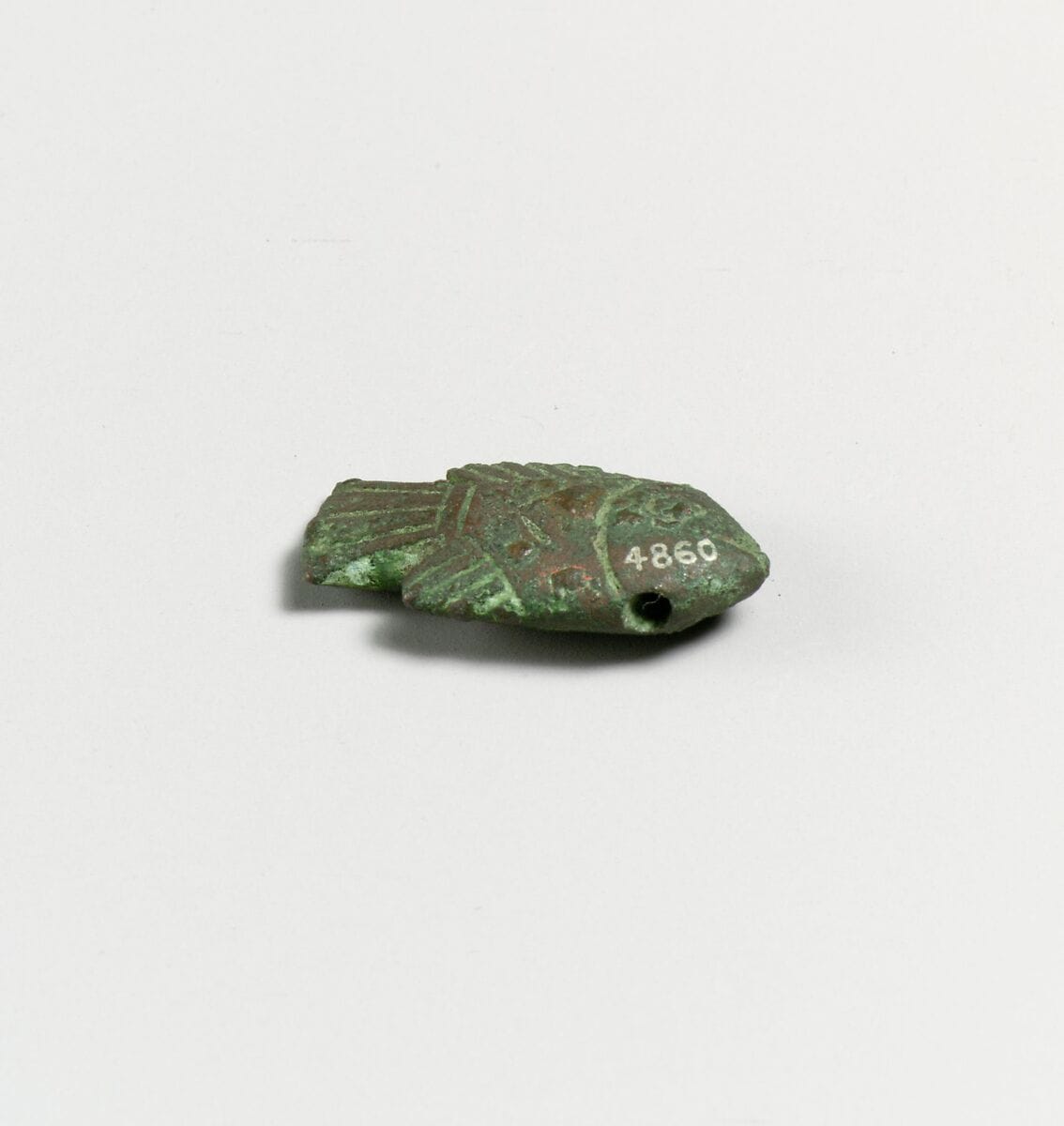
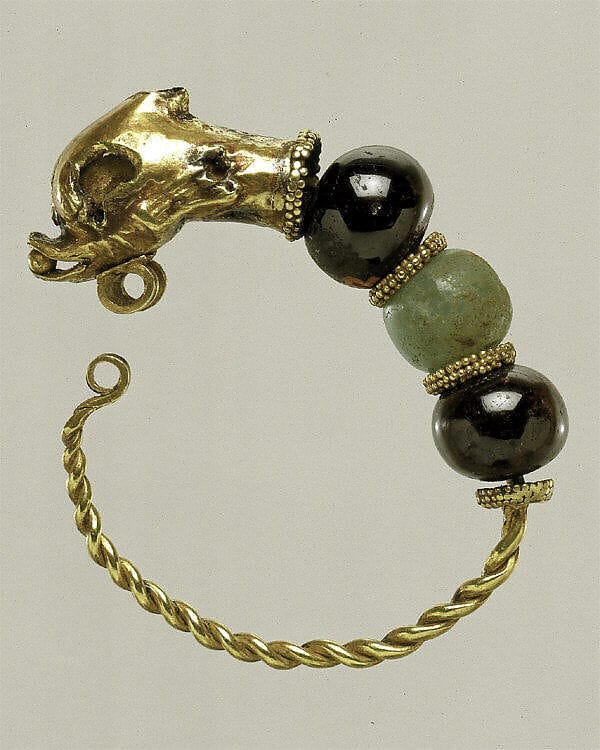
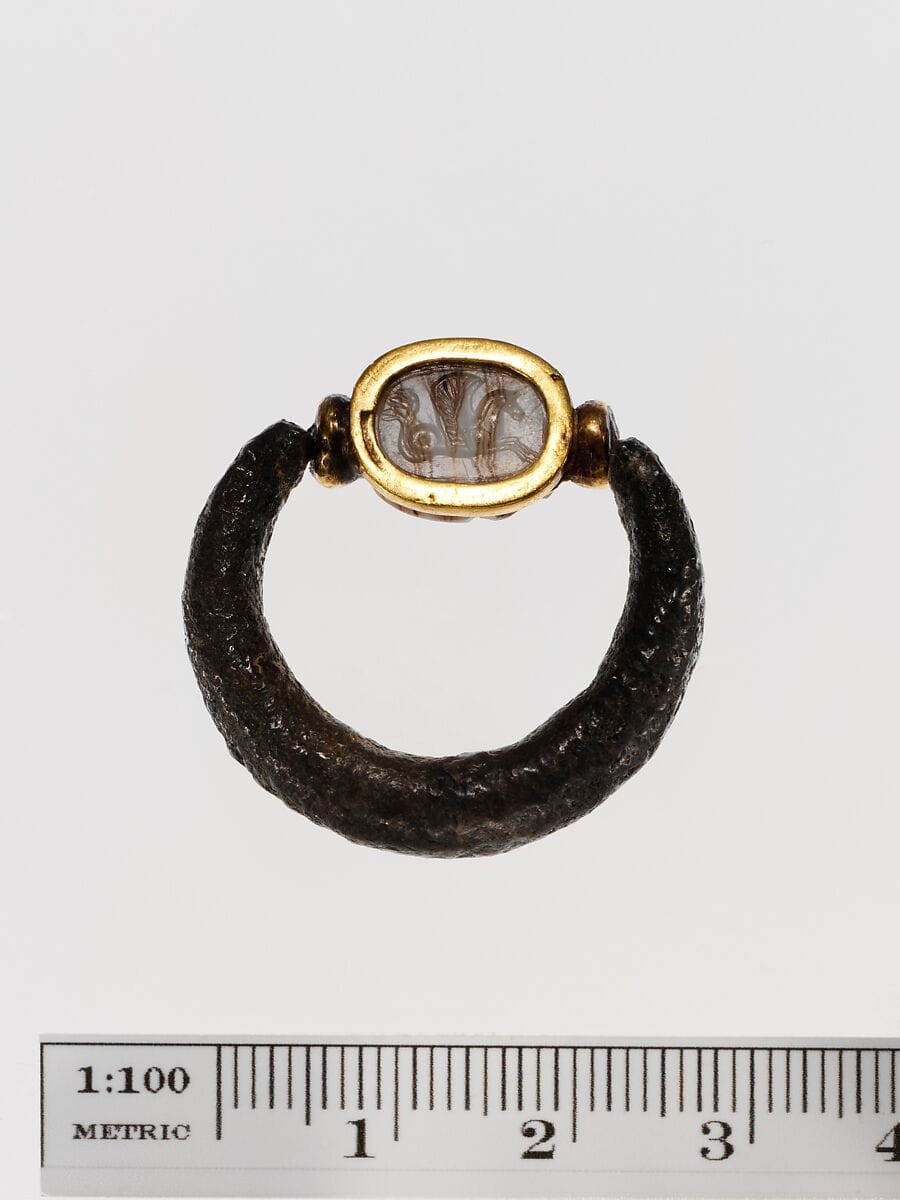
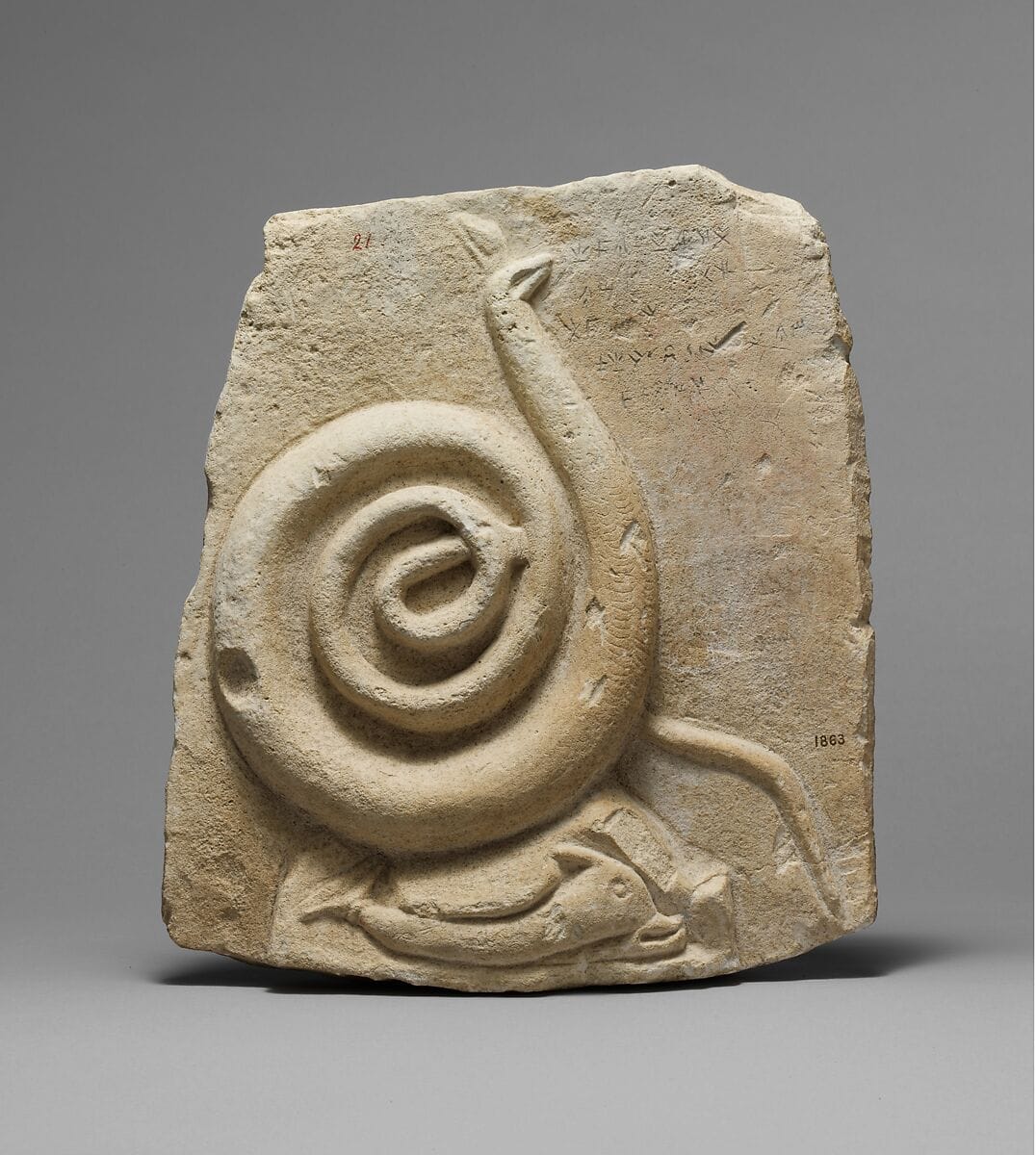
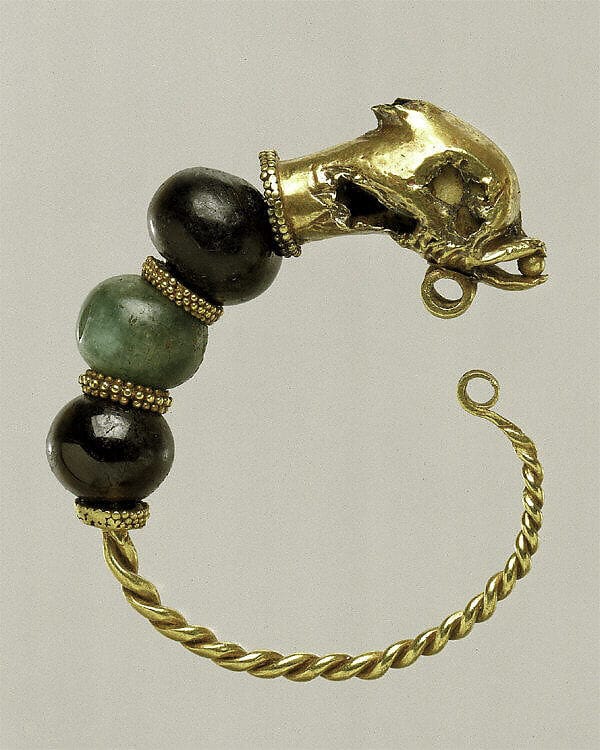
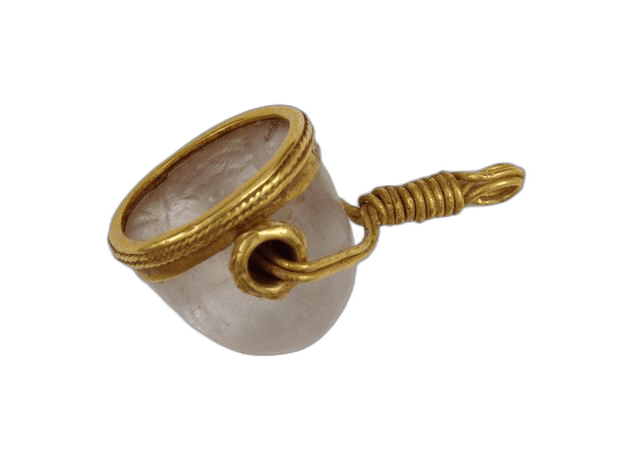
Dolphins and other marine animals are later and mostly off the pot. The Kalavasos krater's dolphin-like fish are the Bronze Age forerunners [4, p. 230]. In the Met, a pair of Hellenistic gold, beryl and garnet earrings end in dolphin heads, and an Early Hellenistic (c. 325-200 BCE) limestone relief fragment shows a snake and a dolphin. A rock-crystal cone seal in the British Museum (1893,1116.1), dated broadly 600-300 BCE, is engraved with a sea urchin between two palm trees with a fish above. A small Cesnola pendant in the form of a fish, 2.8 cm long, is undated.
Where the Cypriot fish came from
The Late Bronze Age fish and octopus are the easier case: they arrived on Aegean pots and descend from Minoan marine painting [4, p. 230; 5, p. 82]. The Cypro-Archaic fish have a different source. Caubet argued that the pairing of fish and lotus, odd in Cyprus, is familiar in Egypt, where the Tilapia nilotica holding lotus stems is a frequent image on blue faience bowls made from the Eighteenth Dynasty to the Third Intermediate Period [1, p. 93]. Such bowls were traded and imitated in the Levant and in Cyprus: one from Enkomi with a boat on water and a floating fish is Late Bronze Age, and a later bowl in the Louvre, perhaps found at Kition, shows a tilapia with a lotus stem in its mouth [1, p. 93]. On her reading, the Salamis painter kept the composition and replaced the Nile fish with a sea creature he knew, a rock fish [1, p. 93]. The idea that the bird-and-fish scene is Nilotic in origin and was adapted to Cypriot taste is also discussed in Free-Field Art. Whether the fish carried a religious meaning on Cypriot vases is a separate question that Caubet raised at the end of the same discussion and left open [1, p. 93].
Objects on this page
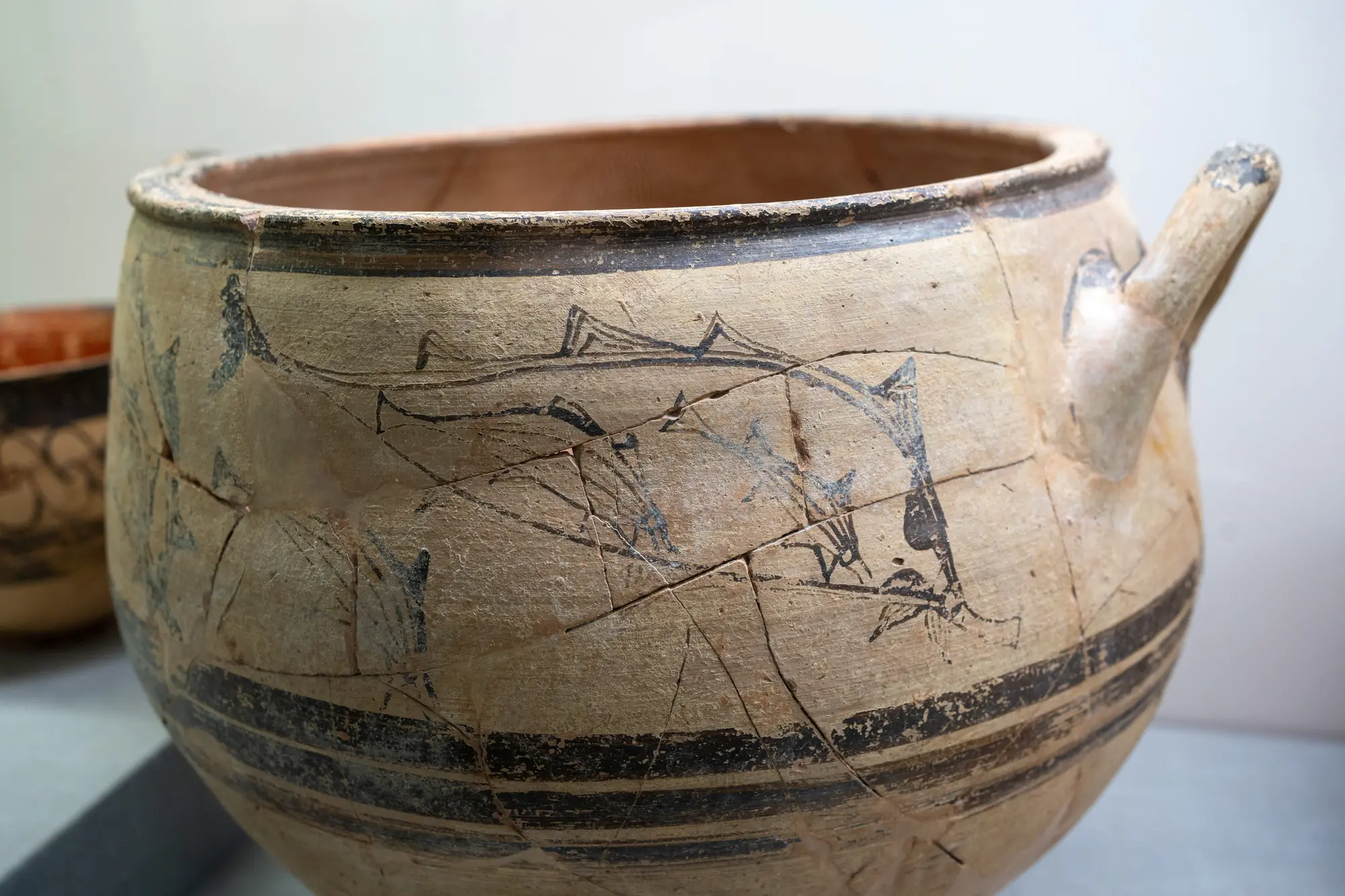 Mycenaean KraterLate Bronze Age II · 1600–1050 BC
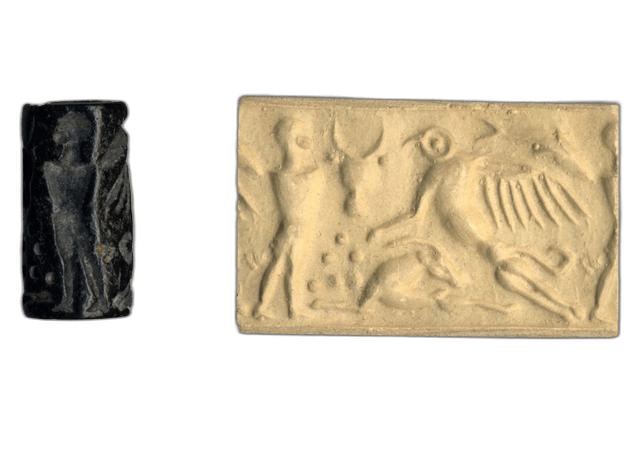 Chlorite Cylinder SealLate Bronze Age II · 1600–1200 BC
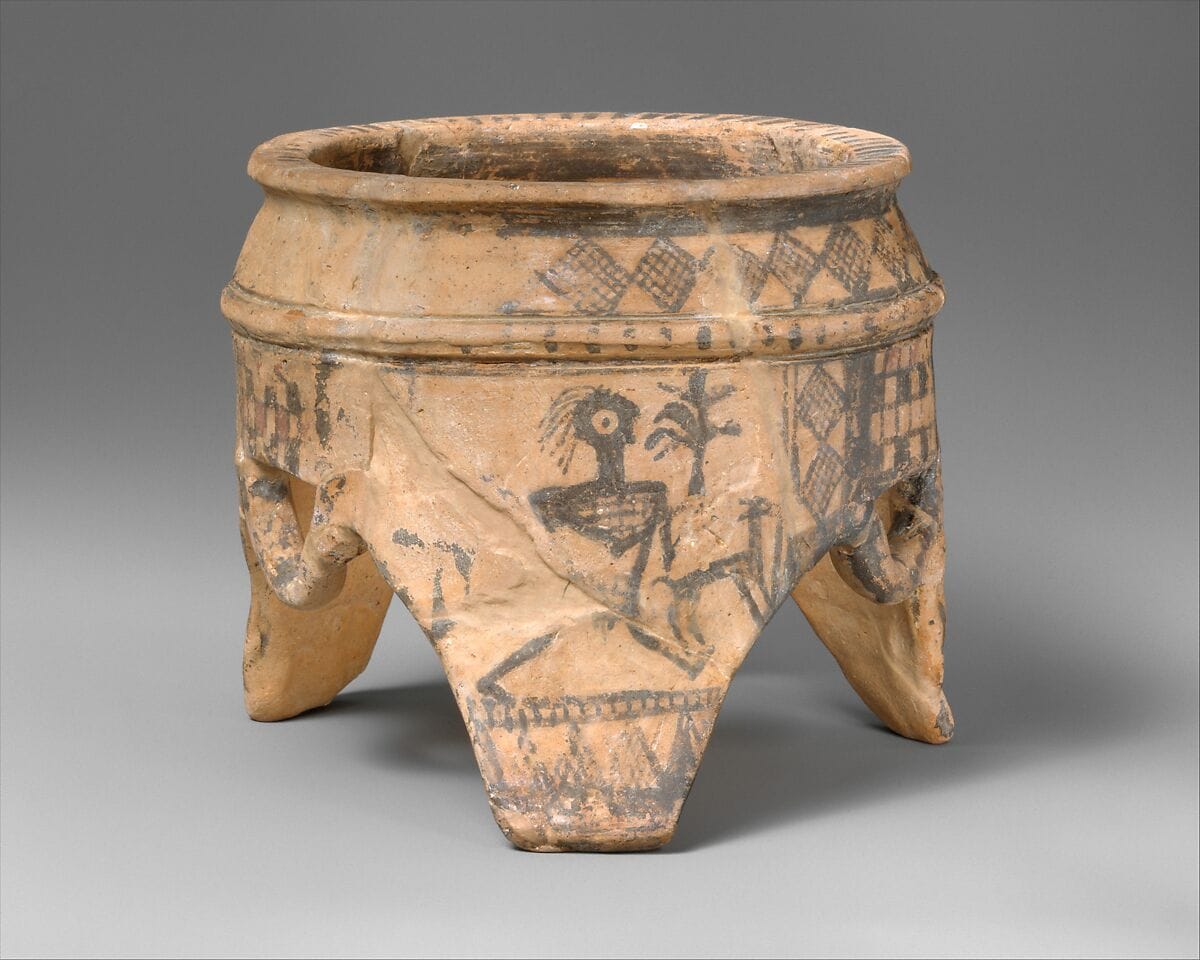 Terracotta tripodGeometric I · 1050–950 BC
 Bichrome IV Jug with a Waterfowl Catching a FishArchaic I · 750–600 BC
 Terracotta jugArchaic I · 750–600 BC
 Terracotta jugArchaic I · 750–600 BC
 AmphoraArchaic II · 600–480 BC
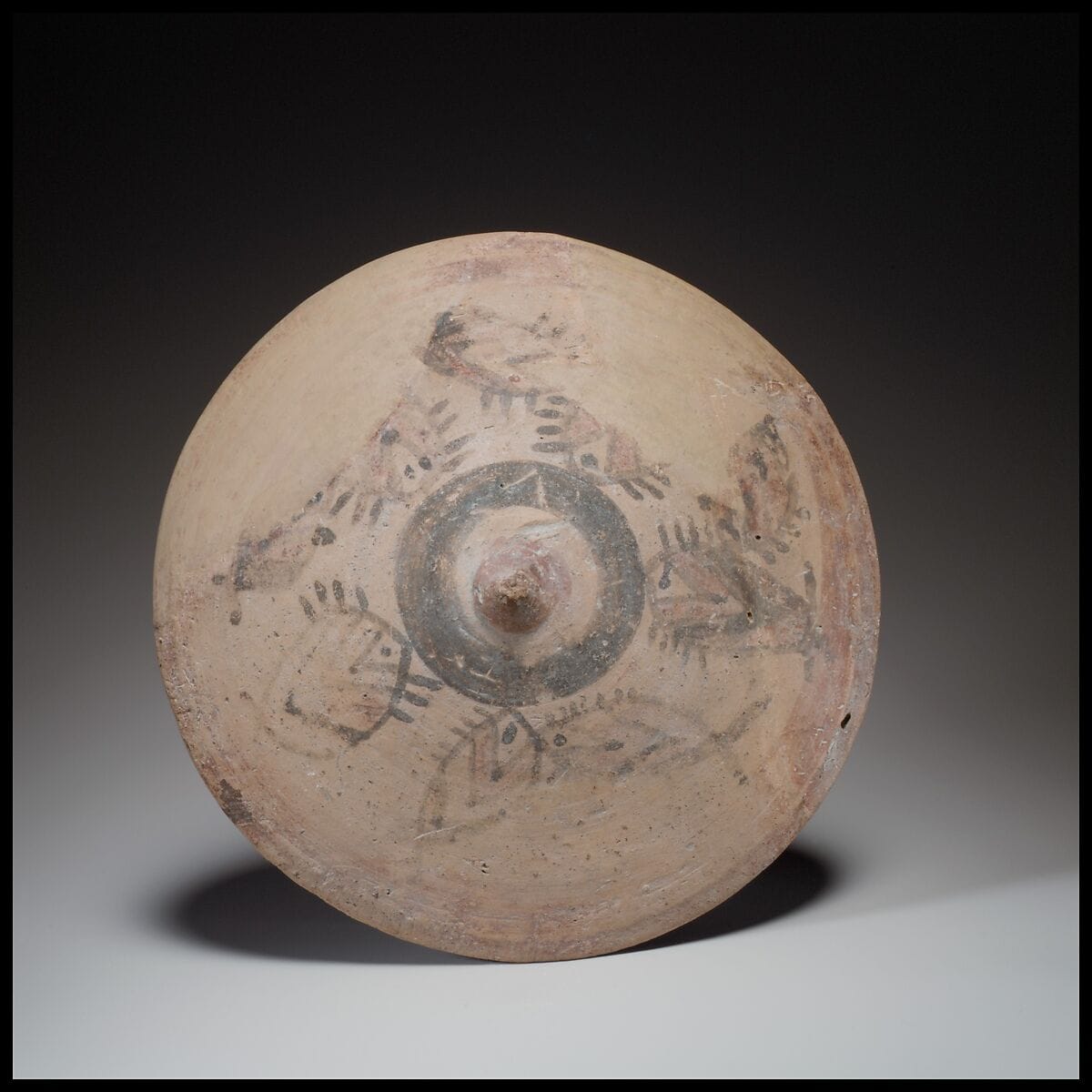 Votive shieldArchaic II · 600–480 BC
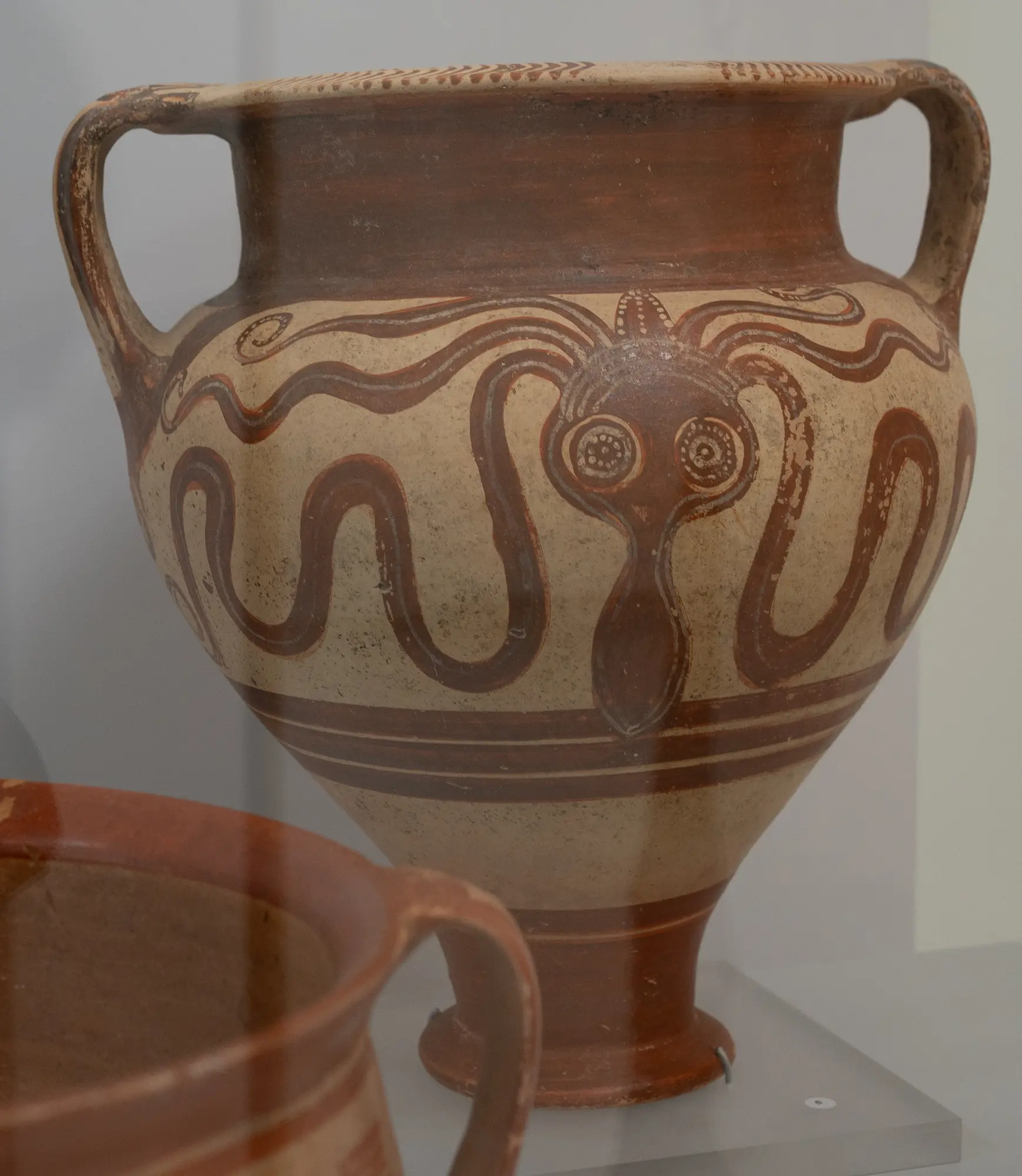 Minoan Octopus JarLate Bronze Age I · 1600–1300 BC
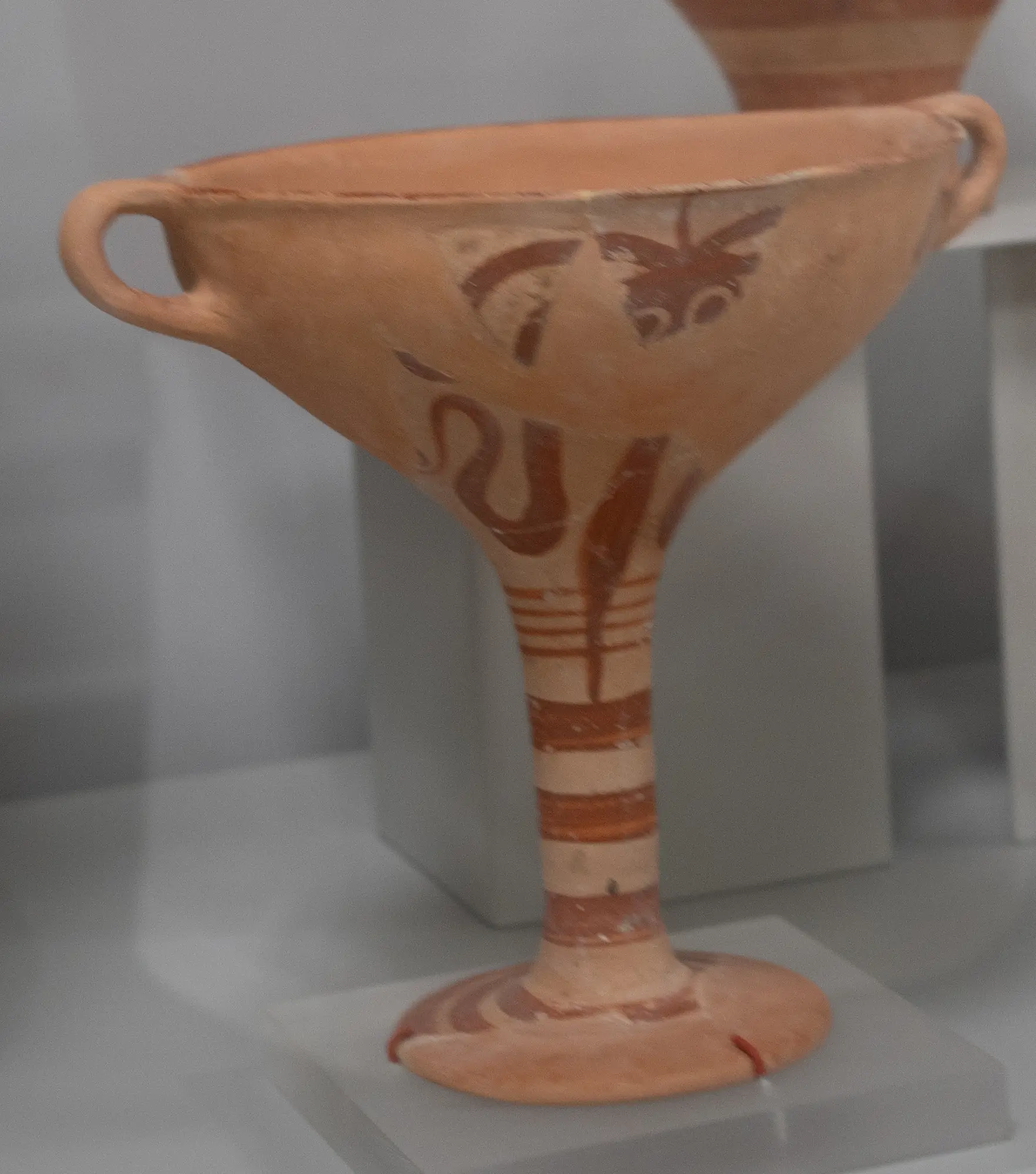 Octopus KylixLate Bronze Age I · 1600–1300 BC
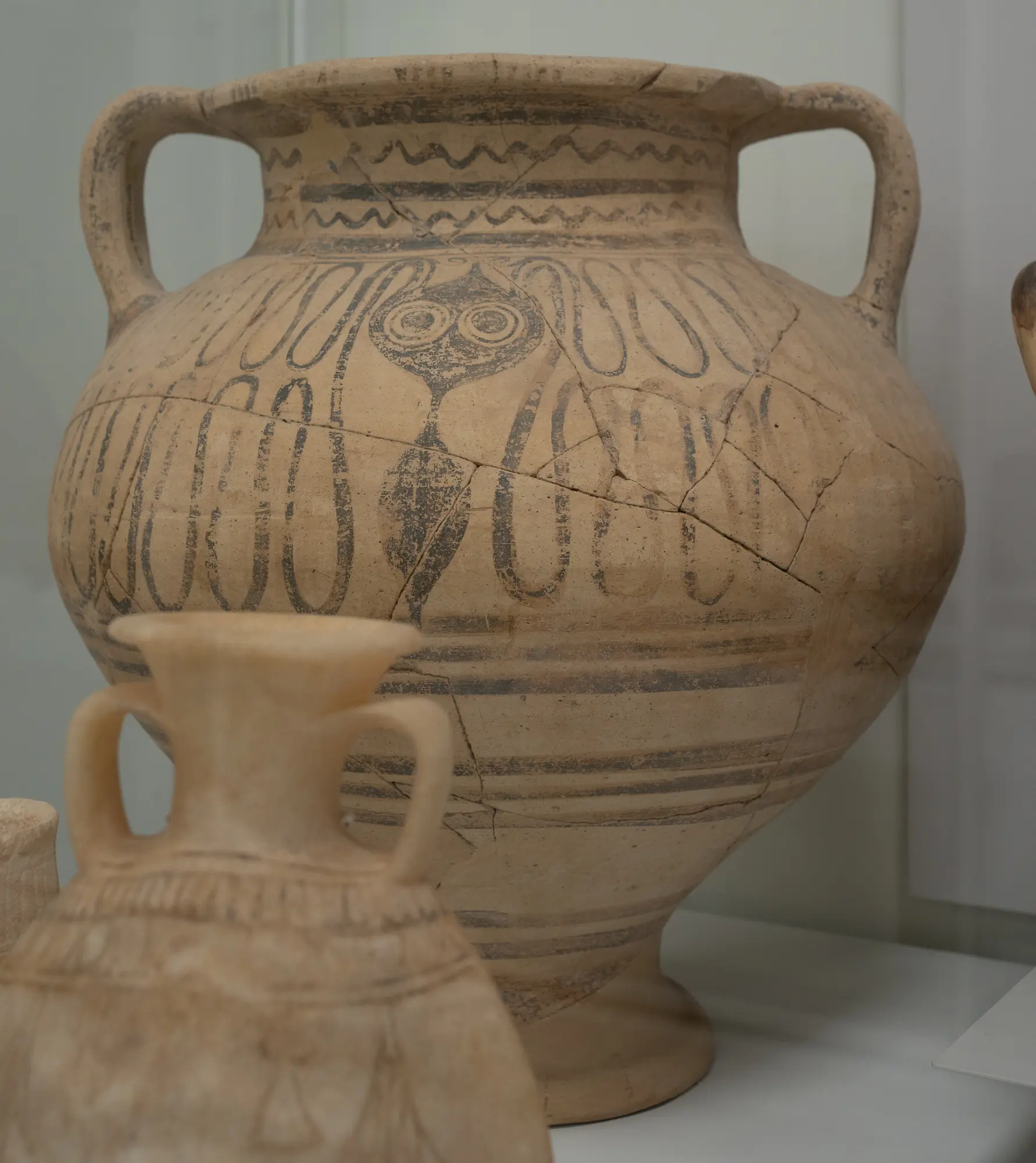 Minoan Octopus on JarLate Bronze Age I · 1600–1300 BC
 Minoan KraterLate Bronze Age I · 1550–1450 BC
and 4 more objects mentioned on this page
In the catalogue
References
- 1.Caubet, A. (2005). Le lotus, le tilapia et le rouget barbet. Cahiers du Centre d'Études Chypriotes, 35, 89-97. https://www.persee.fr/doc/cchyp_0761-8271_2005_num_35_1_1477
- 2.Karageorghis, V. (1990). The A. G. Leventis Foundation and the Cultural Heritage of Cyprus. Athens: A. G. Leventis Foundation.
- 3.Karageorghis, V. (2003). Ancient Cypriote Art in the National Archaeological Museum of Athens. Athens: A. G. Leventis Foundation and National Archaeological Museum.
- 4.Pilides, D., & Papadimitriou, N. (Eds.). (2012). Ancient Cyprus: Cultures in Dialogue. Nicosia: Department of Antiquities, Cyprus.
- 5.Leonard, A., Jr. (1994). An Index to the Late Bronze Age Aegean Pottery from Syria-Palestine (Studies in Mediterranean Archaeology 114). Jonsered: Paul Åströms Förlag.
- 6.Meiberg, L. G. (2011). Figural motifs on Philistine pottery.
- 7.A Guide to the Cyprus Museum. Nicosia: Department of Antiquities, Cyprus.
- 8.Reyes, A. T. (1994). Archaic Cyprus: A Study of the Textual and Archaeological Evidence (Oxford Monographs on Classical Archaeology). Oxford: Clarendon Press.
- 9.Jones, R. E. (1986). Greek and Cypriot Pottery: A Review of Scientific Studies (Fitch Laboratory Occasional Paper 1). Athens: British School at Athens.