
Research·Roundup
This Week in Cypriot Archaeology: 20–26 July 2026
The Kissonerga-Skalia excavation ends its season, a silver-plated coin of Salamis turns up on a beach at Ashdod, and a Kouklia sarcophagus showing Odysseus draws new attention.



The Akamas municipality announced the end of this year's season at the Bronze Age settlement of Skalia, outside Kissonerga. In Israel, a silver-plated coin struck at Salamis in the 5th century BCE was handed to the Israel Antiquities Authority after a beach official found it at Ashdod. A study of 229 people buried at Hellenistic and Roman Paphos compared the state of their teeth. And Christopher Nolan's coming film of the Odyssey brought renewed attention to the painted sarcophagus from Kouklia that shows Odysseus escaping the Cyclops.
Map of Cyprus
This week's stories
- Fieldwork
- Research
- Museums
- Ground above 200, 500, 1,000 m
Sites on this map
Fieldwork
On 25 July the Akamas municipality said the season at Skalia had closed, after councillor Neophytos Constantinou visited the team, which the Cyprus American Archaeological Research Institute and the HARP project field under Lindy Crewe. According to the municipality, the work added evidence for how the settlement grew between its founding around 2500 BCE and its abandonment around 1600 BCE, and strengthened the earlier case for brewing there. That case goes back to Crewe's earlier excavations at Skalia, begun in 2007: in 2012 she and Ian Hill argued that a domed installation in a courtyard was a drying kiln used in making beer, while granting that their study offered no concrete proof. The village, one of the prehistoric sites of Kissonerga, was abandoned on the threshold of the Late Bronze Age.
Research
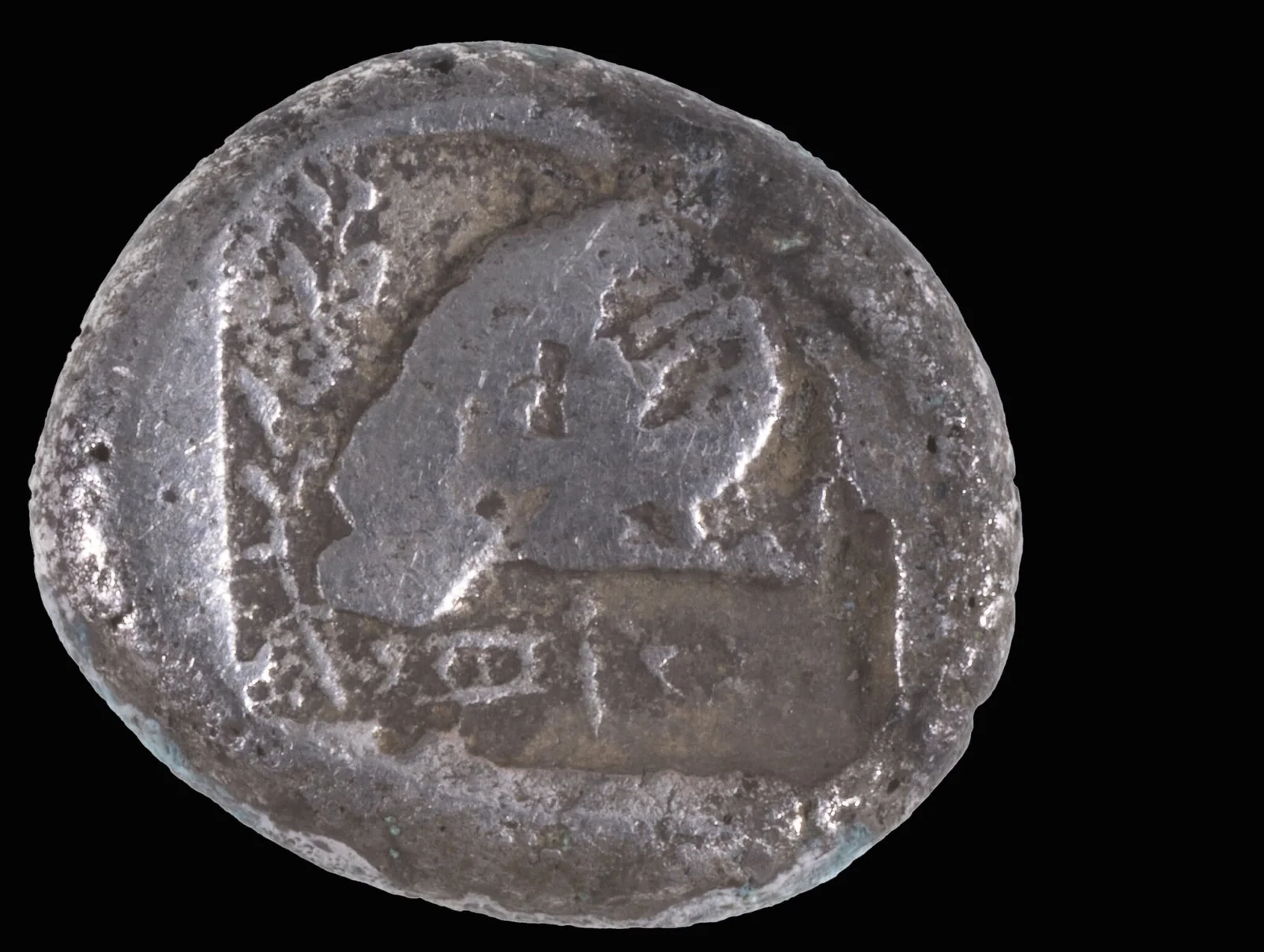
The Israel Antiquities Authority reported on 26 July that Avi Chaprak, deputy director of Ashdod's beaches department, had picked up an ancient coin on the shore about a month before while searching for jewellery lost by bathers, and had passed it to the Authority as Israeli law requires. Its experts identified the coin as a siglos, weighing about 11 g, from the mint of Salamis, and dated it to the middle of the 5th century BCE, when Cyprus was under Persian rule. A reclining ram fills one face; the other has a ram's head with a laurel branch and three signs. Silver on the outside, the coin has a base-metal core, a practice the Authority's coin department links to a shortage of silver on the island. The ram goes back to the first royal coins of Salamis, struck under King Evelthon around the end of the 6th century BCE. Evangeline Markou of the National Hellenic Research Foundation in Athens, a specialist in Cypriot coinage, said fifth-century Salamis coins circulated across the eastern Mediterranean but finds with an exact findspot are rarer, so this one may inform the study of trade between Cyprus and the southern Levant.
Grigoria Ioannou of the Cyprus Institute has examined the teeth of 229 people buried at Nea Paphos in the Hellenistic and Roman periods (312 BCE–395 CE), in a paper published online on 22 July in the International Journal of Osteoarchaeology, volume 36, issue 4 (DOI). At least 97 individuals come from the Eastern Necropolis and at least 132 from the cemetery of the Upper City at Ktima, in modern Paphos. Decay, tartar and abscess cavities at the roots were uncommon in both groups, while gum disease and teeth lost during life were frequent; the Ktima group had more dental disease overall, which Ioannou reads as a difference between the two populations, and men and women differed as well, often to a statistically significant degree. She presents the paper as the first look at Hellenistic and Roman diet and social differences in Cyprus by site and sex, and proposes isotope, tooth-wear and tartar studies of larger Cypriot samples as the next step.
Museums
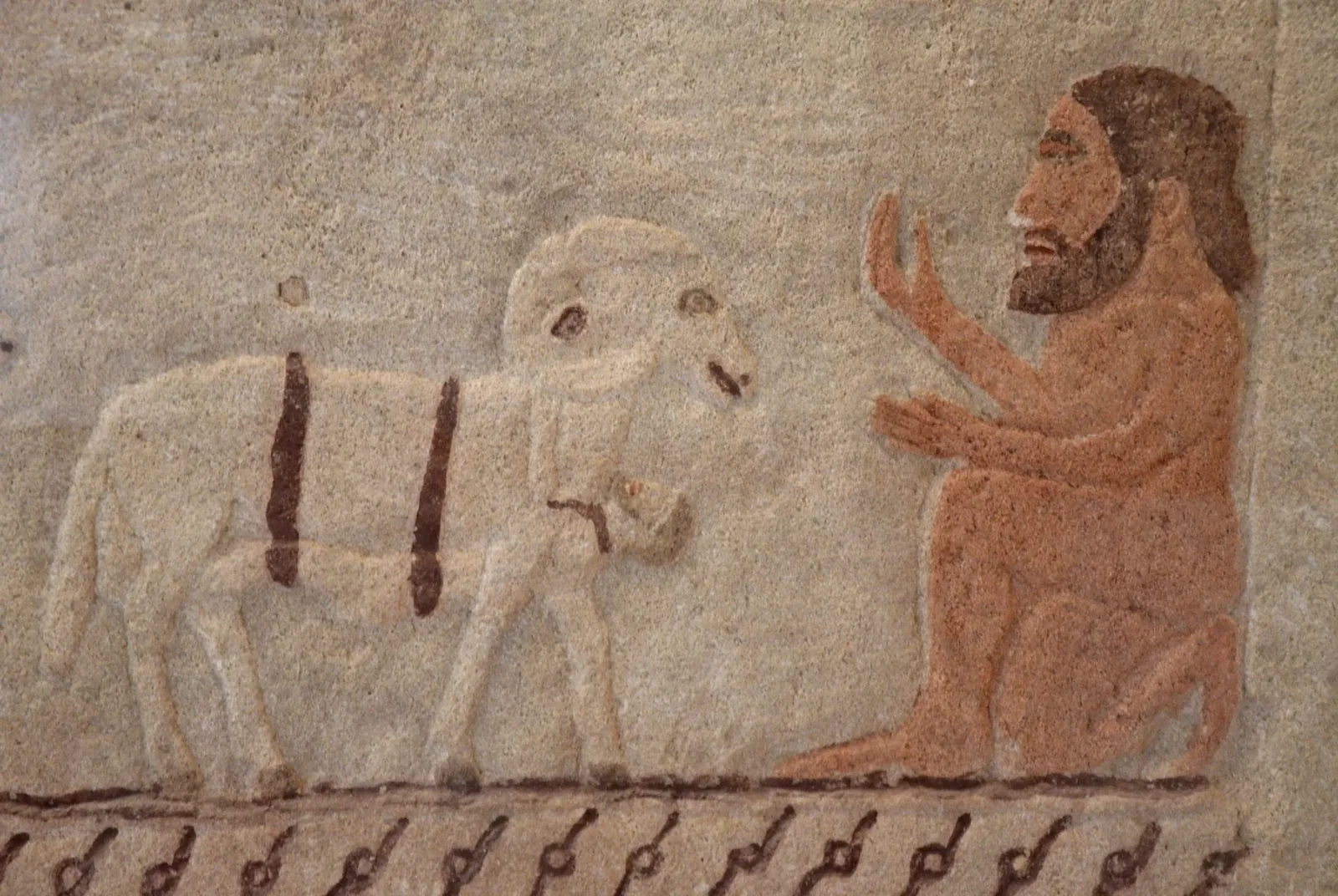
The limestone sarcophagus was found in 2006 at Kouklia, the village on the site of Palaepaphos, by the archaeologist Efstathios Raptou. One long side is thought to show the siege of a city, with Heracles taking part; the opposite side shows Odysseus and his companions getting away from the cave of the Cyclops Polyphemus. The Department of Antiquities dates the coffin to the early 5th century BCE and sees in it strong evidence that the Homeric poems were known on the island by the beginning of the Classical period. It is on display in the Palaepaphos Local Museum.
Original sources
- Cyprus Mail: Excavations at Kissonerga uncover one of Cyprus' oldest Bronze Age settlements
Press·
- Cyprus Times: Significant finds at the Skalia archaeological site in Kissonerga
Press·
- Times of Israel: Beach worker searching for lost items finds rare 2,500-year-old Cypriot coin
Press·
- Haaretz: Debased Cypriot coin from 2,500 years ago found on Israeli beach
Press·
- Ioannou, G.: Dental disease and dietary differences in populations of Nea Paphos, Cyprus, during the Hellenistic and Roman periods (International Journal of Osteoarchaeology 36.4)
Paper·
- Sigmalive: Ancient Cyprus sarcophagus depicts scene from the Odyssey
Press·
On ancientcyprus.com
More in Research
- Wheat traces at Chlorakas-Palloures question the view that cereals were minor in Chalcolithic Cyprus
- Strabo's Arsinoe near Palaepaphos probably never existed, argues study of a Ptolemaic queen's cult
- Charred barley and chaff in a Pyla shaft point to stored animal fodder around 1200 BCE
- Late Bronze Age hoard of at least 111 bronzes at Galinoporni was packed in cloth, cord and grass
- Bronze Age tombs at Hala Sultan Tekke held what may be burnt bouquets of grain and wild flowers