
Research·Brief
Bronze Age tombs at Hala Sultan Tekke held what may be burnt bouquets of grain and wild flowers
Jugs in Tomb SS held barley, wheat, marigold and mallow burnt together; two other graves held barley, olive and grape left as food, a study in Levant reports.



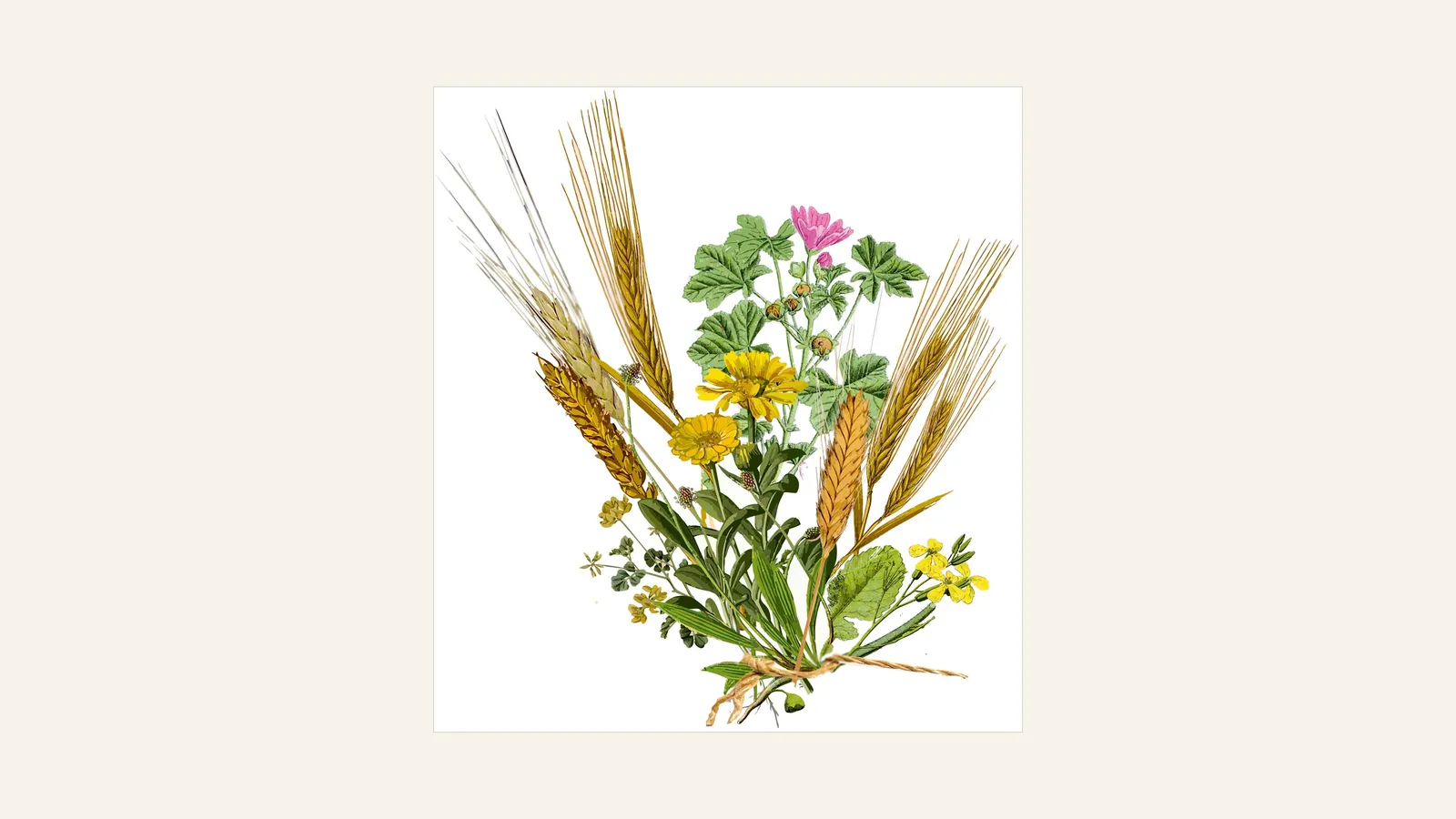
Charred seeds in pottery jugs from the cemetery of Late Bronze Age Hala Sultan Tekke, beside the Larnaca Salt Lake, may be the remains of bunches of cereals and flowering weeds burnt as offerings, two researchers argue. Teresa Bürge and Dominika Kofel set out the evidence in "The power of plants", published online by the journal Levant on 9 September 2026.
The samples come from four tombs in Area A, the cemetery outside the town, opened in 2020–2024 by the New Swedish Cyprus Expedition under Peter M. Fischer, and from a well in the settlement.
Flowers in the jugs
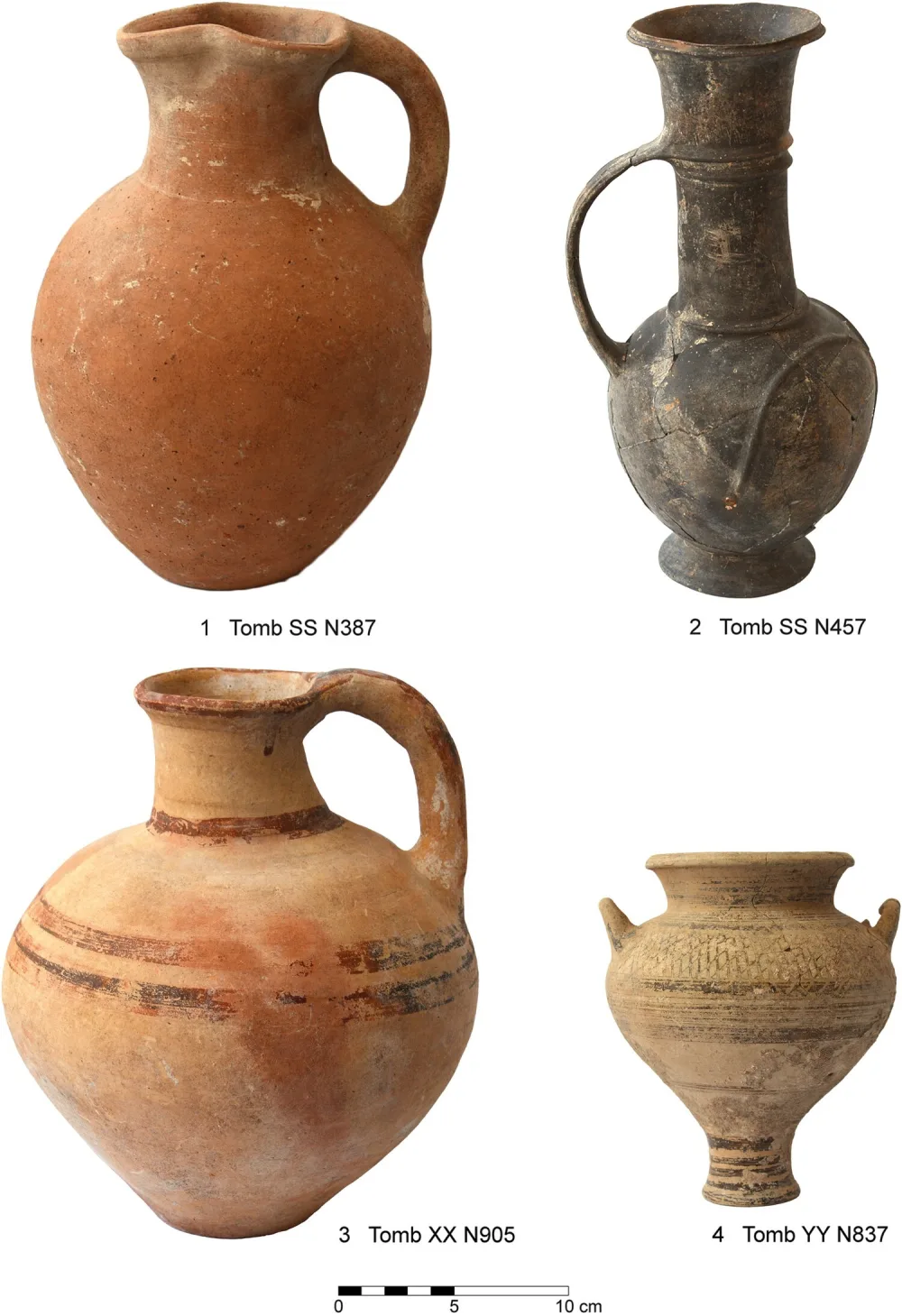
Tomb SS, a chamber about 4.5 m across in use from at least c. 1450 BCE, held more than 1,000 pots and pot parts, most thrown over the burials (Bürge's book describes it in full). Among them was a Plain ware jug, N387, with what the authors call one of the most varied plant assemblages yet published from Late Cypriot sites: barley and four kinds of wheat (emmer, einkorn, bread wheat and a spelt-like form) with their chaff and straw, oats, fig and lentil, and wild plants including field marigold, garland chrysanthemum, common mallow, wild radish and viola.
A Base Ring I jug from the same deposit, N457, held a smaller mix of the same kind, and a Mycenaean piriform jar in Tomb YY, N837, held cereals with croton, centaury and poppy. Grain with chaff, straw and twigs suggests to the authors that whole plants were burnt in bundles, perhaps made up like bouquets, then put in the vessels; the drawing above reconstructs the bunch in N387. The plants point to early summer, perhaps simply when the people died, perhaps a time of commemorations at reopened tombs near the harvest.
Meals for the dead
A clay structure in Tomb UU held 23 barley grains, a pistachio-like fruit fragment, a grape stalk and charcoal of cypress and of a cedar close to Lebanese cedar. In Tomb XX one sample held 18 barley grains, and a painted jug, N905, held cereals with an olive stone and a grape pip. The authors read these as food left with the dead, like the jugs of fish bones found earlier in Tombs RR and SS.
A well and a shaft in the town
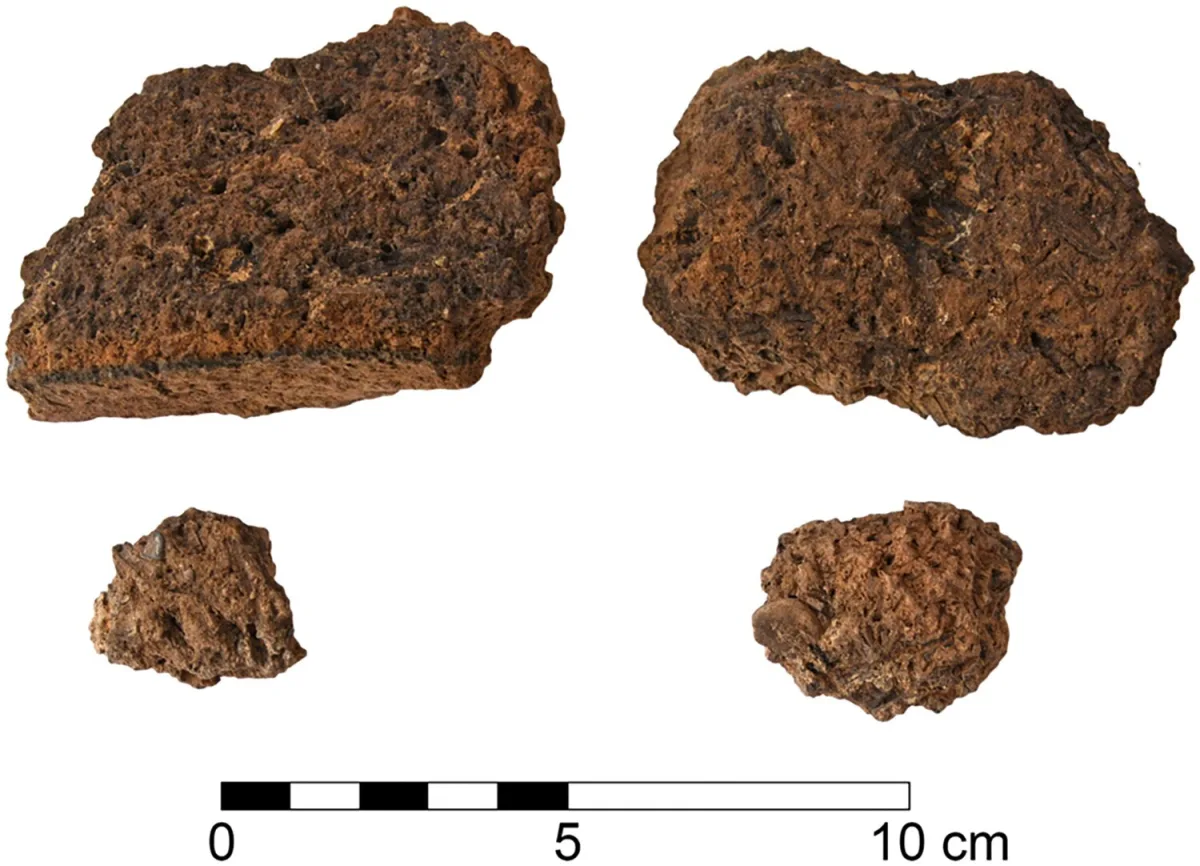
The same mix turned up in a well in City Quarter 3, dug in 2015 and assigned to the level of about 1200 BCE. Three small samples from separate ash layers held barley, emmer, an einkorn-like wheat, broken grape pips and corn chamomile, a white-flowered weed that is neither eaten nor used as a medicine. The authors find them unlike hearth waste and suggest offerings made when the well was closed.
The paper also returns to Shaft F 1070 in Area 8, dug in 1972, 1974 and 1975 by Paul Åström's Gothenburg mission and reported by Gunnel Hult. In 1979 the botanist Hakon Hjelmqvist identified about 730 uncharred grape pips there, probably of wild vine, with pomegranate, fig, caper and gladiolus. The authors consider these stored produce, stray fill or refuse, and allow that they may be food remains or offerings.
Original source
On ancientcyprus.com
More in Research
- Wheat traces at Chlorakas-Palloures question the view that cereals were minor in Chalcolithic Cyprus
- Strabo's Arsinoe near Palaepaphos probably never existed, argues study of a Ptolemaic queen's cult
- Charred barley and chaff in a Pyla shaft point to stored animal fodder around 1200 BCE
- Late Bronze Age hoard of at least 111 bronzes at Galinoporni was packed in cloth, cord and grass
- 48 carved stones near Kourion may come from an unknown Roman temple, study argues