
Research·Brief
Wheat traces at Chlorakas-Palloures question the view that cereals were minor in Chalcolithic Cyprus
Phytoliths from 25 soil samples at the village north of Paphos point to wheat as its main cereal, though the charred seeds are mostly figs, lentils and pistachio.



Microscopic silica from the Chalcolithic village of Chlorakas-Palloures, north of Paphos, points to wheat as its main cereal, although the charred seeds from the same soil are mostly figs, pistachio and lentils. Georgia Kasapidou, Bleda S. Düring, Kyriaki Tsirtsi, Evi Margaritis and Juan José García-Granero publish the results in the November 2026 volume of the Journal of Archaeological Science: Reports. They argue that cereals may have counted for more in Chalcolithic Cyprus than is now accepted.
The established view
A 2020 synthesis of prehistoric Cypriot farming by Lucas and Fuller held that cereals were much less central on the island than on the Levantine mainland, with fruit and perhaps pulses mattering more, and gathering supporting small-scale grain growing. The authors point out that this reading rests on charred plant remains, which survive poorly on Cyprus.
Seeds and phytoliths
The samples come from the Leiden University excavation that Düring has directed at the site since 2015, a rescue dig ahead of planned building. The study uses three trenches with houses, pits and ash dumps of the Middle and Late Chalcolithic; three radiocarbon dates from them fall between about 3070 and 2460 BCE.
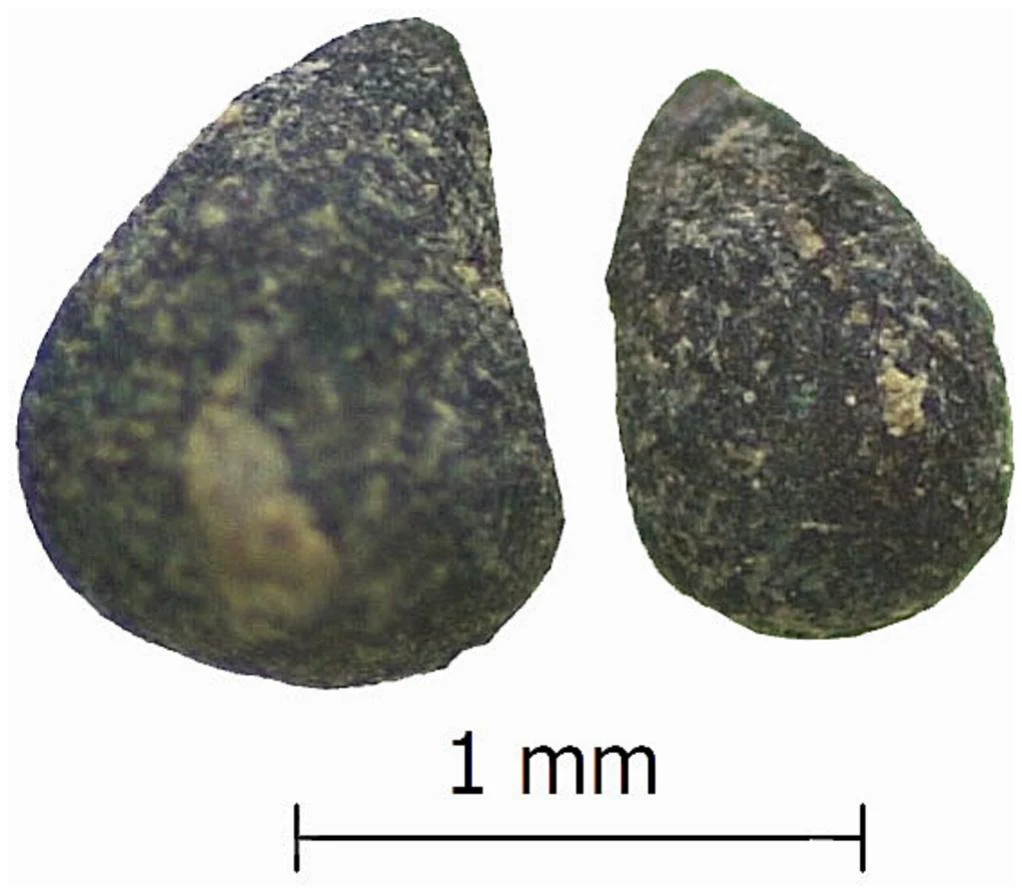
Of 194 flotation samples, 39 held plant remains, 755 litres of soil in all. Cereal grain was scarce: a few broken barley grains, unidentifiable cereal fragments and one spikelet fork of emmer wheat, a piece of its chaff. Fig seeds were the commonest find. The authors caution that one fig holds hundreds of seeds, which survive burning and float easily, so a few eaten figs can fill a sample.
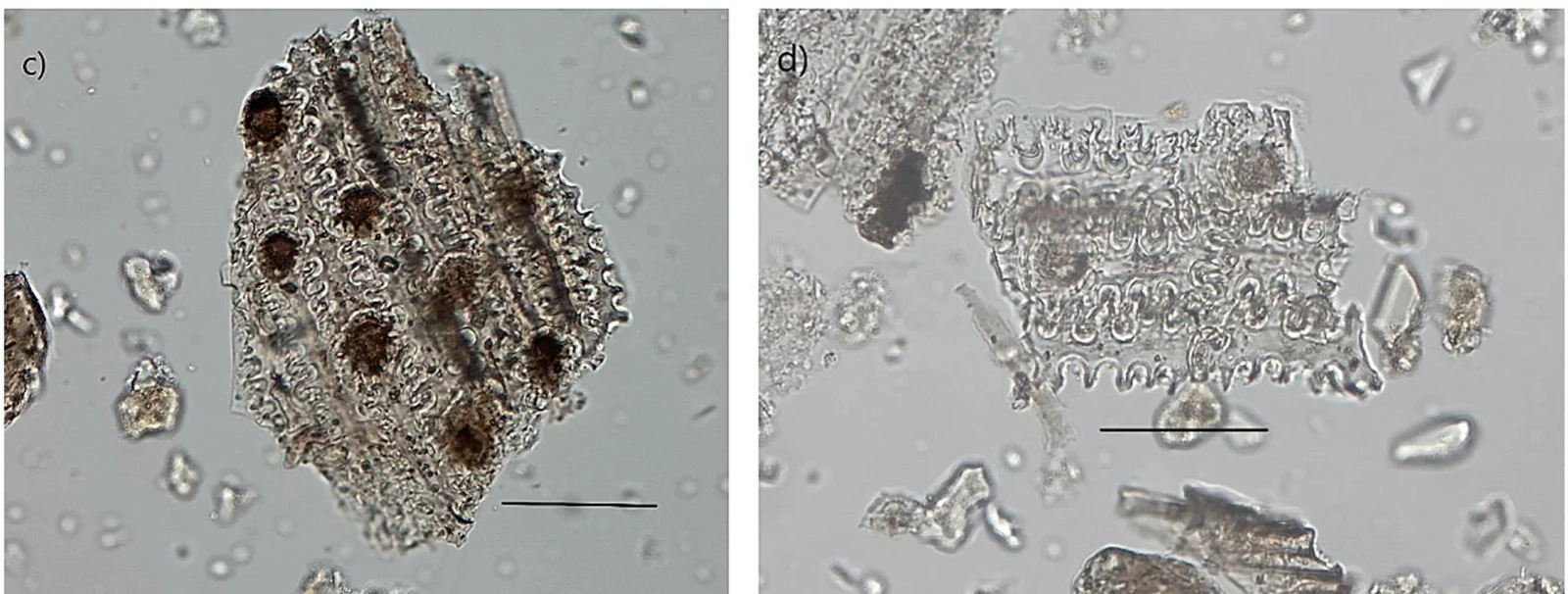
Phytoliths, tiny bodies of silica that plants build in their tissues, survive without burning. All 25 samples analysed at the Cyprus Institute and the BioGeoPal laboratory of CSIC in Barcelona held them; about 97% came from grasses, with the Pooideae, the subfamily of wheat and barley, the most abundant.
Wheat in the husks
Some phytoliths survive as silica skeletons, sheets of joined cells. In six skeletons from the ears of grasses the cell widths fall within the range of wheat, and one sample held a skeleton from oat. Stem and leaf phytoliths outnumber those from ears, which the authors take as a sign that straw was used, perhaps as fuel, fodder or building material. Wild-grass phytoliths and weed seeds suggest the last stages of cleaning the grain took place in the village, and some skeletons carry possible cut marks from stone tools.
Two samples held phytoliths of date-palm leaves, possibly from matting, roofing or fuel. Whether date palms grew on Cyprus then is unclear; the leaves may have arrived as packing for goods from the mainland.
The charred seeds match those of other Chalcolithic sites, among them Lemba-Lakkous, Kissonerga-Mylouthkia and Kissonerga-Mosphilia (see Kissonerga) and Souskiou-Laona. Cereals and pulses fall from the Middle to the Late Chalcolithic, but the authors attribute this to the Middle Chalcolithic samples coming from pits and middens, where seeds survive better. They suggest the phytoliths may reflect a Late Chalcolithic shift towards depending more on farmed food.
Map of Cyprus
Chalcolithic plant evidence in western and southern Cyprus
- This study
- Chalcolithic sites with comparable plant remains
- Ground above 200, 500, 1,000 m
Sites on this map
- 1Chlorakas-Palloures
- 2Lemba-Lakkous
- 3Kissonerga-Mylouthkia (approx.)
- 4Kissonerga
- 5Souskiou-Laona (approx.)
- 6Prasteio-Mesorotsos (approx.)
- 7Kalavasos-Ayious (approx.)
Grinding tools next
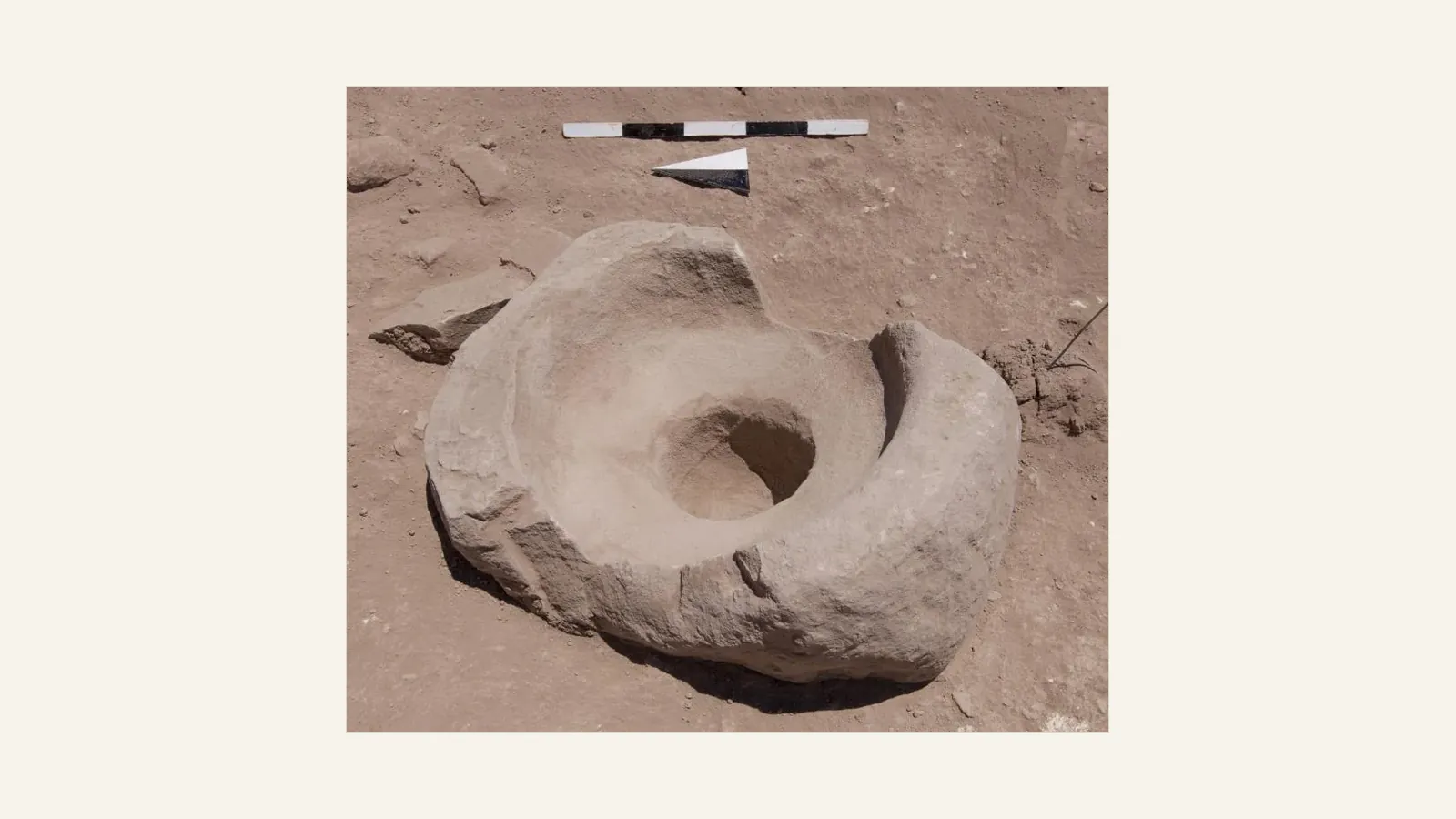
The authors propose testing the site's ground stone tools for plant residues. The excavators had already hoped residue analysis would show the use of the mortar with two hollows sunk into the floor of Building 1, which resembles an installation in the Pithos House at Kissonerga-Mosphilia read as an olive press [1, p. 173]. To test whether cereals had the larger role their results suggest, they call for phytolith studies at other Chalcolithic sites, with work on starch grains and coprolites.
Original source
On ancientcyprus.com
- Sites
- Chlorakas-Palloures
- Excavations
- Chlorakas-Palloures: the Leiden excavation
- People
- Bleda S. Düring
- Institutions
- Leiden University, The Cyprus Institute, Consejo Superior de Investigaciones Científicas (CSIC)
- Periods
- Chalcolithic
References
- 1.Düring, B. S., Klinkenberg, V., Souter, E., Croft, P., & Gamble, M. (2023). The 2015-2017 excavations at the Chalcolithic site of Chlorakas-Palloures on Cyprus. Mediterranean Archaeology and Archaeometry 23(1), 165–198.
More in Research
- Strabo's Arsinoe near Palaepaphos probably never existed, argues study of a Ptolemaic queen's cult
- Charred barley and chaff in a Pyla shaft point to stored animal fodder around 1200 BCE
- Late Bronze Age hoard of at least 111 bronzes at Galinoporni was packed in cloth, cord and grass
- Bronze Age tombs at Hala Sultan Tekke held what may be burnt bouquets of grain and wild flowers
- 48 carved stones near Kourion may come from an unknown Roman temple, study argues