
Research·Brief
Teeth of 229 people buried at Hellenistic and Roman Paphos show more gum disease than decay
A study of two cemeteries finds more dental disease among the dead of Ktima, the upper town, than in the Eastern Necropolis outside the walls of the ancient city.



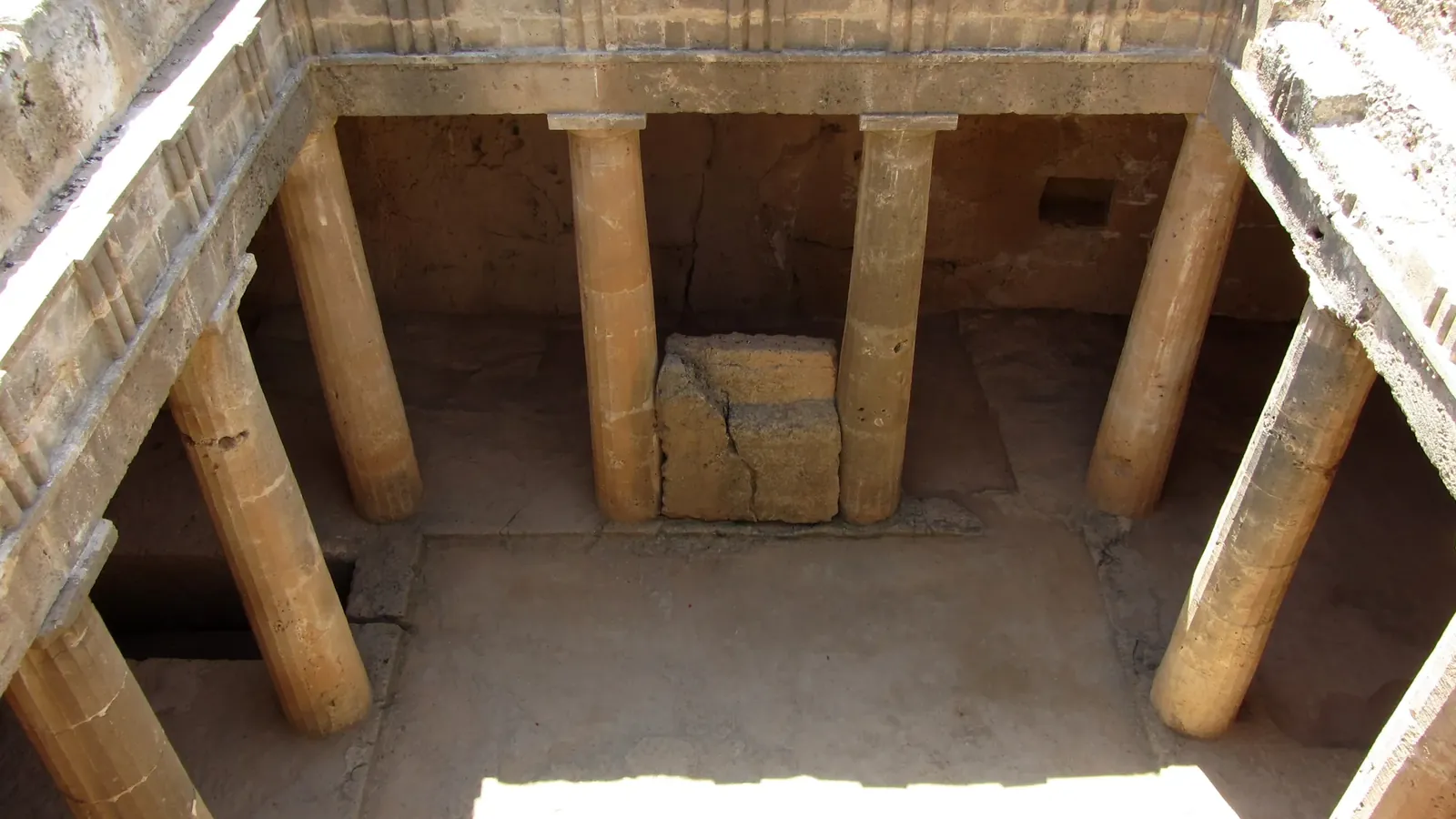
Grigoria Ioannou, of the Science and Technology in Archaeology and Culture Research Center at the Cyprus Institute, has recorded the teeth of 229 people buried at Nea Paphos in the Hellenistic and Roman periods. Her paper, published online on 22 July in the International Journal of Osteoarchaeology (volume 36, issue 4, pages 1087–1099), finds tooth decay uncommon in both groups she studied, and gum disease and teeth lost during life more frequent.
Two cemeteries, five conditions
The skeletons come from two burial grounds. The Eastern Necropolis, just outside the walls of the coastal city, gave a minimum of 97 individuals; the cemetery of the Upper City at Ktima, under the modern town of Paphos, gave a minimum of 132. The paper covers the Hellenistic period, which it dates 312–58 BCE, and the Roman, 58 BCE–395 CE.
Ioannou recorded five conditions as indicators of diet: caries (decay); calculus, which is mineralised plaque or tartar; periapical cavities, holes in the jaw around the tip of a root; periodontal disease, which attacks the gums and the bone that holds the teeth; and teeth lost before death. The first three were rare in both cemeteries. Gum disease and lost teeth were common.
Ktima showed higher rates of dental disease than the Eastern Necropolis, which Ioannou takes to mean that the two populations differed. Men and women also differed, within each cemetery and between them, and the differences were often statistically significant.
Earlier work in the two cemeteries
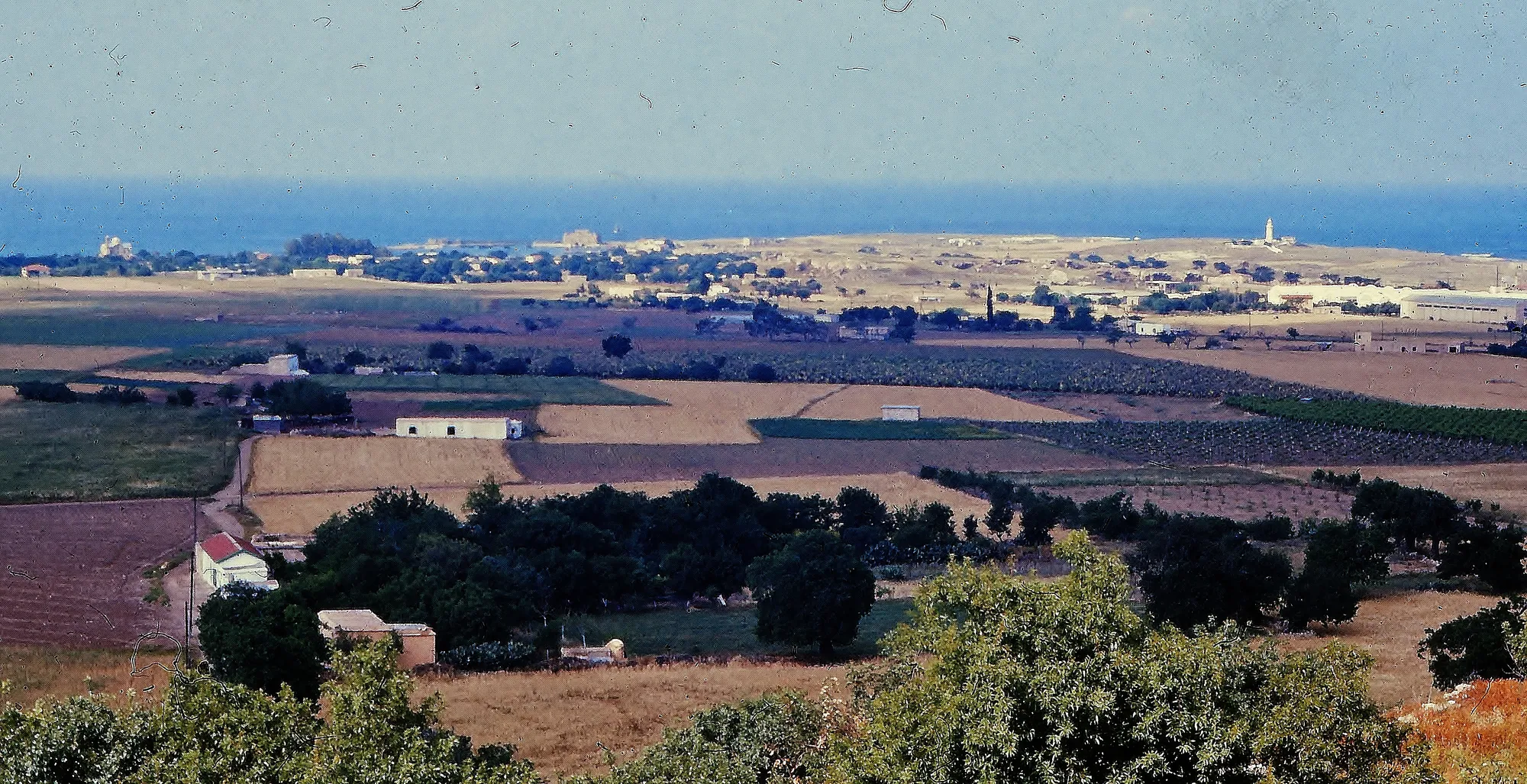
Most of what is known of the eastern cemetery comes from rescue work. The Department of Antiquities excavated tombs there through the 1980s as tourist hotels went up. Demetrios Michaelides, as the Department's Archaeological Officer, directed the large campaigns of 1983–1989, which opened about 500 tombs, nearly all of them east of the city walls [1, p. 554]. Very few of the tombs are preserved, and the excavation records are unpublished [1, p. 554].
The bones from 31 of its rock-cut chamber tombs, a minimum of 275 people, were studied earlier. Sherry C. Fox and Kathryn Marklein describe the Eastern Necropolis as the largest ancient cemetery known on Cyprus and the burial ground of the city's non-elite; the northern cemetery, the so-called Tombs of the Kings, may have been reserved for the elite, but its human remains were not kept [2, p. 198]. The Paphos dead showed porotic hyperostosis, a porous lesion of the skull for which anaemia, vitamin deficiency and malaria are all possible causes; contemporary remains from Ancient Corinth did not [2, p. 198].
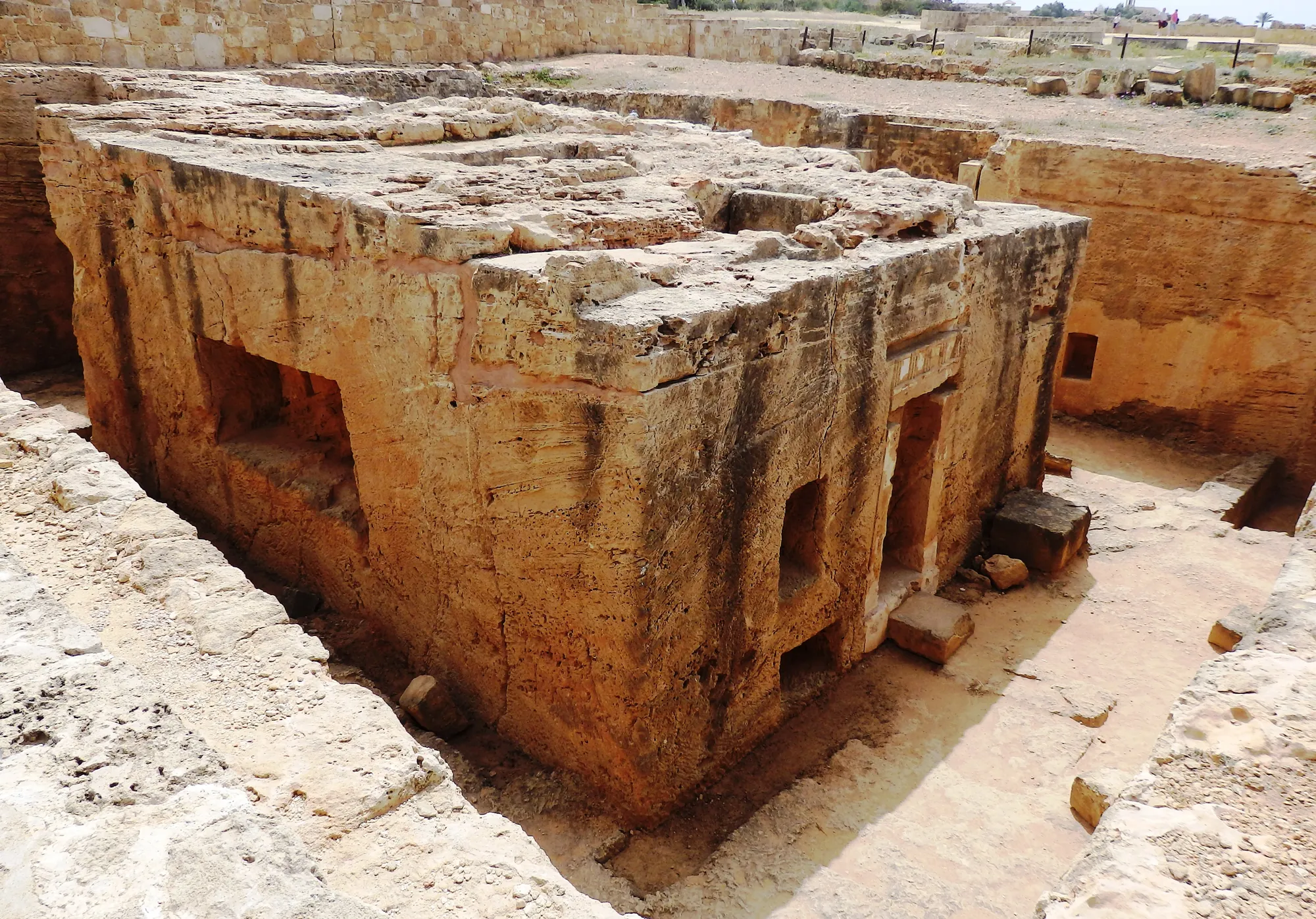
Tombs at Ktima were dug by the French mission of Jean Bérard in 1953–1955 and in the Department's rescue excavations of 1961–1969, which in 1968 included a large tomb, probably early Roman, in the courtyard of the police station.
What comes next
Ioannou places her paper among the few bioarchaeological studies of teeth from ancient Cyprus, and describes it as the first to compare Hellenistic and Roman diet and social differences by cemetery and by sex. She proposes isotope analysis, the study of microscopic wear on tooth surfaces and of food debris trapped in calculus, and larger samples from other Cypriot cemeteries.
Original source
On ancientcyprus.com
- Sites
- Nea Paphos
- Excavations
- Kato Paphos: Department of Antiquities rescue excavations of the 1980s, Ktima: Department of Antiquities rescue work, 1961–1969
- People
- Demetrios Michaelides
- Institutions
- The Cyprus Institute, Department of Antiquities of Cyprus, French Mission at Nea Paphos (Bérard and Deshayes)
- Periods
- Hellenistic, Roman
References
- 1.Lysandrou, V., Agapiou, A., Michaelides, D., & Papasavvas, G. (2018). The Eastern necropolis of Nea Paphos: Overcoming challenges in a lost landscape. Journal of Archaeological Science: Reports 19, 552–561.
- 2.Fox, S. C., & Marklein, K. (2013). Primary and secondary burials with commingled remains from archaeological contexts in Cyprus, Greece, and Turkey. In Commingled and Disarticulated Human Remains, 193–211. New York: Springer.
More in Research
- Wheat traces at Chlorakas-Palloures question the view that cereals were minor in Chalcolithic Cyprus
- Strabo's Arsinoe near Palaepaphos probably never existed, argues study of a Ptolemaic queen's cult
- Charred barley and chaff in a Pyla shaft point to stored animal fodder around 1200 BCE
- Late Bronze Age hoard of at least 111 bronzes at Galinoporni was packed in cloth, cord and grass
- Bronze Age tombs at Hala Sultan Tekke held what may be burnt bouquets of grain and wild flowers