
Research·Roundup
This Week in Cypriot Archaeology: 18–24 May 2026
More than 20 statue bases found in place at the Apollo sanctuary of Frangissa, and Bronze Age pigeons at Hala Sultan Tekke that ate much like the people around them.



The German excavation at the sanctuary of Apollo at Frangissa ended its season with more than 20 statue bases found where they were set up, and a study in Antiquity argued that pigeons at Late Bronze Age Hala Sultan Tekke were at least semi-domesticated by 1400 BCE. Cypriot archaeologists warned about building near monuments across the island, and the House of Cyprus in Athens reported on a lecture about the Erimi-Kaukalla cemetery.
Map of Cyprus
This week's stories
- Fieldwork
- Research
- Heritage protection
- Ground above 200, 500, 1,000 m
Sites on this map
- 1Pera-Frangissa (approx.)
- 2Hala Sultan Tekke
- 3Amathus
- 4Trikomo (approx.)
- 5Erimi-Kafkalla
Fieldwork
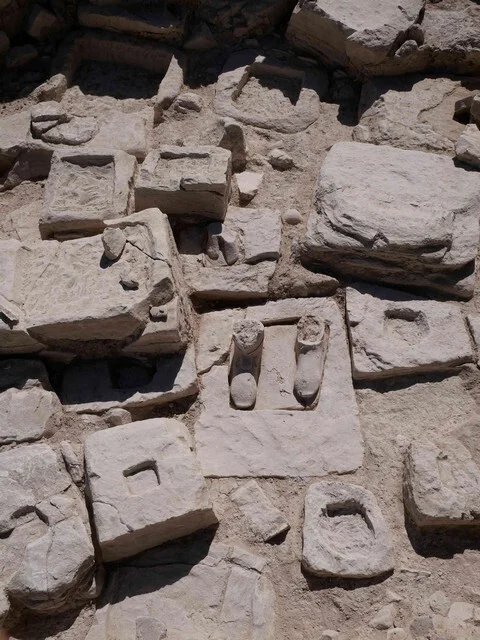
The Department of Antiquities announced on 22 May the end of the fifth modern campaign at the rural sanctuary of Apollo at Frangissa, near Pera Oreinis in the territory of Tamassos. The universities of Frankfurt and Rostock run the project, directed by Matthias Recke with Philipp Kobusch as field director. Max Ohnefalsch-Richter dug the site in 1885, published little more than notes, and its location was then lost until the 2020 survey found it again.
Ohnefalsch-Richter lifted most of the bases he exposed and put many of them back as backfill. Beneath his level, the release says, the team found in 2025 more than 20 bases still in position, some carrying the feet of their statues in limestone and some in terracotta. The Department calls this the first evidence from Cyprus that terracotta figures were given limestone bases of their own. Some bases sit on top of earlier ones, so the build-up of offerings can be followed step by step. In antiquity the area was levelled, probably towards the end of the Archaic period, and a new layer of bases put down; well over 100 of those later bases came out of the old backfill. With the bases in place and statue fragments of the Archaic period beside them, the Department says the sanctuary's Archaic phase, known until now only from scattered sculpture, is proven on the ground; undisturbed layers with Archaic pottery were also reached for the first time. Whether destruction or a shortage of space caused the levelling is the question for the next seasons.
Research
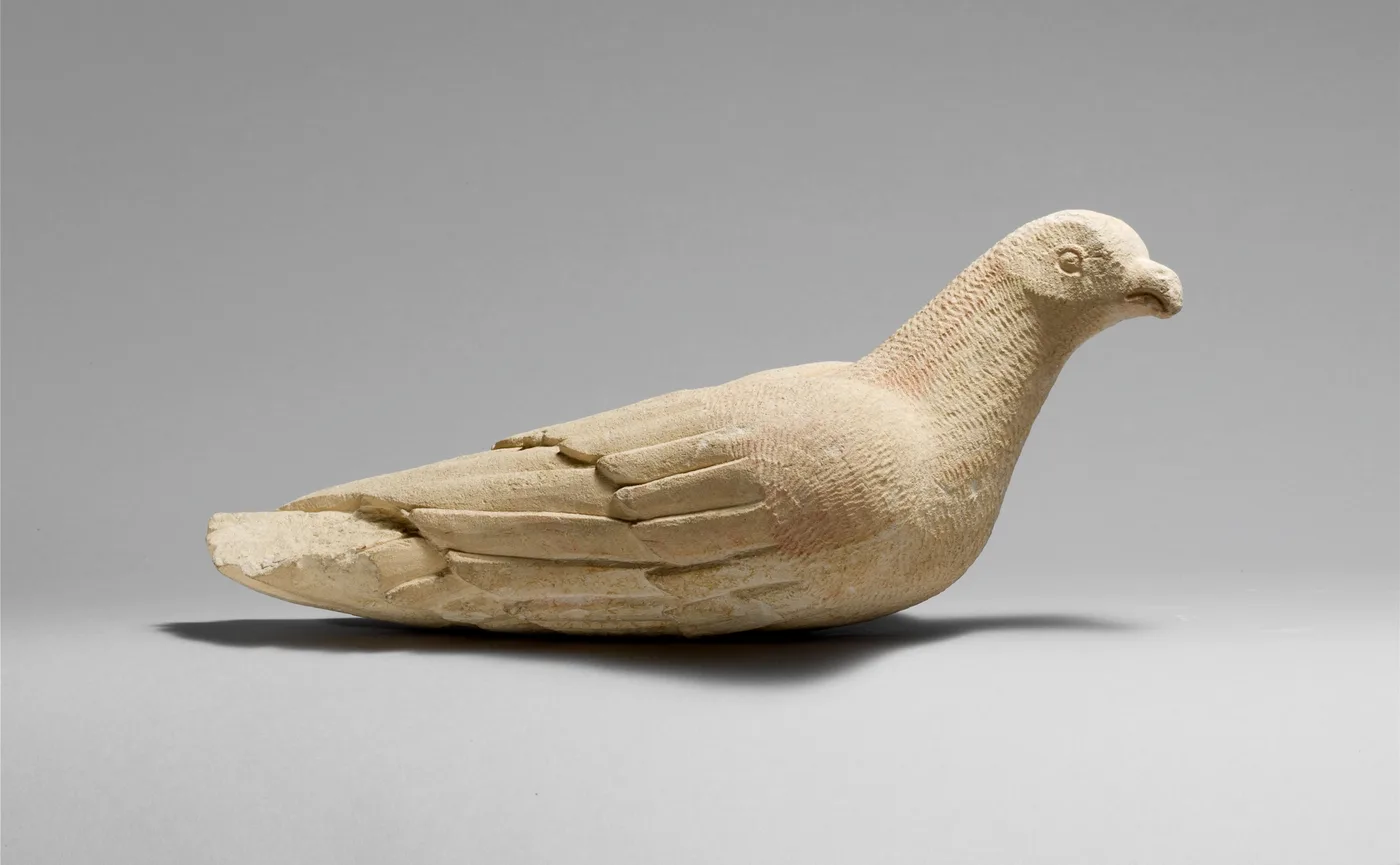
In Antiquity, online from 21 May, Anderson L. Carter, David S. Reese, Ronald van Bommel, Marcel T.J. van der Meer and Canan Çakırlar re-examine 183 bones of pigeons and doves from Hala Sultan Tekke, 159 of them from rock doves (at least 55 birds). Most date to the 14th and 13th centuries BCE and came from City Quarter 1, the part of the town opened by the New Swedish Cyprus Expedition. A third of the birds from that quarter lay in burnt deposits under a plaster floor in a large room that the excavators label feasting debris and suggest was a cult space. Bones of young birds suggest the doves probably bred on the site. Nitrogen isotopes in 37 birds come close to values from people at other Cypriot sites, which the authors take as a diet shared with the town. They conclude the doves were at least semi-domesticated by 1400 BCE. In Greece the earliest bones identified as domestic pigeon come from Hellenistic Nea Helos, of the 4th to 1st centuries BCE. No dovecotes have been found at Hala Sultan Tekke.
Heritage protection
The archaeologists' association of Cyprus said in a statement on 20 May that development threatens monuments across the island. In the south it named hotels and housing near Amathus, a planned high-rise near the Famagusta Gate in Nicosia, and pressure for large schemes in the Akamas, including Ayios Georgios Peyias. In the occupied north it pointed to building along the Kyrenia range from Kormakitis to Karpasia, excavation works and, reportedly, rubble from a nearby quarry dumped close to the medieval monastery of Panagia Melandrina, and tourist and housing projects around Trikomo and the Famagusta coast. It asked for more staff at the Department of Antiquities, stricter planning enforcement and international action on heritage in the north.
Events
The House of Cyprus in Athens reported on 18 May on a lecture given there on 14 May by Demetra Aristotelous, an archaeological officer of the Department, about its trial excavation in part of the Erimi-Kaukalla cemetery near Erimi, west of Limassol. The talk, fourth in the annual Archaeology of Cyprus series run with the University of Athens and supported by the A. G. Leventis Foundation, read the tomb groups for the burial customs and social organisation of the Bronze Age community. The Erimi area was settled from the 4th millennium BCE, when the site of Pamboula, identified by Porphyrios Dikaios in the 1930s, gave its name to a Chalcolithic culture.
Original sources
- Deputy Ministry of Culture: Completion of the archaeological excavation campaign at the Sanctuary of Apollo at Frangissa, in Pera Oreinis Community
Official release·
- Uncovering the lives of rock doves (Columba livia) in Late Bronze Age Hala Sultan Tekke, Cyprus (Antiquity)
Paper·
- Archaeology Magazine: Bronze Age pigeon bones on Cyprus studied
Press·
- Cyprus Mail: Cyprus heritage sites under growing threat from development
Press·
- Dialogos: Lecture on the excavation at the Erimi-Kaukalla necropolis at the House of Cyprus
Press·
On ancientcyprus.com
- Sites
- Tamassos, Amathus, Erimi-Kafkalla, Erimi-Pamboula
- Excavations
- Tamassos-Frangissa: Ohnefalsch-Richter's excavations for Colonel Warren, 1885, Pera-Frangissa: relocation of the Apollo sanctuary, 2020, Hala Sultan Tekke: the New Swedish Cyprus Expedition (2010-)
- People
- Max Ohnefalsch-Richter, Matthias Recke, Philipp Kobusch, David S. Reese, Demetra Aristotelous, Porphyrios Dikaios
More in Research
- Wheat traces at Chlorakas-Palloures question the view that cereals were minor in Chalcolithic Cyprus
- Strabo's Arsinoe near Palaepaphos probably never existed, argues study of a Ptolemaic queen's cult
- Charred barley and chaff in a Pyla shaft point to stored animal fodder around 1200 BCE
- Late Bronze Age hoard of at least 111 bronzes at Galinoporni was packed in cloth, cord and grass
- Bronze Age tombs at Hala Sultan Tekke held what may be burnt bouquets of grain and wild flowers