
Fieldwork·Brief
More than 20 statue bases, some still bearing feet, found in place at Frangissa's Apollo sanctuary
Terracotta feet on some of the limestone bases are the first sign in Cyprus that clay figures were given stone pedestals, the Department of Antiquities said.



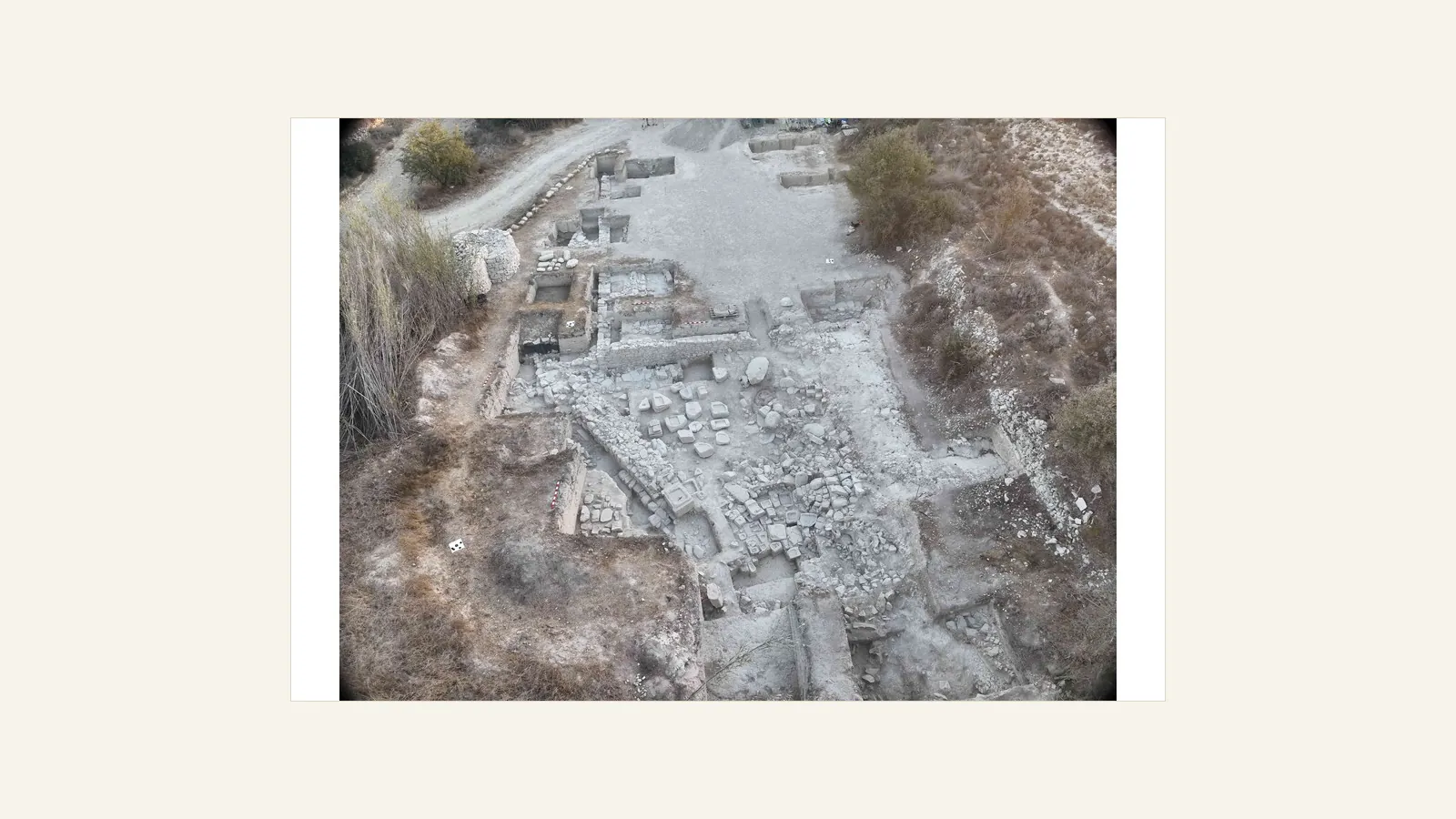
In 2025 excavators at the rural sanctuary of Apollo at Frangissa, near Pera Orinis and west of ancient Tamassos, found more than 20 statue bases still standing where worshippers had set them, some with the feet of their statues attached. The Department of Antiquities announced the results on 22 May 2026, and said that Max Ohnefalsch-Richter, who first dug the site in 1885, had presumably never seen them.
The project, run jointly by the universities of Frankfurt and Rostock, is directed by Matthias Recke of Frankfurt, with Philipp Kobusch of Rostock as field director. The Amricha Foundation of Leipzig and Argo Frankfurt again paid for the work. In the Department's view this fifth campaign may have produced the most spectacular results so far.
Bases stacked on older bases
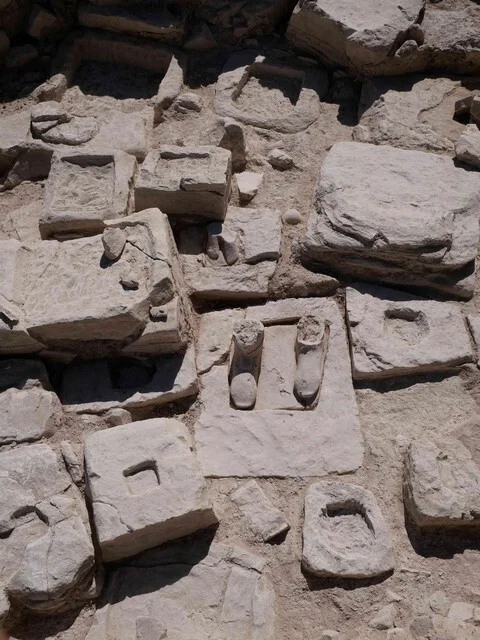
The newly found bases are packed tightly together. Some sit on top of earlier ones, placed so that both statues could still be seen, which lets the team follow how the offerings built up over time. Besides feet of limestone, some bases held feet of terracotta. According to the Department, these are the first evidence from Cyprus that clay figures, otherwise known to have stood on the ground or in settings cut into the rock, could also be given a carved limestone base of their own.
The layers above the bases show that in antiquity the whole area was covered with a levelling fill and a fresh set of bases put down on top. That upper set is the one dug in 1885. The team has recovered well over 100 of those bases from the old backfill. The Department places this rebuilding, presumably, towards the end of the Archaic period. A few clues point to destruction; lack of space is the other explanation, and the next campaigns will try to decide between them.
The in-place bases and the statue fragments found with them are Archaic. Until now that early phase of the sanctuary was known only from scattered pieces of sculpture. The season also produced, for the first time in the modern work, undisturbed layers holding Archaic pottery.
The dig of 1885
Ohnefalsch-Richter excavated the sanctuary for Falkland Warren, who as Chief Secretary of the island's government granted the permit to himself [1, p. 215]. Work began on 17 October 1885 and ended on 2 November [1, p. 216]. The landowner, a farmer and wine merchant from Pera, had made it a condition that the ground be filled in and levelled again so that he could go on farming it [1, p. 216]. The bases that had stood side by side were mostly lifted, and many went back into the trench as fill. Ohnefalsch-Richter left only brief notes, the excavation was never published, and the spot was forgotten.
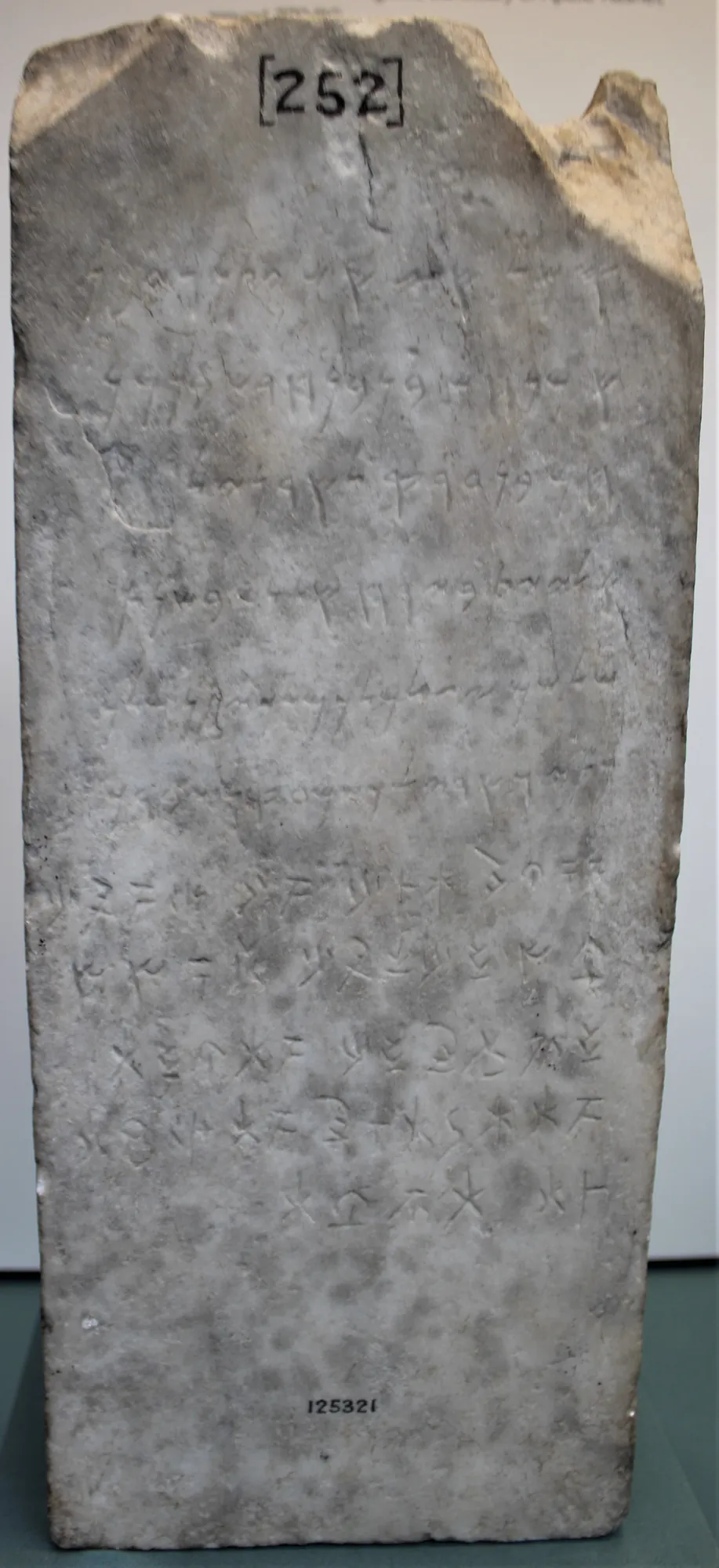
Warren was entitled to two thirds of the finds, and a dispute in court with the banker Charles Watkins, who also claimed the finds, ended in his favour [1, p. 215]. Much of his share is now in the British Museum and the Royal Ontario Museum in Toronto. Two of the bases from 1885 carry 4th-century BCE inscriptions in both Phoenician and the Cypriot syllabary, in which the Phoenician god Reshef stands for the Greek Apollo.
A survey in October 2020, with ground-penetrating radar, located the sanctuary again in a valley south of Pera Orinis. The modern excavation has since cleared the old trenches, recorded them and opened ground the 19th-century workers never reached. Its stated aim is to follow the sanctuary's growth from the Archaic to the Hellenistic period.
Original sources
On ancientcyprus.com
References
- 1.Recke, M. (2018). »like herrings in a barrel«: Max Ohnefalsch-Richters Ausgrabungen in Tamassos-Phrangissa 1885. In S. G. Schmid & S. G. Horacek (Eds.), »I don't know what am I myself, it is so very difficult to explain.« Max Ohnefalsch-Richter (1850–1917) und die Archäologie Zyperns (pp. 213–238). Logos Verlag.
More in Fieldwork
- Hellenistic quarry under Paphos's Fabrika hill became an unused tomb, then a church
- This Week in Cypriot Archaeology: 31 August–6 September 2026
- Hollows cut into a Bronze Age threshold at Erimi match a senet game board
- This Week in Cypriot Archaeology: 27 July–2 August 2026
- Grape seeds and unfired loom weights found in Bronze Age work complex at Erimi-Pitharka