
Early Bronze Age III
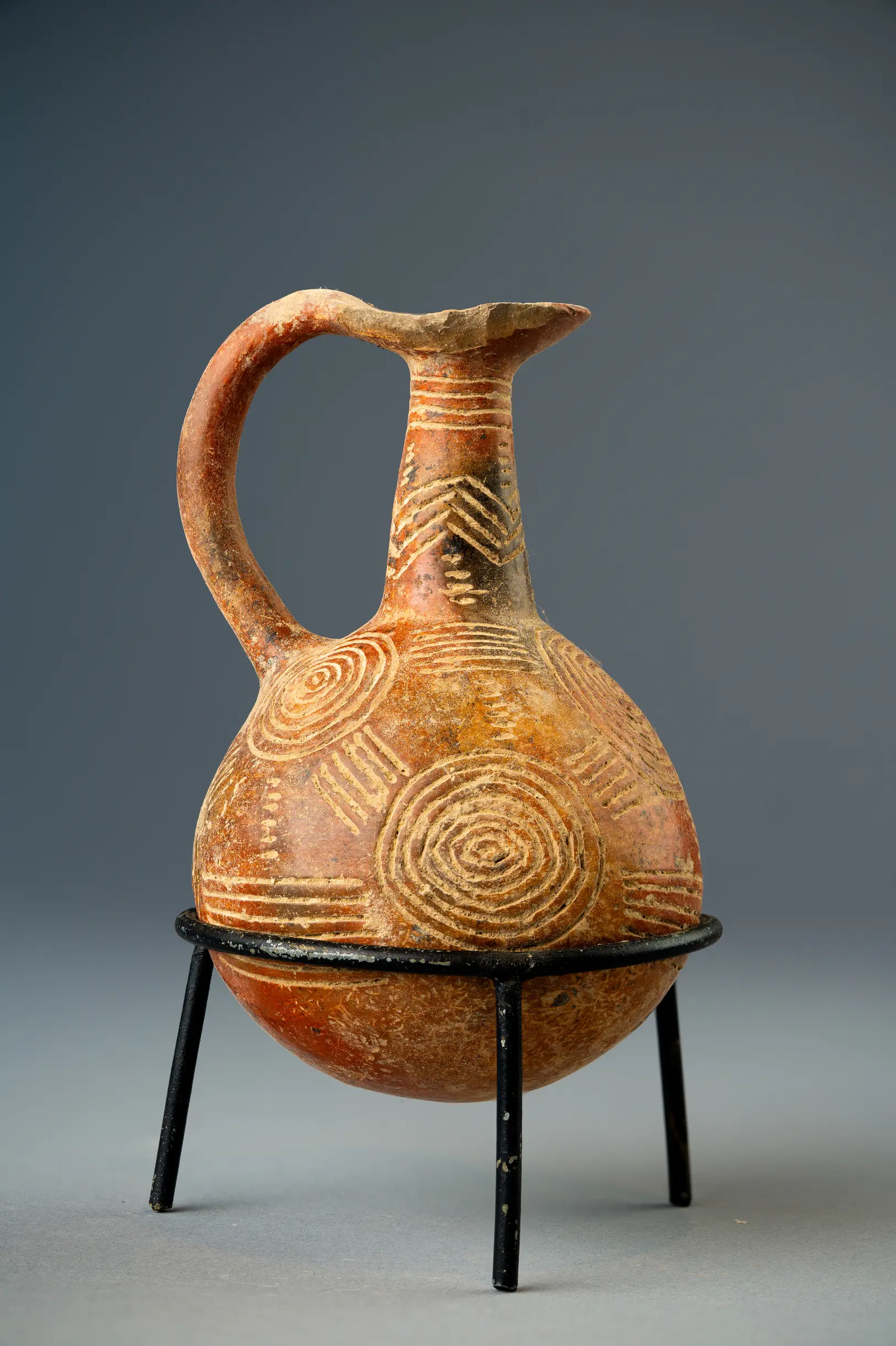
Red Polished Beak-Mouthed Jug with Concentric Circles and Chevrons
Handmade Red Polished jug with a beaked mouth, mottled slip, nested chevrons on the neck and incised spiral and concentric circles on the body; c. 2100–1850 BCE.
Date
2100 - 1850 BC
Accession No.
JUG-BA-004
Collection
Alexis Drakopoulos
Provenance
- c. 1965–2025, The Goodman Collection (acquired 1965–1969)
- 2025–present, Alexis Drakopoulos, London
Early Cypriot III to Middle Cypriot I, c. 2100–1850 BCE · Red Polished ware · Handmade, incised and white-filled
A handmade jug with a round base, a globular body and a tapering neck that flares into a mouth drawn up at the front into a short beak. The loop handle runs from the back of the mouth to the shoulder. The slip is mottled from firing, shading from orange to a deeper red-brown, with a dark patch low on the neck.
Incised, white-filled decoration covers the neck and upper body. Horizontal lines ring the neck below the mouth, above a band of nested chevrons. The body carries large concentric circles, one drawn as a continuous spiral, with blocks of short hatched strokes set between them and a band of horizontal lines low on the body. The lower third is plain. The edge of the mouth is chipped, most visibly on the side towards the handle.
Commentary
The slip, the handmade build and the lime-filled incision identify this as Red Polished ware of the Red Polished III group. The round base with no standing surface is a trait of Early Cypriot III and later [5]. The mouth, raised at the front into a beak, belongs to the family of cutaway and beak-spouted jugs that Morris illustrates in incised, relief-decorated and plain versions [4]. Beaked and cutaway mouths were popular in the Cypriot Bronze Age and uncommon in the Iron Age [4].
Excavated parallels support a date of about 2100–1850 BCE. A Red Polished III juglet from Dhali in the British Museum, dated Middle Cypriot I, has a "spouted cutaway rim" and is deeply incised with concentric circles and parallel strokes [2]. It is the nearest excavated match for the combination of beaked mouth and circle ornament seen here. A juglet with an oblique mouth from Vounous Tomb 65, now in the Louvre, shows the same mouth type on the north coast [3]. A jug in Cleveland with a cutaway neck and concentric circles, said to come from Alambra or Ayia Paraskevi and dated Early Cypriot III to Middle Cypriot I, is close in both shape and decoration [1]. Its possible find-spots, like Dhali, lie in central Cyprus, where this restrained layout of circles and hatched blocks is well represented. The attribution of this jug to any region remains stylistic, since it has no recorded find-spot.
The mottling is a result of uneven firing in an open fire or simple kiln, where parts of the pot were exposed to smoke and reduced conditions. The dark patch on the neck is typical of this effect and does not indicate damage or repair. A beaked mouth gives a narrower and more controlled pour than a round rim, which suits a vessel used for serving liquids at table or in funerary rites. Like most whole Red Polished jugs, this one almost certainly survived because it was placed in a tomb.
The spiral drawn in place of closed concentric rings is a small sign of the potter's hand. Whether this was a deliberate variant or a quicker way of laying out circles with a single tool stroke is not known.
References
- 1.Cleveland Museum of Art, 1916.1987. Red Polished jug with cutaway neck, pierced lug and concentric circles, said to be from Alambra or Ayia Paraskevi, Early Cypriot III–Middle Cypriot I, H. 16.5 cm.
- 2.British Museum, London, 1868,0905.23. Red Polished III juglet from Dhali with spouted cutaway rim and incised concentric circles, Middle Cypriot I, Stewart Type IA³c var. b, H. 11.3 cm.
- 3.Louvre, Paris, AO 17534. Red Polished juglet with oblique mouth from Vounous Tomb 65, H. 15.2 cm.
- 4.Morris, D. (1985) The Art of Ancient Cyprus. Oxford: Phaidon, pp. 48, 54–55, pls. 63–65.
- 5.Brown, A.C. & Catling, H.W. (1980) Ancient Cyprus. Oxford: Ashmolean Museum, p. 27.
More from the Catalogue
Browse related objects
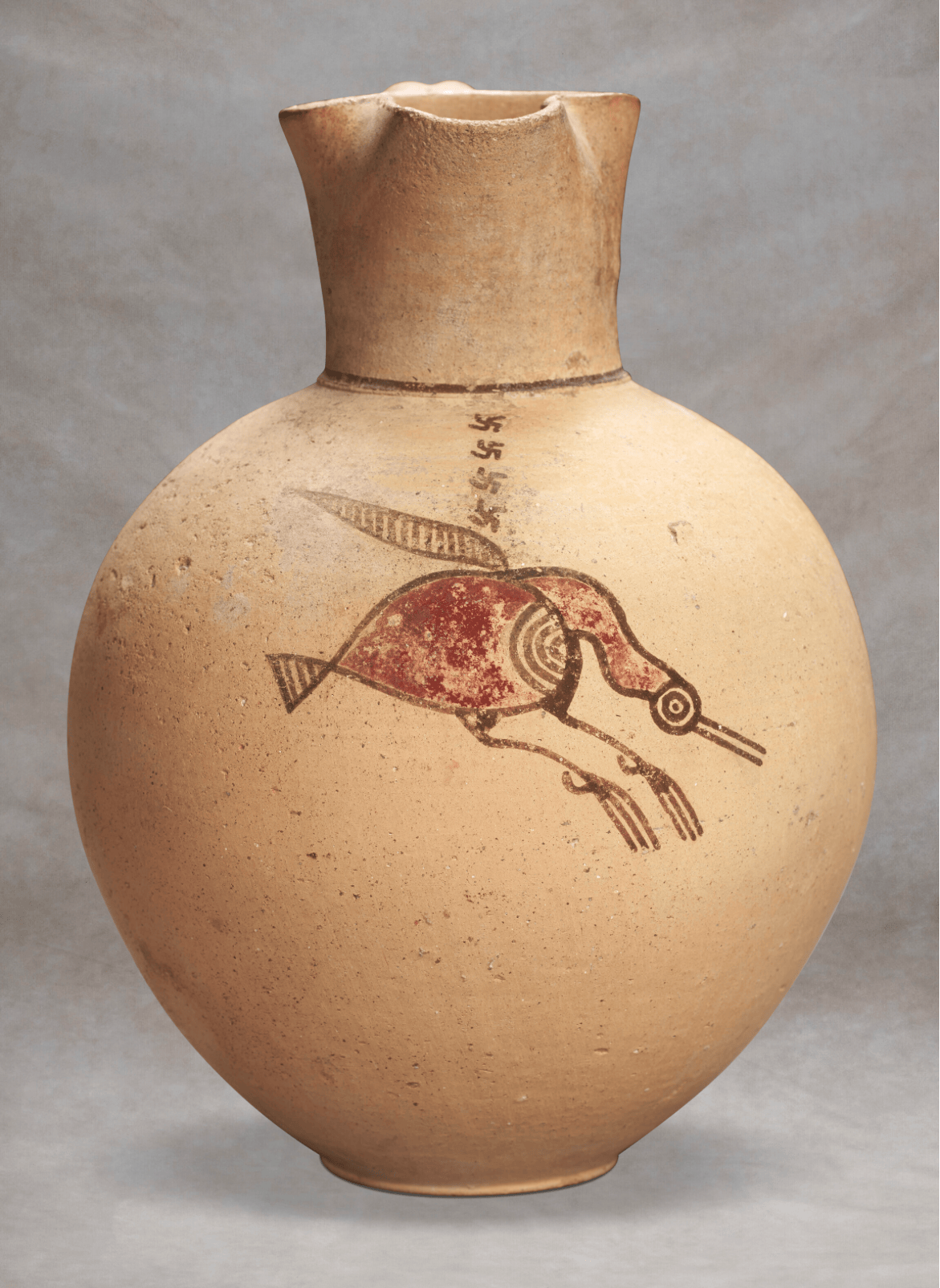
Bichrome Oinochoe
Archaic I
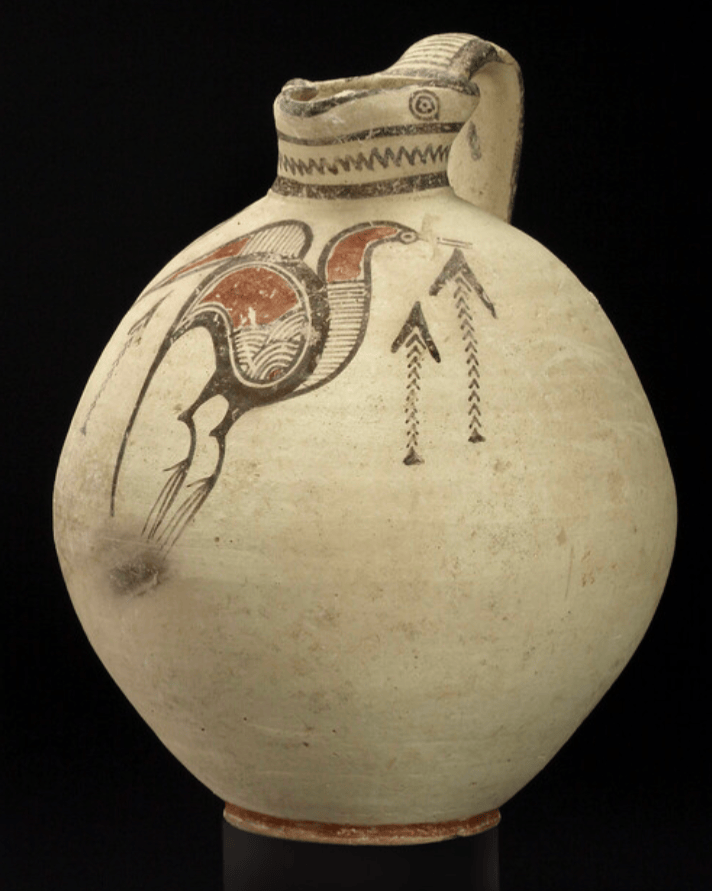
Free-field bichrome jug with image of an Ibis bird and reeds
Archaic
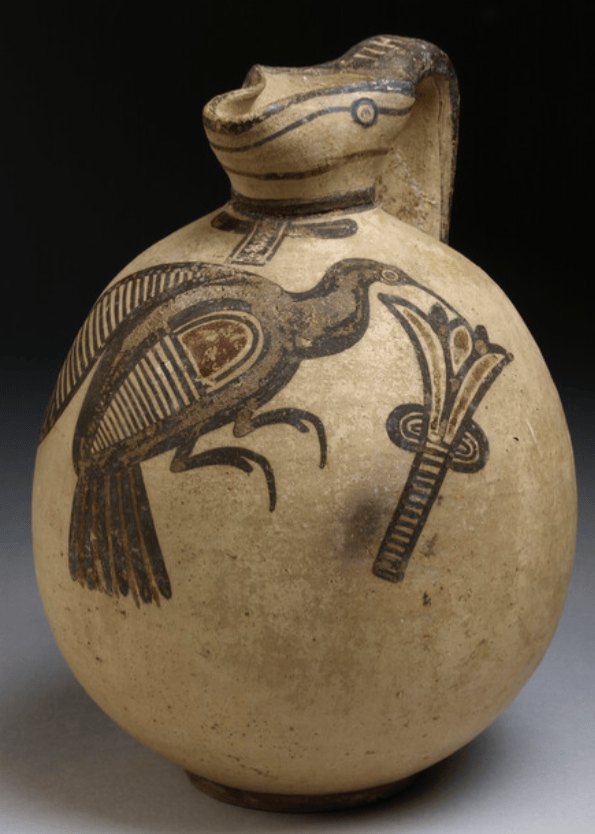
Squat bichrome jug in free-field style with image of bird picking a lotus flower
Archaic
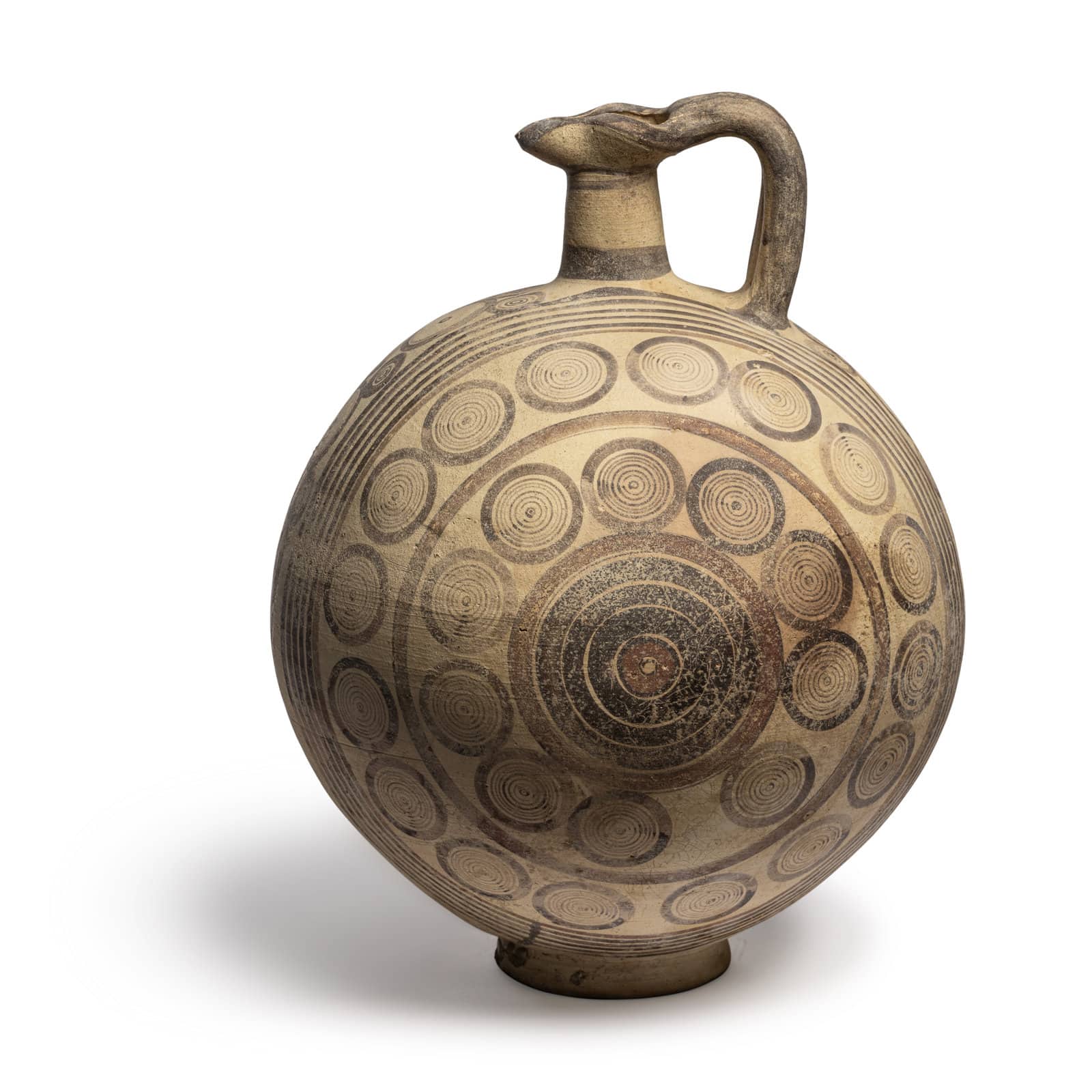
A Cypriot Bichrome-Ware Oinochoe Jug
Archaic I
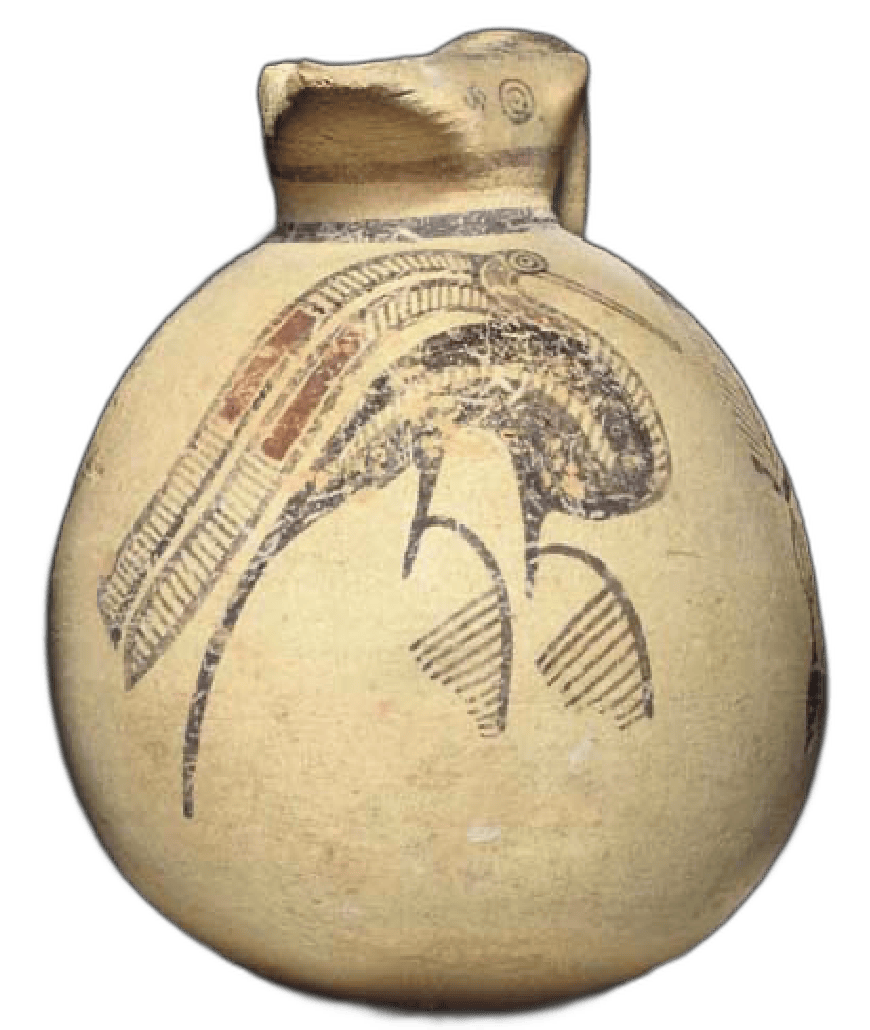
Oinochoe with Free Field Bird
Archaic I
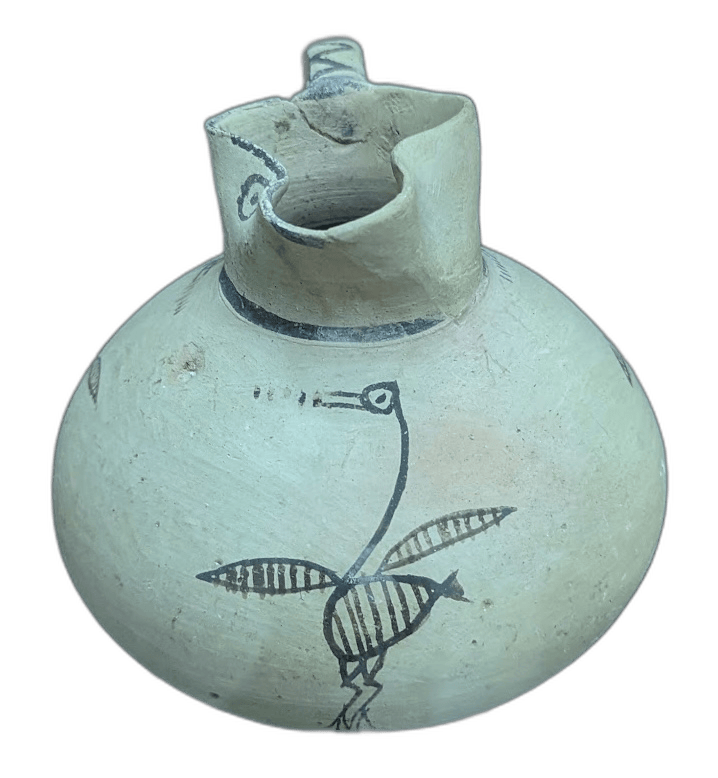
Small Oinochoe with Free Field Bird
Archaic I
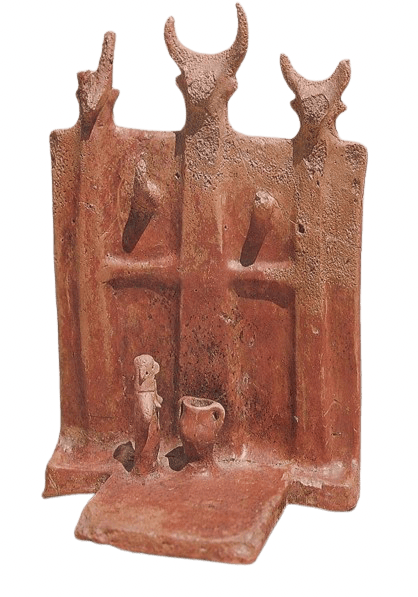
Red Polished Shrine
Middle Bronze Age I
Black-On-Red Geometric Jug Sherd
Geometric II
Bichrome Jug
Geometric
Bichrome Juglet
Geometric
Bichrome Oinochoe
Geometric
Juglet
Archaic II
Oinochoe
Geometric III
Jug
Archaic I
Juglet
Archaic I
Jug
Geometric I
Terracotta jug
Early Bronze Age I
Juglet
Geometric I