
Lecture·The Institute for the Study of Ancient Cultures·2019
How Ancient Israel Began: A New Archaeological Perspective
David Ilan
This video covers more than Cyprus. The description below concentrates on its Cypriot parts, the first of which begins at 22:31.
Chapters
About the lecture
In this lecture at the Oriental Institute, David Ilan of Hebrew Union College, director of the Tel Dan excavations, proposes that the Late Bronze Age to Early Iron Age settlement of the Canaanite hill country was initiated by the Egyptian administration. After reviewing the biblical conquest narrative, hill-country sites and the five standard models of Israelite origins, he traces the Egyptian garrison network across Canaan at sites including Beth Shean and Tel Dan.
Cypriot and Aegean material features prominently in the evidence from Tel Dan (from 0:41:58). Alongside Philistine bowls and Aegean-style figurines, the site has yielded a Cypriot-style seal that Ilan suggests replicates a Cypriot loom weight for stamping textile packages. Tel Dan has also produced hundreds of broad-mouthed pithoi with shoulder handles, once termed Galilean pithoi, which Ilan identifies as a maritime Cypriot form found in large numbers on Cyprus, at Ugarit and at Tyre, and made locally at Tel Dan. A small sanctuary at the site is compared with temples at Enkomi, Kition, Tel Qasile and Phylakopi as a Sea Peoples sanctuary.
Ilan argues (from 0:51:59) that during thirteenth- and twelfth-century BC drought, Egypt recruited Cypriots, Hittites, Libyans and Assyrians into its Canaanite garrisons. These soldiers married local women, received highland land grants provisioned in standardized collared-rim jars, and stayed after Egyptian rule ended around 1140 BC; he also links the Danites to the Denyen or Danaoi from the Anatolian coast or Cyprus and suggests that Tel Dan settlers invited relatives from Cyprus to join them.
From our collection
Pieces in the Drakopoulos collection of the kinds and periods this talk covers: Jar, Late Cypriot (Late Bronze Age), Cypro-Geometric.
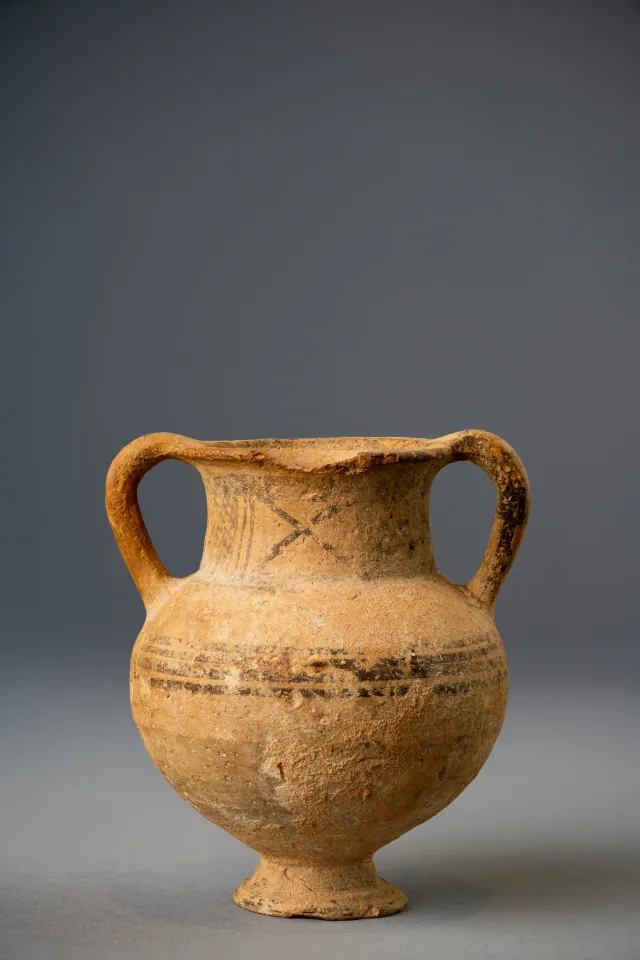
White Painted Amphoriskos on a Conical Foot
Jar
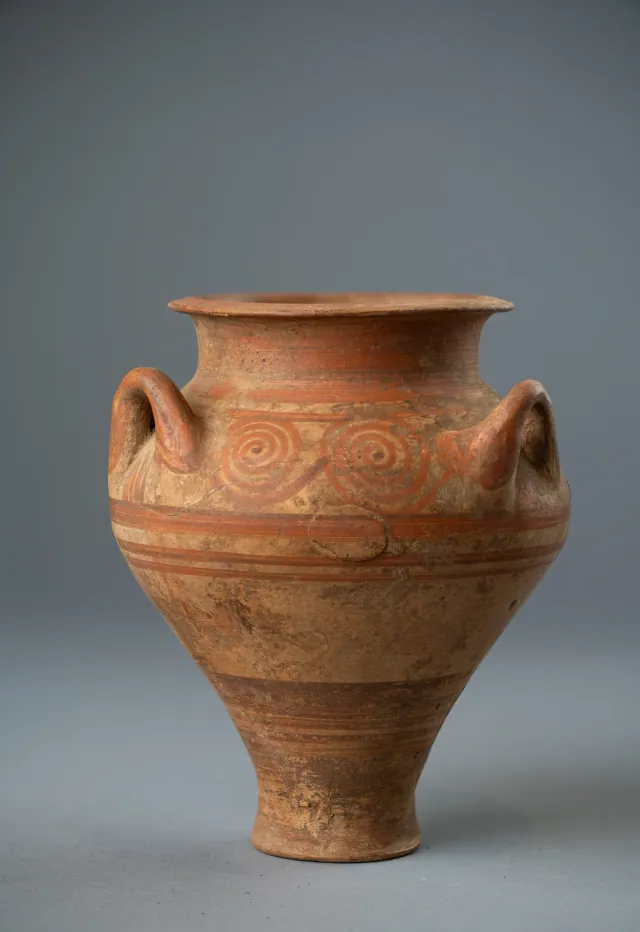
Cypriot Three-Handled Jar in the Mycenaean Style with Running Spirals
Jar
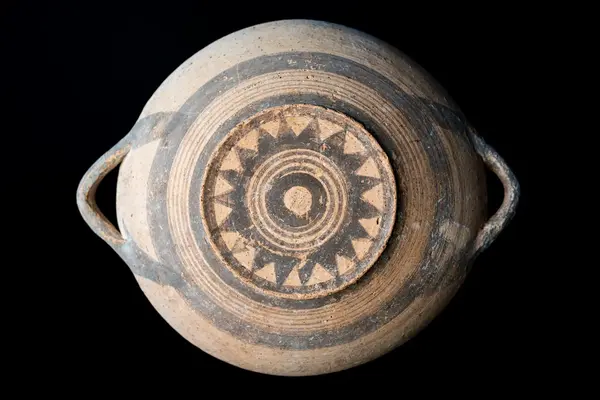
White Painted Plate with a Sawtooth Star on the Underside
Cypro-Geometric
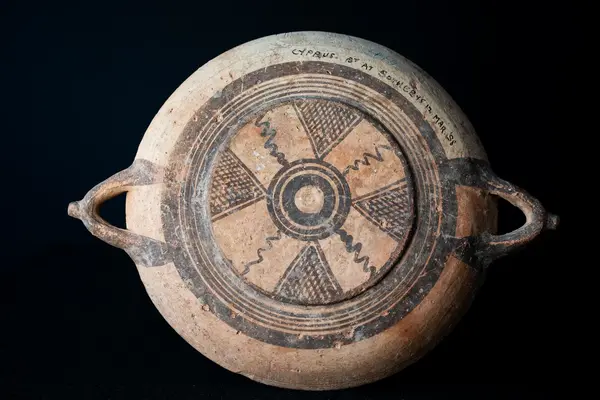
White Painted Plate with Latticed Triangles and Wavy Lines on the Underside
Cypro-Geometric
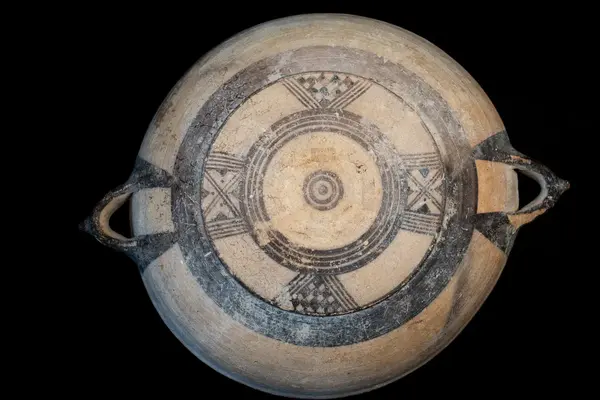
Large White Painted Plate with Knobbed Handles and a Four-Armed Cross on the Underside
Cypro-Geometric
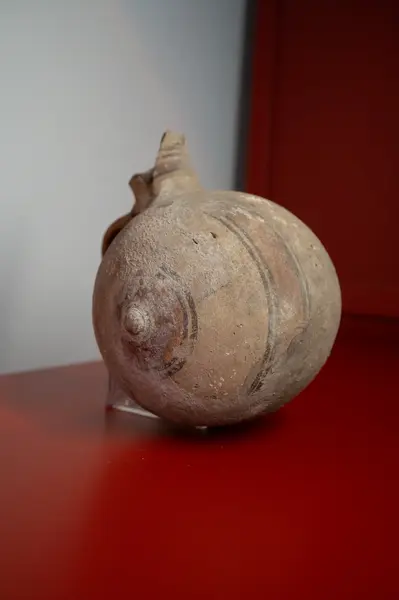
Bichrome Barrel Jug with Circled End-Knobs
Cypro-Geometric
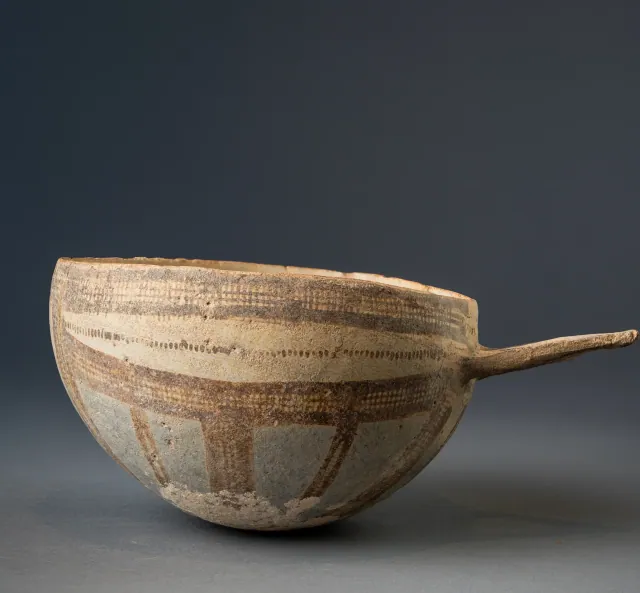
White Slip II Hemispherical Bowl with Wishbone Handle
Late Cypriot (Late Bronze Age)
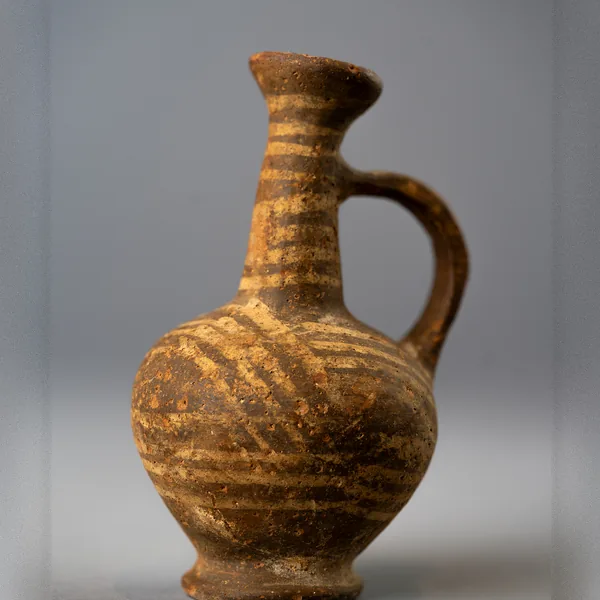
Base Ring II Bilbil Juglet with White-Painted Bands
Late Cypriot (Late Bronze Age)
Found at the places discussed
Objects in our catalogue, in museum collections, recorded as found at these sites.


Background
Where to read more on this site before or after watching.
The site
Enkomi
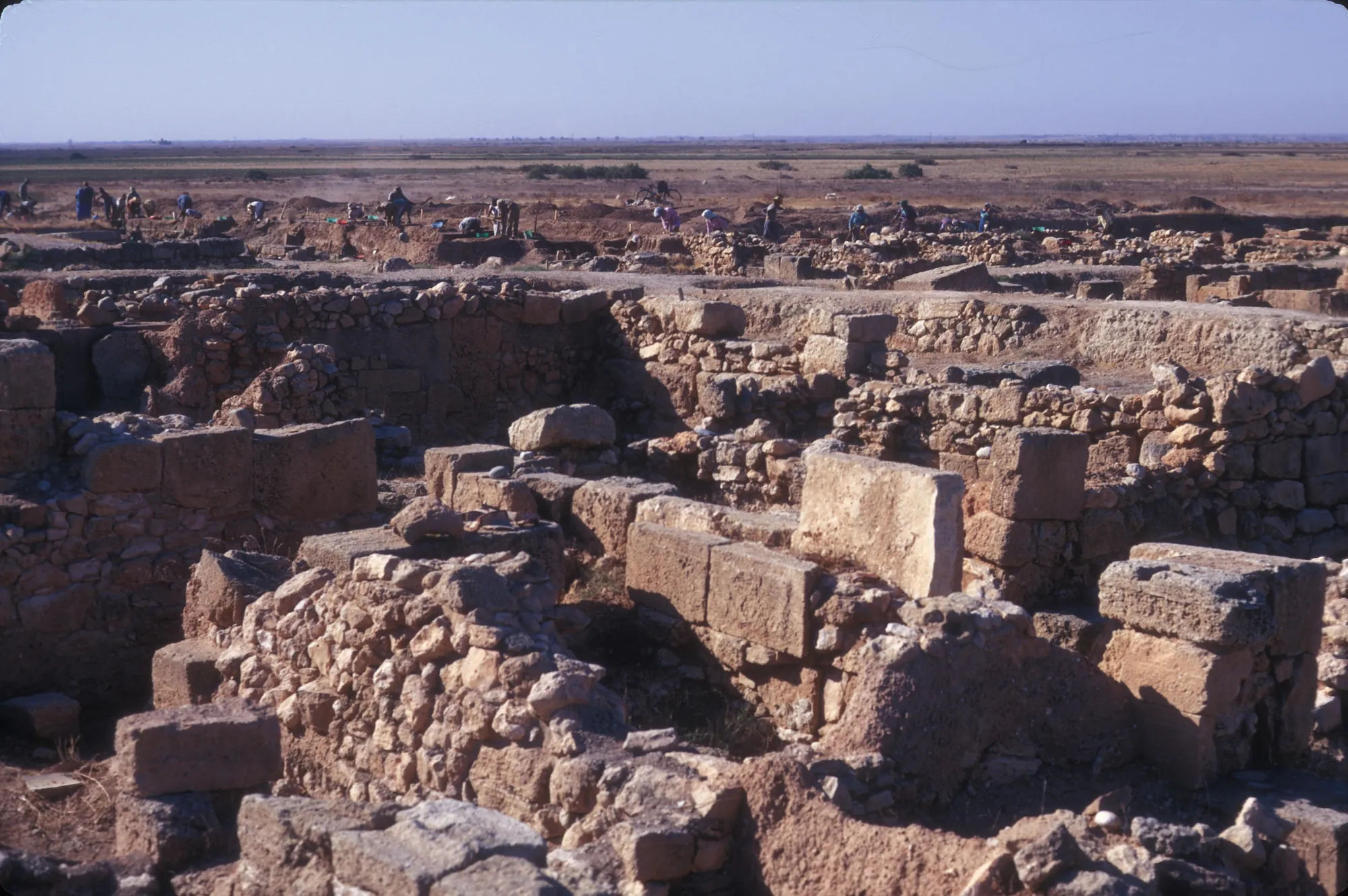
Enkomi is a walled Late Bronze Age town near the mouth of the Pedieos river on the bay of Famagusta, lived in from about 1650 BC until it was gradually abandoned for nearby Salamis. It was a port for Cypriot copper, and its excavations produced metal workshops, sanctuaries with bronze cult statues, rich tombs and the largest group of Cypro-Minoan inscriptions on the island.
In the compendium
Bronze Age Sanctuaries and Temples
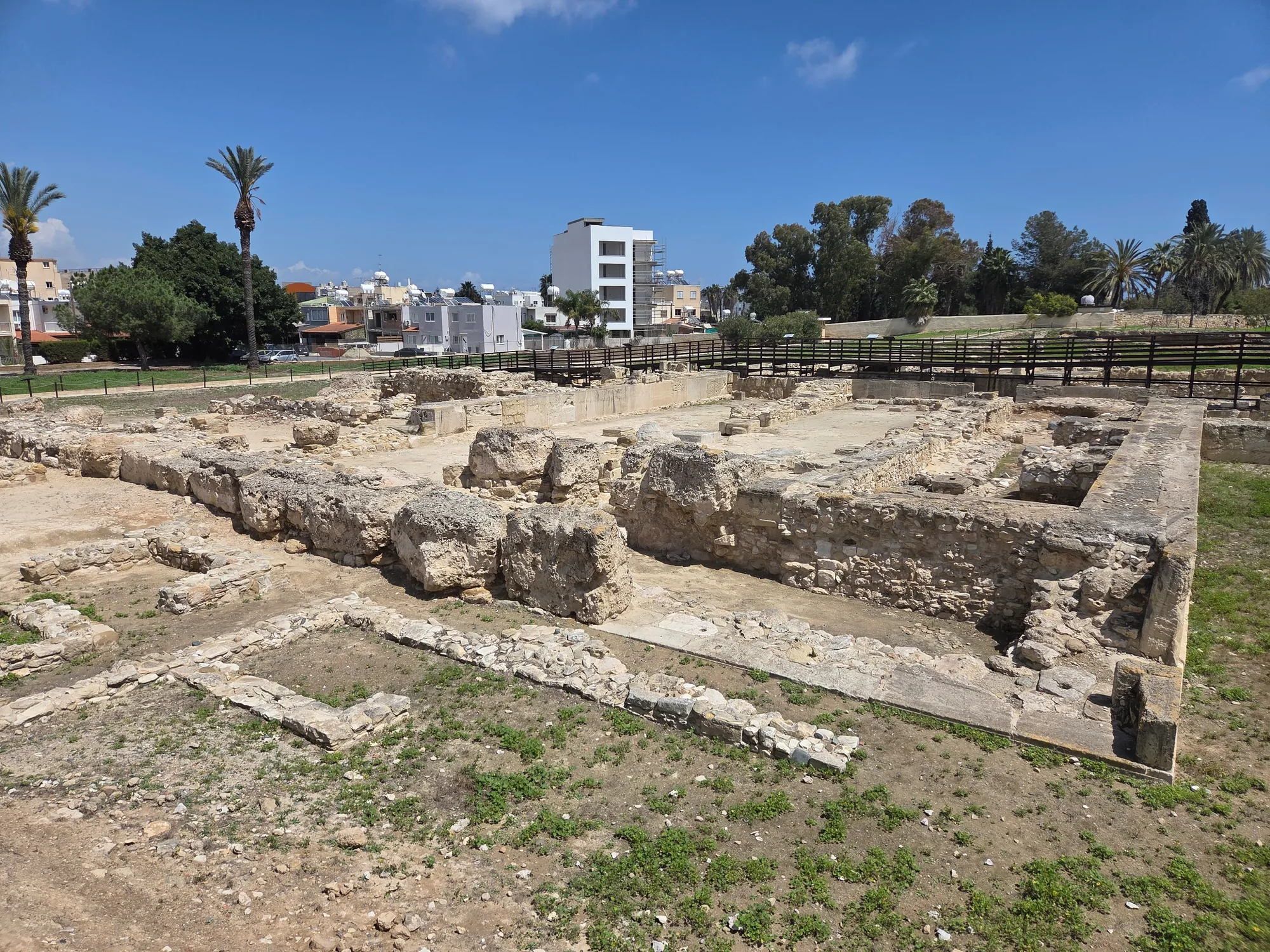
Cypriot cult buildings of the Bronze Age, from the clay sanctuary model of Vounous to the walled courts, altars and inner rooms of the Late Cypriot temples.
In the compendium
Egypt
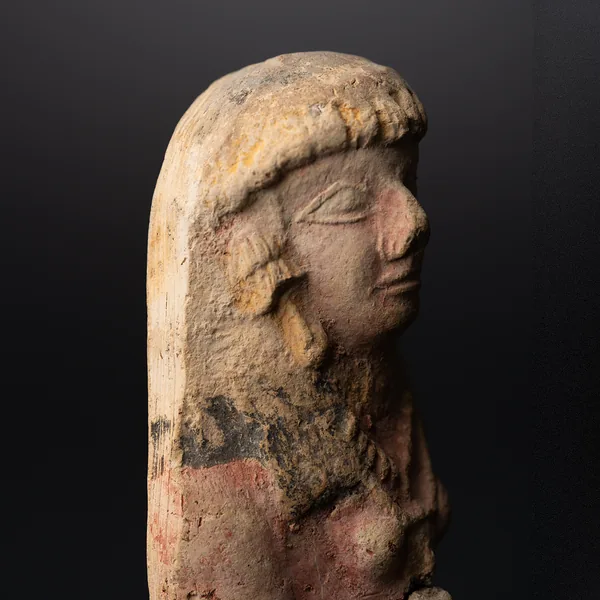
Ancient Egypt, Cyprus's partner in copper, pottery and prestige goods from the Middle Kingdom to the Ptolemies, who annexed the island.
In the compendium
Hittite Empire and Cyprus
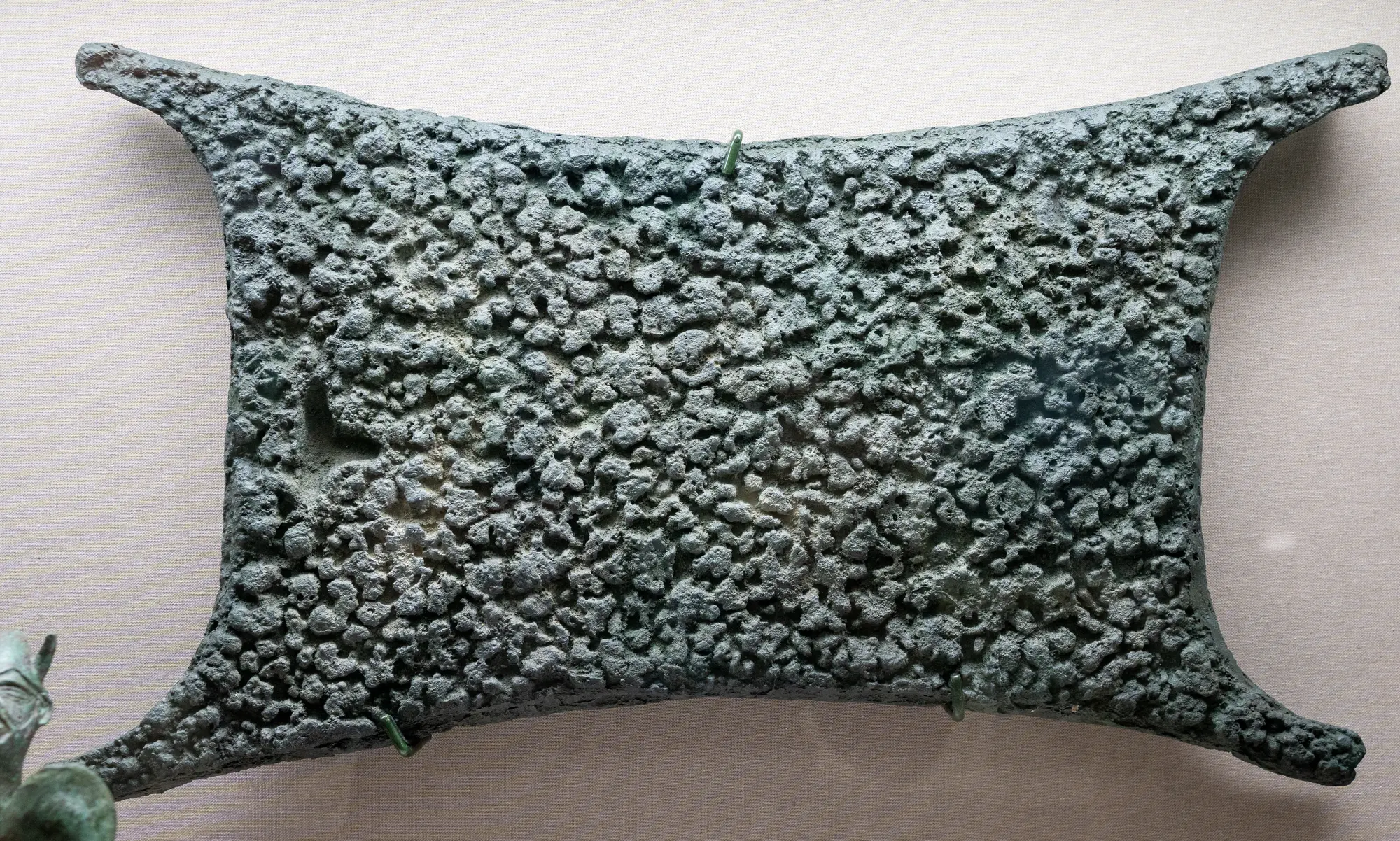
The Late Bronze Age Anatolian empire that claimed Alashiya as a tributary but left almost no material trace on Cyprus.