
Conference paper·CAARI Cyprus·2021
The Entomological Expedition of Giacomo Cecconi and the Formation of the Cypriot Collection of the National Archaeological Museum of Florence
Chapters
About the video
Sebastiano Soldi examines how a turn-of-the-century zoological trip contributed to the Cypriot collection at the National Archaeological Museum of Florence. The paper forms part of a wider project, promoted by Fulvia Lo Schiavo and coordinated by Mario Iozzo and Silvana Di Paolo, to study and reorganise the museum's Cypriot holdings, which had returned to the storerooms after the 1966 flood of the Arno.
Soldi first outlines the museum's institutional history, from the Medici and Habsburg-Lorraine collections and the 1737 Family Pact of Anna Maria Luisa de' Medici to the creation of the Royal Archaeological Museum in 1870 and its opening in the Palazzo della Crocetta in 1883. Its director, Luigi Adriano Milani, organised the Central Museum of Etruria alongside comparative displays of Bronze and Iron Age material from Greece, Crete, Rhodes, Anatolia and Cyprus to place Etruscan civilisation in a wider Mediterranean context. The museum already held 244 Cypriot objects donated by Riccardo Colucci, Italian consul in Cyprus between 1868 and 1872.
The second half of the paper turns to Giacomo Cecconi, a natural scientist and pioneer of Italian forest entomology at the Royal National Forest Institute in Vallombrosa. In 1897 Cecconi received a 300-lira grant from the Italian Geographic Society for a four-month research trip to Cyprus, following earlier zoological fieldwork on Crete in 1894. On the advice of the Italian consul in Larnaca, he postponed the trip because of a smallpox outbreak on the island, travelling instead in late 1898 and early 1899. During January 1899 he visited Larnaca, Famagusta, Trikomo, Akanthou, Agios Amvrosios, Bellapais, Kyrenia, Nicosia and Kythrea.
Although Cecconi's scientific publications do not mention antiquities, letters in the 1902 correspondence show that he wrote to Milani offering to sell about fifteen small pottery vessels and terracotta objects bought in Cyprus to recoup part of his travel expenses. Milani purchased the lot of eighteen objects for 60 lire. Soldi notes that the assemblage spans the Bronze and Iron Ages as well as the Hellenistic, Roman and Byzantine periods, including a well-preserved Red Polished jug and small bowl alongside poorly preserved Roman lamps and a Hellenistic coin. After this sale, Cecconi introduced Milani to a Cypriot dealer in Larnaca, Caremfilaki, sending photographs of objects for sale. Soldi suggests that Cecconi had probably bought his own small group from Caremfilaki, who later supplied larger lots to the Florence museum.
From our collection
Pieces in the Drakopoulos collection of the kinds and periods this talk covers: Red Polished ware.
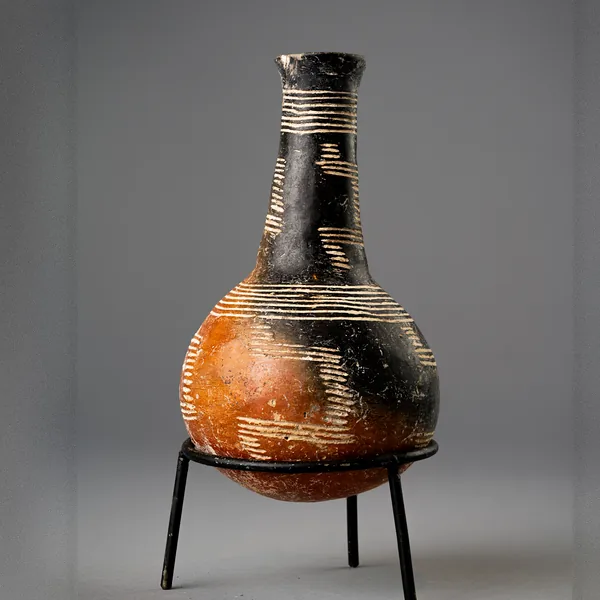
Red Polished Black-Topped Bottle with Stepped Incised Bands
Red Polished ware
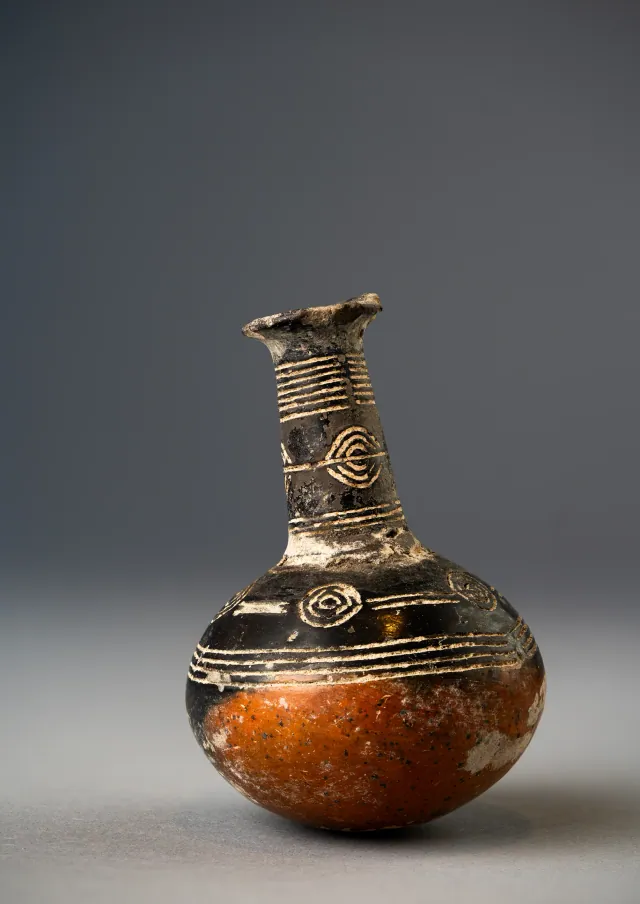
Red Polished Black-Topped Bottle with Incised Concentric Circles
Red Polished ware
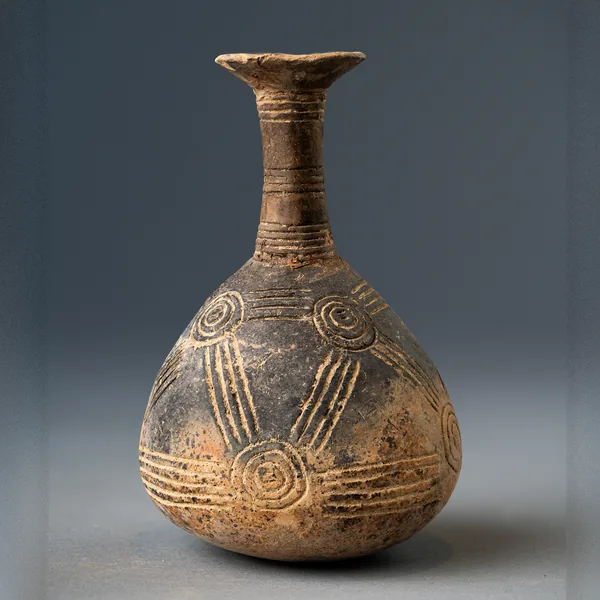
Red Polished Bottle with Linked Concentric Circles
Red Polished ware
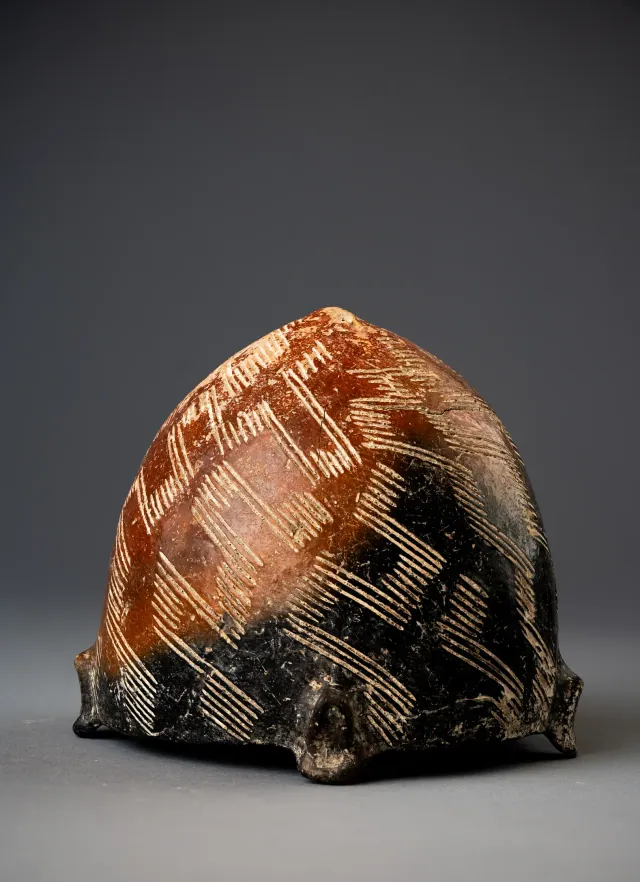
Black-topped Red Polished Tulip Bowl with Incised Hatched Lattice
Red Polished ware
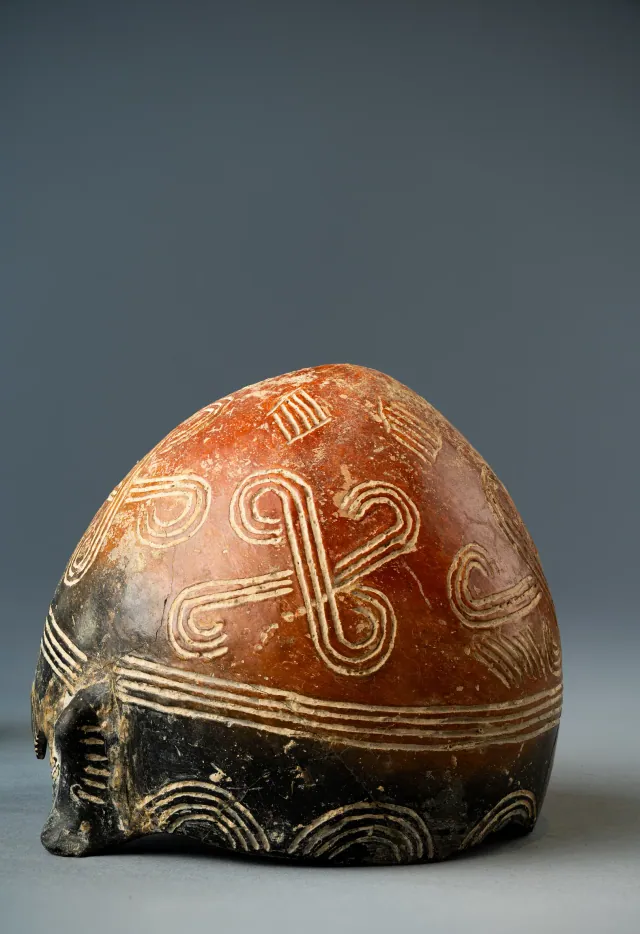
Black-topped Red Polished Tulip Bowl with Incised Spiral-armed Cross, Circles and Arcades
Red Polished ware
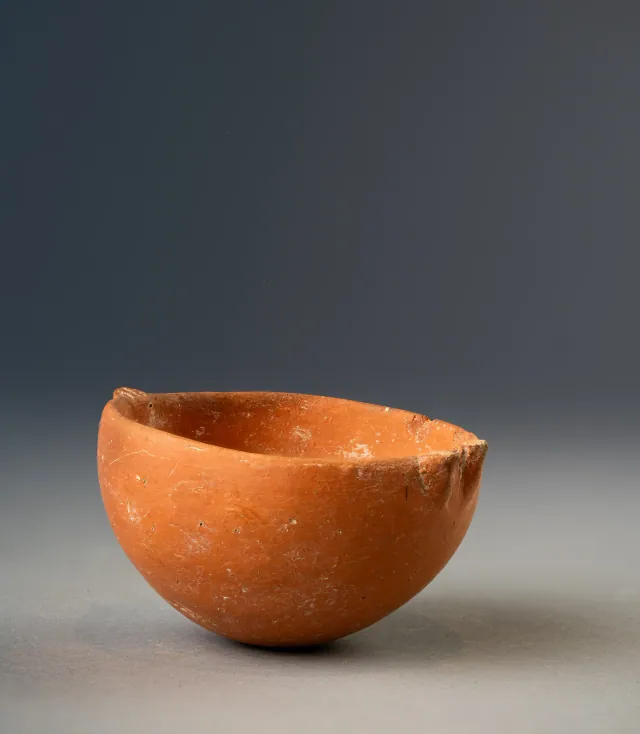
Red Polished Hemispherical Bowl with Two Rim Lugs
Red Polished ware
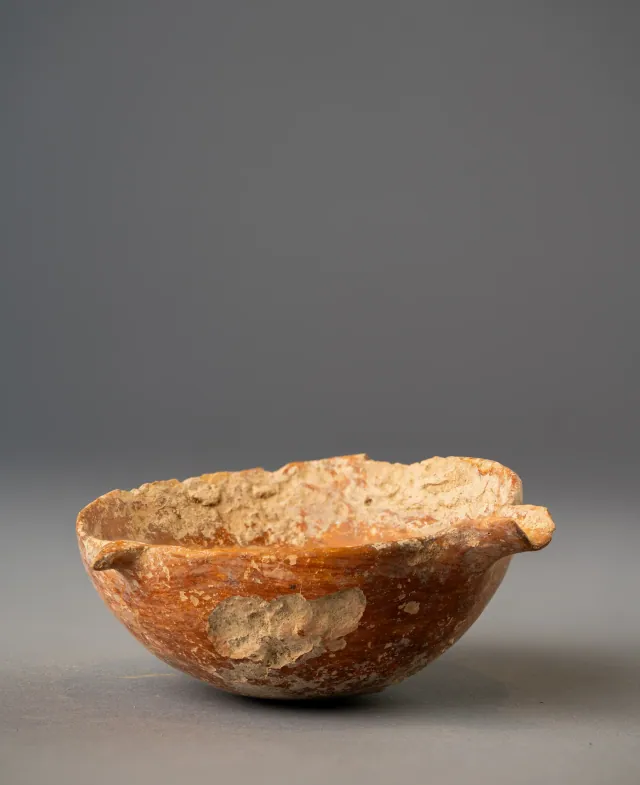
Red Polished Bowl with Two Opposed Tab Lugs
Red Polished ware
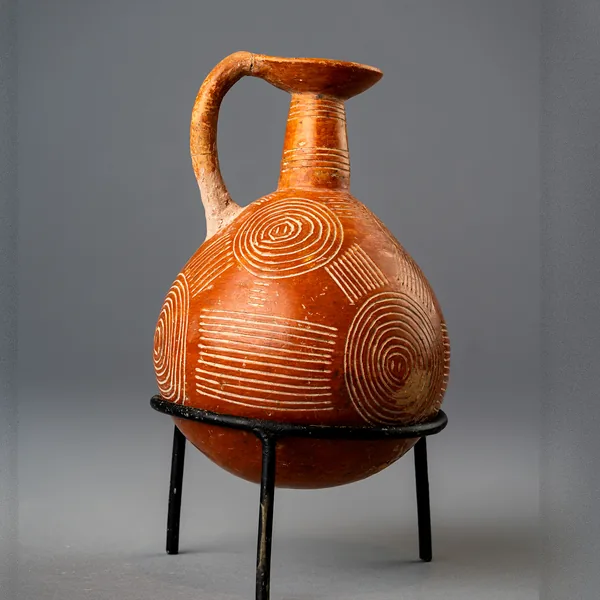
Red Polished Jug with Concentric Circles and Line Panels
Red Polished ware
Found at the places discussed
Objects in our catalogue, in museum collections, recorded as found at these sites.

Background
Where to read more on this site before or after watching.
The site
Kyrenia
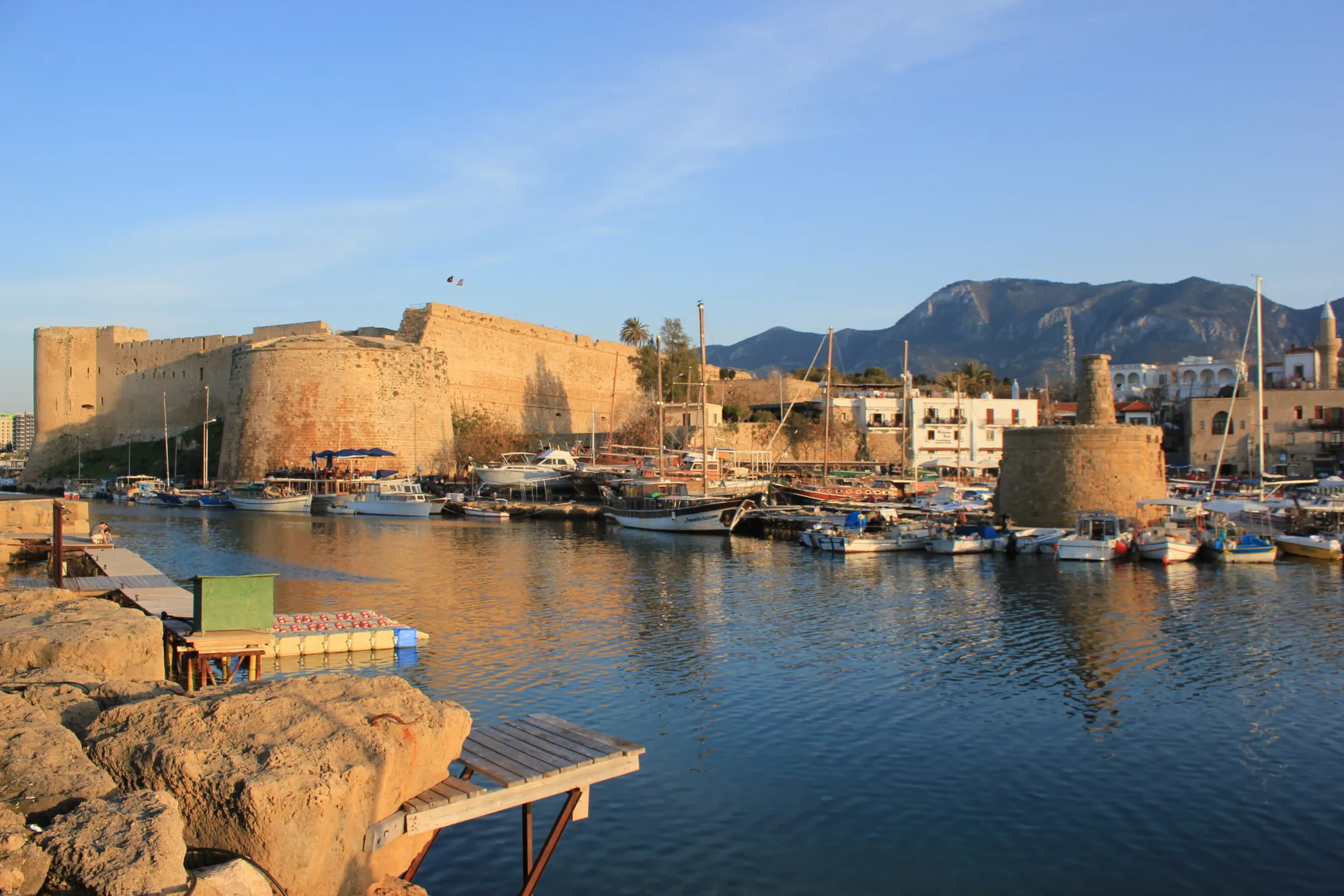
Ancient Keryneia lies under the old town of Kyrenia (Girne) round its small harbour on the north coast. The town was never excavated: it is known from tombs cleared in the 1960s and early 1970s, from a few texts and inscriptions, and from the merchant ship that sank off it around 300 BC, now shown in Kyrenia Castle.
In the compendium
Red Polished Ware
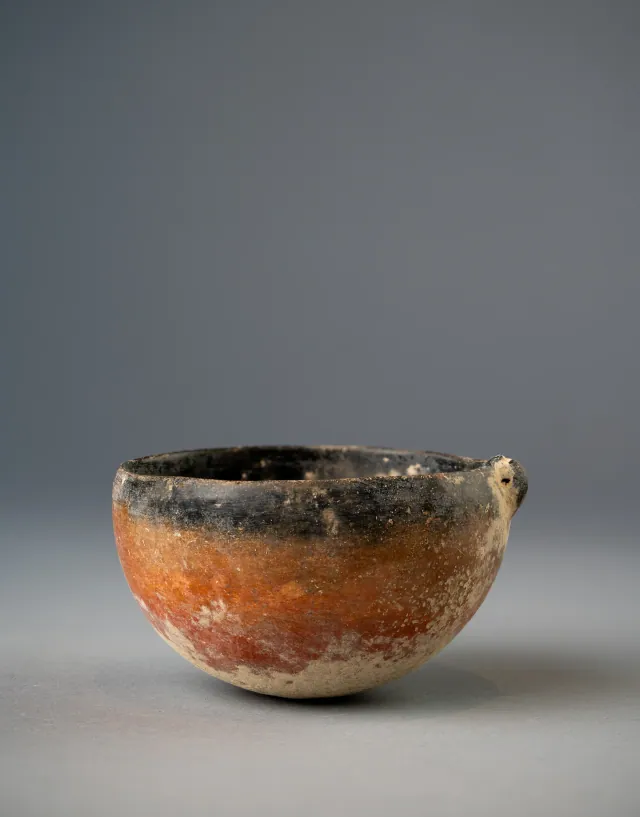
Red Polished is the hand-made, red-slipped and burnished pottery that dominated Cyprus in the Early and Middle Bronze Age.
In the compendium
Lamps
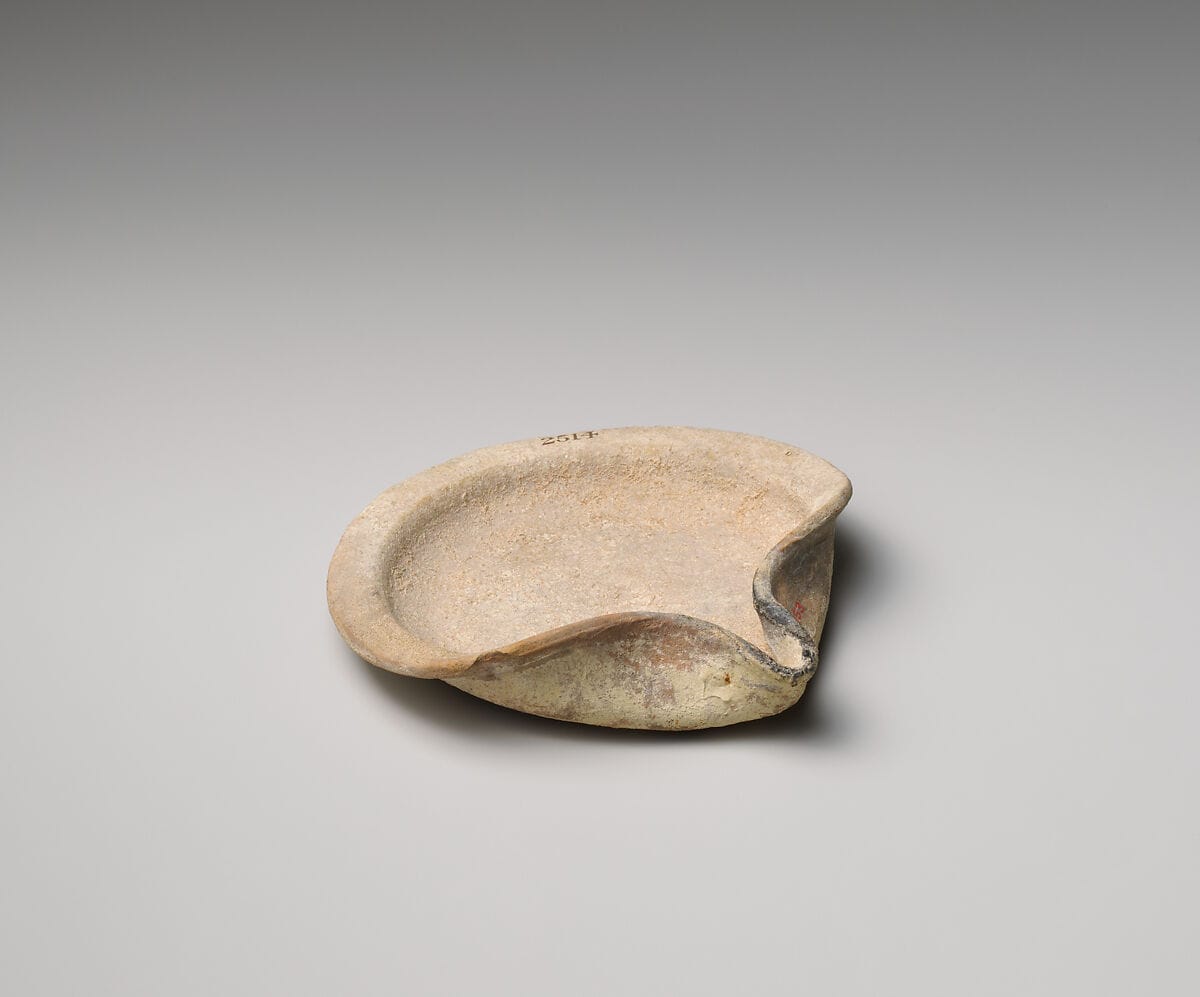
A small hand-held vessel that burned oil or fat on a wick, made in Cyprus as an open saucer from the Late Bronze Age and as a closed lamp from the Hellenistic period.

In the compendium
Coins of Ancient Cyprus
The coins struck in Cyprus from the late sixth century BCE by the city-kingdoms, then by Alexander, the Ptolemies and Rome, and what they record.
Map of Cyprus
Places discussed in the talk
- Has a page on this site
- Other places
- Ground above 200, 500, 1,000 m
Places
- 1Trikomo (approx.)
- 2Akanthou (approx.)
- 3Kyrenia
- 4Kythrea (approx.)