
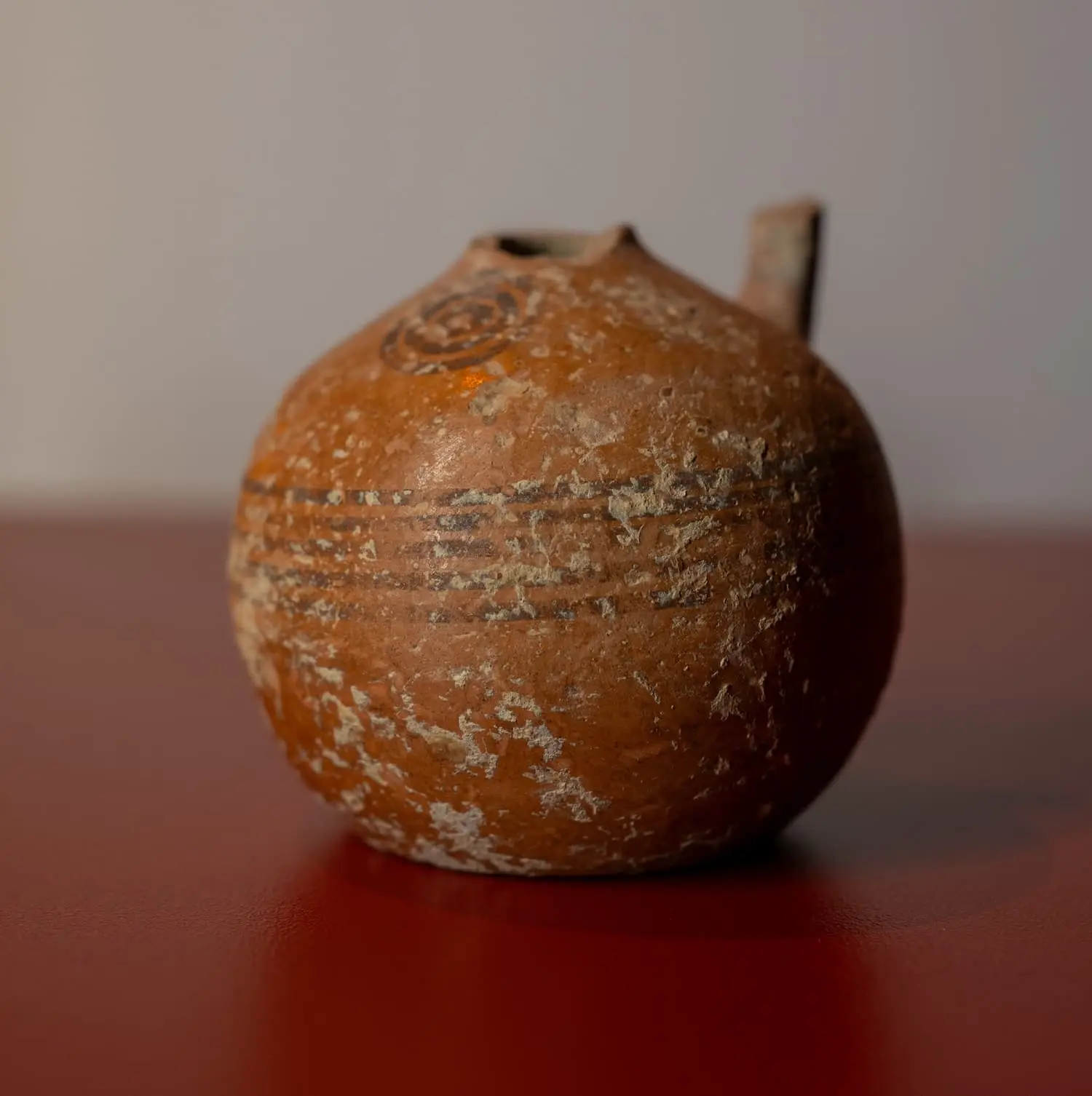
Geometric III
Miniature Black-on-Red Globular Juglet
Miniature squat Black-on-Red juglet with a concentric-circle group on the shoulder and fine encircling lines; neck and handle broken, heavy lime crust.
Date
850 - 600 BC
Accession No.
JUG-GE-021
Collection
Alexis Drakopoulos
3D Model
Provenance
- Mid 20th century–2023, Private collection, Cirencester, Gloucestershire, United Kingdom
- 2023–present, Alexis Drakopoulos, London
Cypro-Geometric III to Cypro-Archaic I, c. 850–600 BCE · Black-on-Red ware · Wheel-made · H. 6 cm
A miniature juglet with a squat globular body that sits directly on a small, rounded base. The neck is broken away at the shoulder, leaving a ragged opening, and only the lower stub of the strap handle survives, rising from the shoulder. The surface is an orange-red slip, matt now, heavily flecked and patched with pale lime encrustation.
The decoration is in black paint. On the shoulder, to one side of the neck, is a single small group of three or four concentric circles, painted with a steady hand. Around the widest part of the body runs a zone of five or six fine encircling lines, evenly spaced and crisp where the lime has not covered them. The lower body is left plain.
Commentary
Black paint on a red slip identifies the juglet as Black-on-Red, the red-slipped member of Gjerstad's Iron Age ware grid [1, p. 3]. Without the painted ornament the same surface would be classed as Red Slip, and with added white as Bichrome Red. The combination of a concentric-circle group on the shoulder and a belt of fine lines on the body is the ware's standard vocabulary on small closed shapes.
The squat globular body belongs to the early juglet repertoire of the ware. Schreiber, reviewing the early tombs, places squat and globular juglets with sparse circle decoration among the first Black-on-Red forms, appearing with barrel-juglets in the earliest tombs at Palaepaphos-Skales in Cypro-Geometric III, and notes their closeness to the squat juglets of White Painted and Bichrome [2, pp. 281, 288–289; 3, p. 224]. The form continues into Cypro-Archaic I, which gives a range of c. 850–600 BCE. The lost neck removes the rim shape, the most useful criterion for a closer date.
Two juglets of similar size in the British Museum make useful comparisons: 1982,0729.210, from Gastria, a Black-on-Red juglet with concentric circles, H. 6.2 cm, and 1982,0726.48, a wheel-made Black-on-Red juglet decorated with concentric circles, H. 6.7 cm, both dated by the museum to Cypro-Geometric III to Cypro-Archaic I.
Juglets of this ware are generally understood as containers for small quantities of oil or perfumed oil [2, p. 88; 3, p. 224]. They were made on Cyprus and widely exported to the Levant, and the ware is now treated as a Cypriot product despite its older name "Cypro-Phoenician" [2, pp. 303–309]. No find-spot is recorded for this example.
The colour needs confirming. The only photographs were taken against a red surface, which warms the ground; if the clay proves to be buff rather than red-slipped under neutral light, the juglet would be White Painted.
References
- 1.Gjerstad, E. (1948) The Swedish Cyprus Expedition, Vol. IV, Part 2: The Cypro-Geometric, Cypro-Archaic and Cypro-Classical Periods. Stockholm: The Swedish Cyprus Expedition, p. 3.
- 2.Schreiber, N. (2003) The Cypro-Phoenician Pottery of the Iron Age. Culture and History of the Ancient Near East 13. Leiden and Boston: Brill, pp. 88, 281, 288–289, 303–309.
- 3.Smith, J. S. (2009) Art and Society in Cyprus from the Bronze Age into the Iron Age. Cambridge: Cambridge University Press, p. 224.
More from the Catalogue
Browse related objects
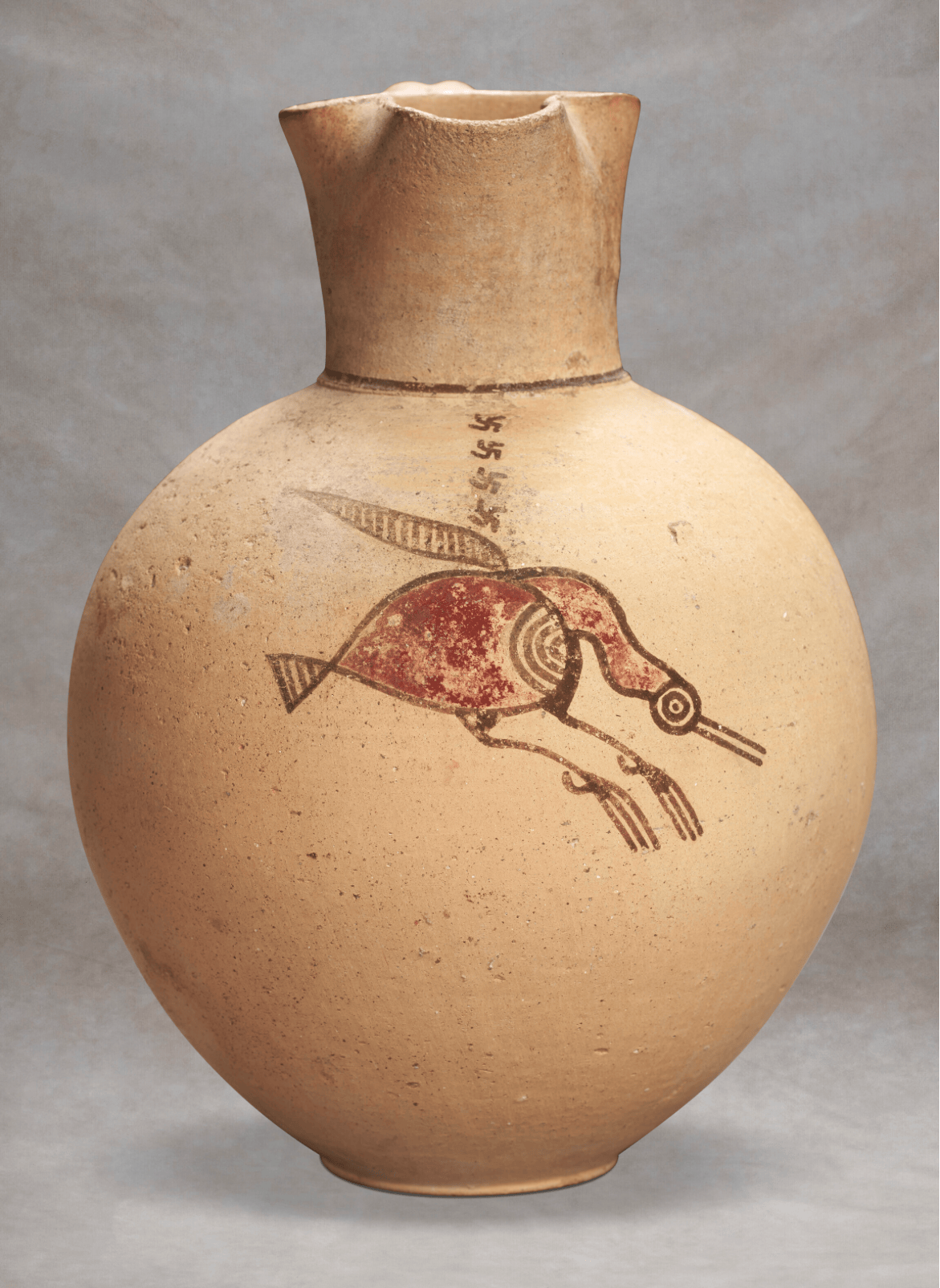
Bichrome Oinochoe
Archaic I
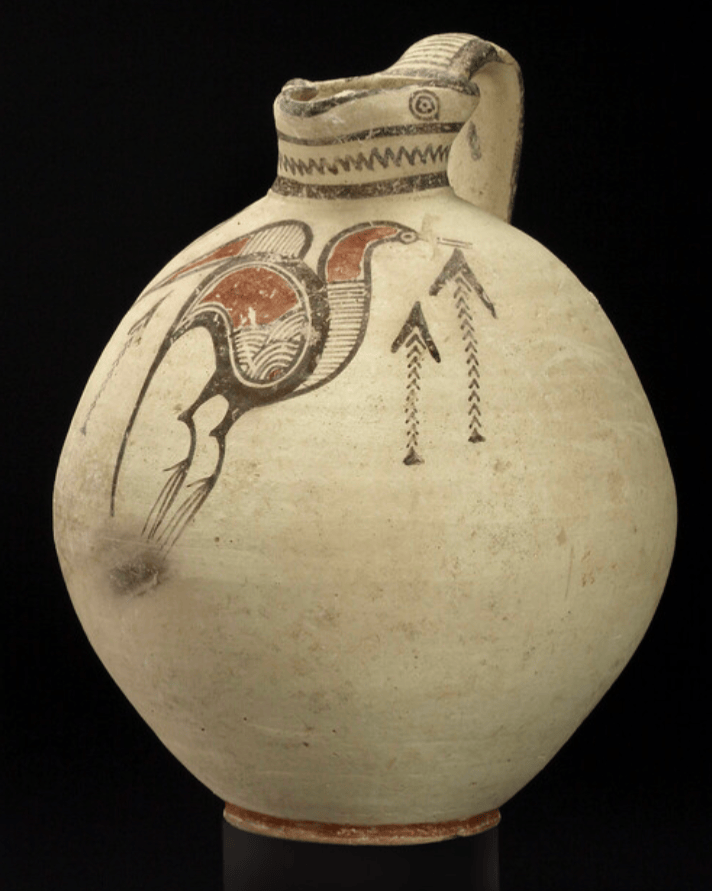
Free-field bichrome jug with image of an Ibis bird and reeds
Archaic
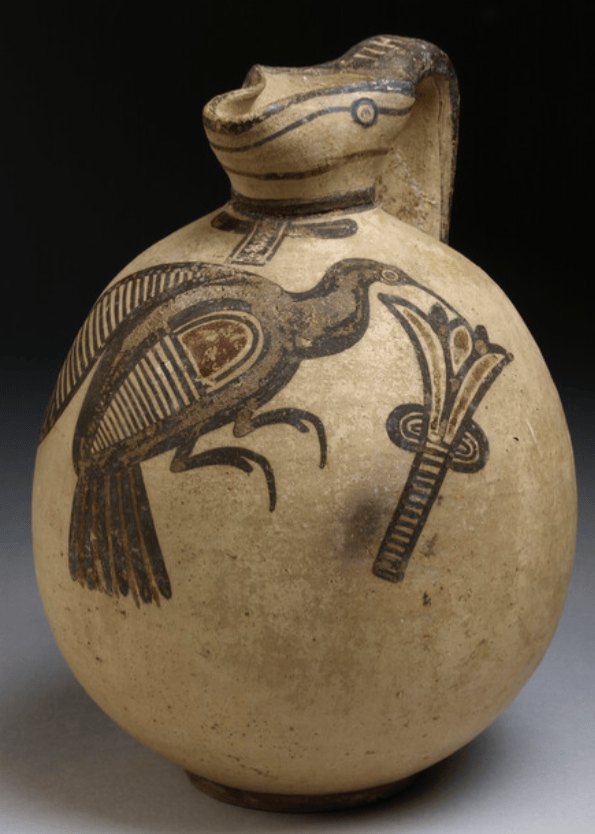
Squat bichrome jug in free-field style with image of bird picking a lotus flower
Archaic
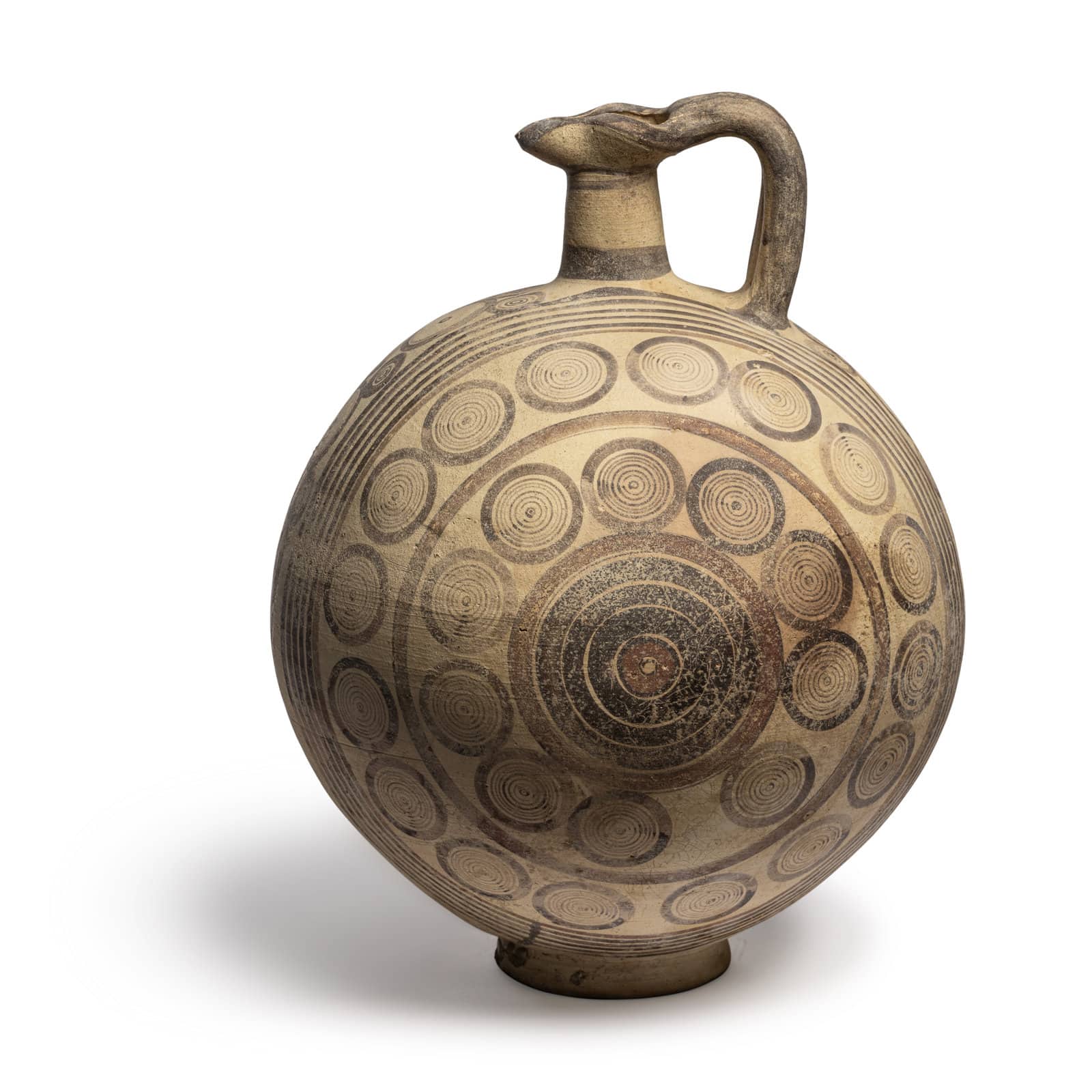
A Cypriot Bichrome-Ware Oinochoe Jug
Archaic I
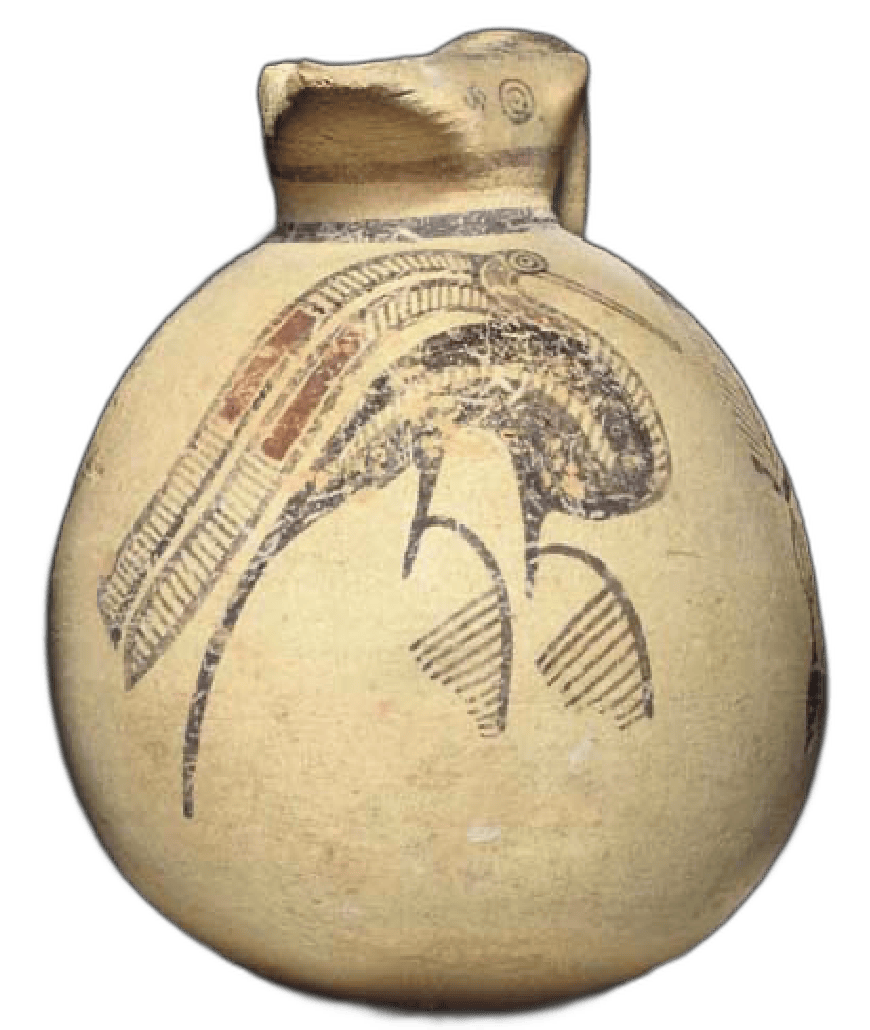
Oinochoe with Free Field Bird
Archaic I
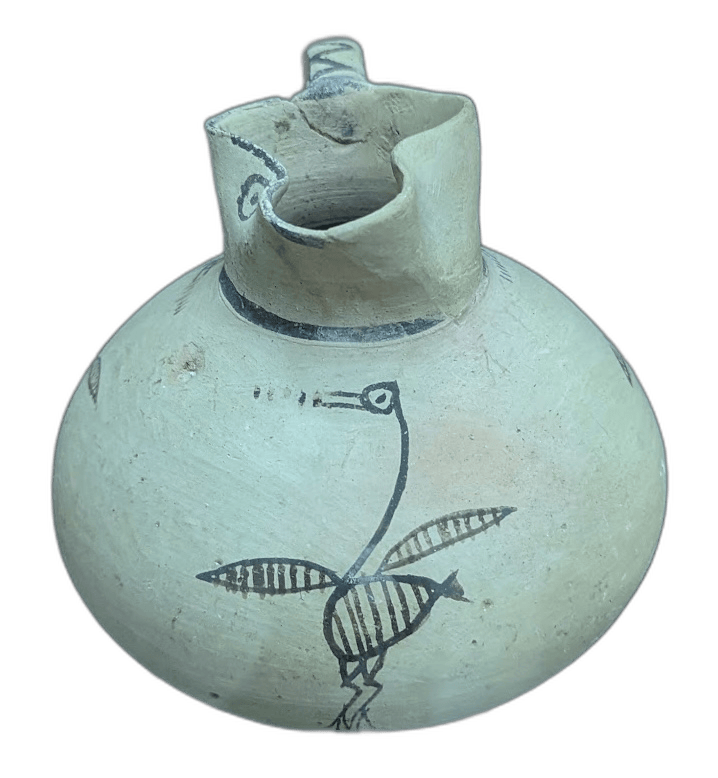
Small Oinochoe with Free Field Bird
Archaic I
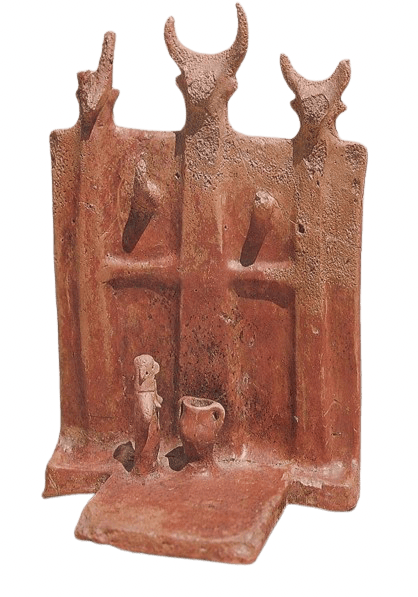
Red Polished Shrine
Middle Bronze Age I
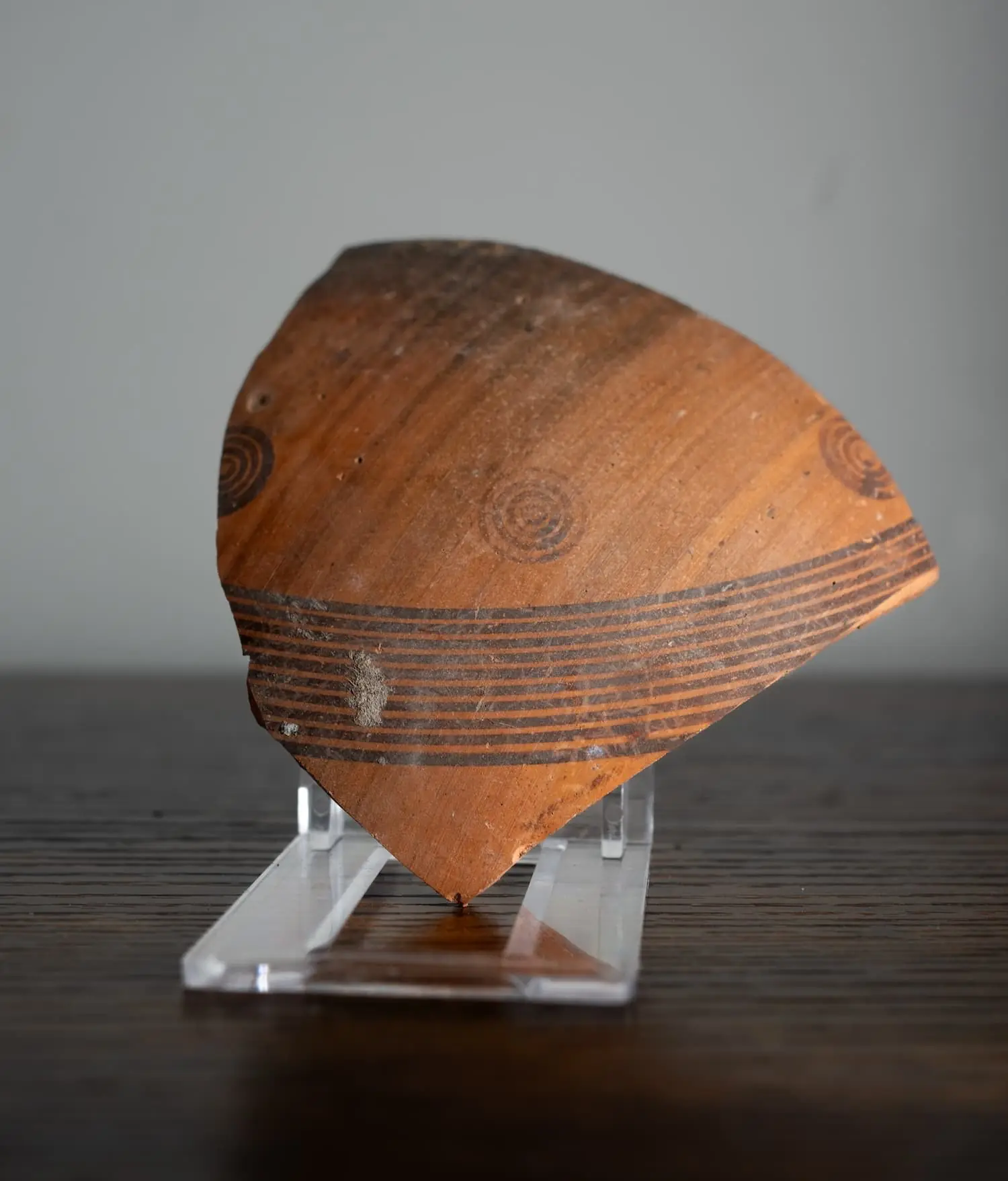
Black-On-Red Geometric Jug Sherd
Geometric II
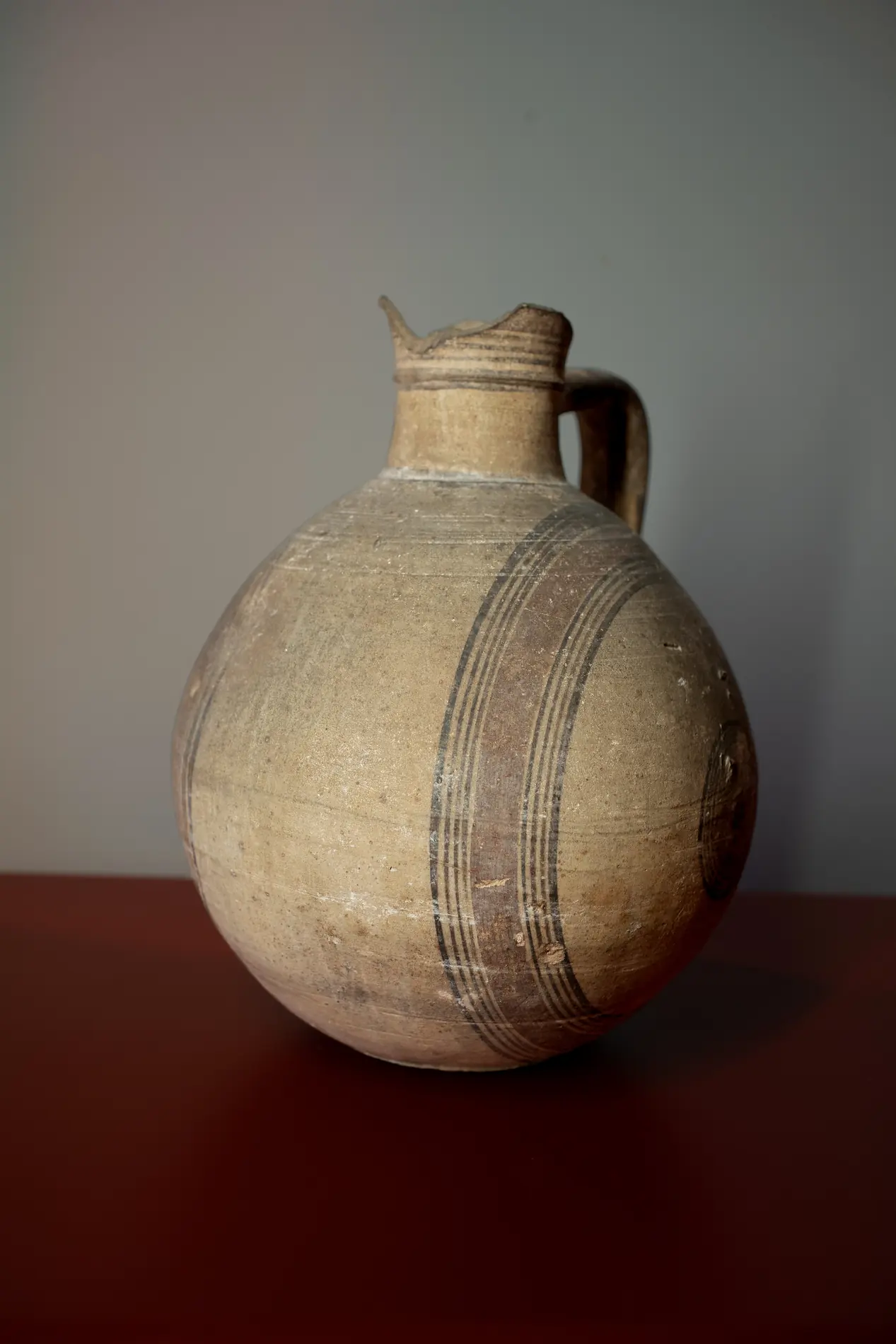
Bichrome Jug
Geometric
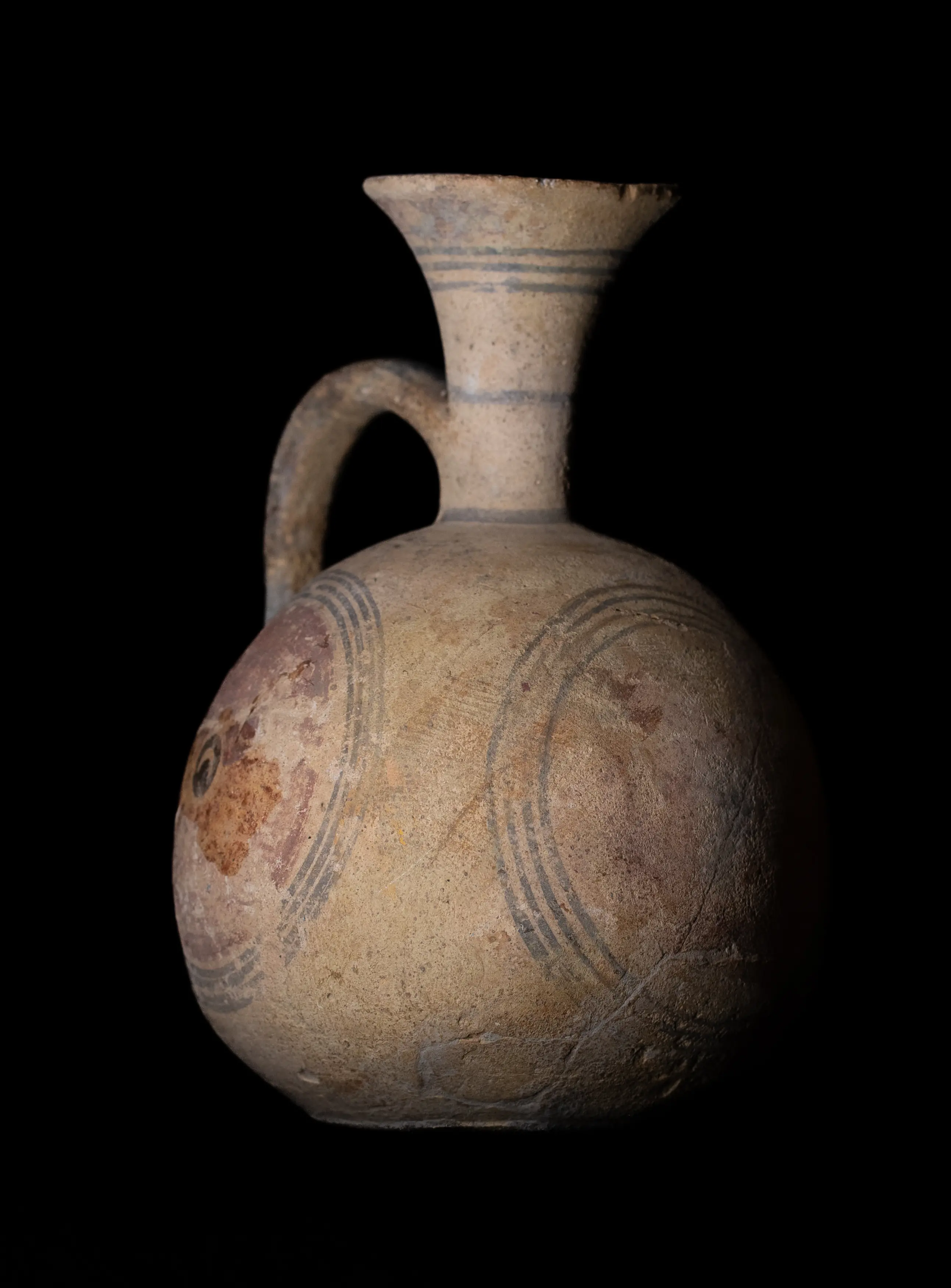
Bichrome Juglet
Geometric
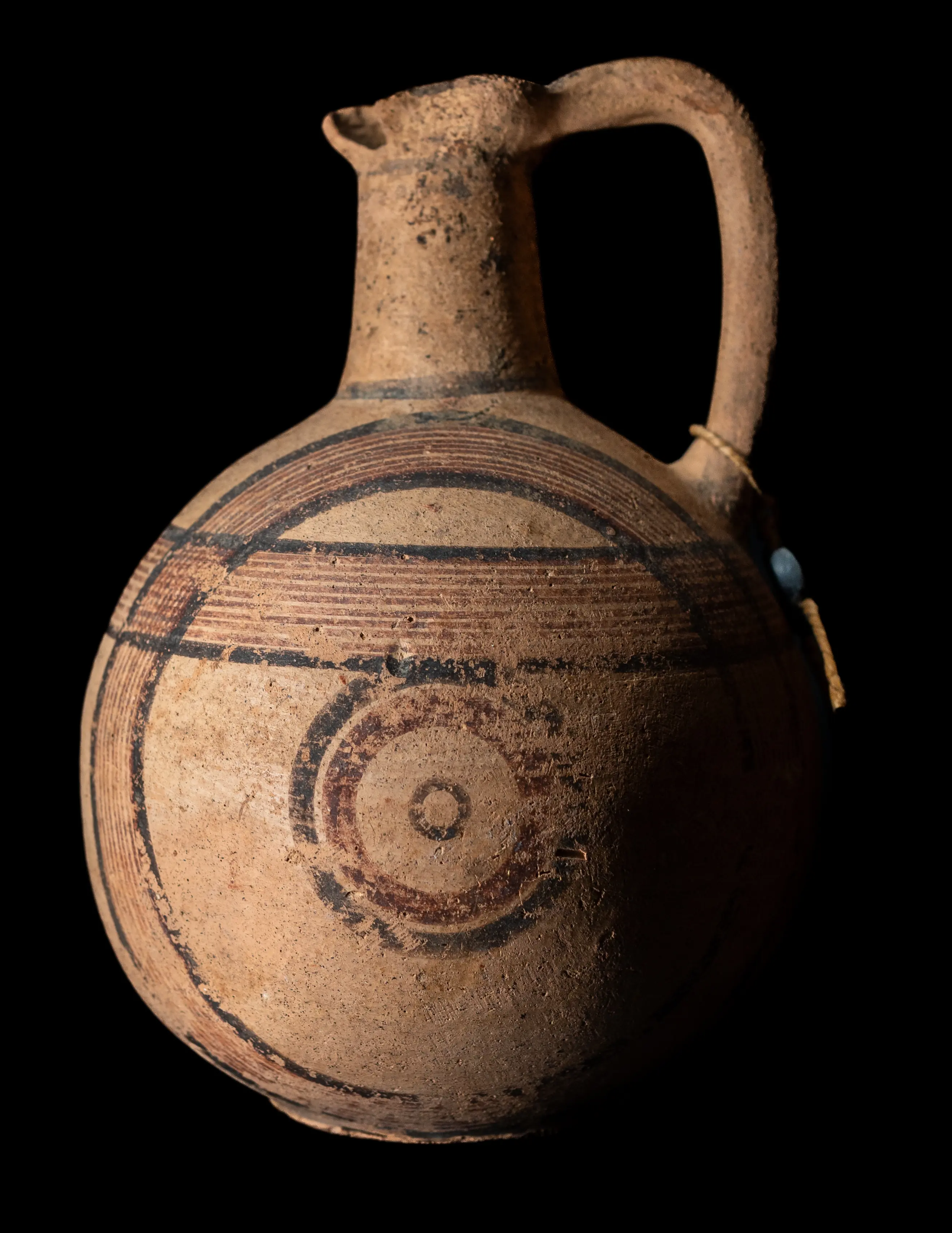
Bichrome Oinochoe
Geometric
Juglet
Archaic II
Oinochoe
Geometric III
Jug
Archaic I
Juglet
Archaic I
Jug
Geometric I
Terracotta jug
Early Bronze Age I
Juglet
Geometric I