
Research·Roundup
This Week in Cypriot Archaeology: 3–9 August 2026
Ian Todd, who led the Vasilikos Valley Project at Kalavasos from 1976, dies; conservation goes on at two Troodos painted churches; a Yale student tests Idalion figurines for Egyptian blue.



Ian A. Todd, who directed the Vasilikos Valley Project at Kalavasos from 1976, died in early August. Deputy Minister of Culture Vasiliki Kassianidou toured conservation works at two of the painted churches of the Troodos and at the monastery of Agios Irakleidios at Politiko. From Idalion, a Yale student reported on her search for Egyptian blue on painted figurines.
Map of Cyprus
This week's stories
- People
- Fieldwork and books
- Monuments
- Ground above 200, 500, 1,000 m
Sites on this map
- 1Kalavasos-Tenta
- 2Kalavasos-Ayios Dhimitrios
- 3Ayios Epiktitos-Vrysi (approx.)
- 4Idalion
- 5Politiko-Troullia (approx.)
- 6Agios Irakleidios, Politiko (approx.)
- 7Pyrga (approx.)
People
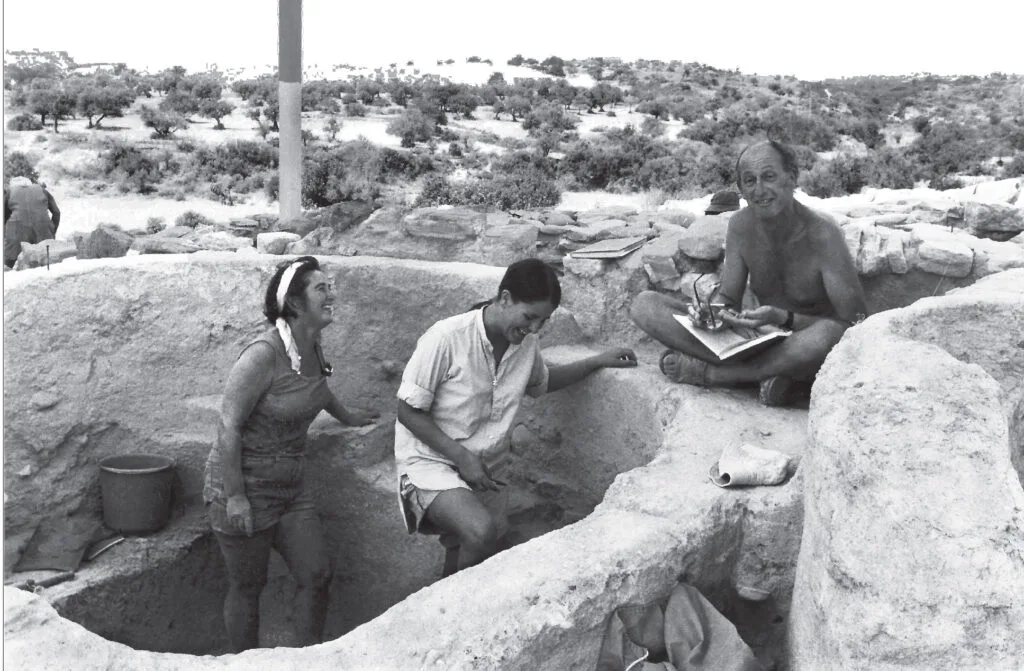
The Archaeological Research Unit of the University of Cyprus published an obituary. Born in Britain, he took both his degrees at the University of Birmingham and worked on Neolithic sites in Turkey, Iran and Jordan, and at Vrysi near Agios Epiktitos in Cyprus. He joined Brandeis University in 1969. The valley project he led studied the whole of the Vasilikos Valley at once, through excavation, field survey, geology and environmental work.
Todd is most closely linked with Kalavasos-Tenta, a Neolithic village of round houses, defensive structures and burials, which Vassos Karageorghis, then Director of the Department of Antiquities, had drawn to his attention in 1975. The project also dug at Chalcolithic Kalavasos-Ayious and at the Late Bronze Age settlement of Kalavasos-Ayios Dhimitrios. Todd served as director of CAARI in its early years. A volume in his honour, Prehistoric Anatolia and Cyprus: Studies in Honour of Ian A. Todd, came out in 2025 with contributors from Europe, North America and Australia, and the Association of Cypriot Archaeologists joined the tributes.
Monuments
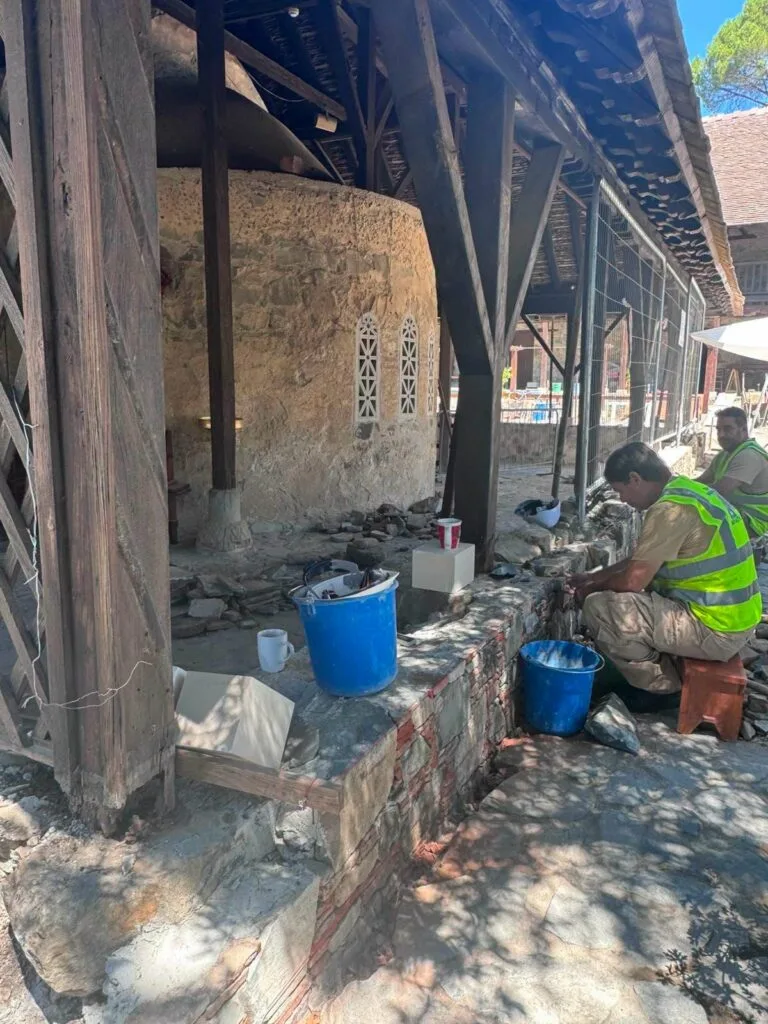
Kassianidou went with the Director of the Department of Antiquities, Chrysanthi Kounnou. Both churches they visited are among the ten Troodos churches on the UNESCO World Heritage List. At the Holy Cross of Agiasmati at Platanistasa, improvements to the access routes are finished. Department teams are conserving the external timber structures and masonry of Panagia tou Araka at Lagoudera, with completion expected in November 2026. At Agios Irakleidios, a project costing more than €2 million, run with the Public Works Department, is due by the end of the year. Since last year all ten churches have kept fixed hours six days a week, and the Deputy Ministry reports a rise in visitors.
In an interview published on 3 August, Sotos Ktoris, Greek Cypriot head of the bicommunal Technical Committee on Cultural Heritage, put the committee's record at more than 200 monuments saved in about 15 years. The second phase at the monastery of Apostolos Andreas, on the Karpas peninsula in the area occupied by Turkey since the 1974 invasion, was expected to end in September 2026; it covers the medieval church by the sea, the wing built in 1919 and an octagonal cistern. Other current work includes churches in the occupied north and the mosque at Koilani.
The Royal Chapel of Agia Aikaterini at Pyrga was closed to visitors from 3 to 14 August, the Department announced on 4 August.
Fieldwork
Ella Hattem, an MA student at Yale University and a 2026 Platt Fieldwork Scholarship holder, reported on her season at Idalion, where the team excavated baulks on the Eastern Terrace. Alongside the digging she studied the paint on terracotta figurines and limestone sculpture fragments. Eleven registered objects in the Cyprus Museum were photographed, tested with visible-induced luminescence, which makes Egyptian blue glow, and with portable XRF, and scanned in 3D. The STARC laboratory of the Cyprus Institute provided the equipment for the XRF and for FTIR analysis of two pieces, one from the museum and one from the site store.
Books
In Antiquity, online on 7 August, Caroline Barnes of the University of British Columbia reviewed Steve E. Falconer and Patricia L. Fall's An archaeological portrait of life in a Bronze Age Cypriot village: scientific explorations at Politiko-Troullia. The book draws on their excavations at the village, which began in 2004. Sidestone published it in Leiden in 2025 (ISBN 978-94-6426-367-1); it is free to read online.
Original sources
- Sigmalive: Cyprus mourns pioneering archaeologist Ian A. Todd
Press·
- Sigmalive: Troodos UNESCO churches undergo restoration
Press·
- ASOR: Learning My Colors, Excavations and Pigment Analysis at Idalion, Cyprus fieldwork report by Ella Hattem
Official release·
- Antiquity: review by Caroline Barnes of Falconer and Fall, An archaeological portrait of life in a Bronze Age Cypriot village
Paper·
- Politis (Parathyro): interview with Sotos Ktoris on the Technical Committee on Cultural Heritage
Press·
- Deputy Ministry of Culture: The Royal Chapel of Agia Aikaterini at Pyrga closed to the public
Official release·
On ancientcyprus.com
- Sites
- Kalavasos-Tenta, Idalion
- People
- Ian A. Todd, Vassos Karageorghis, Chrysanthi Kounnou, Steven E. Falconer, Patricia L. Fall, Sotos Ktoris
- Institutions
- Cyprus American Archaeological Research Institute, Vasilikos Valley Project, Brandeis University, University of Birmingham, Yale University, Cyprus Museum, The Cyprus Institute, Department of Antiquities of Cyprus, Technical Committee on Cultural Heritage
- Periods
- Neolithic, Chalcolithic, Late Bronze Age
More in Research
- Wheat traces at Chlorakas-Palloures question the view that cereals were minor in Chalcolithic Cyprus
- Strabo's Arsinoe near Palaepaphos probably never existed, argues study of a Ptolemaic queen's cult
- Charred barley and chaff in a Pyla shaft point to stored animal fodder around 1200 BCE
- Late Bronze Age hoard of at least 111 bronzes at Galinoporni was packed in cloth, cord and grass
- Bronze Age tombs at Hala Sultan Tekke held what may be burnt bouquets of grain and wild flowers