
Museums·News
Cyprus turns to the Louvre for its new Nicosia museum and discusses exchanging antiquities
Deputy Minister Clea Papaellina met Louvre president Christophe Leribault in Paris, following up the Cyprus at the Louvre exhibition of the EU presidency.



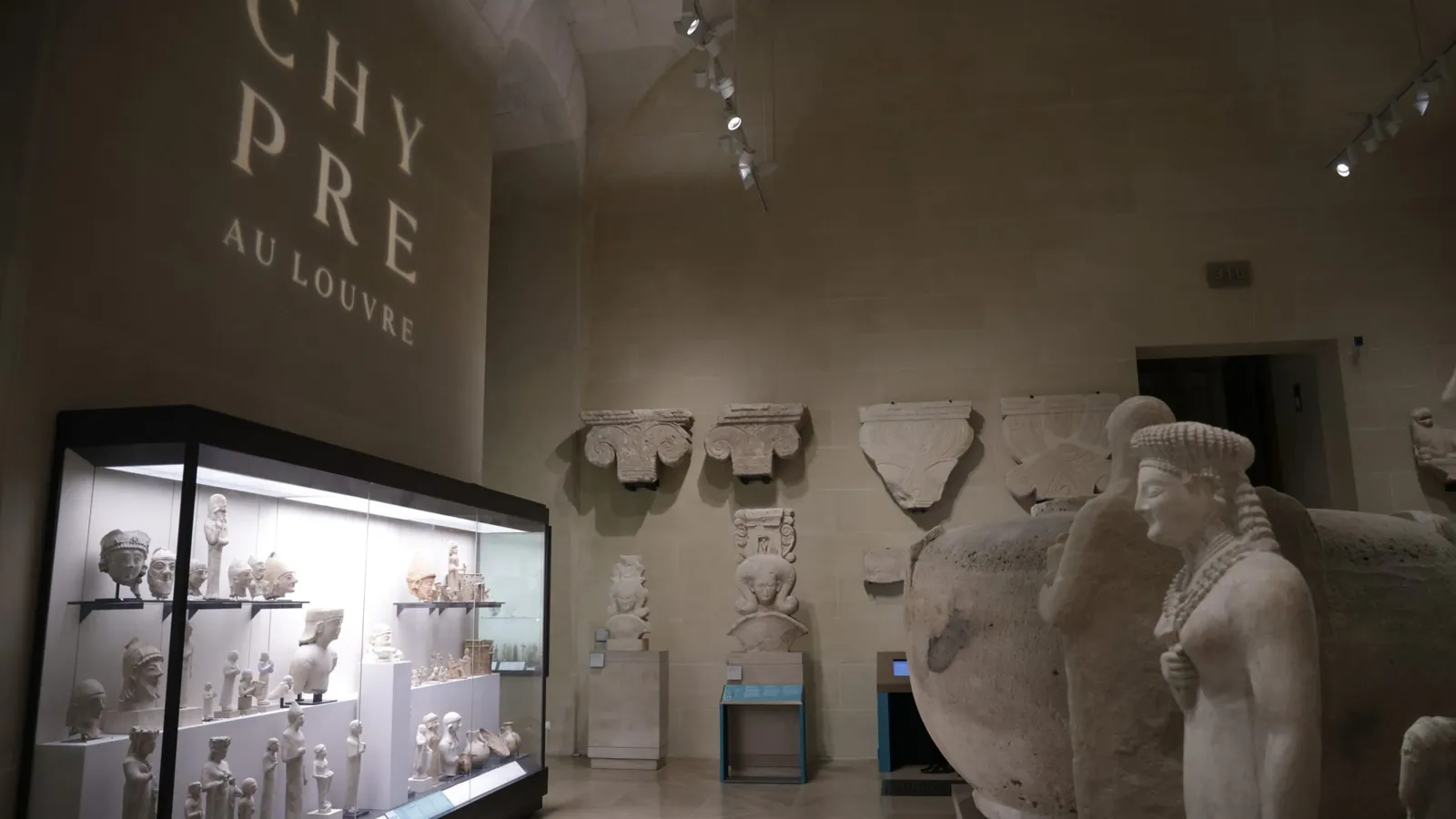
Cyprus has opened talks with the Louvre on drawing on the Paris museum's experience for the new Archaeological Museum of Cyprus, which is being built in Nicosia, and on more exchanges of archaeological objects between the Louvre and Cypriot museums. Deputy Minister of Culture Clea Papaellina put both on the table with the Louvre's president, Christophe Leribault, during meetings in Paris on 20 and 21 October, the Deputy Ministry of Culture announced on 22 October.
The round of meetings was meant to find concrete projects for the declaration of intent on cultural cooperation that Papaellina and the French Minister of Culture, Catherine Pégard, signed on 19 October. The Director General of the Deputy Ministry, Giorgos Papageorgiou, and the Cypriot ambassador in Paris, Pavlos Kombos, went with her to every meeting.
What was discussed at the Louvre
According to the Deputy Ministry, the two sides restated their wish to take a long-standing archaeological partnership further. They looked at how the Louvre's museological expertise, the planning and display of collections, could be put to use in the new museum, and at the scope for further object exchanges. No objects, dates or terms have been announced. Papaellina was then shown round the Louvre, its Cypriot collection included.
The ministry presented the talks as a sequel to Cyprus at the Louvre, part of the cultural programme for the six months, January to June 2026, in which Cyprus held the Presidency of the Council of the European Union. That exhibition opened on 10 February in halls 300 and 316 of the Louvre's Department of Near Eastern Antiquities and ran until 22 June, with sixteen antiquities lent by the Department of Antiquities shown beside the museum's own pieces.
How the Louvre's Cypriot collection was formed
Annie Caubet, who has written the collection's history, explains its place among the Near Eastern antiquities by the people who first took an interest in Cyprus: in France they were orientalists, scholars of the ancient Near East, who went looking for Phoenician and Cypriot inscriptions [1, pp. 23–25]. Before 1862 the museum received terracotta and stone figurines brought back by Félicien de Saulcy and Alban Guillaume-Rey, among them a statue base dedicated to Melqart in Phoenician (AO 4826) [1, p. 25].
The bulk came from a French mission in two parts. In 1862 Melchior de Vogüé travelled to Cyprus with William Waddington and the architect Edmond Duthoit, and in 1865 Duthoit went back alone [1, p. 28]. Vogüé was chiefly after inscriptions, but the mission came upon a huge deposit of votive sculpture at Golgoi, with more statues from Malloura, Trapeza, Paphos and Arsos [1, p. 28]. On his second trip Duthoit drew the great stone vase on the acropolis of Amathus, a 13-tonne block later brought to the Louvre on a French warship (AO 22897) [1, p. 28]. The curator of the day, Adrien de Longpérier, shrank from inventorying so much material; the sculptures were piled in a storeroom and registered only in 1968–69 [1, p. 29].
When the Louvre created its Department of Oriental Antiquities in 1881, the consignments Vogüé and Duthoit had sent from Cyprus went into it alongside the growing collections from Mesopotamia and the finds of Ernest Renan's mission to Phoenicia [1, p. 32]. Fieldwork in the 20th century added more through the sharing of finds, the old rule under which an excavation's finds were divided between Cyprus and the foreign team. Claude Schaeffer, encouraged by René Dussaud, curator of Oriental Antiquities from 1928 to 1936, brought Mycenaean pottery, weapons, tools and a bronze statuette of a banqueting god from Enkomi to the Louvre, and his finds from the Early Bronze Age cemetery at Vounous were divided between the Cyprus Museum, the Louvre and the museum at Saint-Germain-en-Laye [1, p. 36]. Both sites are now in the area occupied by Turkey since the 1974 invasion. The objects from the mission of Jean Bérard and Jean Deshayes at Ktima in the 1950s were the last to reach a French museum before the law allowing such sharing was repealed; since then, what French missions find in Cyprus stays on the island [1, p. 36].
The museum under construction
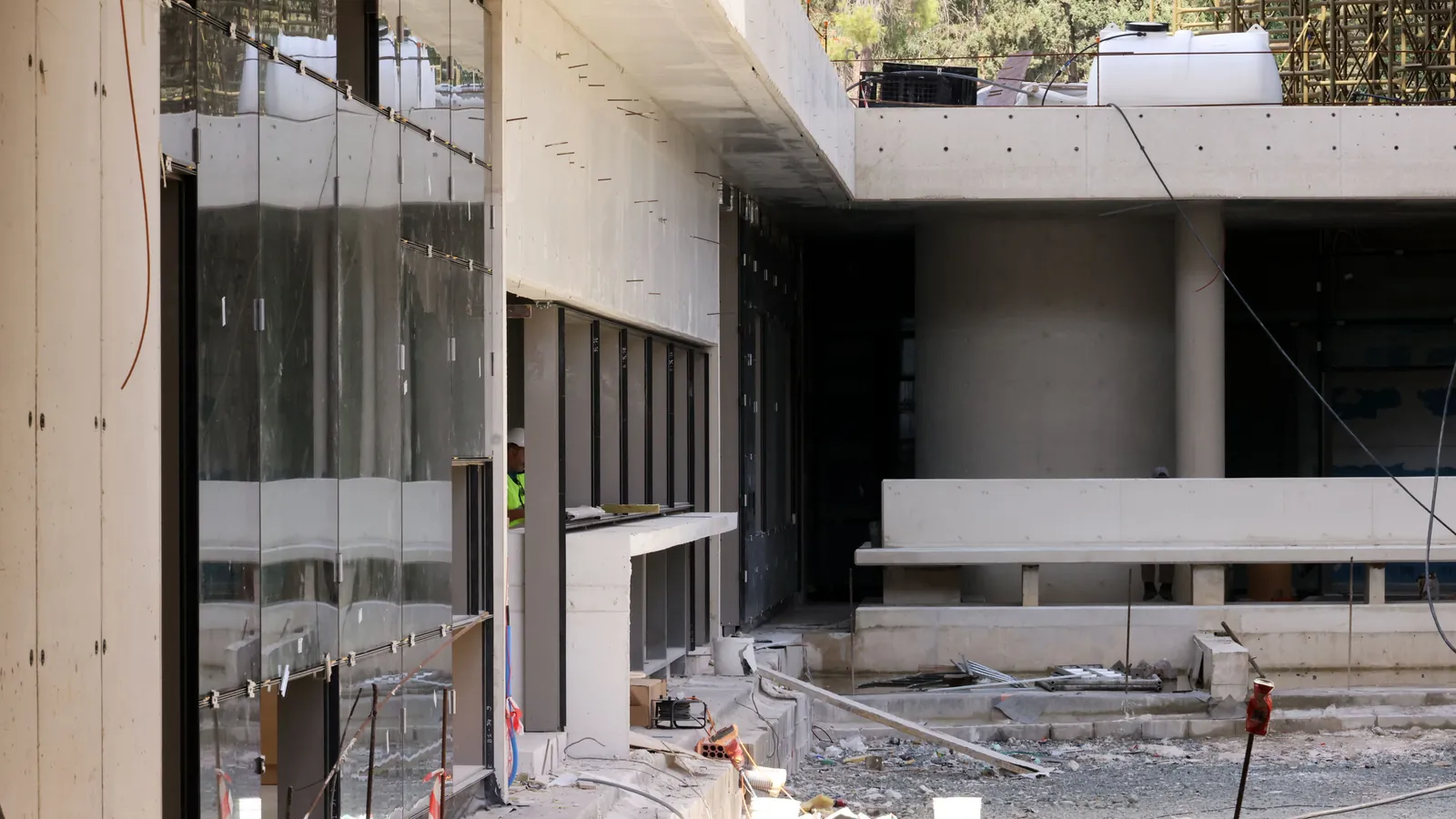
The new building will take over from the present Cyprus Museum on Museum Street, whose building came out of a competition held in 1906. Theoni Xanthi of XZA Architects won the international competition for its successor in 2017, and construction began in January 2023 on a plot near the medieval walls, at a cost of about €144 million. The galleries sit in three raised volumes that the architects call Place, Sea and World.
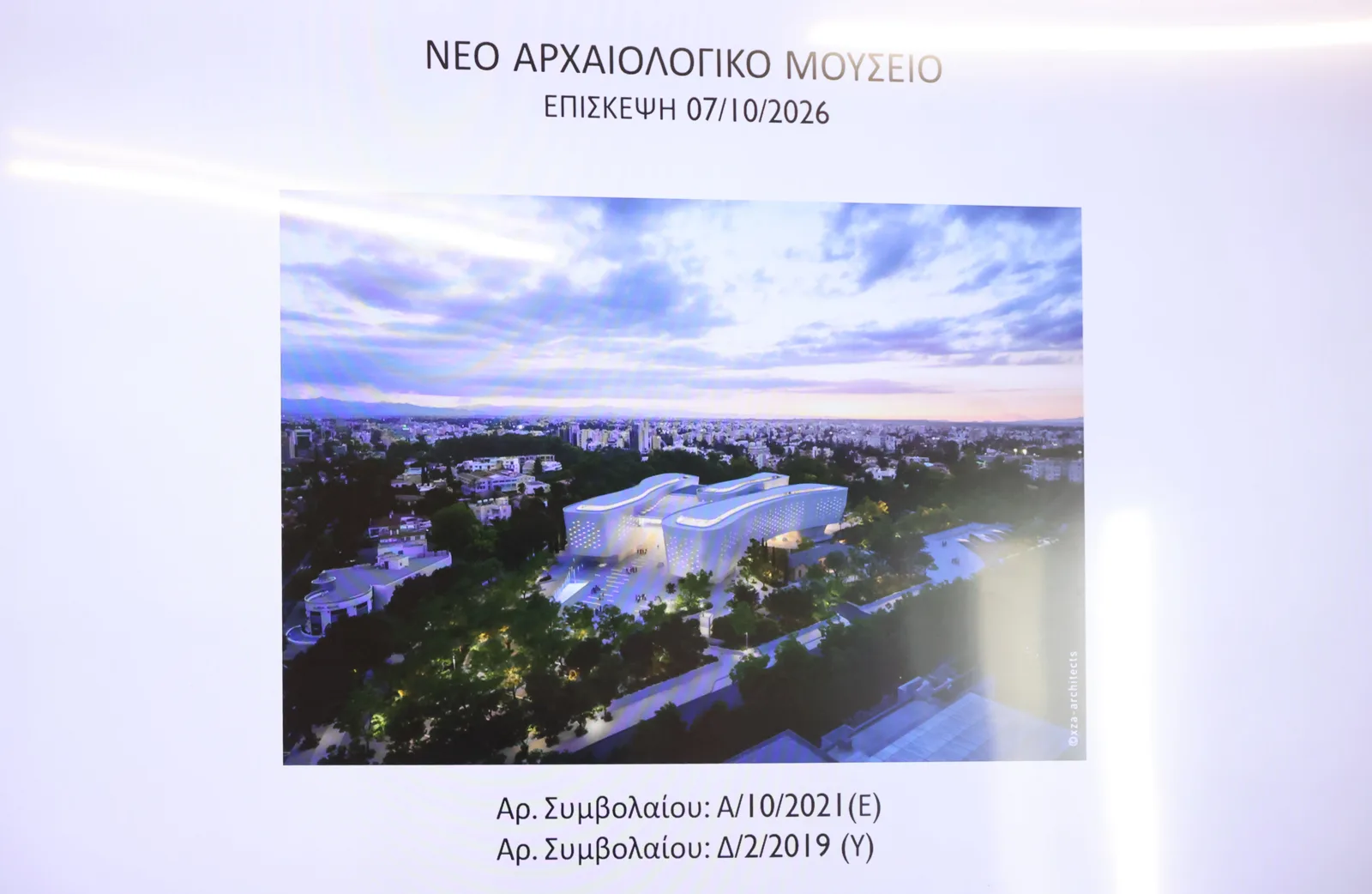
The project is late. Completion was first set for June 2026, and on 30 September MPs on the House education committee heard that the building will not be handed over before 2028; the committee's chairman said visitors might not get in before 2030. The Department of Antiquities is already using the records from its digitisation of museum collections to prepare the new displays.
UNESCO, the BnF and the stage
At UNESCO's headquarters Papaellina was received by the Director-General, Khaled El-Enany, and met Nayef Al-Fayez, the Assistant Director-General for Culture. The talks covered closer work against the illicit trade in cultural property and the protection of Cyprus's World Heritage sites and intangible heritage; she also said Cyprus wanted to join UNESCO initiatives on sustainable cultural tourism and on protecting heritage from climate change.
With Gilles Pécout, president of the National Library of France, Papaellina said Cyprus wished to keep up the cooperation begun with the library's exhibition Cyprus at the BnF during the presidency, so that more of its Cypriot holdings become known. Her programme ended with Clément Hervieu-Léger, head of the Comédie-Française, and Evelyne Laquit, development director of the Paris Opera, about possible exchanges of know-how and appearances at festivals in Cyprus.
Original source
On ancientcyprus.com
References
- 1.Caubet, A. (1993). Les antiquités chypriotes au musée du Louvre et dans les collections publiques françaises. In M. Yon (ed.), Kinyras: l'archéologie française à Chypre / French Archaeology in Cyprus (Travaux de la Maison de l'Orient 22). Lyon: Maison de l'Orient, 23–37.
More in Museums
- Christodoulides and Erhurman agree to proceed with an exchange of cultural artefacts
- Guided demon hunts and mummification demonstrations at Chicago's ISAC Museum on 24 October
- Cyprus and France sign a culture declaration that names archaeological research and heritage
- Greek museum-education team visits Paphos and Larnaca museums and trains Cypriot officials
- Anna Marangou calls for pedestrian streets linking Nicosia's old and new Cyprus Museums