
Museums·Roundup
This Week in Cypriot Archaeology: 9–15 February 2026
Sixteen antiquities lent by Cyprus join the Louvre's Cypriot rooms, and the National Library of France opens an exhibition on Cyprus with icons from Nicosia.



Two Paris exhibitions opened this week as part of the cultural programme of Cyprus's Presidency of the Council of the European Union: Cyprus at the Louvre, with sixteen antiquities lent by the Department of Antiquities, and an exhibition on Cyprus and France at the National Library of France. President Nikos Christodoulides inaugurated both.
Map of Cyprus
Where the Louvre pieces were found
- Ground above 200, 500, 1,000 m
Museums
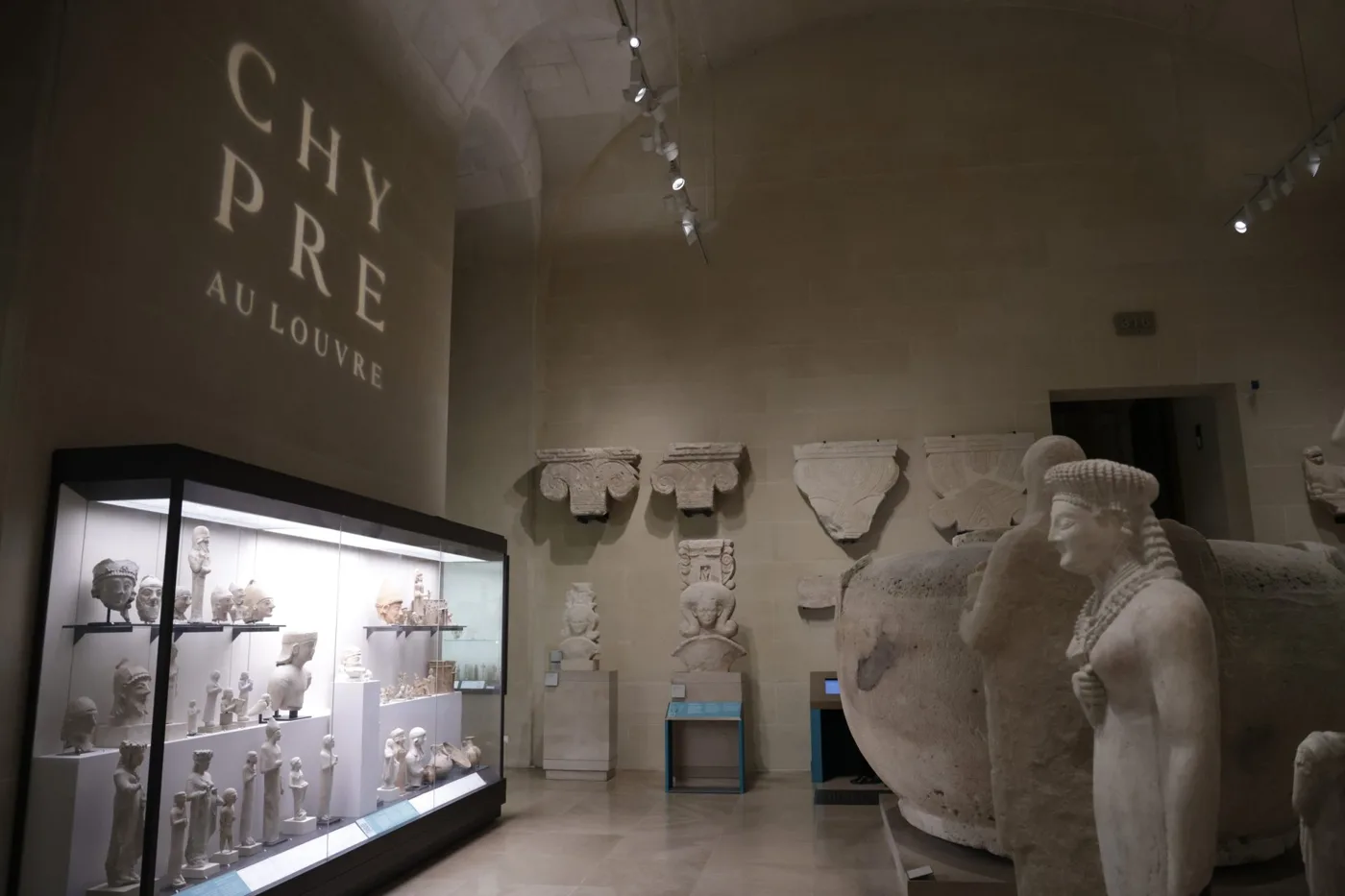
Cyprus at the Louvre has been open since 10 February in halls 300 and 316 of the Louvre's Department of Near Eastern Antiquities, where the museum keeps its Cypriot collection, and runs until 22 June. The Presidency announced that the show is a joint project of the Deputy Ministry of Culture, the University of Cyprus, the CYENS Centre of Excellence and the Louvre. Sixteen objects from the Department of Antiquities, picrolite figurines and terracotta votive statues among them, stand beside the museum's own pieces. The show uses picrolite idols from the Troodos and an inscribed copper ingot found in a sanctuary at Enkomi to tell of production and trade in the Chalcolithic and Bronze Age. Archaic terracotta votives found at Ayia Irini by the Swedish Cyprus Expedition in the 1930s are set against limestone votive statues dug at Golgoi in the 1860s by the French mission of Melchior de Vogüé. Enkomi and Ayia Irini lie in the area occupied by Turkey since the 1974 invasion.
The Louvre's two Hathoric capitals, carved with the head of the Egyptian goddess Hathor, anchor a section on recent research into the "Great Goddess", and the Asklepios of Paphos is shown with a large group of votive offerings on the place of Cyprus in the history of medicine. Digital displays add 3D models, touch screens and augmented reality, and a sound trail sets poems by Giorgos Seferis and Konstantinos Kavafis beside Cypriot songs. A trilingual catalogue gathers contributions from 37 archaeologists, historians and scientists, and the work of French archaeological missions in Cyprus has its own place in the story. Public lectures are planned during the run. The Deputy Minister of Culture, Vasiliki Kassianidou, attended the opening with Brigitte Macron and the French Minister of Culture, Rachida Dati.
Events
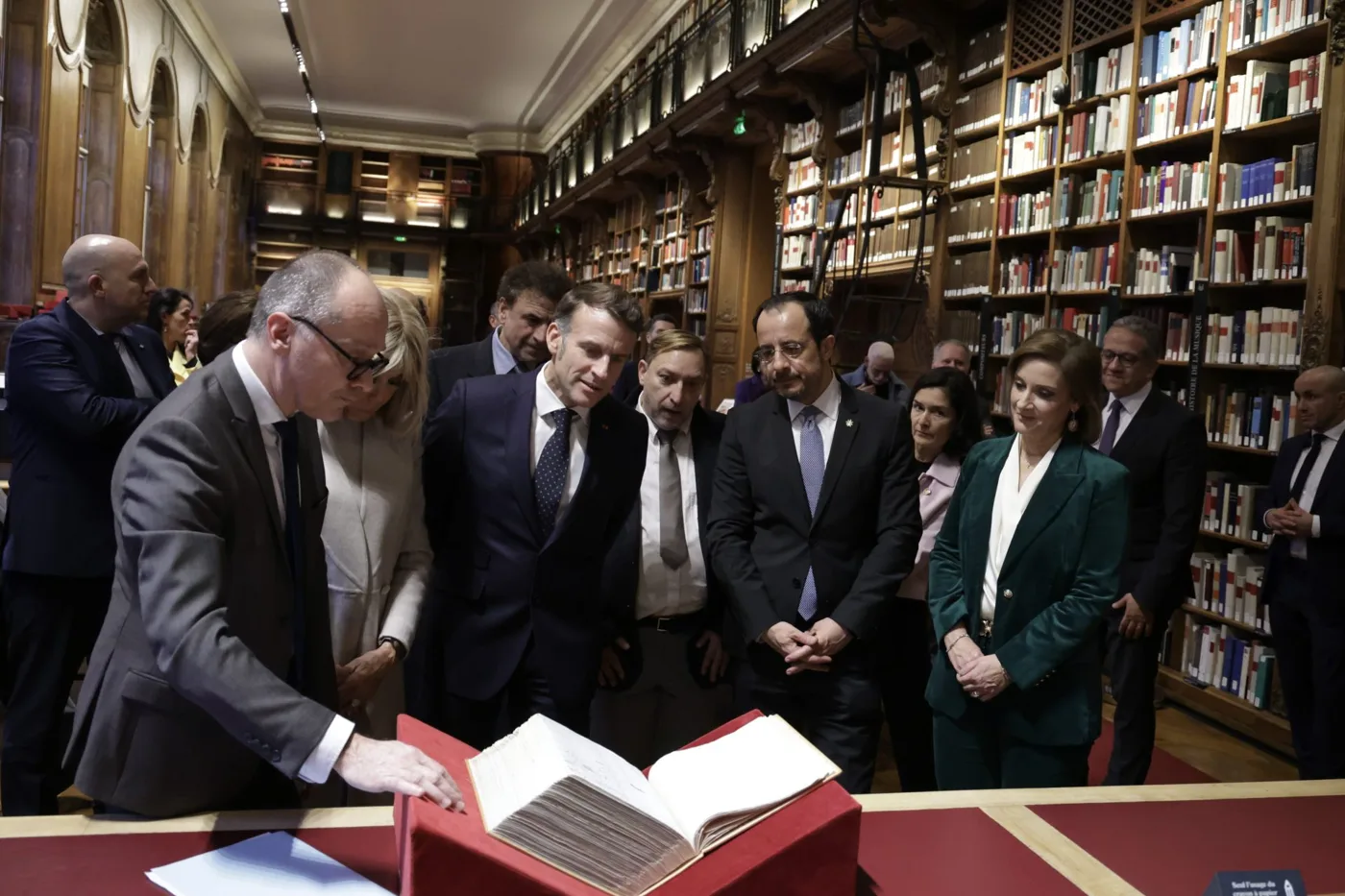
At the National Library of France, President Christodoulides and President Emmanuel Macron inaugurated "Chypre à la Bibliothèque nationale de France", open until 14 June. The library and the Bank of Cyprus Cultural Foundation organised it together; according to the Presidency, it is the first time the BnF has made an exhibition with an outside partner and shown objects that partner supplied. Dr Yiannis Toumazis and Dr Christodoulos Hadjichristodoulou curated for the Foundation.
Antiquities, coins, manuscripts, maps, drawings, engravings and archive papers trace how France has seen Cyprus since the 17th century, and follow the island from antiquity through its Byzantine, Frankish and Venetian centuries to modern times. Works by Louis-François Cassas, who toured Cyprus in February and March 1785, have a prominent place. Post-Byzantine icons of the 17th and 18th centuries come on loan from the Foundation and from the church of Panagia Faneromeni in Nicosia.
Original sources
- Presidency of the Republic of Cyprus: The archaeological exhibition Cyprus at the Louvre was inaugurated in Paris
Official release·
- Presidency of the Republic of Cyprus: Inauguration of the Cyprus at the National Library of France exhibition
Official release·
- Archaeology Wiki: Cyprus at the Louvre
Press·
- Cyprus Mail: BoCCF takes part in Chypre à la BnF exhibition at National Library of France
Press·
On ancientcyprus.com
- People
- Vassiliki Kassianidou, Melchior de Vogüé, Louis-François Cassas, Christodoulos Hadjichristodoulou
- Institutions
- Musée du Louvre, Department of Antiquities of Cyprus, University of Cyprus, Swedish Cyprus Expedition, Bibliothèque nationale de France, Bank of Cyprus Cultural Foundation
- Periods
- Chalcolithic, Late Bronze Age, Cypro-Archaic
More in Museums
- Nicosia's €144m new Cyprus Museum will not be delivered before 2028, MPs told
- Aphrodite at the Ashmolean: Cyprus lends a sanctuary figurine of a woman giving birth
- This Week in Cypriot Archaeology: 12–18 October 2026
- This Week in Cypriot Archaeology: 5–11 October 2026
- This Week in Cypriot Archaeology: 21–27 September 2026