
Workshop·Archaeological Research Unit - University of Cyprus·2019
PORPHYRA Workshop: Hellenistic and Roman Purple Dye Workshops on Agathonisi and in Chania, and Concluding Discussion
Pavlos Triantafyllidis and Angeliki Tsingou
Chapters
About the video
This recording covers the final session and closing discussion of the PORPHYRA workshop on purple dye production and use in Cyprus and the Aegean from prehistory to the Late Roman period.
Pavlos Triantafyllidis (Ephorate of Antiquities of Lesbos) presents his 2006 to 2014 excavations at the fortified settlement of Kastraki on Agathonisi (ancient Tragia) in the northern Dodecanese. Rebuilt in the 2nd century BC against piracy, the Hellenistic and early Roman fortress contained workshop installations with plastered tanks, pigments for painting vases, and punctured and crushed Hexaplex trunculus and Bolinus brandaris shells. Triantafyllidis connects these with over 50,000 clay beehive fragments, including examples incised kypselion and kypselia demosia, and stamped tiles of 84/83 BC naming Apollo as eponymous stephanephoros, arguing that apiculture and purple production at Kastraki were controlled by the Milesian state and sanctuary of Apollo.
Angeliki Tsingou (Ephorate of Antiquities of Chania) presents a 2002 rescue excavation in Nea Chora on the outskirts of ancient Kydonia (Chania, Crete). Functioning from the mid-1st to the mid-2nd century AD, the Roman workshop had circular furnaces with central cylindrical stones for indirect, low-temperature heating, cisterns, and a well holding an estimated 188 cubic metres of crushed shells, 85 per cent of them Hexaplex trunculus.
Dimitra Mylona and Thomas Brogan lead a concluding discussion comparing the Aegean and Cypriot case studies, addressing indirect heating, dyeing recipes, isotopic sourcing, and the apparent Iron Age gap. Participants note newly observed murex shells at Kition alongside Palaepaphos, Marion, Hala Sultan Tekke, and Pyrgos-Mavrorachi, arguing that continuous occupation at Cypriot towns obscures earlier levels unless a site was abandoned.
From our collection
Pieces in the Drakopoulos collection of the kinds and periods this talk covers: Cypro-Geometric, Cypro-Archaic, Hellenistic.
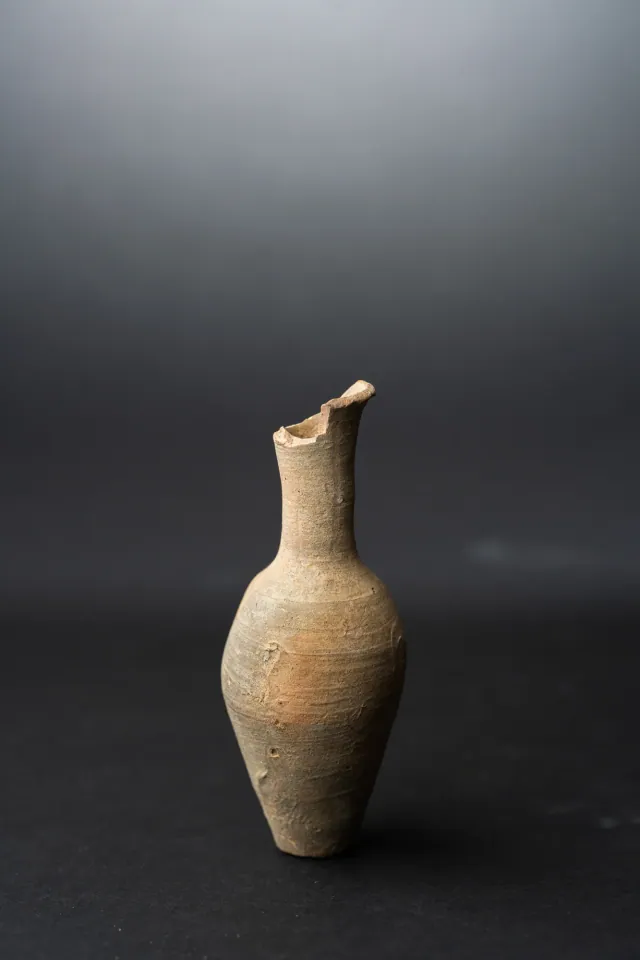
Fusiform Unguentarium
Hellenistic
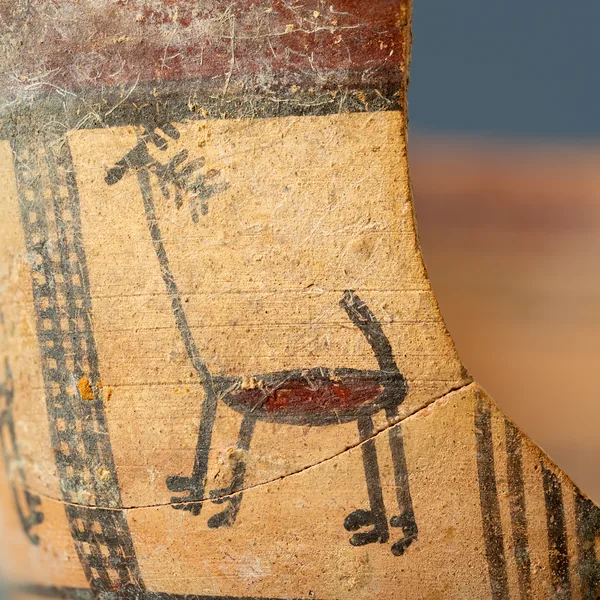
Bichrome Skyphos with Stags in Metopes
Cypro-Archaic
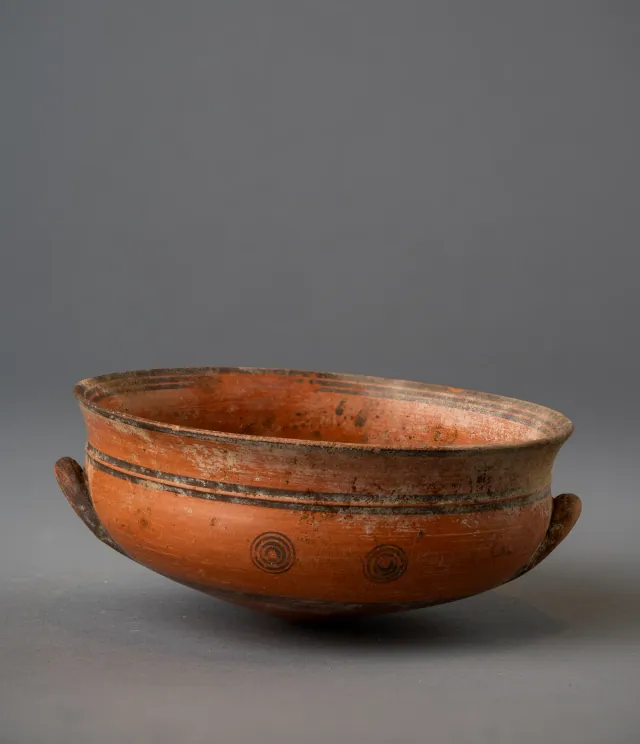
Black-on-Red Two-Handled Bowl with Raised Flaring Rim
Cypro-Archaic
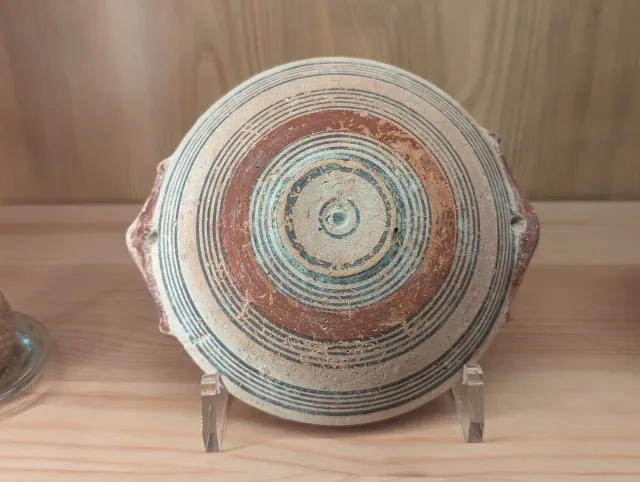
Bichrome IV Bowl with Red-Painted Pierced Lug Handles
Cypro-Archaic
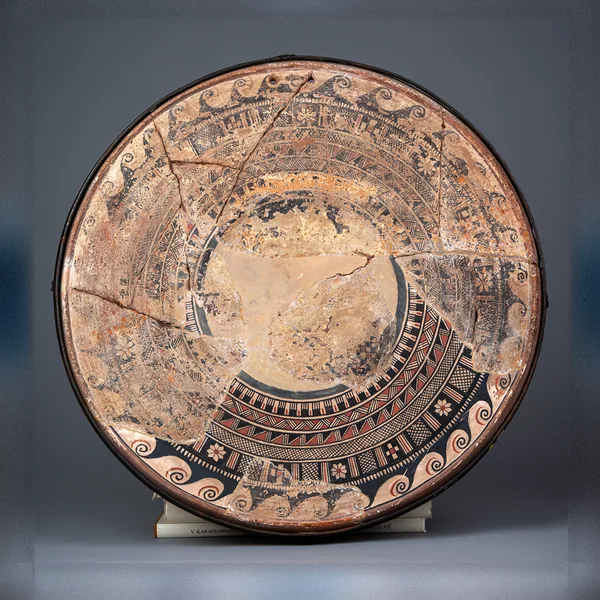
Large Bichrome Plate from Salamis with a Wave Band and Rosette Metopes
Cypro-Archaic
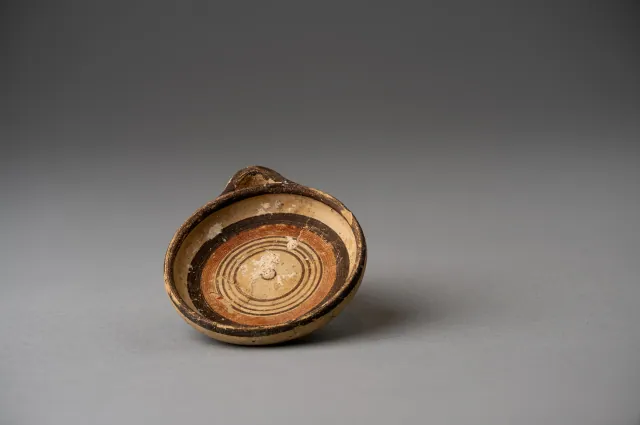
Miniature Bichrome Plate with Concentric Circles
Cypro-Archaic
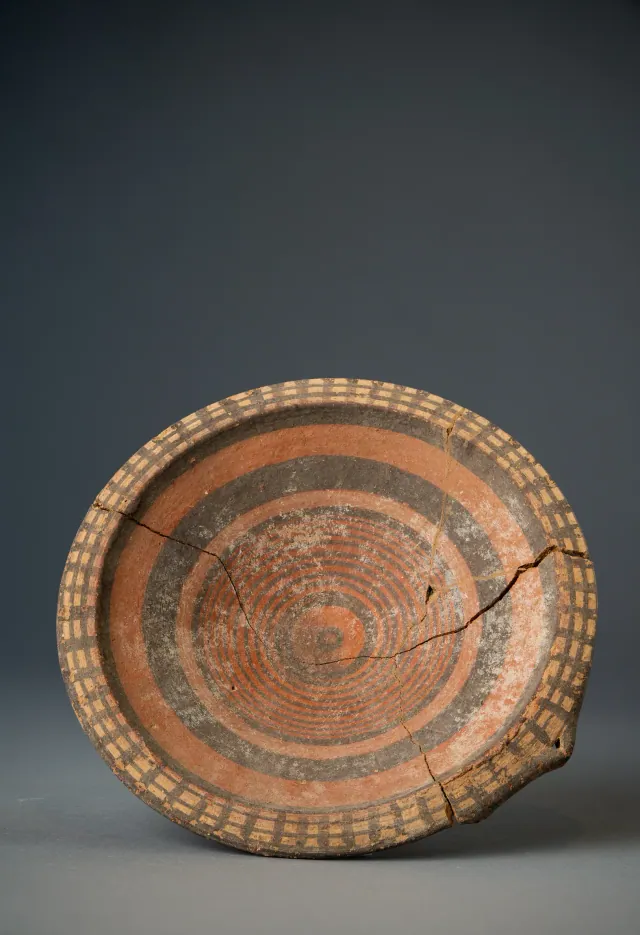
Black-on-Red Plate with Barred Rim and Concentric Circles
Cypro-Archaic
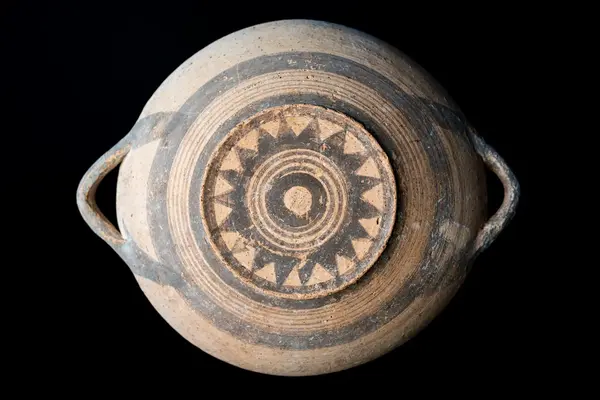
White Painted Plate with a Sawtooth Star on the Underside
Cypro-Geometric
Found at the places discussed
Objects in our catalogue, in museum collections, recorded as found at these sites.


Background
Where to read more on this site before or after watching.
The site
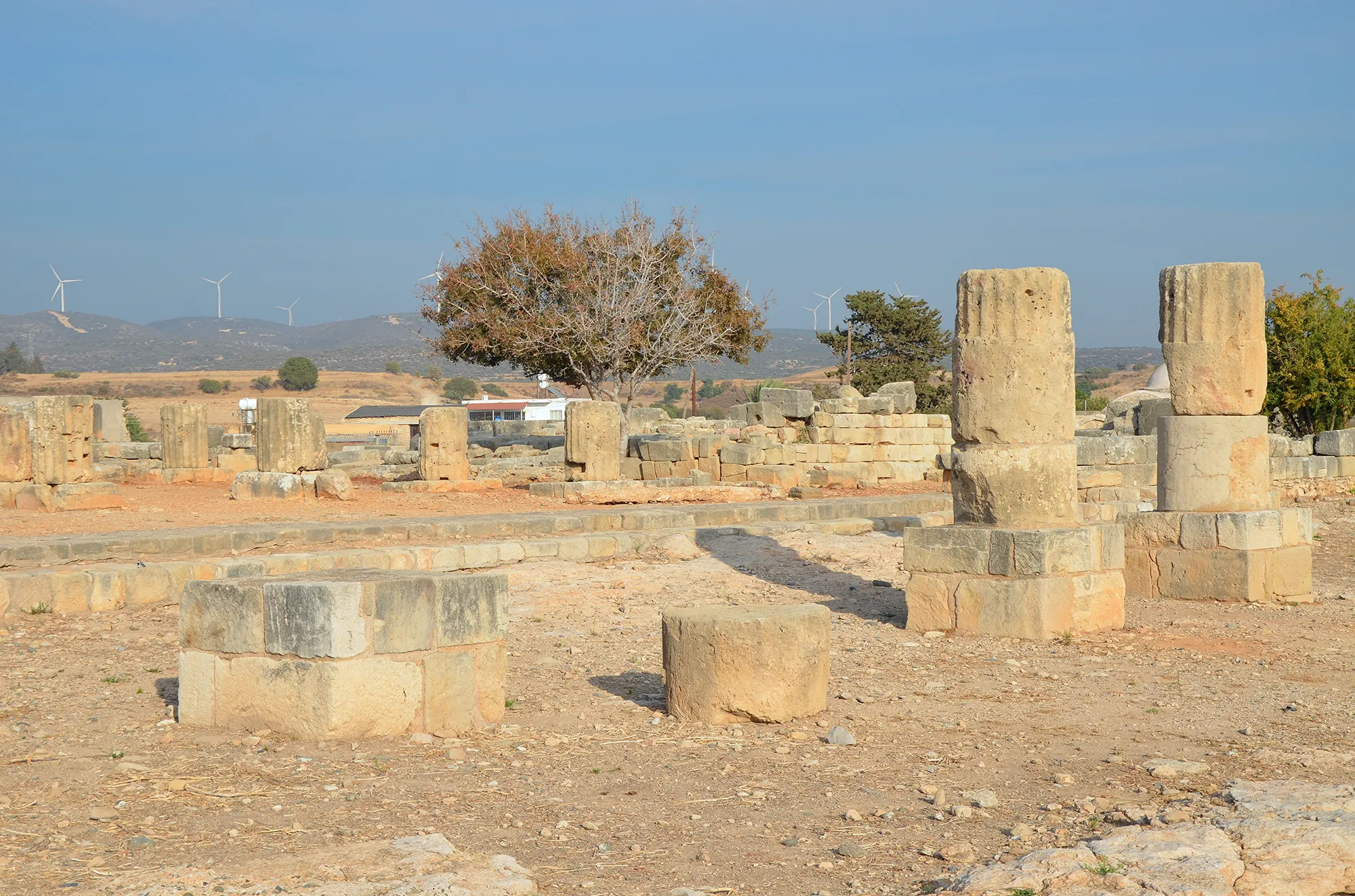
Palaepaphos (Kouklia)
Palaepaphos, Old Paphos, lies under and around the village of Kouklia in western Cyprus. Founded in the Middle Bronze Age, it was the only large town of the south-west until the early Hellenistic period, the seat of the kings of Paphos and the site of the sanctuary of the Paphian goddess, Aphrodite, worshipped here from about 1200 BC to the end of the 4th century AD.
In the compendium
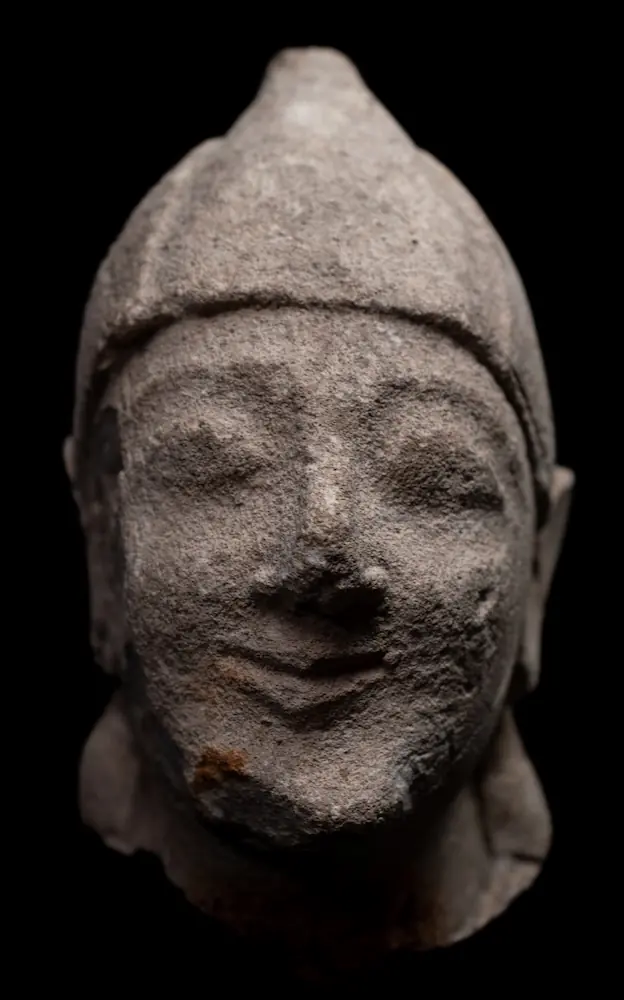
Clothing and Dress in Ancient Cyprus
What Cypriots wore from the Neolithic to the Cypro-Classical period, reconstructed from figurines, statues, textile tools and metal fasteners.

The period
Late Bronze Age
The Late Cypriot period, c. 1650–1050 BCE, when copper exports made Cyprus an urban, literate trading power before the crisis around 1200 BCE.
Map of Cyprus
Places discussed in the talk
- Has a page on this site
- Other places
- Ground above 200, 500, 1,000 m
Places
- 1Palaepaphos
- 2Kition
- 3Marion
- 4Hala Sultan Tekke
- 5Pyrgos-Mavrorachi