
A free course·15 lessons·about 3.5 hours of reading
Ancient Cypriot Pottery: A Course from the First Pots to the Classical Kingdoms
Fifteen lessons on reading a Cypriot pot, from Neolithic combed bowls to Hellenistic oil bottles: how each ware was made, how to tell them apart, what the Roman numerals on a museum label mean, and how to date a pot yourself. Illustrated with 112 pieces from the Drakopoulos collection and 44 from museums.
Alexis Drakopoulos·Ceramics · Archeology · Guides
Share


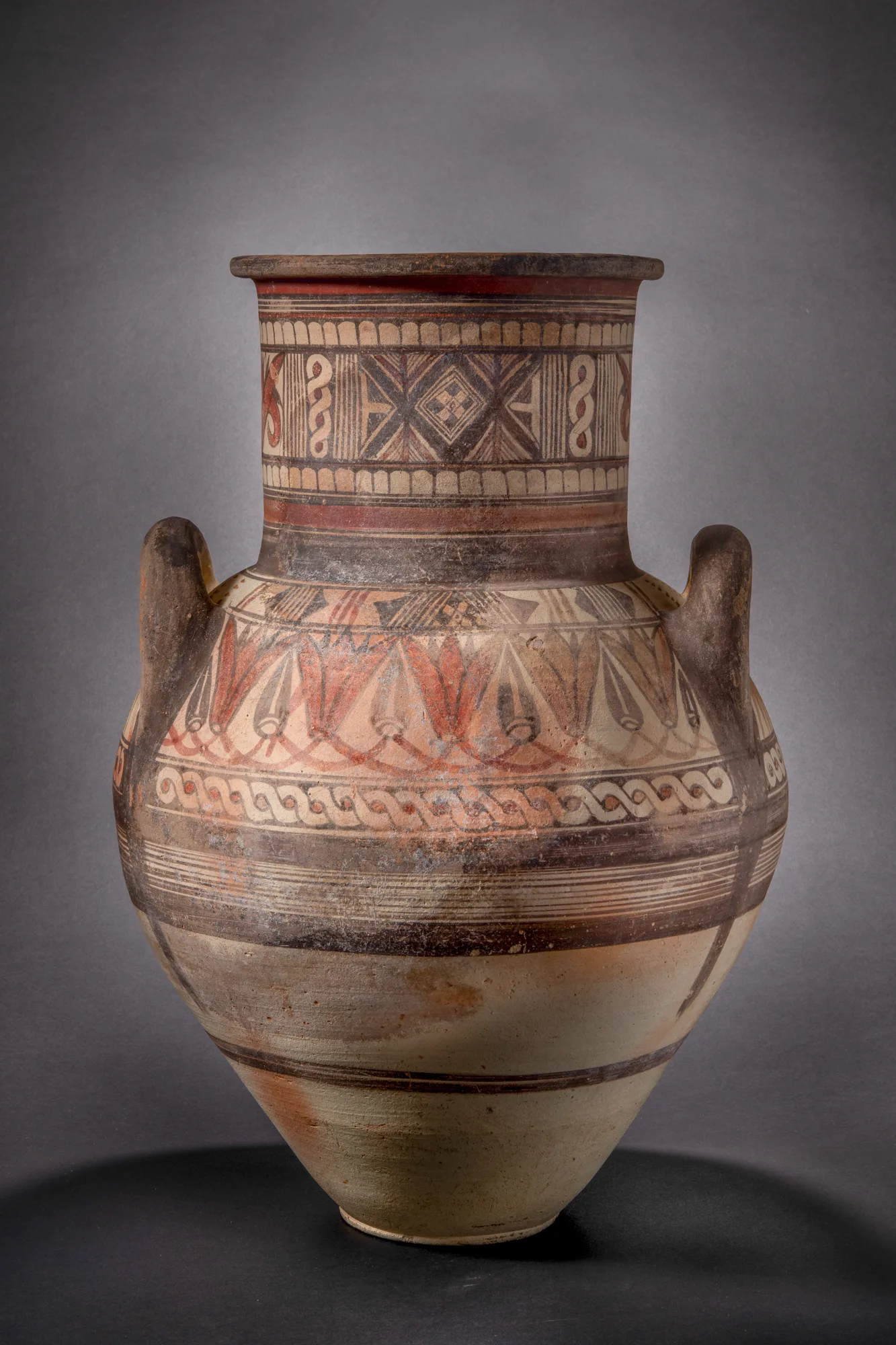
Around 2200 BC a potter working in the north-coast tradition of Cyprus cut rings of concentric circles into a small round bottle, fired it so that the neck came out black and the body red, and filled the cuts with white lime. Some fifteen hundred years later a painter in an Iron Age workshop hung a row of lotus flowers and buds round the shoulder of a wheel-made amphora in two colours of matt paint. Both pots are Cypriot, both sit in the same collection, and with a little practice anyone can tell from across a gallery which is older, roughly how each was made and what each potter wanted it to look like.
This course teaches that practice. It runs from the first pottery made on the island, in the Late Neolithic, to the end of the Cypriot kingdoms around 310 BC, with a short look beyond. A hundred and twelve of the objects illustrated belong to the Drakopoulos collection, which means every pot in it but one. Forty-four more, from the British Museum, the Metropolitan Museum, the Cyprus Museum and others, stand in where the collection has no example of a ware or supply an excavated parallel. Each lesson has its own page and takes ten to fifteen minutes to read. Each ends with a short list of things to look for and a pointer to the compendium pages that go further. The first two lessons are the toolkit; after that the period lessons can be read in order or dipped into, and the last four cut across the whole sequence.
The lessons
Getting started
Lesson 0·11 min
How to Look at a Cypriot Pot
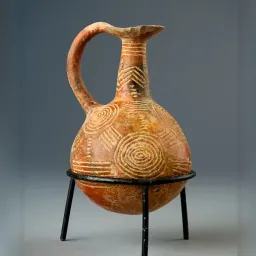
What a Cypriot pottery label means: how ware names describe a pot's surface, why shape is a separate question, and what the Roman numerals say about date, so that a label like Bichrome IV places a pot in time.
Lesson 1·15 min
Clay, Hands, Wheel and Fire
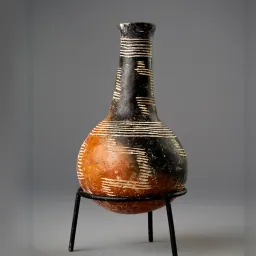
How Cypriot potters chose clay, built pots by hand, burnished them and fired them in the open, and why the wheel came so late. Afterwards you can read a handmade rim, a fire-cloud, black-topping and throwing ridges on a pot.
Period by period
Lesson 2·13 min
The First Pots of the Neolithic and Chalcolithic
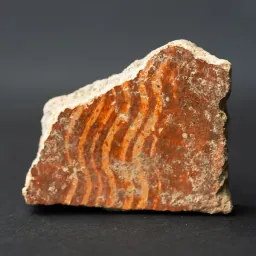
Cypriot farmers used stone bowls for some fifteen centuries, and the first pots came only around 4750 BC. Meet the Neolithic and Chalcolithic wares that followed, and learn to tell a combed, a painted and a plain red sherd apart and date it.
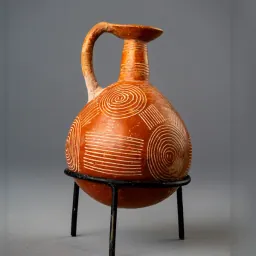
Lesson 3·16 min
The Red Polished World
Red Polished pottery from its Philia beginnings around 2400 BC to the tomb pots of Vounous: why its numerals I to IV do not date a pot, and how to tell glossy incised north-coast work from plain mottled southern ware.
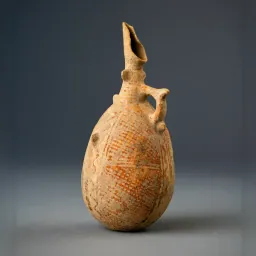
Lesson 4·14 min
Painted Again in the Middle Cypriot
White Painted, the pale line-painted pottery that names the Middle Cypriot, and the plainer wares beside it. Learn to tell the Lapithos and Kalopsidha manners apart, read the Roman numerals with caution, and spot the juglets that dated the period abroad.
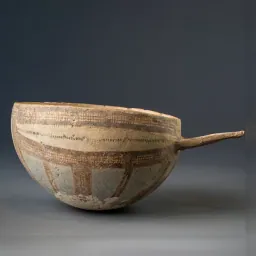
Lesson 5·15 min
Handmade by Choice in the Late Bronze Age
Base Ring and White Slip, the handmade fine wares that Late Bronze Age Cyprus exported by the thousand, beside Red Lustrous and the first wheel-made wares. Learn to tell Base Ring I from II, White Slip I from II, and a bilbil juglet at a glance.
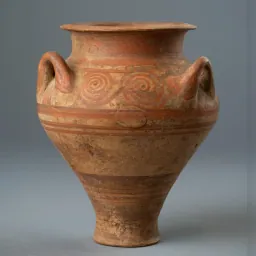
Lesson 6·12 min
Mycenaean Pots and the End of the Bronze Age
Imported Mycenaean chariot kraters, the Cypriot three-handled jars that copied Aegean perfume jars, and the Aegean-style wares Cyprus made after 1200 BC. Learn to tell an import from a local product, and why these pots do not prove a Greek invasion.
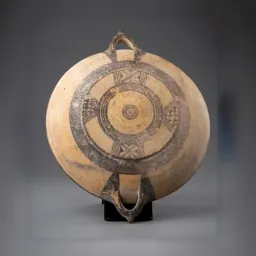
Lesson 7·13 min
The Cypro-Geometric Repertoire
The first Iron Age pottery of Cyprus, c. 1050 to 750 BC: White Painted, Bichrome and fluted Black Slip, plates painted on their undersides, and the cues (red fill, compass circles, a jug's foot) that tell one stage from the next.
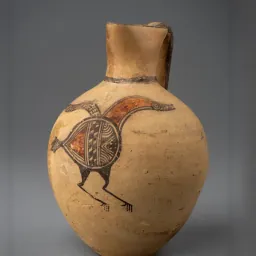
Lesson 8·17 min
Bichrome and the Free-Field Style
Bichrome and White Painted pots of c. 750 to 480 BC: the circle jugs of the west, the lotus amphorae of Salamis, and the free-field jugs with a single bird, fish or goat on a bare body, and how to tell stage IV from V.
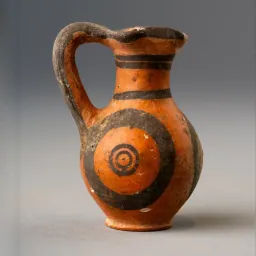
Lesson 9·14 min
The Red Wares of the Iron Age
Black-on-Red, Bichrome Red and Red Slip share one red slip and part company over a brushstroke of paint. Tell the three apart, recognise the export juglet and its bowls, and see why the ware once called Cypro-Phoenician was made in Cyprus.
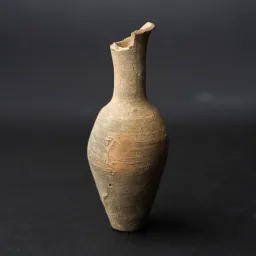
Lesson 10·11 min
The Cypro-Classical and the End of a Tradition
How painted pottery faded from Cypriot tombs between 480 and 310 BC: the spare White Painted VI and VII jugs, figure-spouted jugs from Marion, Athenian black glaze, and the plain Hellenistic oil bottle that came next.
Across the periods
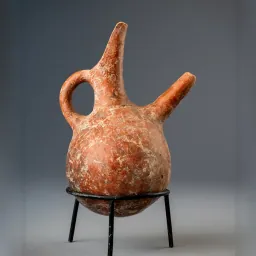
Lesson 11·17 min
Shapes, a Field Guide
Three questions about handles, neck and mouth name any simple Cypriot pot, and its base and spout then help to date it. A field guide to jugs, bottles, flasks, jars, bowls, askoi and composite vessels, and to the features that tell Bronze Age from Iron Age.
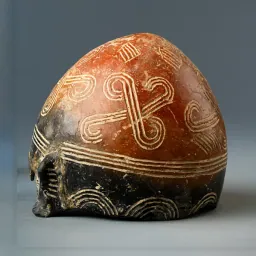
Lesson 12·13 min
Decoration and Motifs
Incision, relief and paint on Cypriot pottery over four thousand years, the main motif families (zigzags, circles, crosses, swastikas, lotus, birds, painted eyes), and how a motif's technique and company date a pot when the motif alone cannot.
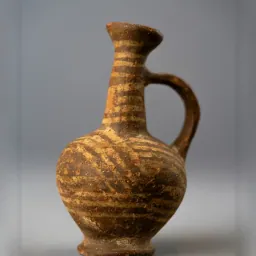
Lesson 13·14 min
What Pots Were For
Nearly every intact Cypriot pot came out of a grave. Set beside house floors, storage halls, sanctuaries and a shipwreck, they show how to tell a pot used in life from one made for burial, and what residue analysis says the small juglets held.
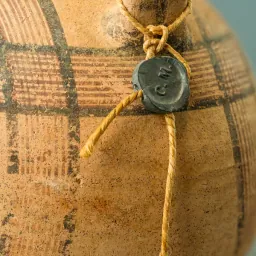
Lesson 14·16 min
How to Date and Identify a Cypriot Pot
Six questions, asked from the making to the decoration, that take a Cypriot pot to a ware, a period and an honest date range, with how to read a museum label, spot old repairs and tell lime fill from burial crust.