
Research·Roundup
This Week in Cypriot Archaeology: 14–20 September 2026
A paper argues for a lost Roman temple near Kourion, police arrest a man with a metal detector at Kouklia, and the 1989 Idalion excavation report goes free online.



The American Journal of Archaeology published a case for a lost Roman temple near Kourion this week, and a synthesis of lead isotope data on 752 copper ingots argued that Cypriot copper dominated Late Bronze Age markets. Police arrested a man with a metal detector at Kouklia, the Department of Antiquities finished work round the Paphos lighthouse, and the 1989 report of the American excavations at Idalion became free to download.
Map of Cyprus
This week's stories
- Research
- Fieldwork
- Heritage crime
- Ground above 200, 500, 1,000 m
Sites on this map
- 1Kourion
- 2Nea Paphos
- 3Palaepaphos (Kouklia)
- 4Idalion
- 5Dhali-Agridhi (approx.)
Research
In the American Journal of Archaeology, online from 15 September, Anna Urszula Kordas, Szymon Popławski, Monika Rekowska and Aleksandra Brzozowska-Jawornicka study carved architectural pieces from Latsithkia, now in the museums of Episkopi and Limassol. They suggest the pieces adorned a temple-like building of the end of the 1st century CE, standing where they were found in the countryside of Kourion, and call the reconstruction tentative. Greek-style temples, the authors note, seem to have been fairly rare in Cyprus (our brief).
Daniel M. Finn-Kandel, Naama Yahalom-Mack and Yigal Erel re-examine the lead isotope data for 752 copper ingots from the central and eastern Mediterranean in the Journal of Archaeological Science, online from 18 September. Sorting the ingots with a five-step method, they conclude that unmixed Cypriot copper dominated Late Bronze Age markets, with small amounts from other sources, and that only a few ingots show signs of ores being mixed.
Fieldwork
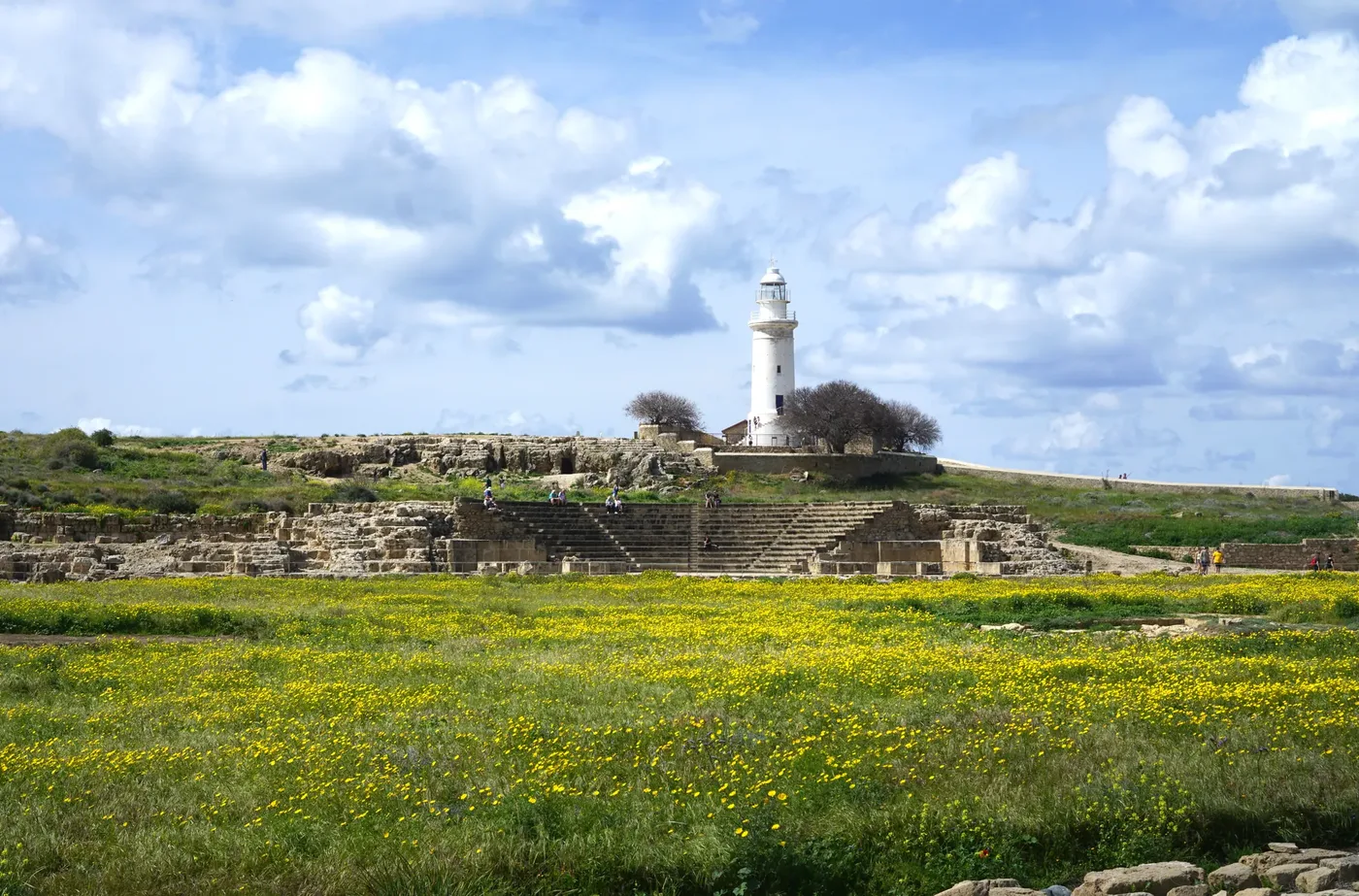
The Department of Antiquities announced on 14 September that it had finished restoring the auxiliary buildings of the Paphos lighthouse, with new landscaping and access paths. The work exposed a cistern, a pebbled floor and a channel thought to belong to a water-management system of the early Roman period, the 1st–2nd century CE. The lighthouse was built in 1888, under the British administration, and stands on Fanari, one of two low hills inside the ancient wall of Nea Paphos. Lighthouse keepers and their families lived in the auxiliary buildings until the last family left in 1982. Eustathios Raptou, a senior archaeological officer of the Department, said the modernised building is no ancient monument itself and forms part of a site where many periods meet.
Heritage crime
Police arrested a 41-year-old man on the evening of 14 September near an archaeological site at Kouklia, the village of Palaepaphos, after a report at about 6.30pm that someone was digging there. Officers found him with a metal detector and a pickaxe. He was arrested on a court warrant on suspicion of digging illegally in search of antiquities and of owning the detector without a licence, and was due in court the next day. Kouklia is the site of the sanctuary of Aphrodite at Old Paphos, in use from about 1200 BCE.
Books
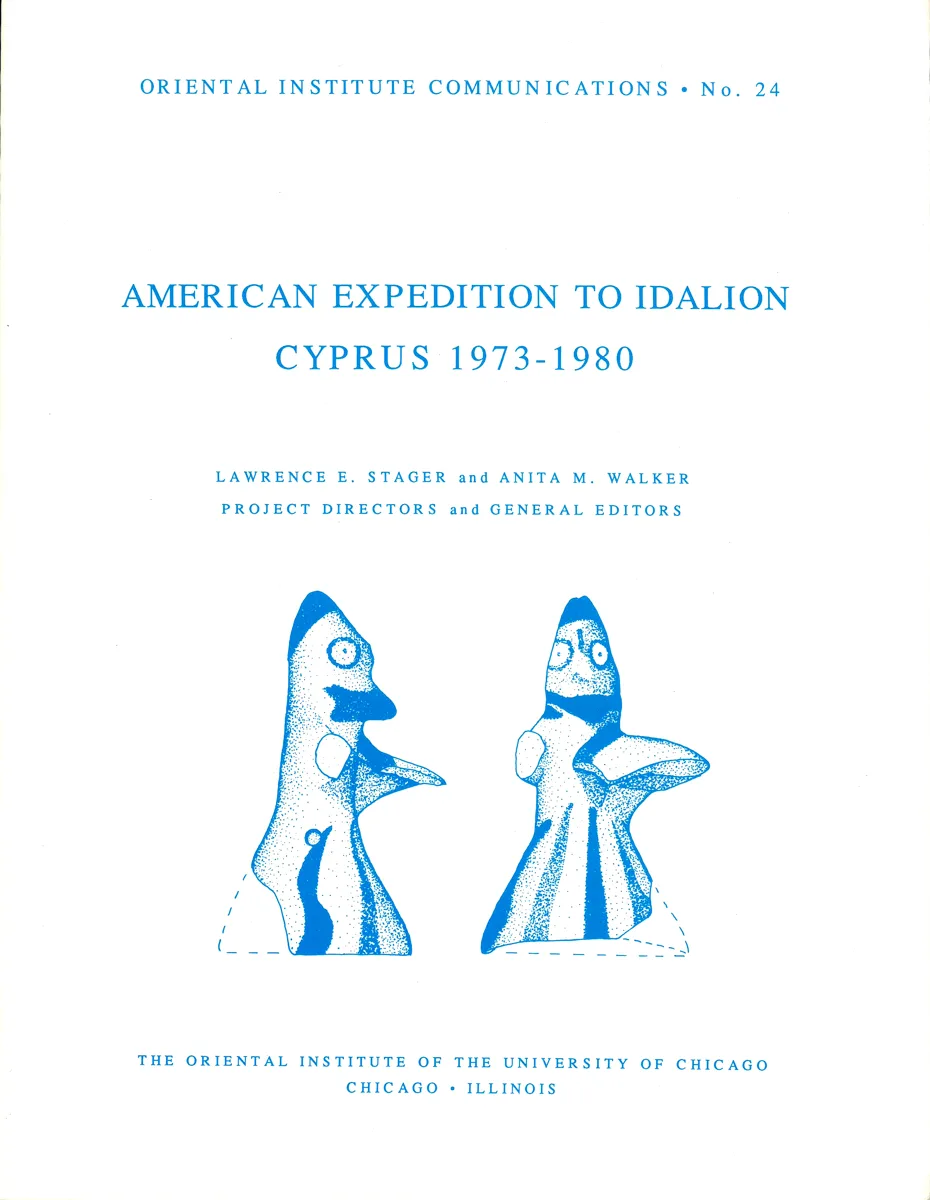
On 16 September the Institute for the Study of Ancient Cultures (ISAC) of the University of Chicago gave a DOI and a free PDF to The American Expedition to Idalion, Cyprus 1973–1980, Oriental Institute Communications 24, first published in 1989 by the Oriental Institute in Chicago. Edited by Lawrence E. Stager and Anita M. Walker, it is the expedition's second report, on the city of Idalion and the Neolithic site of Dhali-Agridhi. Its 516 pages hold the stratigraphy of both sites and studies of mining and metallurgy, animal bones, human remains, pottery, coins, limestone sculpture and the modern village of Dhali (publisher's page).
Events
Staff of the Deputy Ministry of Culture and the Department of Antiquities stopped work from 9am on 16 September. Their union, PASYDY, opposes a proposal in the 2027 budget to move the Financial Control Officer posts from the Department to the Deputy Ministry, which it says would take control of each department's funds away from its director.
The Department also announced that the Medieval Castle of Kato Paphos would be closed to visitors on Saturday 26 September for a performance of the ballet Don Quixote.
Original sources
- An Unknown Roman Temple in Cyprus? Reading the Architectural Fragments from Latsithkia (American Journal of Archaeology)
Paper·
- Mediterranean Late Bronze Age copper ingots: A new lead isotope-based synthesis (Journal of Archaeological Science)
Paper·
- Cyprus Mail: Restoration of historic Paphos lighthouse continues
Press·
- Cyprus Mail: Man arrested near Kouklia archaeological site
Press·
- KIPRINFORM: Man arrested near the Kouklia archaeological site with a metal detector and pickaxe
Press·
- ISAC, University of Chicago: The American Expedition to Idalion, Cyprus 1973–1980 (Oriental Institute Communications 24)
Book
- The American Expedition to Idalion, Cyprus 1973–1980 (ISAC Data Research Center, DOI)
Book·
- Sigmalive: Culture ministry staff strike over proposed job transfers
Press·
- Pafospress: Don Quixote closes the Medieval Castle of Kato Paphos
Press·
On ancientcyprus.com
- Sites
- Kourion, Nea Paphos, Palaepaphos, Idalion
- Excavations
- Idalion: the American Expedition to Idalion
- Periods
- Neolithic, Late Bronze Age, Roman
More in Research
- Wheat traces at Chlorakas-Palloures question the view that cereals were minor in Chalcolithic Cyprus
- Strabo's Arsinoe near Palaepaphos probably never existed, argues study of a Ptolemaic queen's cult
- Charred barley and chaff in a Pyla shaft point to stored animal fodder around 1200 BCE
- Late Bronze Age hoard of at least 111 bronzes at Galinoporni was packed in cloth, cord and grass
- Bronze Age tombs at Hala Sultan Tekke held what may be burnt bouquets of grain and wild flowers