
Research·Brief
48 carved stones near Kourion may come from an unknown Roman temple, study argues
Capitals, column bases and an altar recorded on a hill at Latsithkia in 1997 may belong to a temple of the late 1st century CE, four researchers argue.



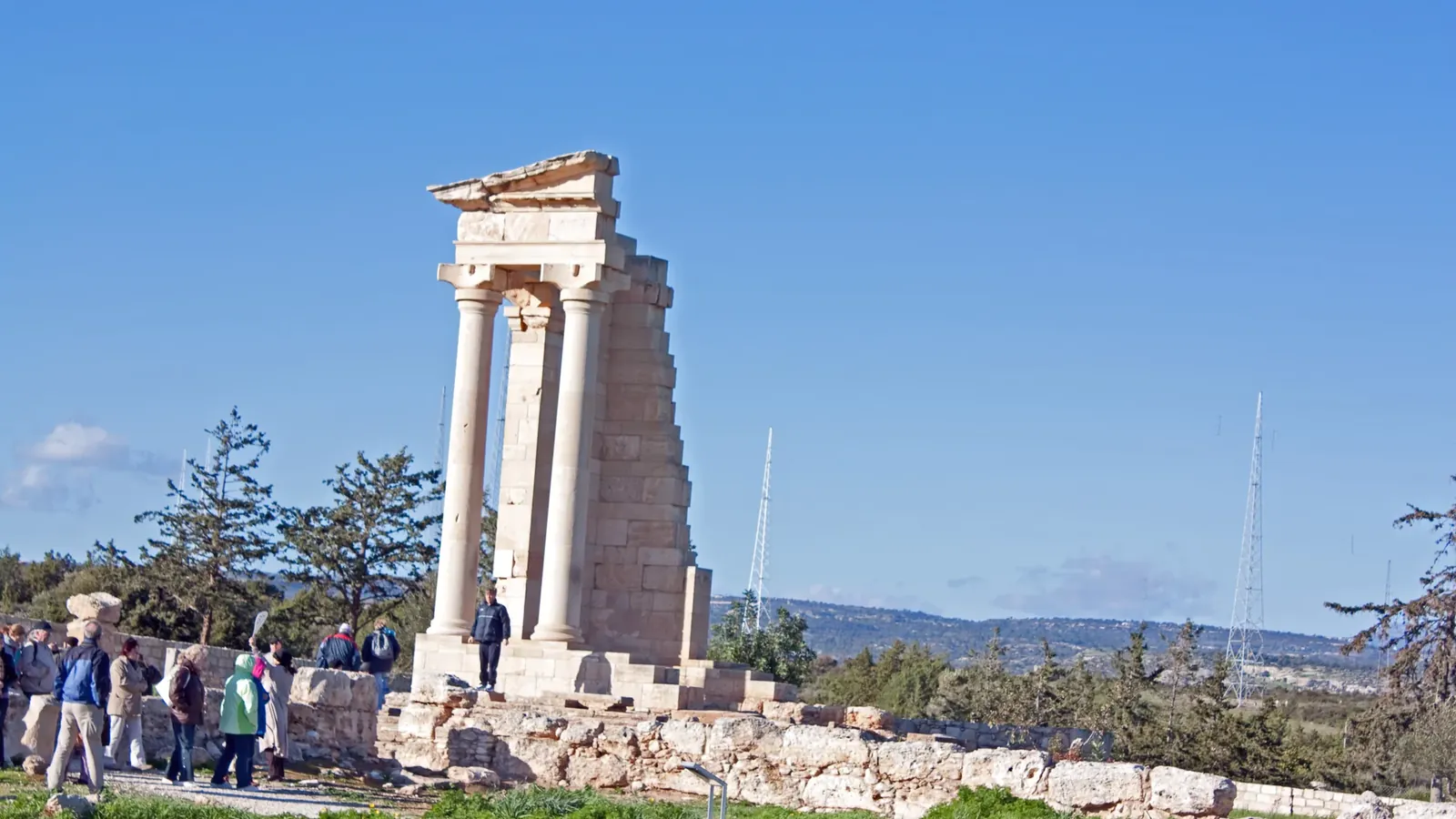
A scatter of carved limestone blocks on a hill at Latsithkia, in the countryside of ancient Kourion near Episkopi, may be all that survives of a Greek-style temple built at the end of the 1st century CE. Anna Urszula Kordas, Szymon Popławski, Monika Rekowska and Aleksandra Brzozowska-Jawornicka make the case in a paper in the American Journal of Archaeology, published online on 15 September 2026 and printed in the October issue (vol. 130, pp. 483–498). They call their reconstruction tentative and say the hill needs fieldwork before the building can be identified or located.
Stones on a hillside
Eleni Procopiou found and recorded 48 architectural pieces on the hill in 1997, among them capitals, column bases, cornices and an altar. The spot lies inland, less than 2 km from the Sanctuary of Apollo Hylates. They are now in the museum at Episkopi and in Limassol.
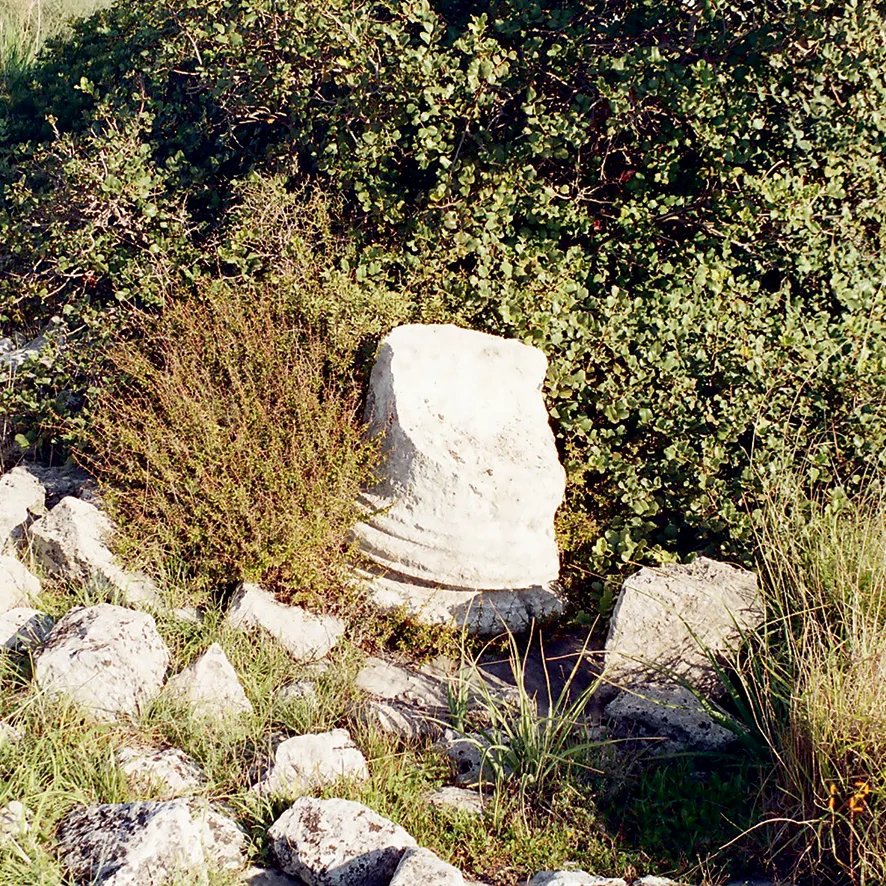
Procopiou was working with Anthea Garrod of the Western Sovereign Base Area Archaeological Society. Besides the Corinthian capitals the group includes pieces of shaft, an Ionic architrave, a block that framed a niche, and a cylindrical cippus (a round stone pillar) a little over a metre tall that the authors think could have been an altar. Kordas came upon the material in 2022 while studying stonemasons' marks for her doctorate, and the team fitted the blocks together in 3D models made by photogrammetry.
A small monumental building
The authors treat the pieces as a single group in style, probably from a local Cypriot workshop that combined Alexandrian forms with its own habits, and compare it with the Roman temples of Apollo at Kourion and of Aphrodite at Amathus. They estimate about 5.07 m for a column with base and capital and 5.87 m for the whole order, well beyond the scale of houses.
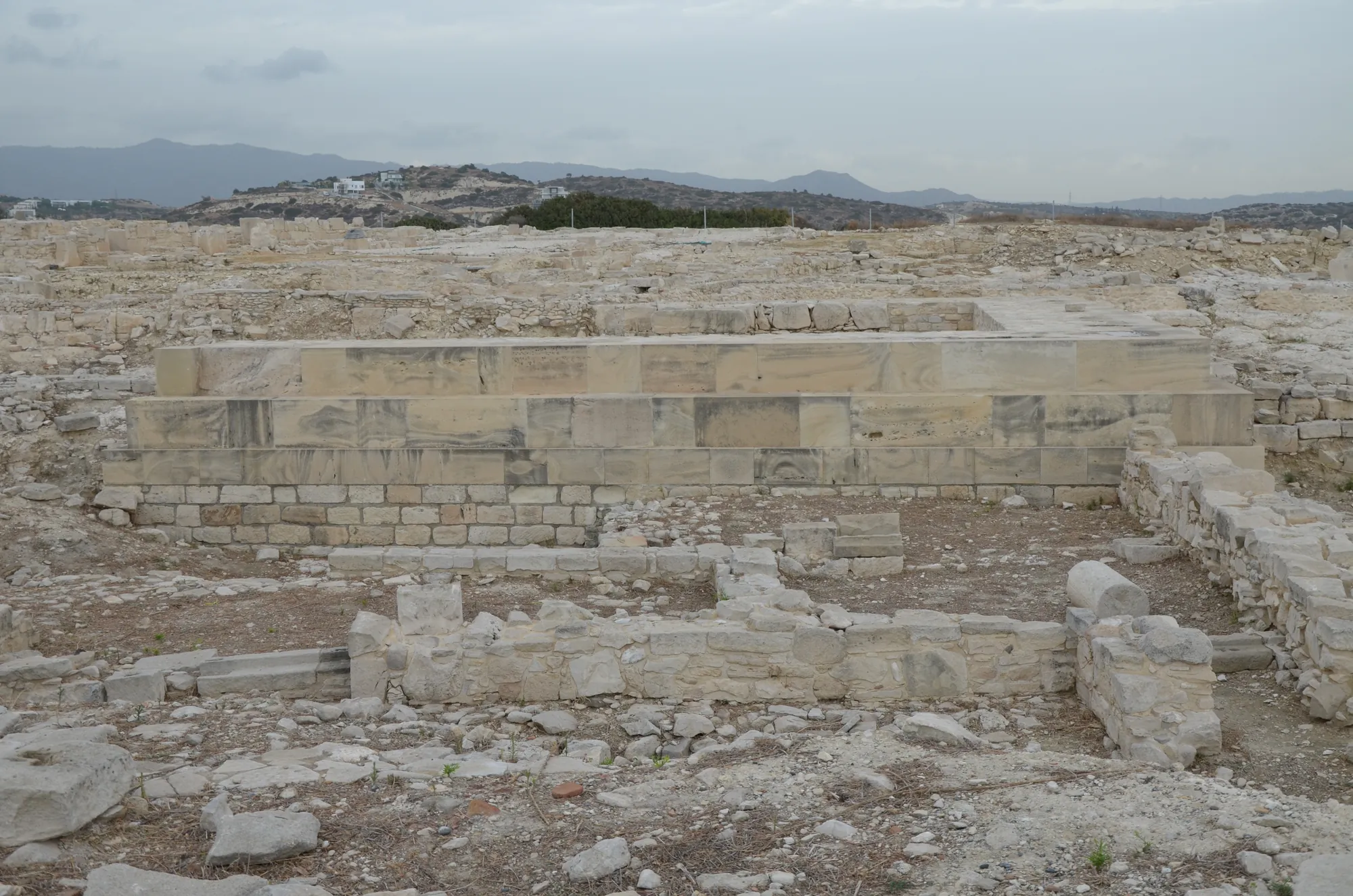
When the stones were first recorded, the hill was read as a quarry where blocks for the Apollo sanctuary were cut and roughed out. No foundations were recorded in 1997. The authors also weigh a tomb built to look like a temple, and find it a poor fit because no freestanding funerary monument is known on the site. They favour a building on the hill itself, a prominent rocky rise at a junction of ancient routes, and take its scale together with the cippus as support for a sacred use.
Where it would fit
Greek-style temples seem to have been fairly rare in Cyprus, the authors note, and Roman builders there more often enlarged old sanctuaries than founded new ones. The authors suggest that a temple at Latsithkia would mean reassessing the island's architecture under Rome, and might point to new Roman investment in sanctuaries outside the city walls.
Fieldwork on the hill
A reconnaissance survey in 2024 recorded more decorated stone fragments, traces of stone extraction and three tombs with arcosolia, arched burial recesses, according to a research project led by Rekowska and funded by Poland's National Science Centre. The project sets out to map the ancient countryside around the hill with archaeological prospection, remote sensing and field survey.
Original sources
On ancientcyprus.com
References
- 1.D. Soren (ed.) (1987). The Sanctuary of Apollo Hylates at Kourion, Cyprus. Tucson: University of Arizona Press.
- 2.T. Mavrojannis (2015). The Roman Temples of Kourion and Amathus in Cyprus: a chapter on the Arabian policy of Trajan. In G. A. Xenis (ed.), Literature, Scholarship, Philosophy, and History: Classical Studies in Memory of Ioannis Taifacos. Stuttgart: Franz Steiner Verlag.
More in Research
- Wheat traces at Chlorakas-Palloures question the view that cereals were minor in Chalcolithic Cyprus
- Strabo's Arsinoe near Palaepaphos probably never existed, argues study of a Ptolemaic queen's cult
- Charred barley and chaff in a Pyla shaft point to stored animal fodder around 1200 BCE
- Late Bronze Age hoard of at least 111 bronzes at Galinoporni was packed in cloth, cord and grass
- Bronze Age tombs at Hala Sultan Tekke held what may be burnt bouquets of grain and wild flowers