
Books·Brief
Children painted some 'crude' Bronze Age pots at Kalopsidha, new book on Cypriot ceramics argues
Sixteen studies edited by Sergios Menelaou and Edyta Marzec run from metal-imitating prehistoric pots to the workshops that supplied Ottoman Nicosia.



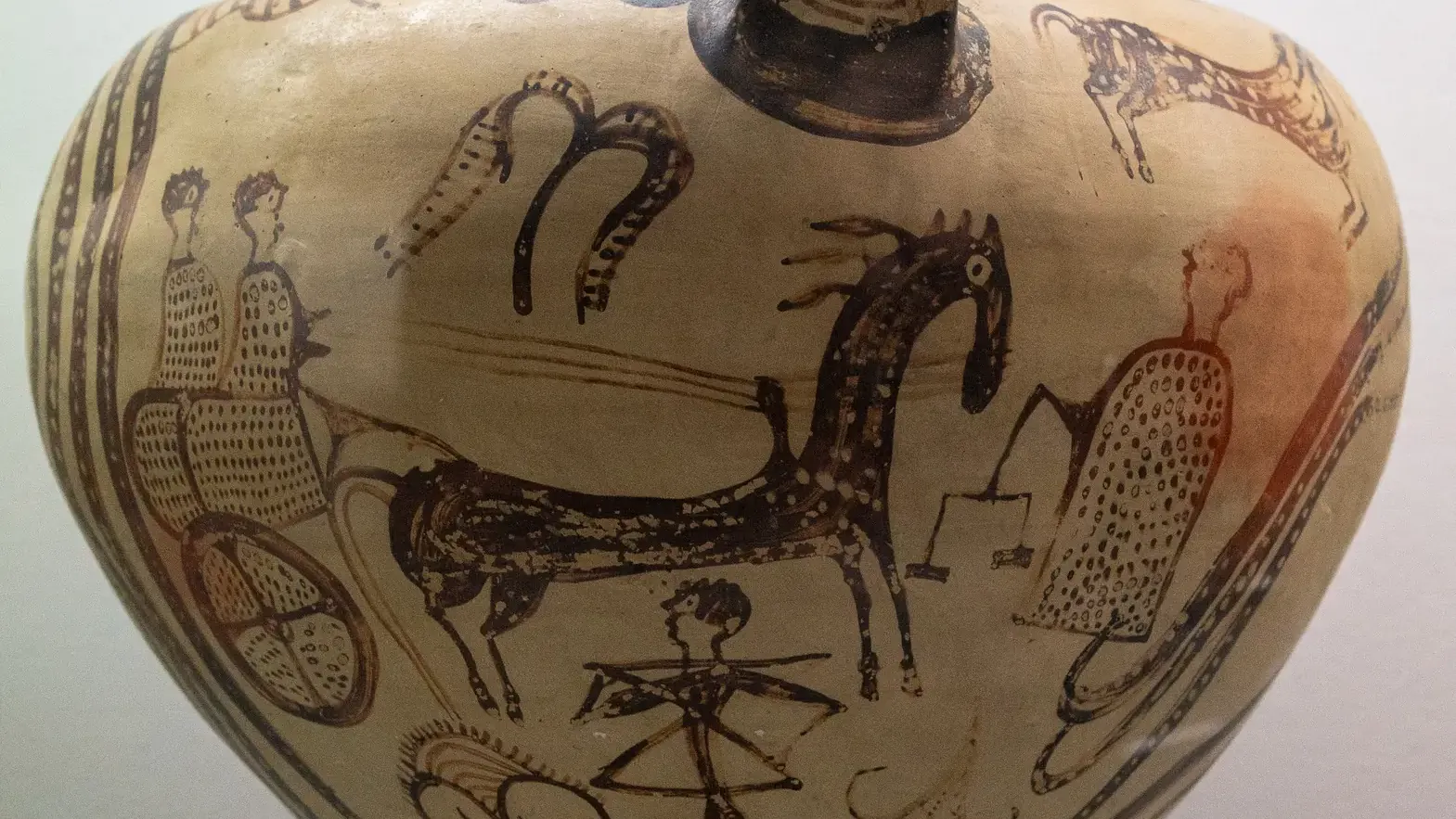
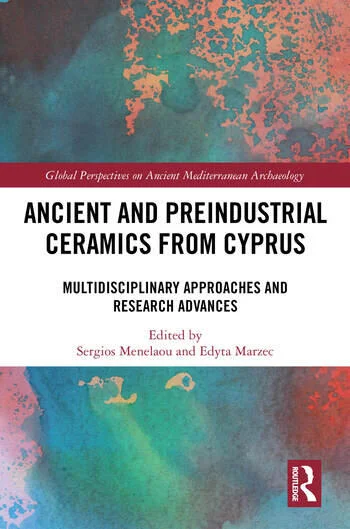
Some small White Painted pots from Kalopsidha, in eastern Cyprus, that Paul Åström divided into two decorative styles were painted by children learning their craft, Laura Gagné argues in a new book on Cypriot pottery. Her chapter is one of sixteen in Ancient and Preindustrial Ceramics from Cyprus: Multidisciplinary Approaches and Research Advances, edited by Sergios Menelaou and Edyta Marzec and published by Routledge in September in its series Global Perspectives on Ancient Mediterranean Archaeology (466 pages; hardback ISBN 9781032960982, ebook ISBN 9781003587996).
Children's brushwork at Kalopsidha
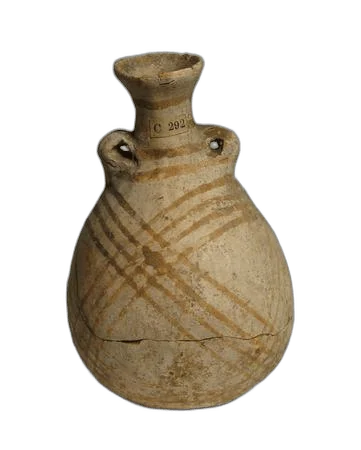
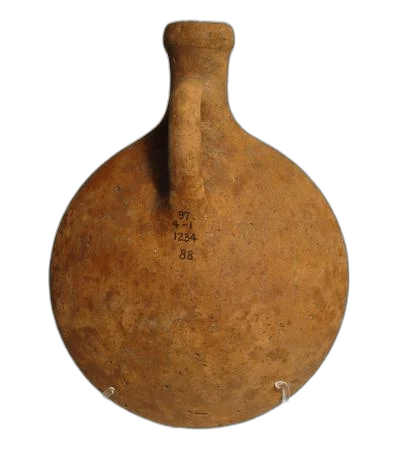
Åström, who dug trenches at Kalopsidha in 1959, took the village for a major production centre of White Painted ware. He held that the Cross Line Style, with its nets of crossing oblique lines, began there, and he defined a Coarse Linear Style found nowhere else. Gagné looks at the individual brush strokes on his Cross Line Style 4 and on the Coarse Linear pots. Drawing on neo-Piagetian models of child development, she reads both groups as children's attempts at the mainstream Cross Line Style, which would take them off the list of separate styles.
What else the volume covers
Giorgos Vavouranakis and Ioannis Voskos follow clay vessels that copy metal ones over some seventeen centuries, c. 2800–1100/1050 BCE, from the Late Chalcolithic onwards. At the palace of Amathus, Lucile Chabrier and Thomas Delbey tested 40 storage-jar samples on site in 2022 with a handheld X-ray fluorescence instrument; they distinguish several workshops, at their most varied in the Cypro-Classical phase from about 500 BCE. After 1570, Jelena Živković shows, Ottoman Nicosia still bought from the old centres at Lapithos, Famagusta and the Troodos. Other chapters treat shipwreck cargoes, recording oil lamps, the Kouris valley, transport jars, contacts with southern Anatolia, early Nea Paphos, a late antique workshop in the Xeros valley and village potters at work since 1986.
Enkomi sherds in a Swedish store
The Medelhavsmuseet in Stockholm, with about 12,000 Cypriot objects, holds almost 150 boxes of sherds from the Late Bronze Age tombs of Enkomi, near Famagusta in the occupied north, which the Swedish Cyprus Expedition dug in 1930; they are kept in the museum's store at Tumba. Stephen Czujko and Ole Stilborg put 25 fragments, mostly of Mycenaean Greek type, from three of the expedition's 22 tombs under the scanning electron microscope and in thin section. The aim, in this first stage of a larger study, is to tell imported Greek pots from early Cypriot imitations.
Paphian jars and Cypriot Sigillata
A papyrus of the 3rd century BCE in the Zenon archive (59741) lists Paphian transport jars, Paphia keramia, beside Kourion's Kouriaka. Only the Kourion type had been recognised among excavated amphorae. Agata Dobosz, David F. Williams, Anno Hein and Vassilis Kilikoglou describe a group of early Hellenistic amphorae from Paphos, some stamped, in three fabrics, two of them possibly from the south or west of the island. They propose, with a question mark in their title, that the jars in fabric A MG 21, found widely in Cyprus and nearby, may be the Paphia.
Marzec and Małgorzata Kajzer return to Eastern Sigillata D, the early Roman red tableware also called "Cypriot Sigillata". Since J. W. Hayes classified it in 1967 it has been tentatively assigned to Cyprus, because so much of it turns up around Paphos, and later chemical and isotope work partly supported that view. Their thin sections and X-ray fluorescence analyses of the ware and of its Hellenistic predecessor, from Nea Paphos and Kourion, leave the source open, and possibly outside Cyprus.
Original sources
On ancientcyprus.com
More in Books
- Bronze Age wells and pits at Hala Sultan Tekke were filled on purpose, new book argues
- New Tombs of the Kings volume centres on the Paphos tomb linked to Ptolemy, king of Cyprus
- This Week in Cypriot Archaeology: 7–13 September 2026
- Cyprus's first Director of Antiquities was sacked within a year; his memoir is now in print