
Books·Brief
New Tombs of the Kings volume centres on the Paphos tomb linked to Ptolemy, king of Cyprus
Sophocles Hadjisavvas, who began digging the Paphos cemetery in 1977, publishes the 1977–1981 seasons; the Ministry ties Tomb 8 to Ptolemy of Cyprus (80–58 BCE).



Dr Sophocles Hadjisavvas, who excavated the Tombs of the Kings at Nea Paphos and later became Director of the Department of Antiquities, is the author of the first volume of the site's final publication. Tombs of the Kings: The Ptolemaic Necropolis of Pafos, Volume I. Excavation Seasons 1977–1981 covers the seasons from 1977 to 1981 of the Department's work in the city's northern cemetery, which continued until 1990. The Department released it on 27 May 2026, 35 years after the excavations ended, and presented it at the A. G. Leventis Gallery in Nicosia on 3 June. A second presentation followed in Athens on 30 September. The A4 volume runs to 329 pages plus XXIII (ISBN 978-9963-36483-1).
Tomb 8 and the Ptolemaic attribution
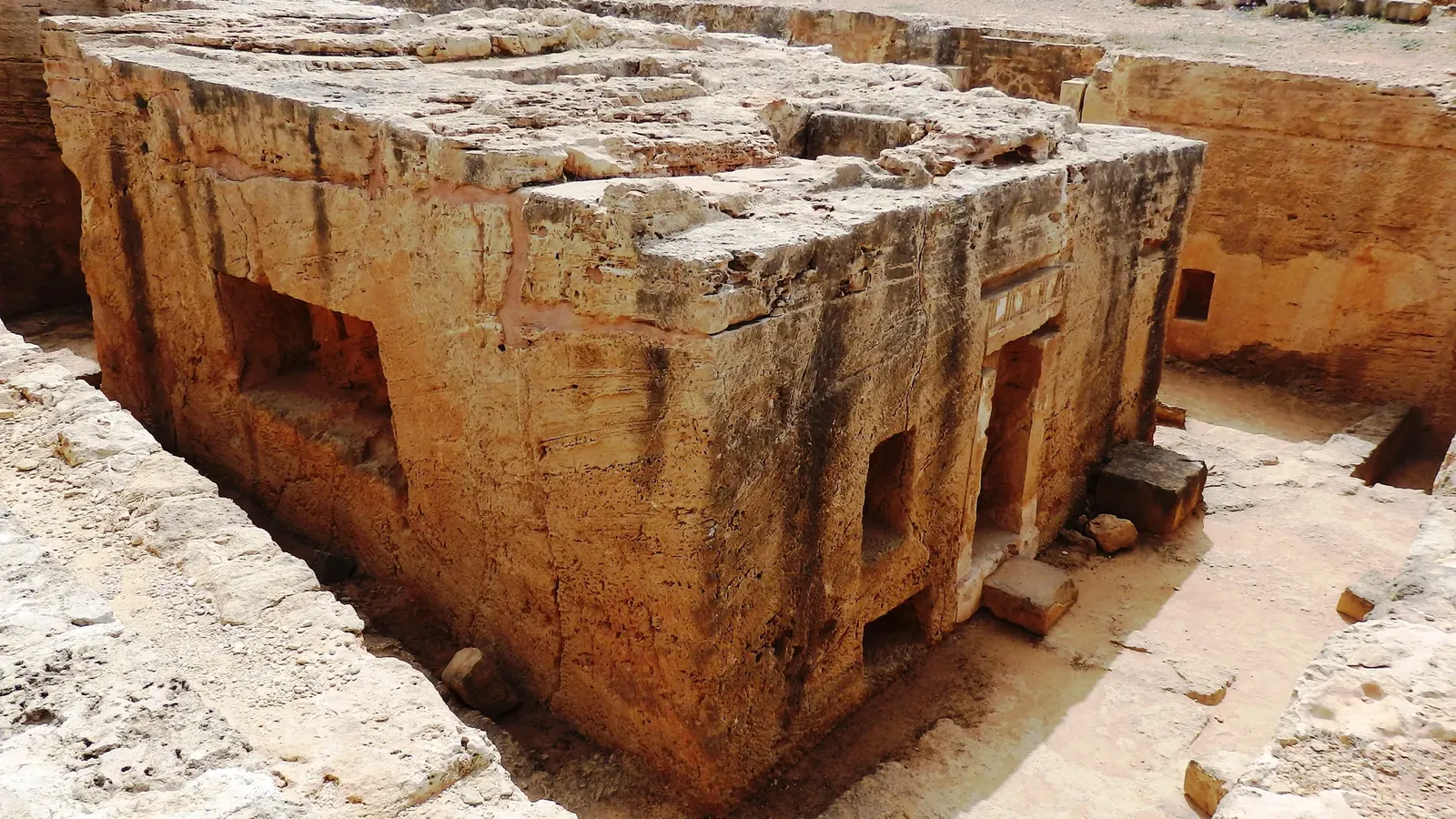
The Ministry says the volume gives particular weight to Tomb 8. Unlike the peristyle tombs, it has no colonnaded court: a block of rock was left standing in the middle, with four open courts around it [1, p. 6]. According to the Ministry, the tomb has been attributed on strong arguments to the burial of Ptolemy of Cyprus (80–58 BCE), brother of Ptolemy XII, who ruled the island until Rome annexed it in 58 BCE. Two chapters deal with its architecture, and the last proposes restoring its built portico with the pediment above it, following recommendations by Charalambos Bouras.
The Department lists 18 burials in the tomb, with chambers, loculi and pit graves. Finds include unguentaria, gold myrtle leaves and Rhodian amphorae, which help date its phases, and a lead ash urn, evidence of cremation, a rite rare in Cyprus but well known in Macedonia. An infant was buried in a terracotta pipe. A well inside the central rock, reached by a stepped alcove and lit by a shaft, may have served for ritual purification, as in Alexandrian tombs.
In a paper of 2017 Hadjisavvas described the central rock as holding burials, bone deposits and the complex's water well, and its principal loculus, a burial niche with a Doric front, as found empty. Coins of Cleopatra VII lay in the debris of the West Wing, and two falcons flank the loculus. He did not exclude a cenotaph, but held that whoever it was meant for belonged to the Ptolemaic family [1, pp. 6–8]. That paper answered Th. Mavrojannis, who in 2016 had identified Tomb 8 as the mausoleum of Ptolemy Eupator [1, p. 1]. Hadjisavvas rejected a reading of the painted epistyle that lay behind that identification: in his account it shows torches and shields [1, p. 4].
The volume and the earlier work
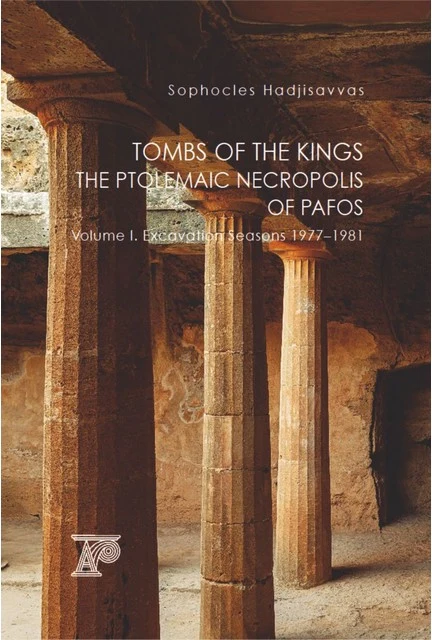
As the Ministry describes it, the book opens with a general history of the site, describes in detail the peristyle tombs that visitors can enter today, and gives a full account of the systematic excavations of 1977–1981. The Ministry calls the cemetery the largest Hellenistic burial ground in Cyprus and lists nine monumental underground complexes with peristyle courts among its main monuments, combining Egyptian and Greek architectural traditions.
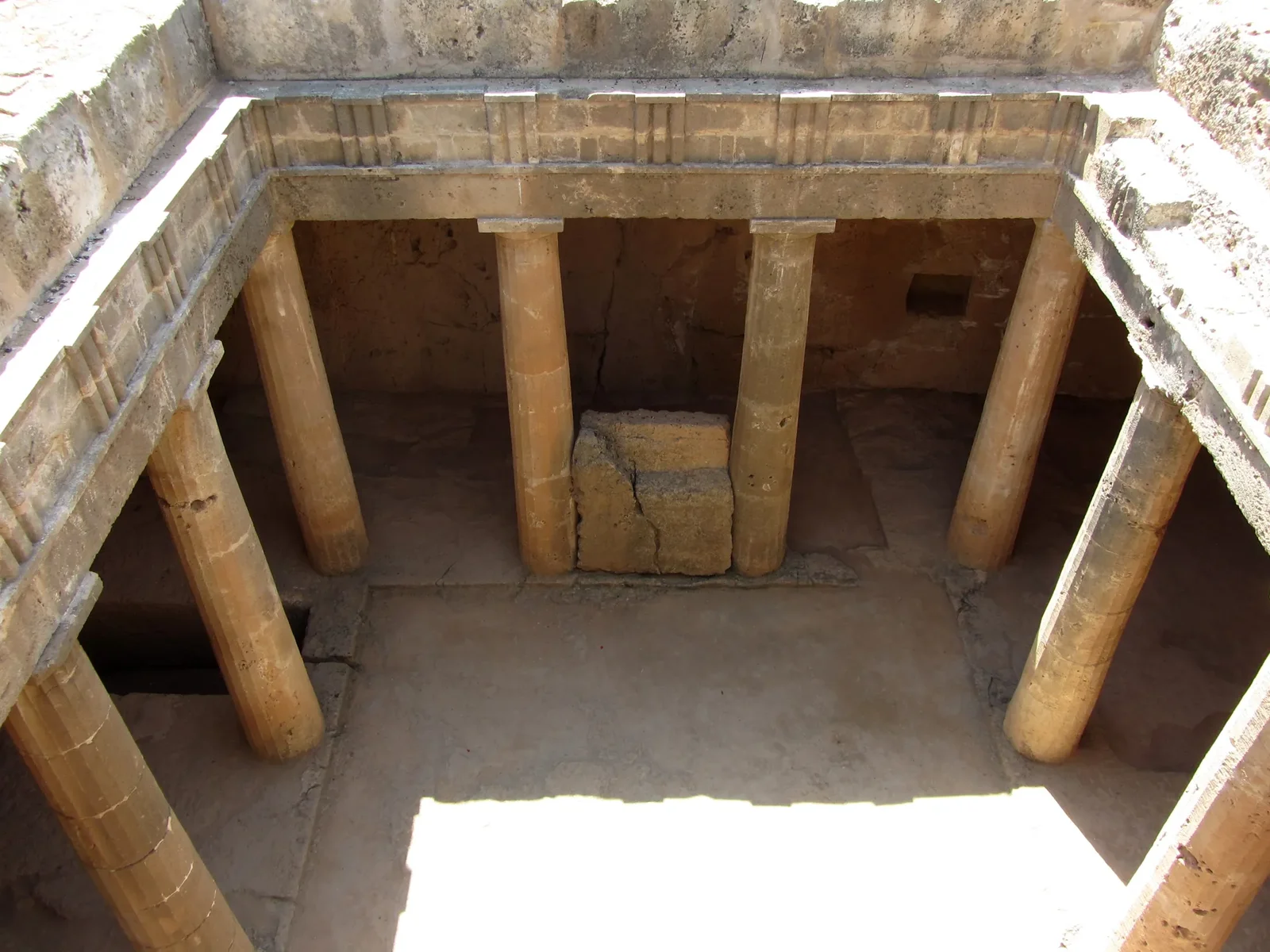
The site, Palaiokastra, has been known as the Tombs of the Kings since the 1930s. The Department began systematic work there in 1977, after the Turkish invasion of 1974 had cut it off from the sites of the occupied north; over fourteen seasons the excavation investigated five monumental tombs with peristyle courts and a tumulus [1, p. 1]. The two main peristyle tombs had earlier been cleared by groups of prisoners, and the first season dug the ground between and around them, finding 20 rock-cut tombs, most of them looted [1, pp. 1–2]. Tombs were numbered by year and order of discovery, so Tomb 8 first appeared as Tomb 1979/1 [1, pp. 2–3]. Of the peristyle tombs, only Tombs 3 and 7 were finished; the large tumulus in the south-east was dug in 1984 and 1985 [1, pp. 2–3]. In 2017 Hadjisavvas called the final publication pending [1, p. 9].
The presentation in Athens
The Department and the House of Cyprus scheduled the Athens presentation for 18:00 on Wednesday 30 September at the House of Cyprus. The programme listed a greeting by the Department's Director, Dr Giorgos Georgiou, and talks by Dimitris Plantzos, Professor of Classical Archaeology at the National and Kapodistrian University of Athens; Nikolas Dimakis, Associate Professor of Classical Archaeology at the same university; and Klairi Palyvou, Emeritus Professor of Architecture at the Aristotle University of Thessaloniki. It was to be streamed live.
Original sources
- Department of Antiquities, Cyprus: Release of Volume I
Official release·
- Deputy Ministry of Culture, Cyprus (gov.cy)
Official release·
On ancientcyprus.com
- Sites
- Nea Paphos
- Institutions
- Department of Antiquities of Cyprus
- Periods
- Hellenistic
References
- 1.Hadjisavvas, S. (2017). Facts and Factoids related to the excavations of the 'Tombs of the Kings', Paphos, Cyprus. Summarised version of a presentation at an international conference held in Paphos in 2017.
More in Books
- Children painted some 'crude' Bronze Age pots at Kalopsidha, new book on Cypriot ceramics argues
- Bronze Age wells and pits at Hala Sultan Tekke were filled on purpose, new book argues
- This Week in Cypriot Archaeology: 7–13 September 2026
- Cyprus's first Director of Antiquities was sacked within a year; his memoir is now in print