
Books·Brief
Cyprus's first Director of Antiquities was sacked within a year; his memoir is now in print
John R. Hilton wrote up his 1934–36 posting some forty years later from family letters. Nicholas Stanley-Price has edited it for Archaeopress.



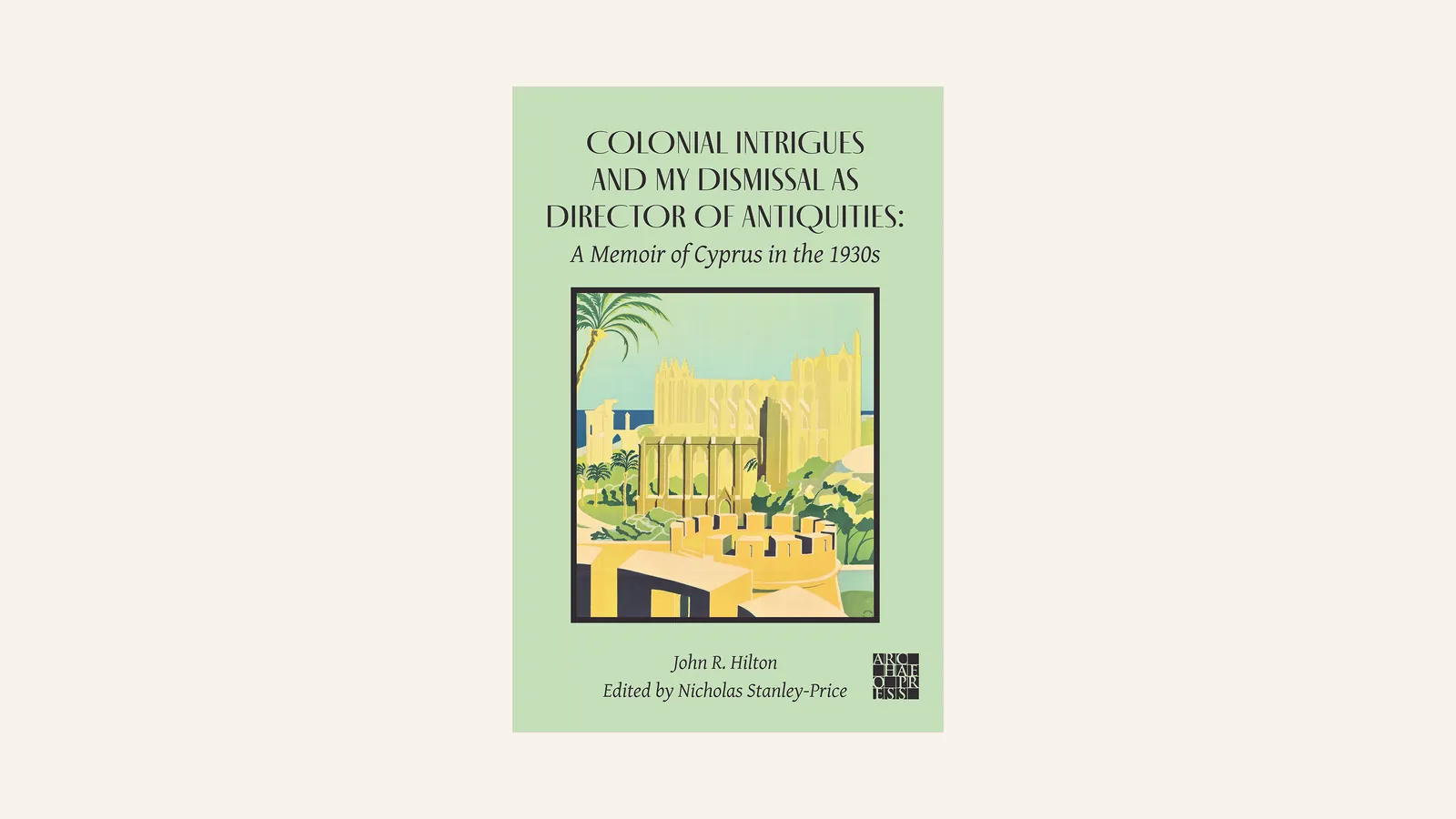
John R. Hilton, the architect chosen in 1934 to head the new Department of Antiquities of Cyprus, left a first-person account of how he lost the post inside a year. Archaeopress published it as “Colonial Intrigues and My Dismissal as Director of Antiquities: A Memoir of Cyprus in the 1930s” in its Archaeological Lives series in July 2025, edited by Nicholas Stanley-Price (172 pages, 49 figures; paperback ISBN 9781805830641, PDF ISBN 9781805830658).
What the memoir covers
Hilton wrote it about forty years after the events, working from the family's letters of the time, according to the publisher. Its nine chapters carry the story through to his departure. Stanley-Price, a former Director-General of ICCROM who began his career as an archaeologist in Cyprus, adds an introduction on the Hiltons and colonial society and a chronology of 1932–1936. The publisher presents it as an account of a young director undermined by a rival who had the Governor's support, and as a picture of a poor and fairly isolated colony between the wars; protests in Cyprus and England won Hilton an extension, and the rival lost his post. Reviewing the book for Current World Archaeology on 15 March 2026, Richard Hodges called it "a story of tawdry intrigue".
Seventeen months in office
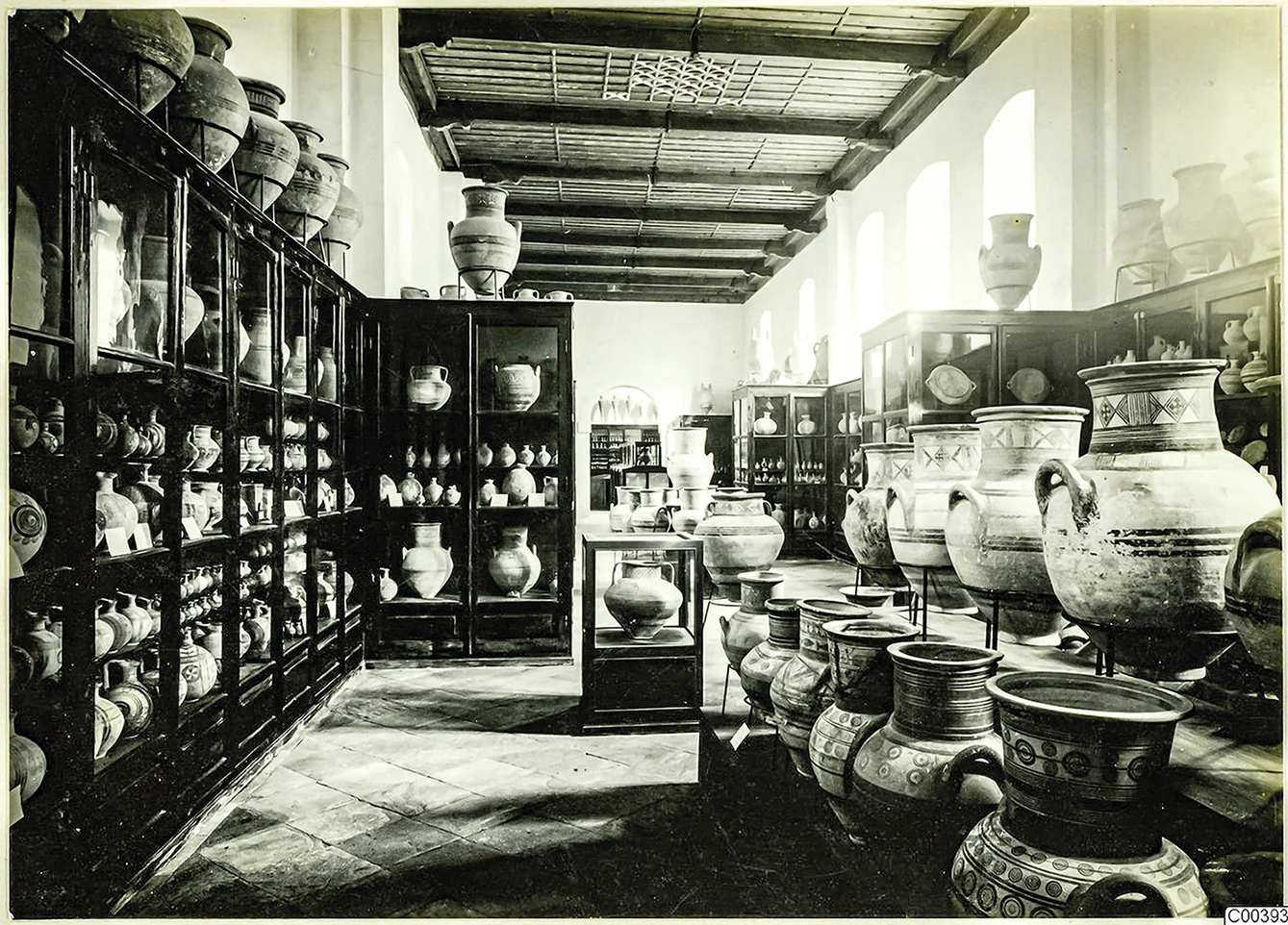
Stanley-Price set out the case from the colonial records in a chapter published the same year [1]. Hilton's appointment ran from 19 October 1934 [1, p. 115]. The Department began work on 1 January 1935, taking in the Cyprus Museum and the office of the Curator of Ancient Monuments [1, p. 116], and a new antiquities law was signed only at the end of that year [1, p. 116] (the 1905 and 1935 laws). Hilton brought out a foreman from the Office of Works to train Cypriot masons and left Porphyrios Dikaios, Curator of the Museum, a free hand in the Museum [1, pp. 116–117].
By May 1935 he knew that Rupert Gunnis, the Inspector of Antiquities, was working against him. On 2 August the Acting Governor, W. Denis Battershill, called him up to Troodos and told him in a three-minute meeting that his appointment was ending, for want of administrative capacity and of going about and seeing people [1, p. 118]. Stanley-Price notes that Gunnis had no archaeological or architectural knowledge and claimed none [1, p. 119]; his earlier years at the Museum, selling off "duplicate" pots, are the subject of another of Stanley-Price's studies.
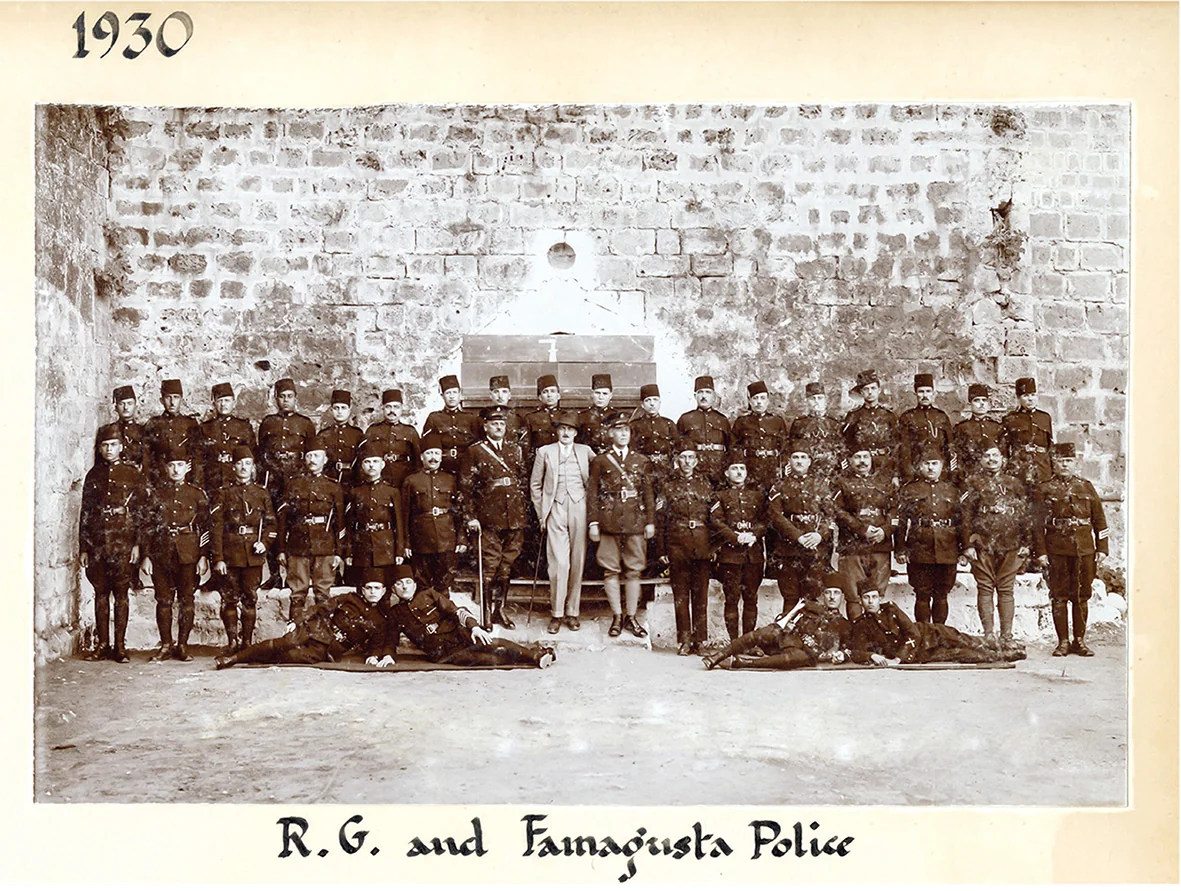
Hilton petitioned the Secretary of State on 26 September. The reply of 6 December upheld the dismissal but let him stay to the end of March 1936. In those extra months he set up the Antiquities Advisory Board, had new building in old Famagusta brought under control and drafted a restoration scheme for Kyrenia castle [1, p. 121]. In February 1936 Governor Richmond Palmer removed Gunnis from his post. Hilton left Cyprus on 6 April; Dikaios acted as Director until A. H. S. Megaw arrived on 18 July [1, p. 122].
Hilton, born in 1908, later did intelligence work for the Foreign Office [1, p. 123]. He died in 1994.
Original sources
On ancientcyprus.com
References
- 1.Stanley-Price, N. (2025). Colonial society and the dismissal of John Hilton, first Director of Antiquities in Cyprus. In T. Kiely, A. Reeve and L. Crewe (eds), Empire & Excavation: Critical perspectives on archaeology in British-period Cyprus, 1878–1960, 109–126. Leiden: Sidestone Press.
More in Books
- Children painted some 'crude' Bronze Age pots at Kalopsidha, new book on Cypriot ceramics argues
- Bronze Age wells and pits at Hala Sultan Tekke were filled on purpose, new book argues
- New Tombs of the Kings volume centres on the Paphos tomb linked to Ptolemy, king of Cyprus
- This Week in Cypriot Archaeology: 7–13 September 2026