
Lecture·CAARI Cyprus·2022
Literary Cartographies: Hilarion's Cyprus
Chapters
About the lecture
Virginia Burrus of Syracuse University reads from her monograph on Saint Hilarion, examining how Jerome's late fourth-century Life of Hilarion maps the saint's travels and how readers, pilgrims, and scholars have sought to locate his final Cypriot hermitage on the ground. Introduced by Lindy Crewe, the talk considers the relationship between literary texts and physical geography in Late Antique Cyprus.
Jerome describes Hilarion arriving at Paphos, then in ruins from earthquakes, before retreating to a remote mountain garden twelve miles from the sea near a ruined pagan temple. Burrus traces Hilarion's earlier itinerary from Gaza through Egypt, Libya, Sicily, and Dalmatia to Cyprus, arguing that Jerome starts with the measured coastal distances of an ancient periplous before dissolving into unmapped deserts, seas, and mountain interiors. Comparing Hilarion's sea voyage past Cape Maleas and the Cyclades to Homer's Odyssey in reverse, she notes that Jerome privileges the obscure place over bodily relics: Palestine received Hilarion's body after his death in 371, while his spirit remained in the Cypriot garden.
Although the fifth-century historian Sozomen named the Cypriot site Charbyris and the former patriarch Gennadius died in a snowstorm near Paphos in 471 trying to reach it, no lasting ancient cult survives on the island, as the twelfth-century writings of Neophytus confirm. Burrus surveys the places later proposed in response to Jerome's text. Under Lusignan rule, Western Christians identified the hermitage with the Byzantine fortress of Saint Hilarion Castle in the Kyrenia range, which Leontios Machairas linked instead to a later saint of the same name. Local Cypriot tradition favours a cave and church near Episkopi in the Ezousa valley, recorded by Andreas Stylianou and Judith Stylianou. Scholarly proposals include the monastery of Agia Moni in the Troodos (suggested by Ilona Opelt), the sanctuary of Aphrodite at Palaepaphos, a small early Christian basilica beside a subterranean sanctuary excavated in the 1990s at Toumballos in Nea Paphos, and the sanctuary of Apollo of the Woodlands at Kourion.
Burrus then examines Estienne Michalet's 1693 Paris map of the desert fathers, which marks Hilarion's desert, New and Old Paphos, and Charbyris, before reflecting on Daniel Mendelsohn's Odyssey memoir, Constantine Cavafy's poem Ithaca, her own deferred travels, and the late fourth- or early fifth-century monastery of Hilarion excavated south of Gaza in 1990. In the discussion afterwards, Young Kim asks about Jerome's opening dismissal of Epiphanius, who had known Hilarion personally.
Found at the places discussed
Objects in our catalogue, in museum collections, recorded as found at these sites.

Background
Where to read more on this site before or after watching.
The site
Palaepaphos (Kouklia)
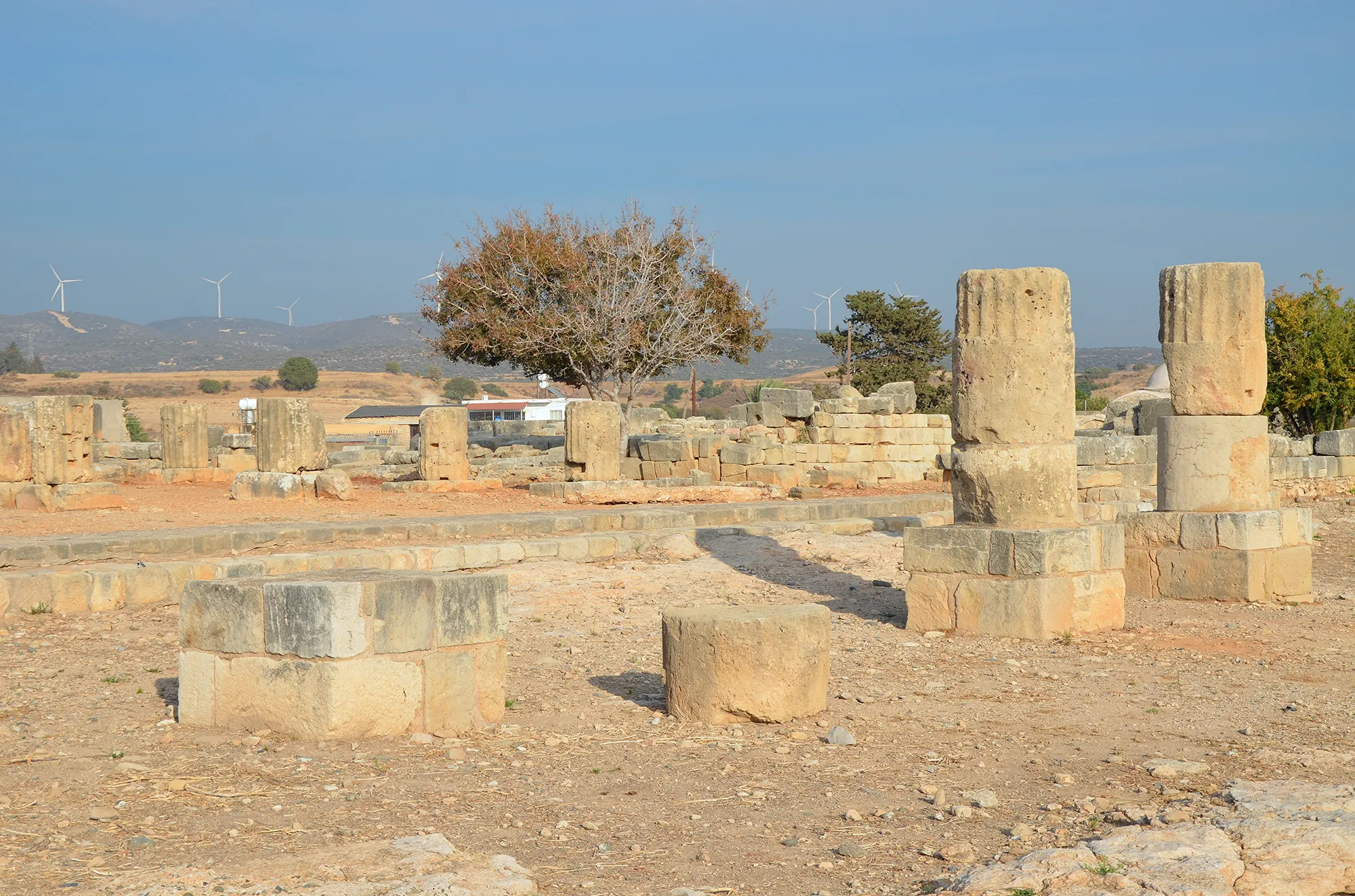
Palaepaphos, Old Paphos, lies under and around the village of Kouklia in western Cyprus. Founded in the Middle Bronze Age, it was the only large town of the south-west until the early Hellenistic period, the seat of the kings of Paphos and the site of the sanctuary of the Paphian goddess, Aphrodite, worshipped here from about 1200 BC to the end of the 4th century AD.
In the compendium
Earthquakes in Ancient Cyprus
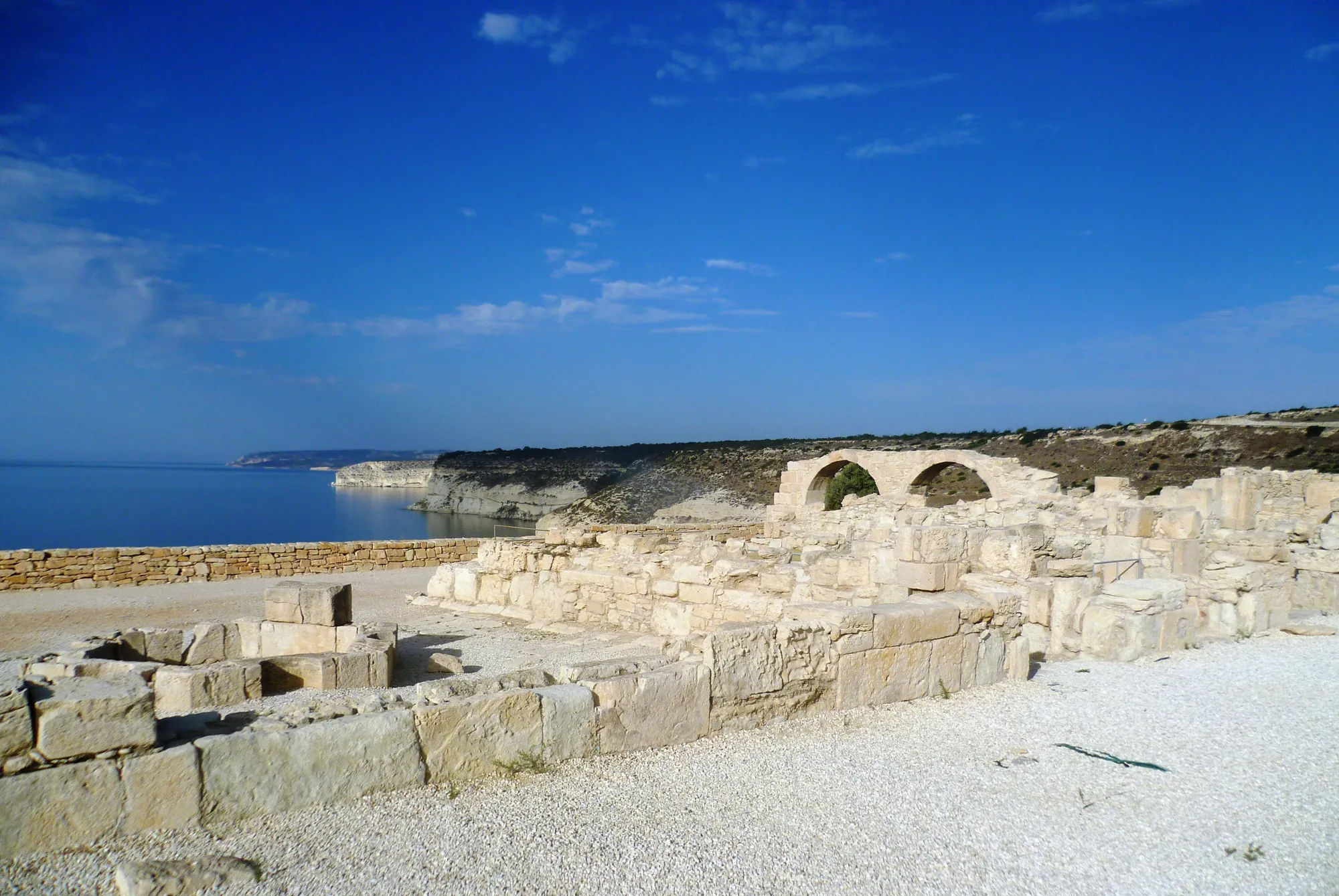
The earthquakes proposed for ancient Cyprus, from disputed Bronze Age destructions to the 4th-century CE shocks that left Kourion in ruins.
In the compendium
Egypt
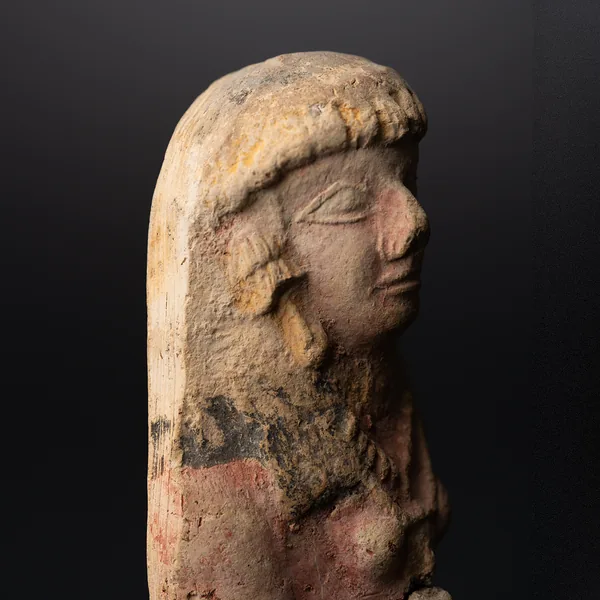
Ancient Egypt, Cyprus's partner in copper, pottery and prestige goods from the Middle Kingdom to the Ptolemies, who annexed the island.
The period
Roman
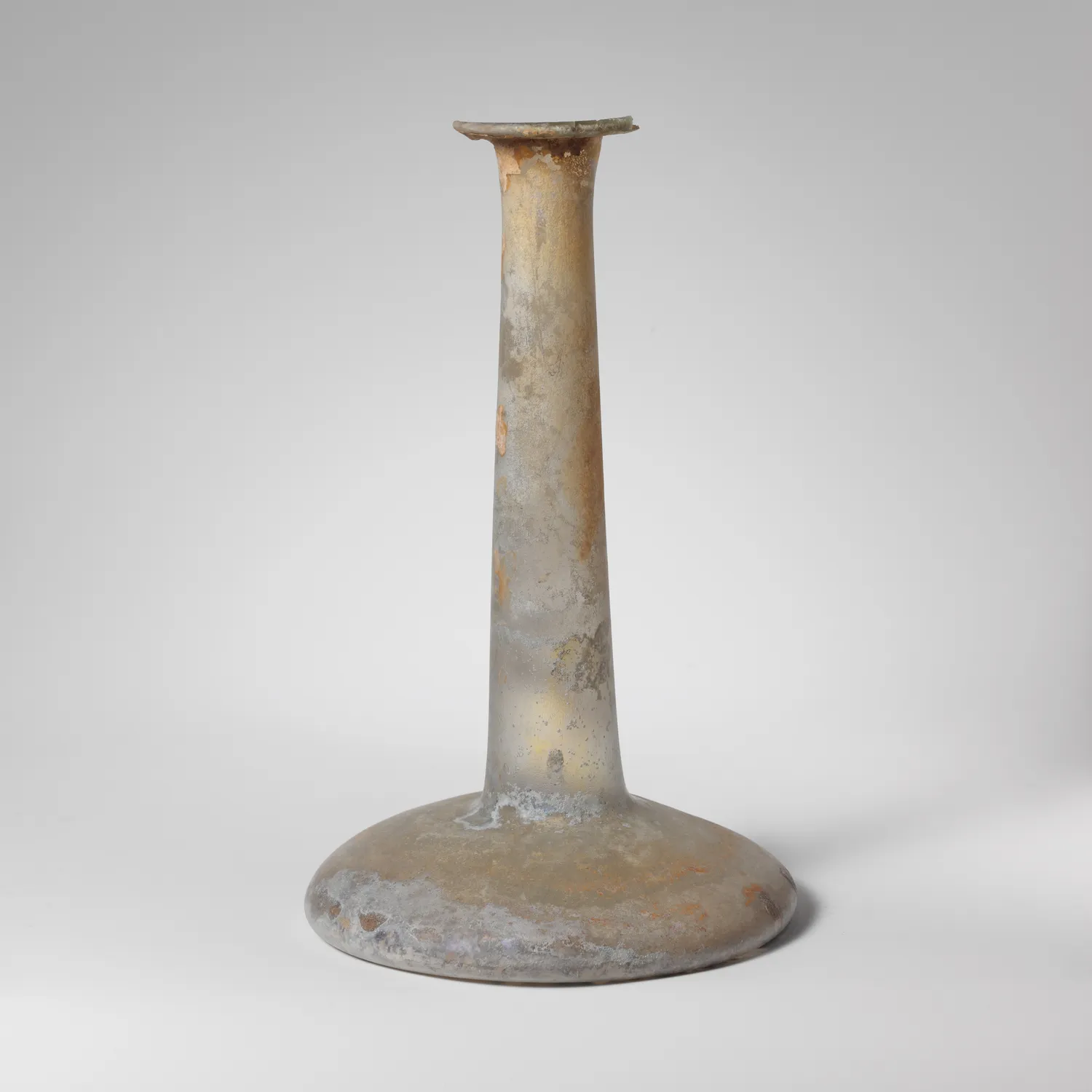
Cyprus as a Roman province from 58 BCE to the fourth century CE, governed from Nea Paphos, mined for copper, and finally wrecked by earthquakes.
Map of Cyprus
Places discussed in the talk
- Has a page on this site
- Other places
- Ground above 200, 500, 1,000 m
Places
- 1Palaepaphos
- 2Kourion
- 3Kyrenia
- 4Agia Moni (approx.)