
Conference paper·Archaeological Research Unit - University of Cyprus·2022
1st Graduate Forum for Mediterranean Archaeology: Plasters and Mortars in Cyprus, Greece, Egypt and Anatolia
Archontoula Barouda, Caterina Zazzaro, Paola Pizzo, Eleni Filippou and Matilde Ricci
Chapters
About the video
This afternoon session on technology and materials at the 1st Graduate Forum for Mediterranean Archaeology brings together five doctoral papers on the archaeometric analysis of ancient plasters, pastes and mortars across the eastern Mediterranean, two of which examine sites in Cyprus.
The first paper, by a doctoral researcher at University College London, examines Neolithic lime plaster floors from trench Delta 8 at the cave and mound site of Makri in Greek Thrace, dated to 5800 to 5400 BC. Using macroscopic study, petrography and micro-XRF mapping, the speaker distinguishes nine formal, compact lime floors from thicker, rougher intermediate layers made with unburned travertine, lime lumps and domestic debris, and points to a foundation fill between phases B and C of Makri II that marks a settlement-wide renovation.
Caterina Zazzaro of the University of Cambridge follows with an analysis of the white and pink pastes and fibrous glue on a Twenty-Fifth or Twenty-Sixth Dynasty Theban coffin set in the Fitzwilliam Museum, made of sycamore fig wood and pseudo-cartonnage. Optical microscopy, SEM-EDS and FTIR show that the calcite grains exceed one micrometre and contain microfossils, demonstrating that the pastes are crushed limestone rather than heat-treated plaster, while the pink shade derives from natural iron oxide impurities and the fibrous glue contains animal collagen.
In the third paper, Paola Pizzo presents preliminary results from the Hellenistic and Roman theatre at Nea Paphos, founded around 300 BCE and excavated by the University of Sydney. Sampling wall, floor, waterproof and seat-sealing plasters from phases following the earthquake of 126 CE, Pizzo combines portable XRF, XRD, thermogravimetric analysis and porosity tests. Most samples use a calcite binder, with two masonry mortars composed of over ninety per cent gypsum, while a waterproof mortar sample (MPT12) displays over forty-three per cent porosity, leading the speaker to test whether waxes or oils were added for waterproofing.
The fourth paper, by Eleni Filippou, compares historic plasters from Cypro-Classical to early Hellenistic Kition-Pamboula at Larnaca (a military port with shipsheds, basins and an aqueduct) and the Late Roman villa with mosaics and pools at Akaki. Portable XRF and XRD show that at Kition-Pamboula hydraulic lime plasters with ceramic fragments were reserved for structures in direct contact with water, while gypsum plaster was used elsewhere; at Akaki only lime plasters occur, with a pink opus signinum layer rich in ceramic powder lining the pools and aqueduct, and diabase serving as the main aggregate at both sites.
Finally, Matilde Ricci of the Catholic University of Leuven examines twenty masonry mortar samples taken in 2006 from the second- to fifth-century AD Roman baths at Sagalassos in Turkey, using thin-section petrography and water immersion tests to trace mixtures of lime lumps, pumice, volcanic rock and ceramic fragments. A closing discussion addresses trampling on Neolithic floors, lipid testing for waterproofing in Cyprus, organic additives recorded by Vitruvius, and how to distinguish crushed fired ceramic from raw clay in mortar matrices.
From our collection
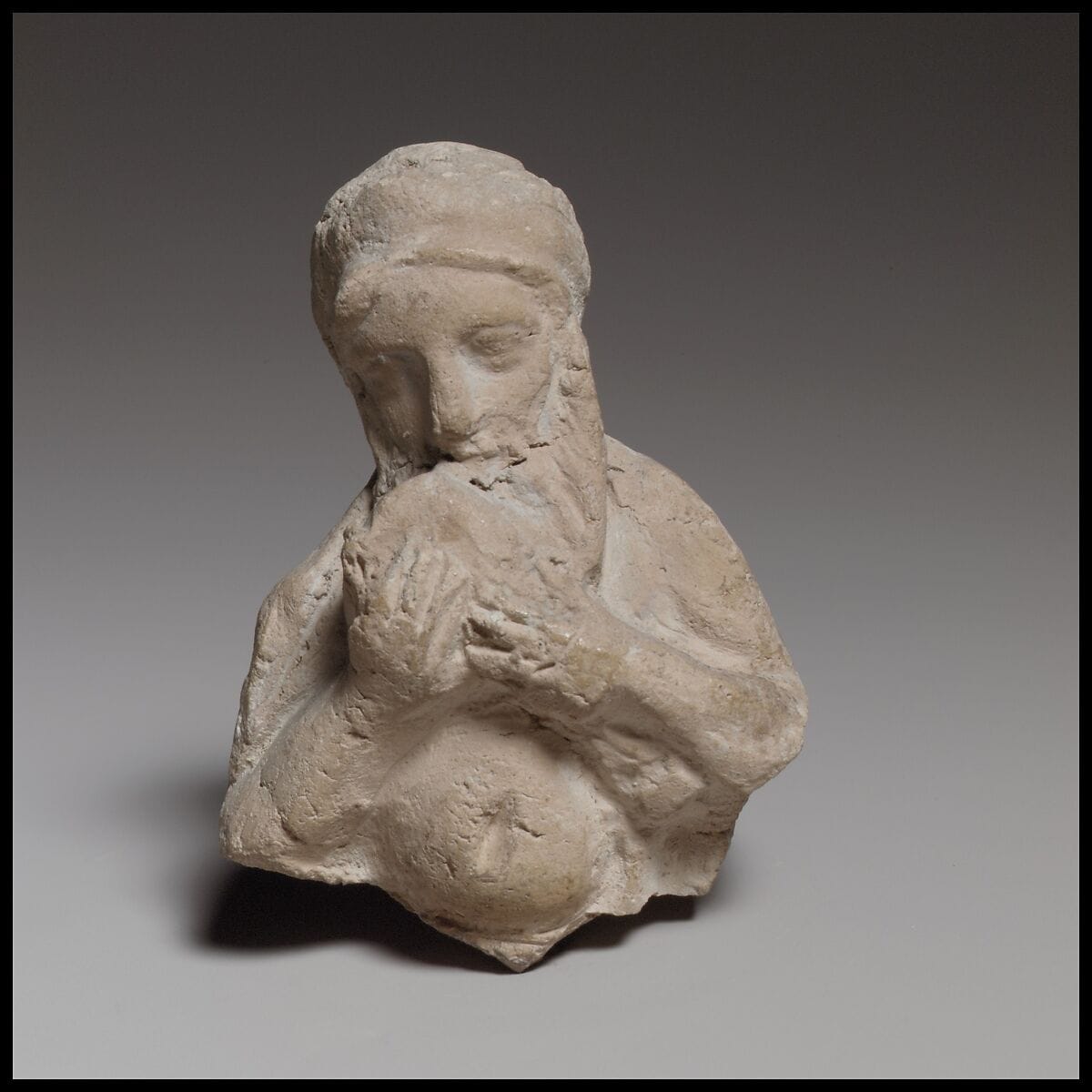
Pieces in the Drakopoulos collection of the kinds and periods this talk covers: Cypro-Classical, Hellenistic.
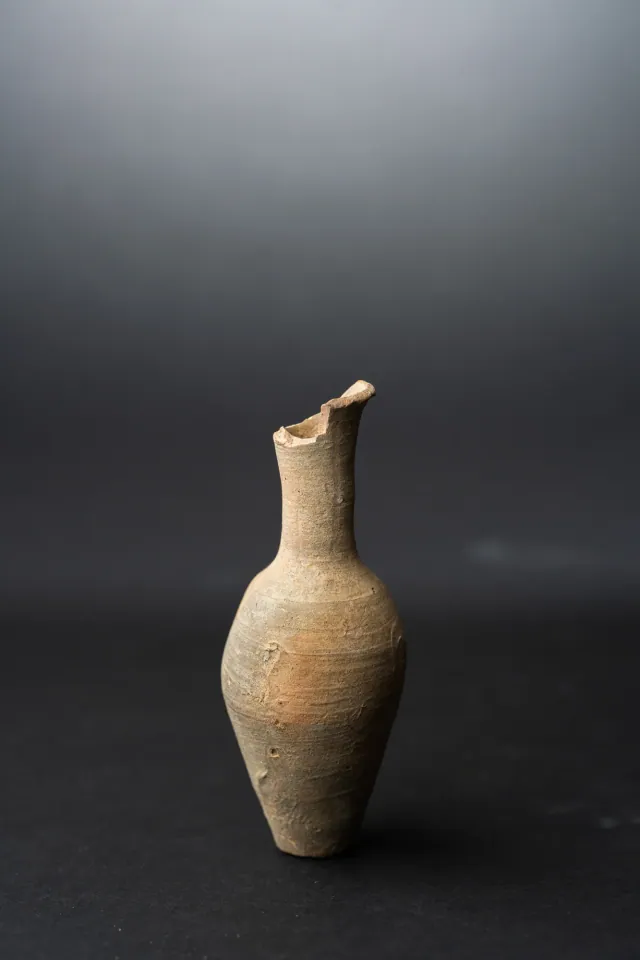
Fusiform Unguentarium
Hellenistic
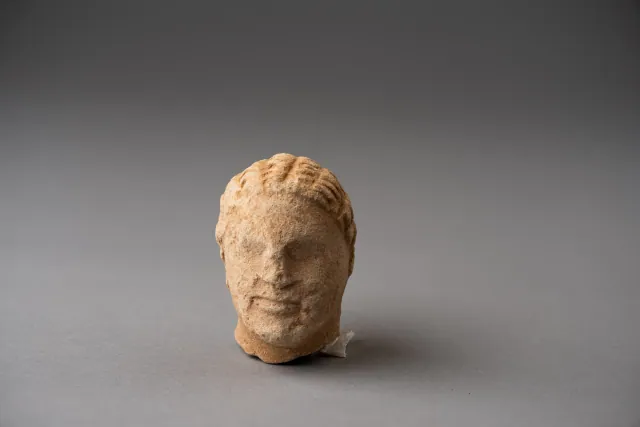
Limestone Head of a Boy, probably from a Temple Boy Statuette
Cypro-Classical
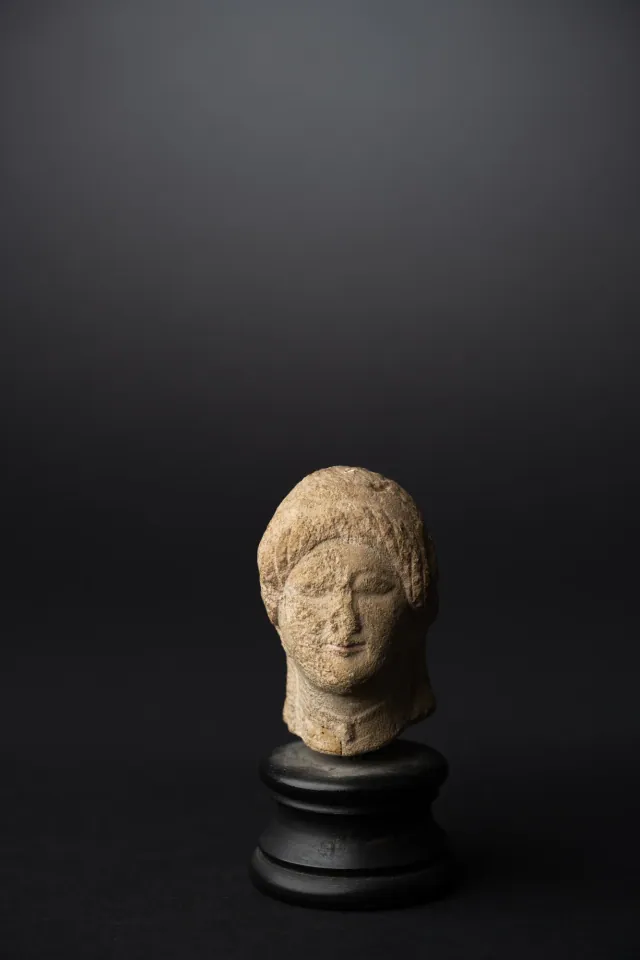
Limestone Head of a Votary with a Wreath
Cypro-Classical
Found at the places discussed
Objects in our catalogue, in museum collections, recorded as found at these sites.


Background
Where to read more on this site before or after watching.
The site
Nea Paphos
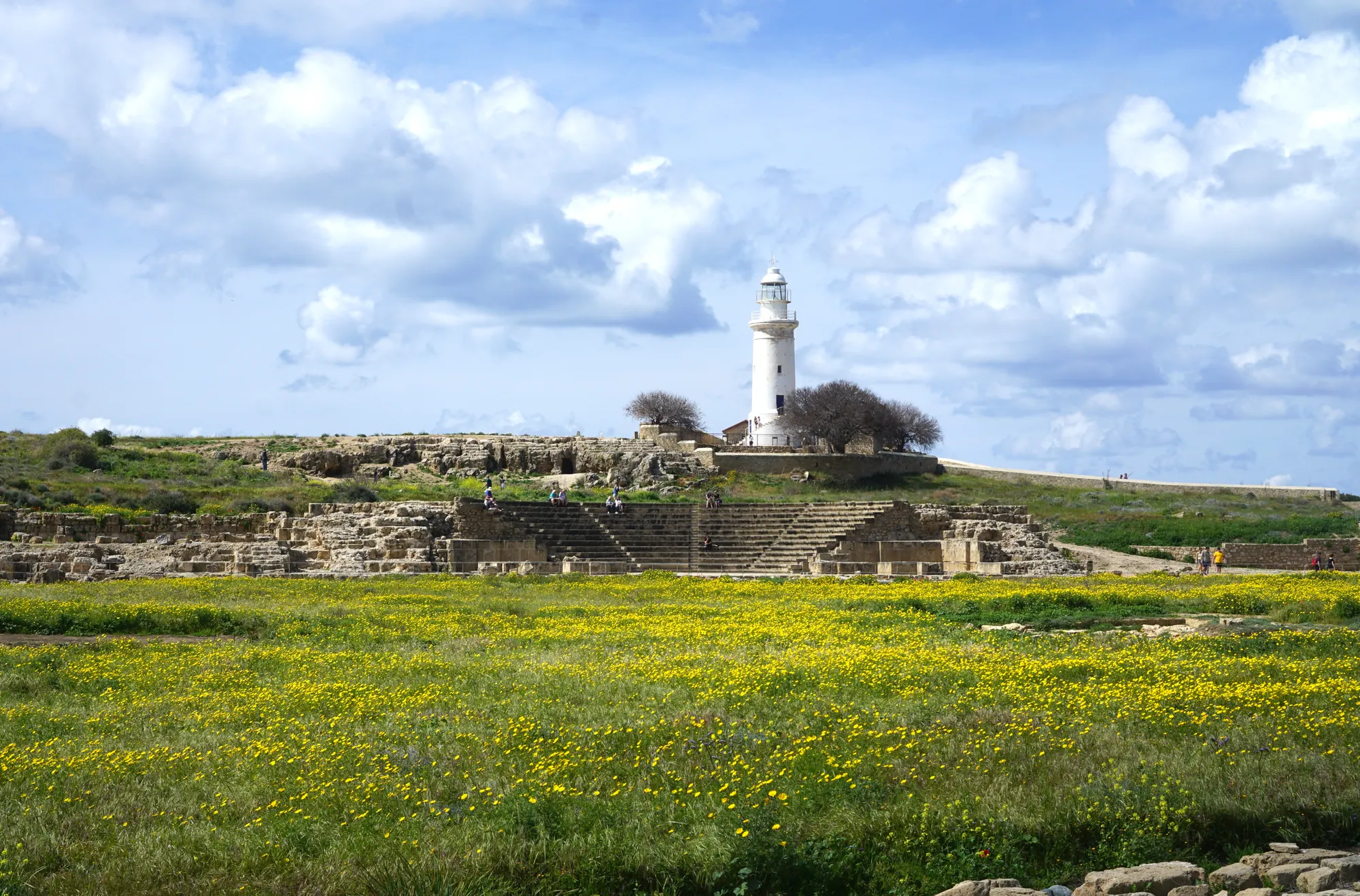
Nea Paphos, New Paphos, lies under Kato Paphos on the south-west coast of Cyprus. Founded about 320 BC as a harbour town for the kingdom of Paphos, it became the seat of the Ptolemaic governors of the island and then the capital of the Roman province until the 4th century AD. Its walls, theatre, civic centre, mosaic-floored houses and rock-cut tombs are part of the UNESCO World Heritage Site of Paphos, inscribed in 1980.
In the compendium
Building Materials and Techniques
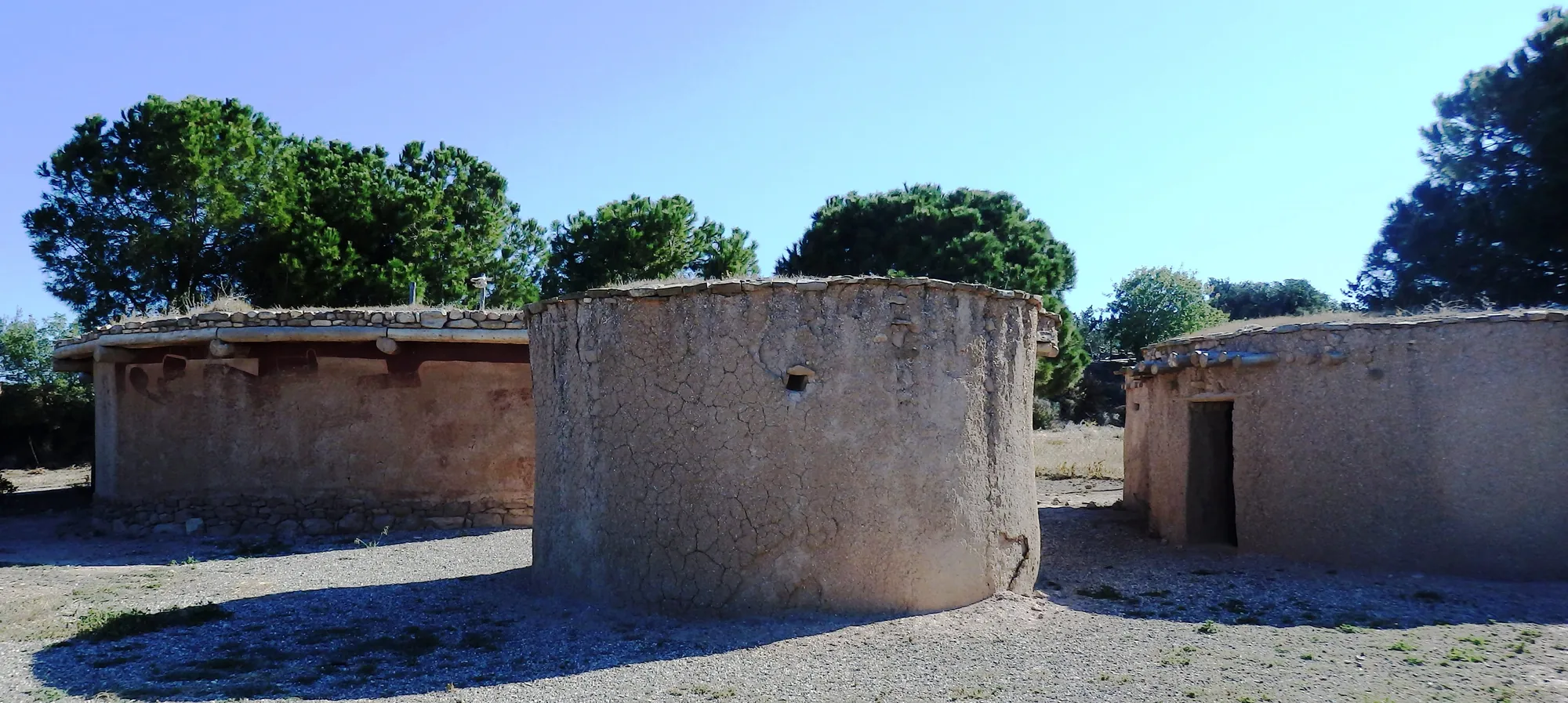
Cypriot houses were built of local stone, earth and timber: walls of rubble or mudbrick on stone socles, under flat roofs of beams, brush and packed earth.
In the compendium
Iron Age Cities and Palaces
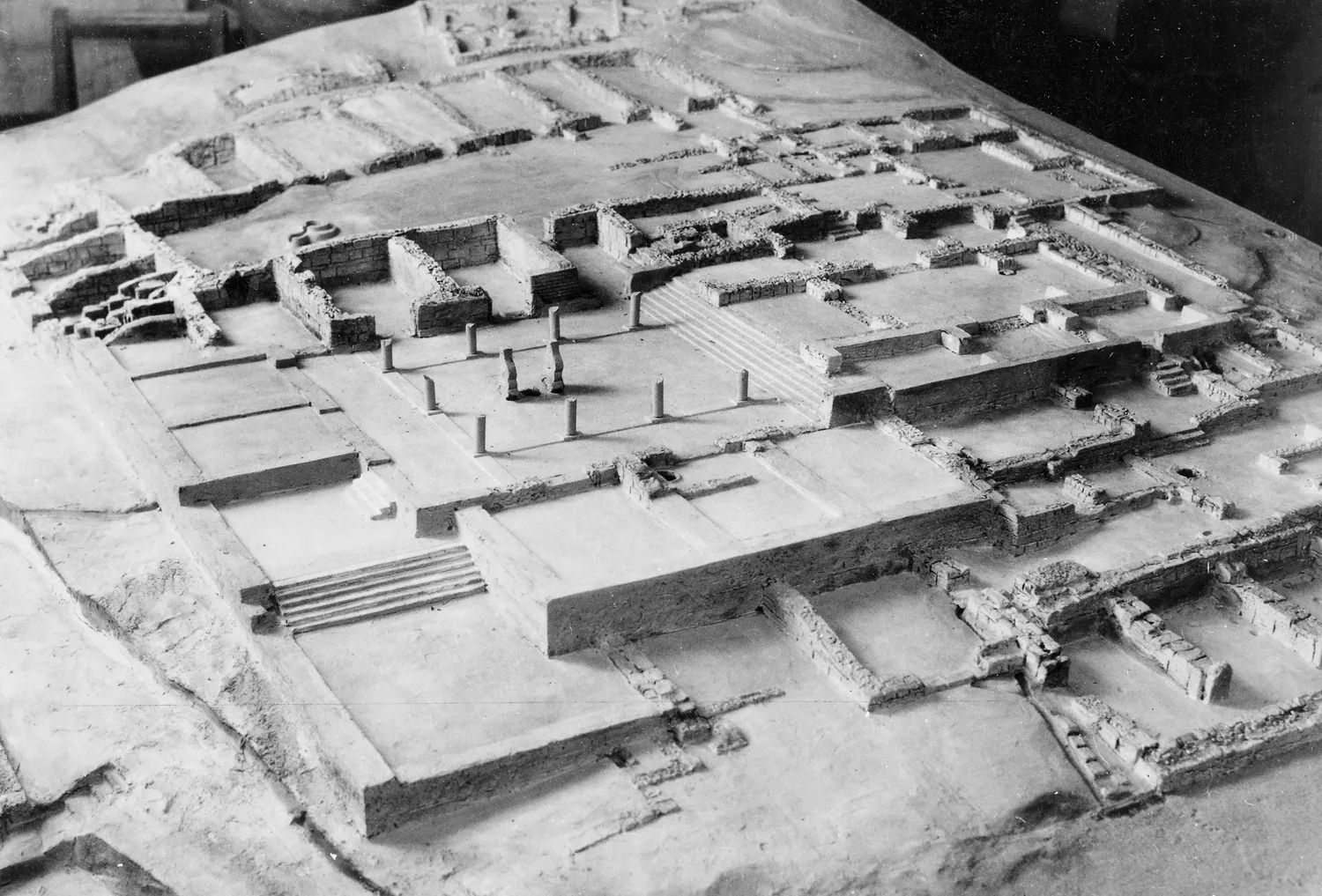
The capitals of the Iron Age kingdoms of Cyprus, their palaces at Vouni, Amathus, Idalion and Palaepaphos, their houses, and the volute and Hathor capitals of the period.
In the compendium
Theatres, Baths and Public Buildings
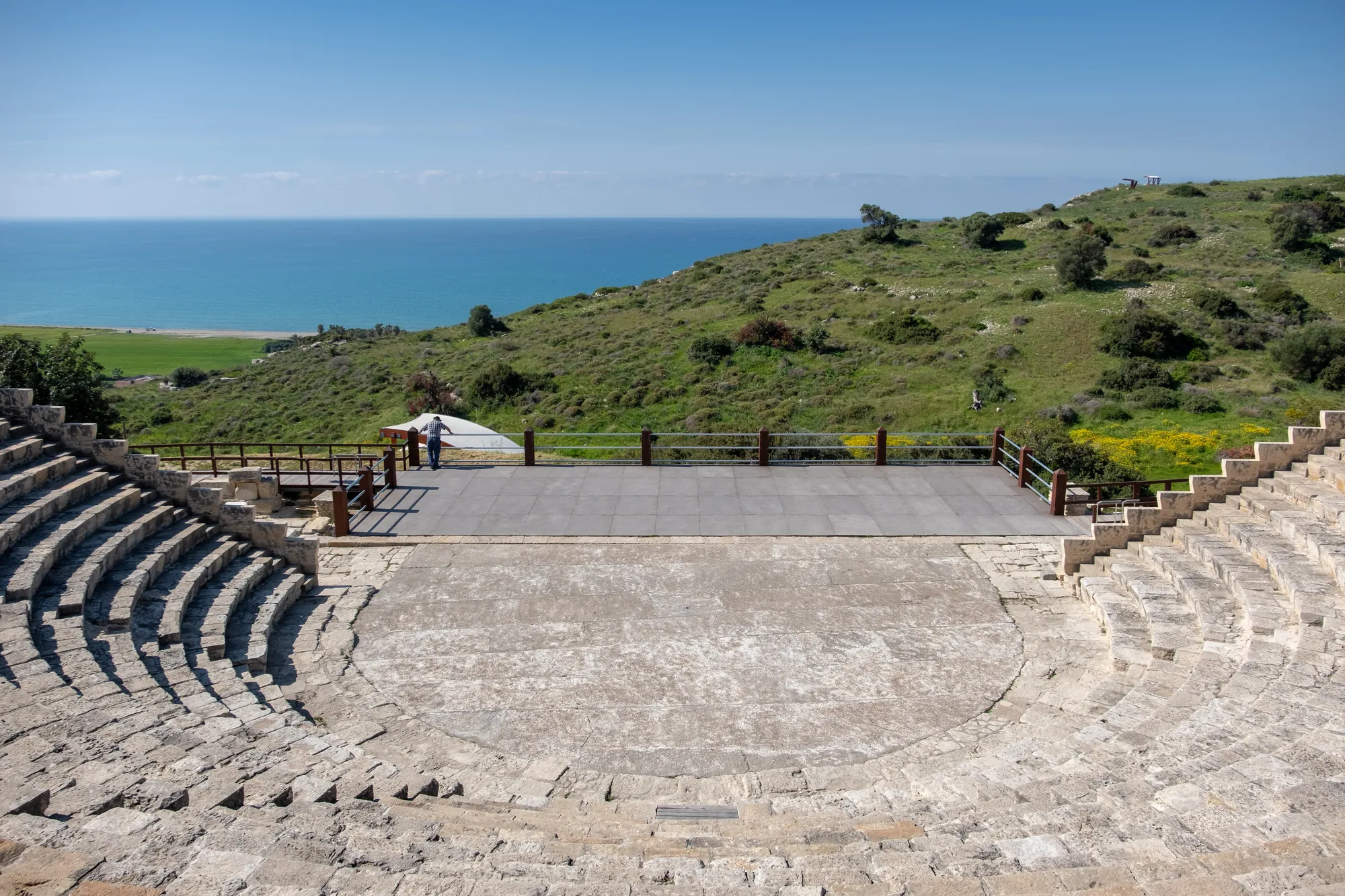
The public buildings of Hellenistic and Roman Cyprus: theatres, an odeion, agoras, the Salamis gymnasium, the Kourion stadium and heated baths, mostly rebuilt after AD 76/77.
Map of Cyprus
Places discussed in the talk
- Has a page on this site
- Other places
- Ground above 200, 500, 1,000 m
Places
- 1Nea Paphos
- 2Kition
- 3Akaki (approx.)