
Lecture·Archaeological Research Unit - University of Cyprus·2018
Flesh on Bones: Latest Developments and State of Affairs in Cypriot Zooarchaeology
Chapters
About the lecture
Angelos Hadjikoumis of the University of Sheffield surveys the history and current state of zooarchaeology in Cyprus and presents three case studies from his own research.
He begins with a history of the study of animal remains on the island, from Dorothea Bate's palaeontological work on the Cypriot dwarf elephant and early zoological reports on bones from Lapithos, Bellapais-Vounous, and Petra tou Limniti to the establishment of modern zooarchaeology in the late twentieth century through the work of Paul Croft, Simon Davis, Paul Halstead, and Jean-Denis Vigne. This work has focused largely on prehistoric questions such as early domestication, feralisation, and game management.
The first case study uses stable oxygen isotope analysis of sheep and goat tooth enamel from two eighth-millennium BC Pre-Pottery Neolithic B sites, Kritou Marottou-Ais Giorkis in the Paphos uplands and Parekklisha-Shillourokambos near Limassol. By tracking seasonal fluctuations in oxygen-16 and oxygen-18 ratios, Hadjikoumis demonstrates that early domestic sheep and goats were already capable of breeding outside the narrow spring season of wild populations, giving birth mainly in autumn and winter.
The second case study presents ethnozooarchaeological research based on interviews with twenty-three traditional sheep and goat herders across Cyprus. Hadjikoumis examines how herders manage mortality, noting that lambs reach slaughter weight earlier than kids because of the higher fat content of sheep's milk, and that traditional herders kept ewes up to fifteen years while slaughtering male goats by age two or three. He explains how these distinctions can refine the archaeological interpretation of mortality profiles.
The third case study examines faunal remains from the thirteenth- to sixteenth-century Cistercian nunnery of Agios Theodoros in Nicosia, addressing the neglect of animal bones from post-prehistoric excavations in Cyprus. The assemblage is dominated by young pigs, goats, and sheep, alongside equids, hare, a small dog, locally bred chickens with medullary bone indicating egg production, marine fish, and imported freshwater catfish from the Near East or Africa, which he interprets as reflecting a varied diet and respectable social status.
Hadjikoumis concludes by calling for the routine collection of faunal remains from Bronze Age through medieval sites, the creation of a unified comparative bone collection on the island, and the recording of vanishing pastoral knowledge. In the discussion afterwards, he addresses the extinction of the Mesopotamian fallow deer, expresses scepticism that humans caused the extinction of the pygmy hippopotamus at Akrotiri-Aetokremnos given the lack of fresh bone breakage and butchery marks, and discusses the integration of specialist reports in excavation publications.
From our collection
Pieces in the Drakopoulos collection of the kinds and periods this talk covers: Neolithic.
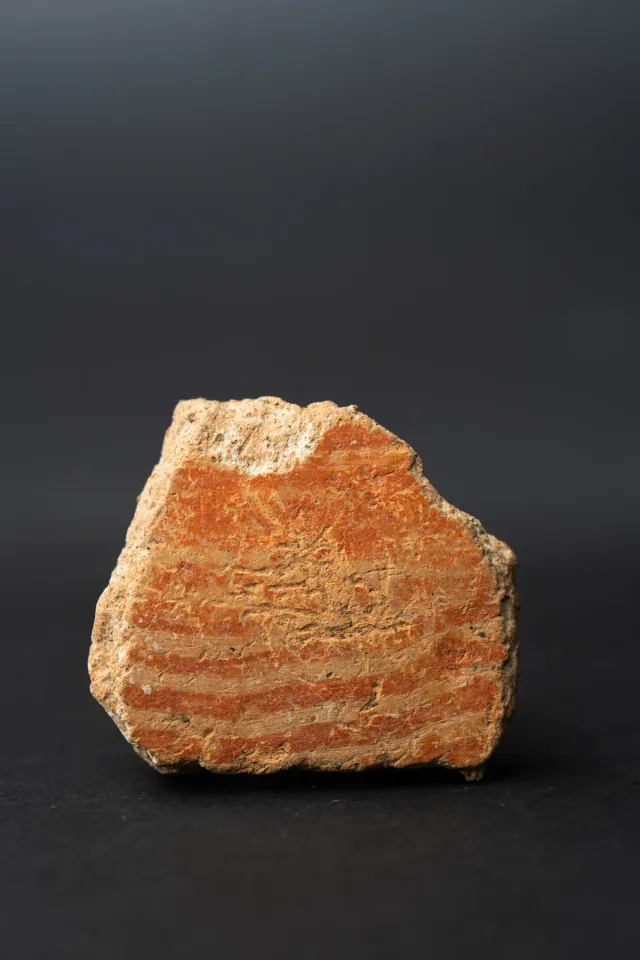
Combed Ware Bowl Fragment with Parallel Bands
Neolithic
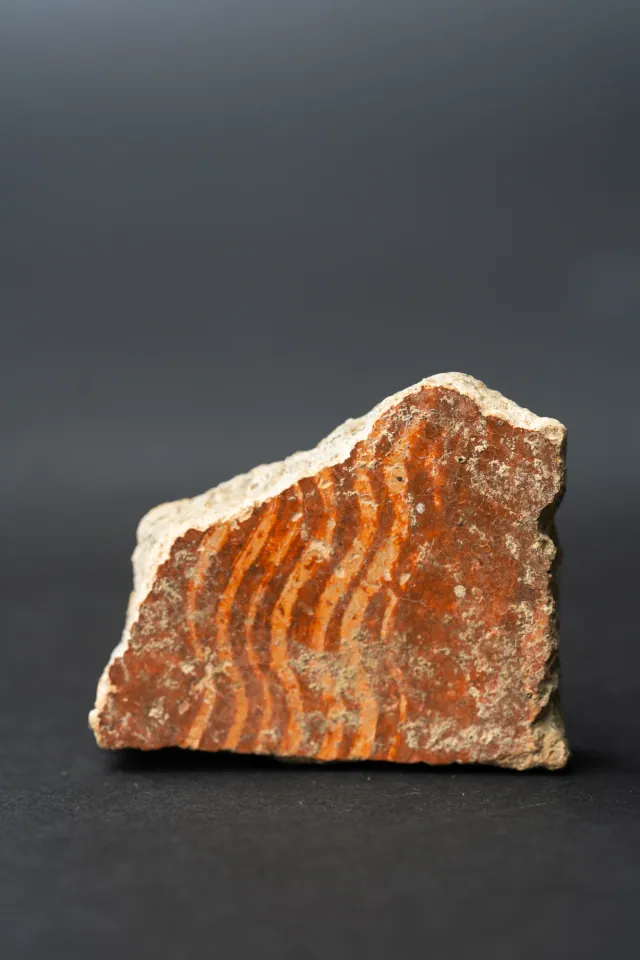
Combed Ware Bowl Fragment with Multiple Wavy Bands
Neolithic
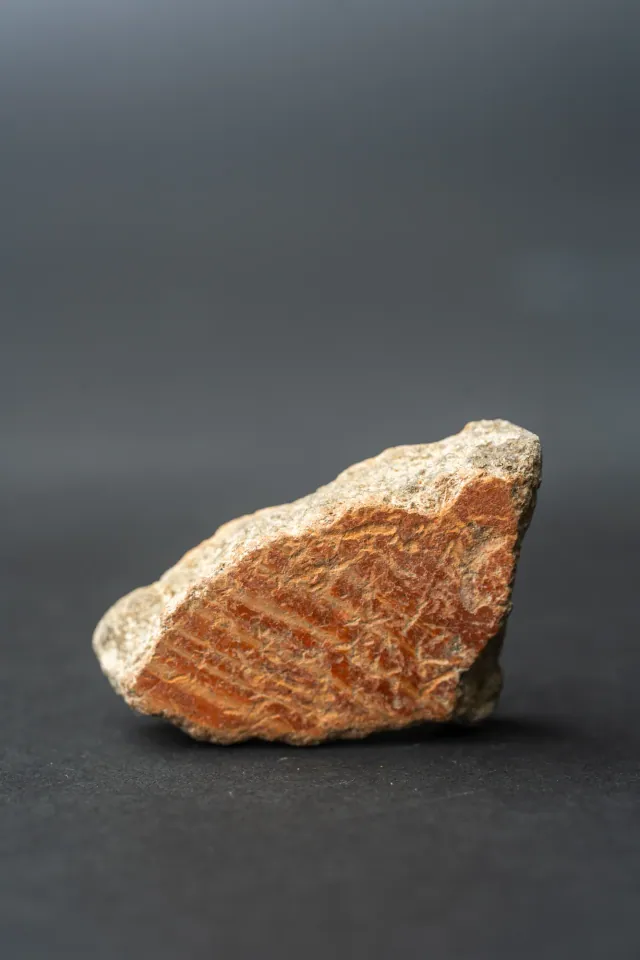
Combed Ware Bowl Fragment with Oblique Bands
Neolithic
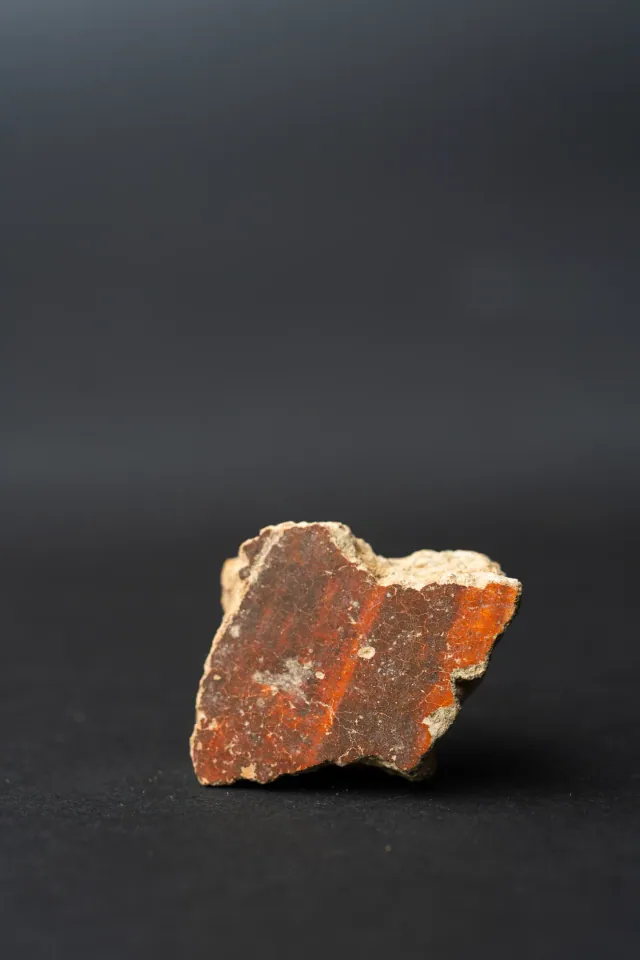
Red Lustrous Ware Body Sherd with Fire-Mottled Slip
Neolithic
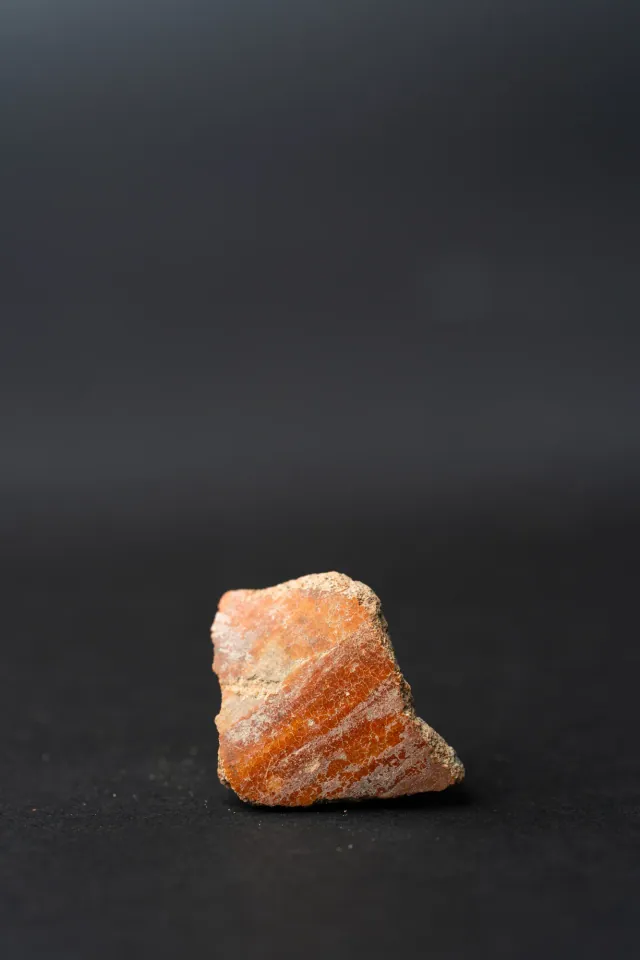
Red Slip Ware Body Sherd with Streaked Slip
Neolithic
Background
Where to read more on this site before or after watching.
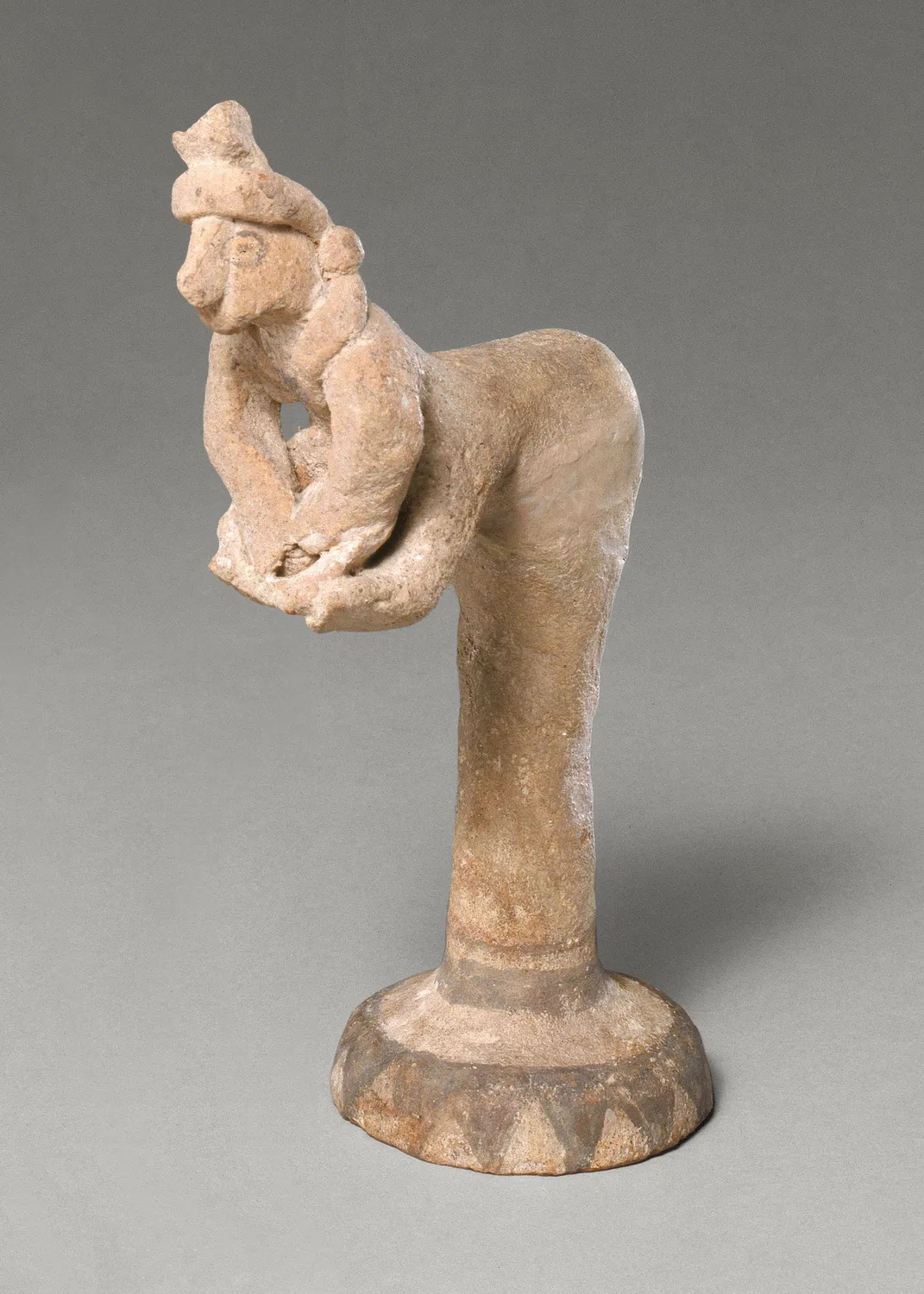
In the compendium
Food and Diet in Ancient Cyprus
What Cypriots grew, herded, hunted, cooked and drank from the first Neolithic villages to the end of the Cypro-Archaic period.
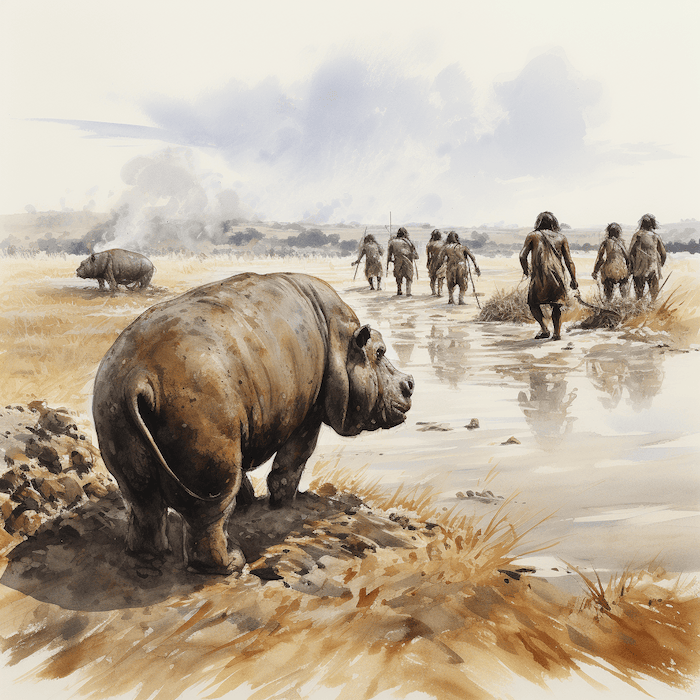
The period
Cyprus Before Humans
Pleistocene Cyprus, an oceanic island of dwarf hippos, dwarf elephants, a genet and an endemic mouse, and its first human visitors at Akrotiri-Aetokremnos.
Map of Cyprus
Places discussed in the talk
- Ground above 200, 500, 1,000 m
Places
- 1Kritou Marottou-Ais Giorkis
- 2Parekklisha-Shillourokambos (approx.)
- 3Akrotiri-Aetokremnos