
Fieldwork·Roundup
This Week in Cypriot Archaeology: 26 January–1 February 2026
Two 14th-century BCE chamber tombs at Hala Sultan Tekke held amber, lapis lazuli and Sardinian pottery, and the Cyprus Museum set 7 February to show its upgraded galleries.



The Department of Antiquities reported the 2025 season in the cemetery outside the Late Bronze Age harbour town of Hala Sultan Tekke, where two family chamber tombs held goods from Greece, Crete, Egypt, Sardinia and as far as Afghanistan. In Nicosia, the Cyprus Museum set a date to present its refitted permanent exhibition.
Map of Cyprus
This week's stories
- Fieldwork
- Museums
- Ground above 200, 500, 1,000 m
Sites on this map
- 1Hala Sultan Tekke
- 2Nicosia
Fieldwork
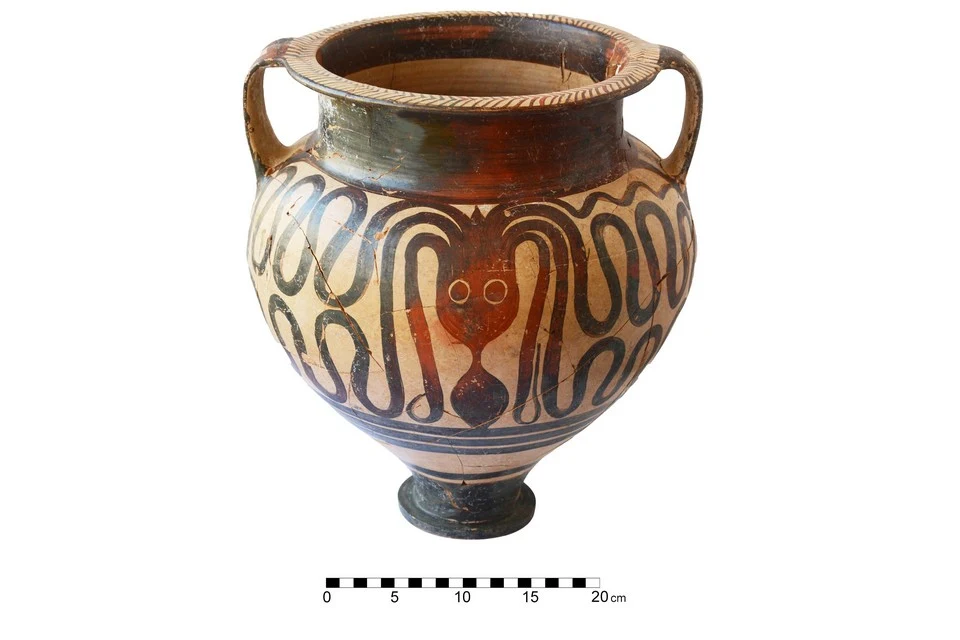
In May and June 2025 a team led by Peter M. Fischer of the University of Gothenburg dug in Area A, the cemetery outside the town of Hala Sultan Tekke (Dromolaxia-Vyzakia), the Department of Antiquities announced on 26 January. Guided by geophysical survey and surface finds, they cleared an old well and two chamber tombs of about the 14th century BCE. A modern borehole next to the well struck very salty groundwater at about 10 m, which the team thinks probably helped put the well out of use in antiquity. The tomb roofs had fallen in long ago; the collapse broke some objects but sealed the rest.
Among the imports, fine pottery arrived from the Greek mainland, mostly from Berbati and Tiryns, and from Crete and other Aegean islands; Egypt supplied ivory and calcite (alabaster) vessels. Lapis lazuli is traced to the Sar-i-Sang mine in Afghanistan, carnelian to Gujarat in India, and amber, worked into beads and even a scarab, to the Baltic. Sherds of Nuragic pottery from Sardinia fit earlier evidence that Cypriot oxhide copper ingots reached that island.
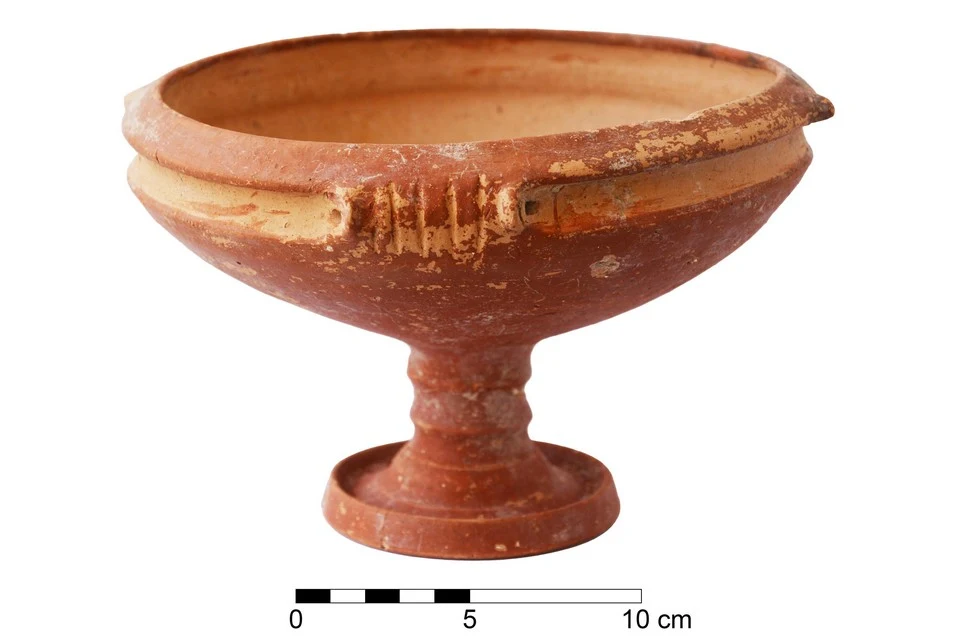
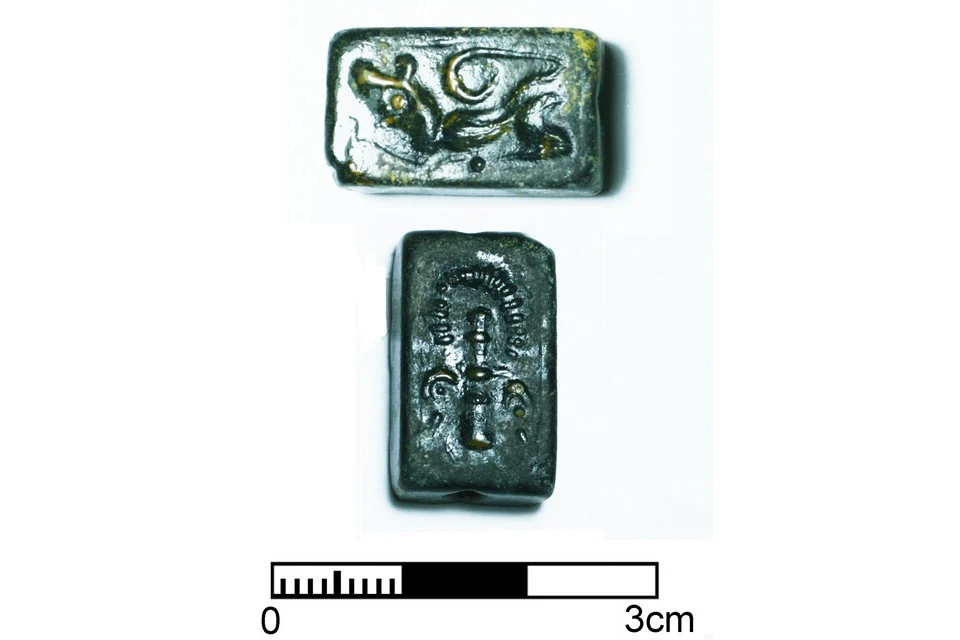
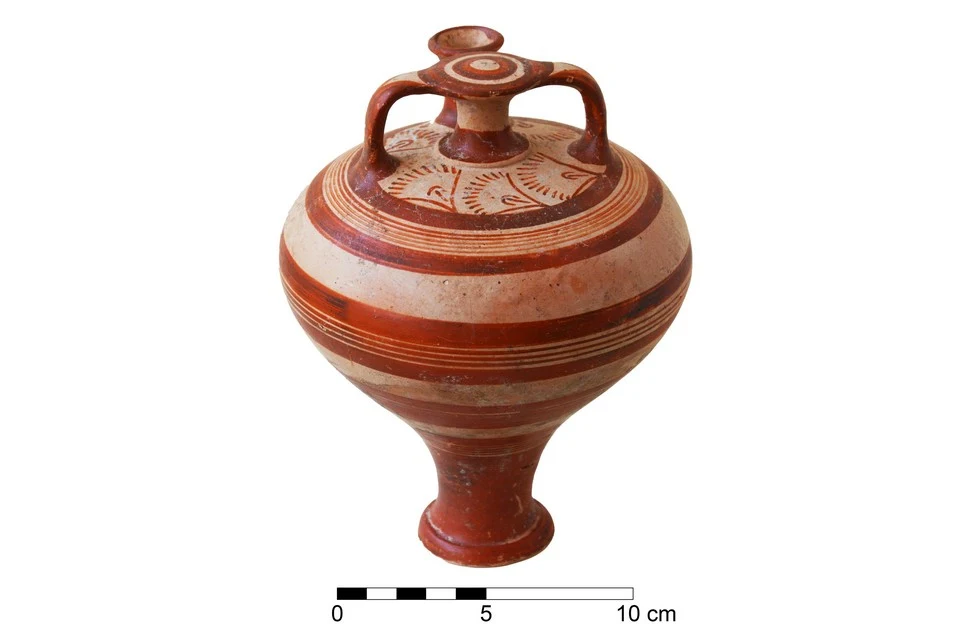
The tombs were reused over generations, often for more than a century, with older remains moved aside to make room for new burials; the layered grave goods, pottery above all, will help refine the dating of the site. The dead range from newborns to adults, few of them older than 40. Bioarchaeologists Kirsi Lorentz and Yuko Miyauchi of The Cyprus Institute excavated and recorded the human remains, now under study, including ancient DNA; their colleague Sorin Hermon and his team supported the 2D and 3D recording and material analysis. Rainer Feldbacher assisted in the field, and Teresa Bürge processed old and new finds in the stores of the Larnaca District Museum. The Department reads the tombs as those of elite families in the copper export trade, and suggests that a taste for particular foreign goods in some tombs may point to specialised trading roles or to migrants living in the town.
The town covered at least 25 hectares, was founded around 1650/30 BCE and was destroyed and abandoned around 1150 BCE. Its cemetery was found in 2014, when a magnetometer survey picked up more than 100 anomalies, and the New Swedish Cyprus Expedition has opened tombs there since 2016. Plant offerings from earlier tombs in the same cemetery are the subject of a Levant paper published in September (our brief).
Museums
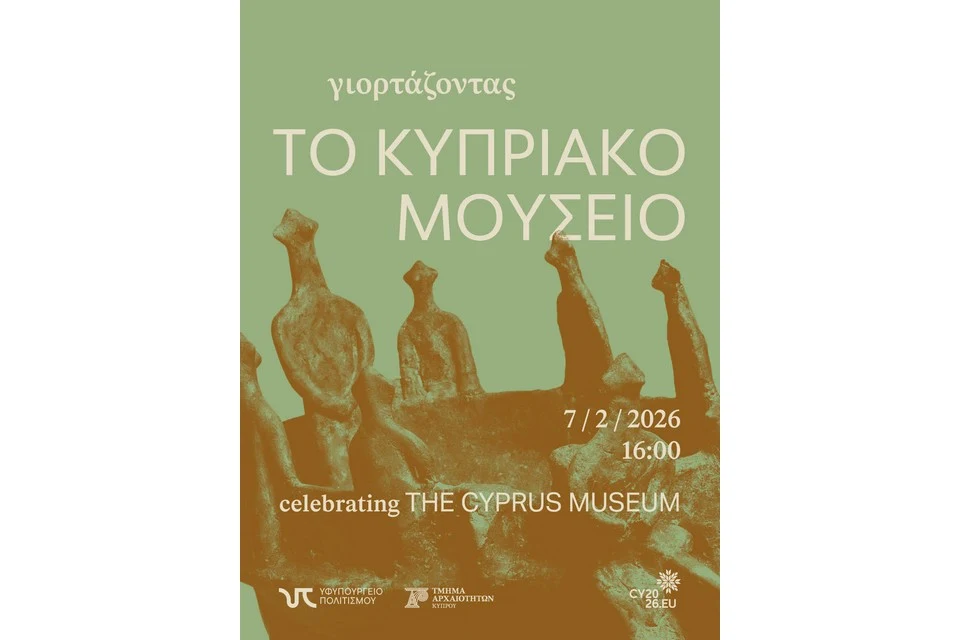
The Cyprus Museum in Nicosia will present its upgraded permanent exhibition on Saturday 7 February, the Department of Antiquities announced on 30 January; events marking the museum had been postponed in mid-January. Finds from years of excavation and antiquities repatriated in recent years have joined the displays, with new texts and graphics, better lighting and refitted cases. The Deputy Minister of Culture, Vasiliki Kassianidou, and the Director of the Department, Giorgos Georgiou, speak at 4pm, followed by guided tours in Greek and English and a reception in the museum garden. The evening is part of the programme for Cyprus's Presidency of the Council of the European Union in the first half of 2026. The work was supervised by Eftychia Zachariou, Curator of Antiquities. The museum's planned new building is a separate project; MPs were told in September that it will not be ready before 2028 (our brief).
Original sources
- Department of Antiquities: Excavations at the extraurban cemetery of the Late Bronze Age harbour city of Dromolaxia-Vyzakia
Official release·
- Department of Antiquities: Celebrating the Cyprus Museum
Official release·
- Cyprus Mail: Bronze Age tombs discovered at Hala Sultan Tekke
Press·
- Archaeology Magazine: Bronze Age tombs containing luxury goods unearthed in Cyprus
Press·
On ancientcyprus.com
- People
- Peter M. Fischer, Rainer Feldbacher, Teresa Bürge, Kirsi O. Lorentz, Yuko Miyauchi, Sorin Hermon, Vassiliki Kassianidou, George (Giorgos) Georgiou
- Institutions
- Department of Antiquities of Cyprus, University of Gothenburg, The Cyprus Institute, Larnaca District Museum, Cyprus Museum
- Periods
- Late Bronze Age
More in Fieldwork
- Hellenistic quarry under Paphos's Fabrika hill became an unused tomb, then a church
- This Week in Cypriot Archaeology: 31 August–6 September 2026
- Hollows cut into a Bronze Age threshold at Erimi match a senet game board
- This Week in Cypriot Archaeology: 27 July–2 August 2026
- Grape seeds and unfired loom weights found in Bronze Age work complex at Erimi-Pitharka