
Fieldwork·Roundup
This Week in Cypriot Archaeology: 19–25 January 2026
A University of Graz survey round Amargeti in Paphos District found Bronze Age material and about 70 looted chamber tombs, and a show of Cypriot myths opened in Strasbourg.



The Department of Antiquities reported on 22 January on a University of Graz survey round the village of Amargeti in the Paphos District, which recorded Bronze Age material, among it a Middle Cypriot jug handle, and about 70 looted chamber tombs. In Strasbourg, President Nikos Christodoulides opened an exhibition of Cypriot myths at the European Parliament to mark Cyprus's presidency of the Council of the EU.
Map of Cyprus
This week's fieldwork
- Ground above 200, 500, 1,000 m
Sites on this map
- 1Amargeti (approx.)
Fieldwork
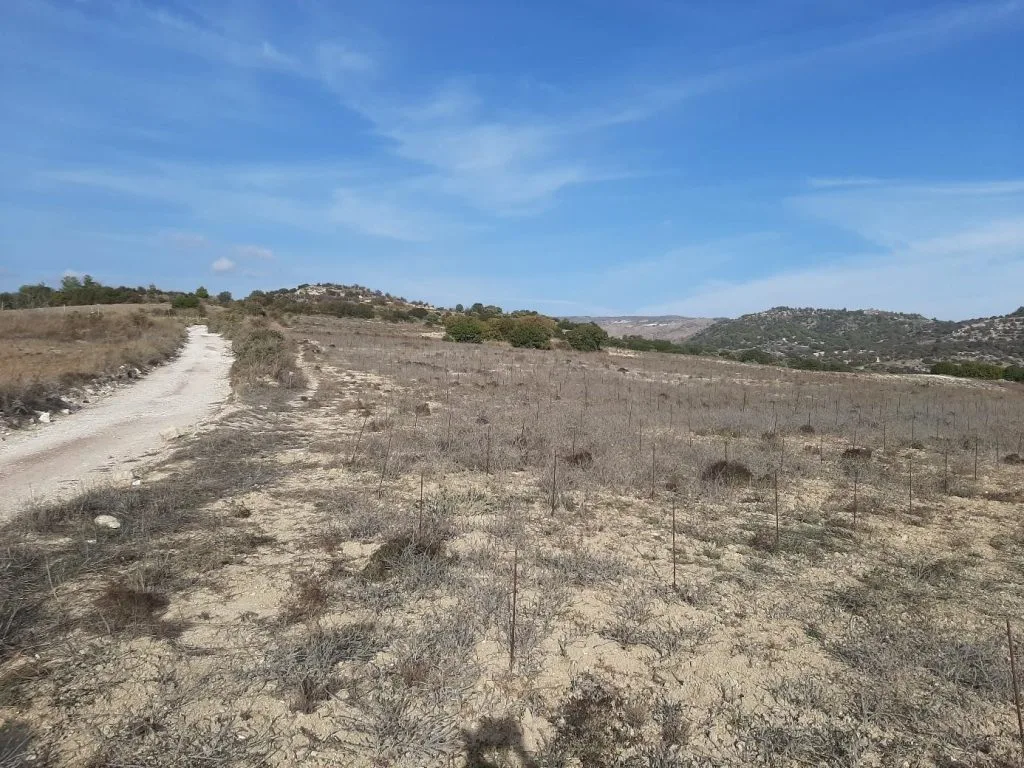
The survey team, directed by Gabriele Koiner of the University of Graz, surveyed the country round Amargeti from 27 to 31 October 2025, and the Department of Antiquities announced the results this week. At Teratsoudi and Sotira the team picked up Bronze Age material, among it the handle of a Middle Cypriot jug and a gaming stone. According to the Department, this is the first time the Graz team has confirmed Bronze Age activity within the village's territory.
Elsewhere the yield ran from the Iron Age to the Middle Ages. Asomatos gave medieval pottery, with terracottas that point to activity nearby from the Archaic period on, and Loura tou Arkana appears to have been used in the Iron Age. Roman sherds came from Petros Anthropos and Xeroargarka. South of the village, towards the valley of the Xeros Potamos, a Roman site at Loutra produced fine and coarse wares, amphora fragments among them, and roof tiles. A few coarse-ware sherds and an old path turned up on the way down to the so-called Venetian bridge at Routhounia.
Further south, in the Acherona forest, drone photographs documented about 70 chamber tombs that had been looted. The broken pottery collected round them includes one piece of Iron Age date.
The Graz project began in 2019 with fieldwalking, aerial and satellite images and ground-penetrating radar at Asomatos and Petros Anthropos, north of the village; Koiner and her co-authors gave continuing unauthorised digging as one reason to assess the area. Amargeti first drew excavators in the 1880s. In May 1888 David George Hogarth dug a vineyard there for the Cyprus Exploration Fund and found inscribed dedications to Opaon Melanthios among fragments of statuettes and doves.
Events
"The Myths of Cyprus" opened at the European Parliament's visitor centre in Strasbourg, where Parliament President Roberta Metsola joined Christodoulides and toured it with Aliki Stylianou, who heads the Cypriot government's Press and Information Office. The exhibition retells eight stories: the Dragons, the Wine of the Knights, the Stones of Digenes, St Helen and the Holy Cross, Sierolotta, the Flood, Adonis and the Castles of Regina. It stays open until June, the end of the Cyprus presidency.
Original sources
- Department of Antiquities: Announcement regarding the Graz Amargeti Survey Project
Official release·
- Cyprus Mail: Bronze Age and medieval finds unearthed at Amargeti archaeological site
Press·
- Dialogos: Finds from the Bronze Age to the Middle Ages located by Austrian archaeological mission at Amargeti
Press·
- Euronews: The Myths of Cyprus, Strasbourg exhibition
Press·
On ancientcyprus.com
- Periods
- Middle Bronze Age, Cypro-Archaic, Roman
More in Fieldwork
- Hellenistic quarry under Paphos's Fabrika hill became an unused tomb, then a church
- This Week in Cypriot Archaeology: 31 August–6 September 2026
- Hollows cut into a Bronze Age threshold at Erimi match a senet game board
- This Week in Cypriot Archaeology: 27 July–2 August 2026
- Grape seeds and unfired loom weights found in Bronze Age work complex at Erimi-Pitharka