
Fieldwork·Brief
Two Late Bronze Age tombs at Hala Sultan Tekke held Baltic amber and Afghan lapis lazuli
Used by families for generations, two tomb chambers of about the 14th century BCE near Larnaca were sealed by fallen roofs and held pottery from Crete, Greece and Sardinia.



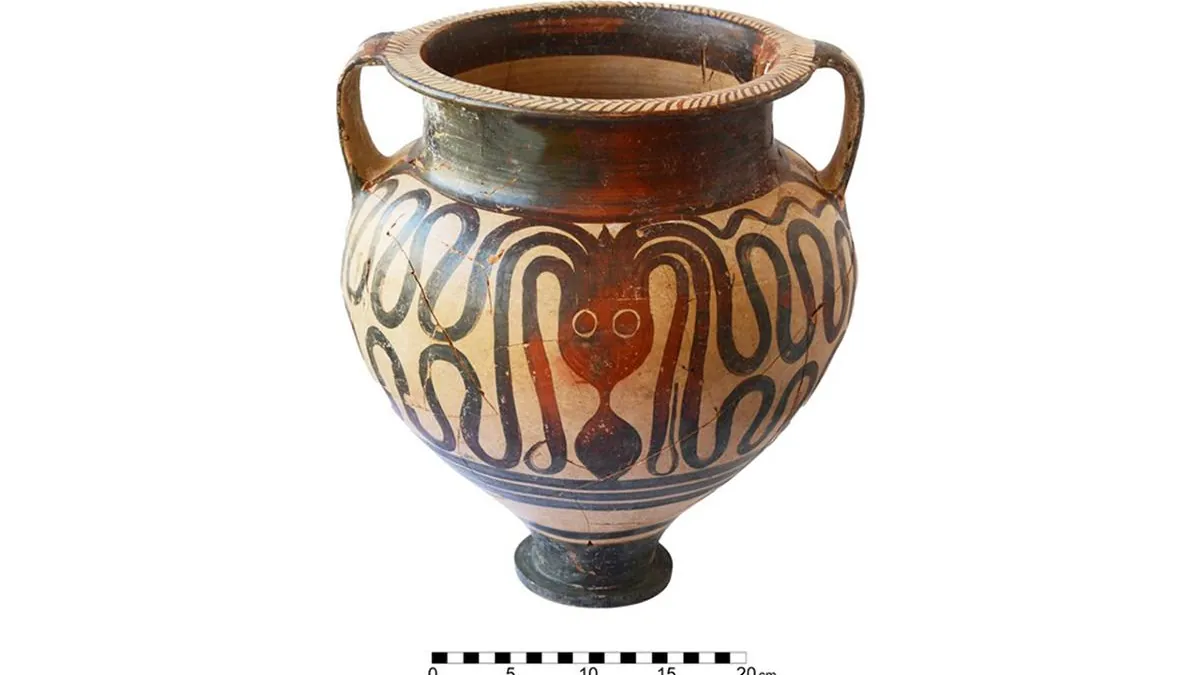
Two chamber tombs of about the 14th century BCE, opened in the cemetery outside the Late Bronze Age harbour town of Hala Sultan Tekke on the Larnaca Salt Lake, held pottery from Crete, mainland Greece and Sardinia, Egyptian ivory, lapis lazuli, carnelian and Baltic amber. The Department of Antiquities announced the results on 26 January 2026. Professor Peter M. Fischer of the University of Gothenburg led the work in May and June 2025 in Area A of Dromolaxia-Vyzakia, the Department's name for the site.
Two sealed chambers and a salty well
Ploughing and erosion had damaged the features found, an ancient well among them. A modern borehole beside it struck very salty groundwater about 10 m down, which the Department thinks probably helped put the well out of use in antiquity.
Both tomb roofs fell in long ago, breaking some objects but sealing the chambers. Each tomb took burials over several generations, often for more than a century, older bones being carefully moved aside for new ones, which the Department reads as a sign of family ties. The pottery, layered through that long use, should help to refine the dating of the whole site.
The bioarchaeologists Professor Kirsi Lorentz and Dr Yuko Miyauchi of The Cyprus Institute excavated and recorded the skeletons. Preliminary results show people of every age from newborns to adults, rarely older than 40; ancient DNA and other analyses under way are meant to show kinship and health. Dr Rainer Feldbacher assisted in the field, and Professor Teresa Bürge processed finds from this and earlier seasons in the stores of the Archaeological Museum of Larnaka District.
Imports from the Aegean to Afghanistan
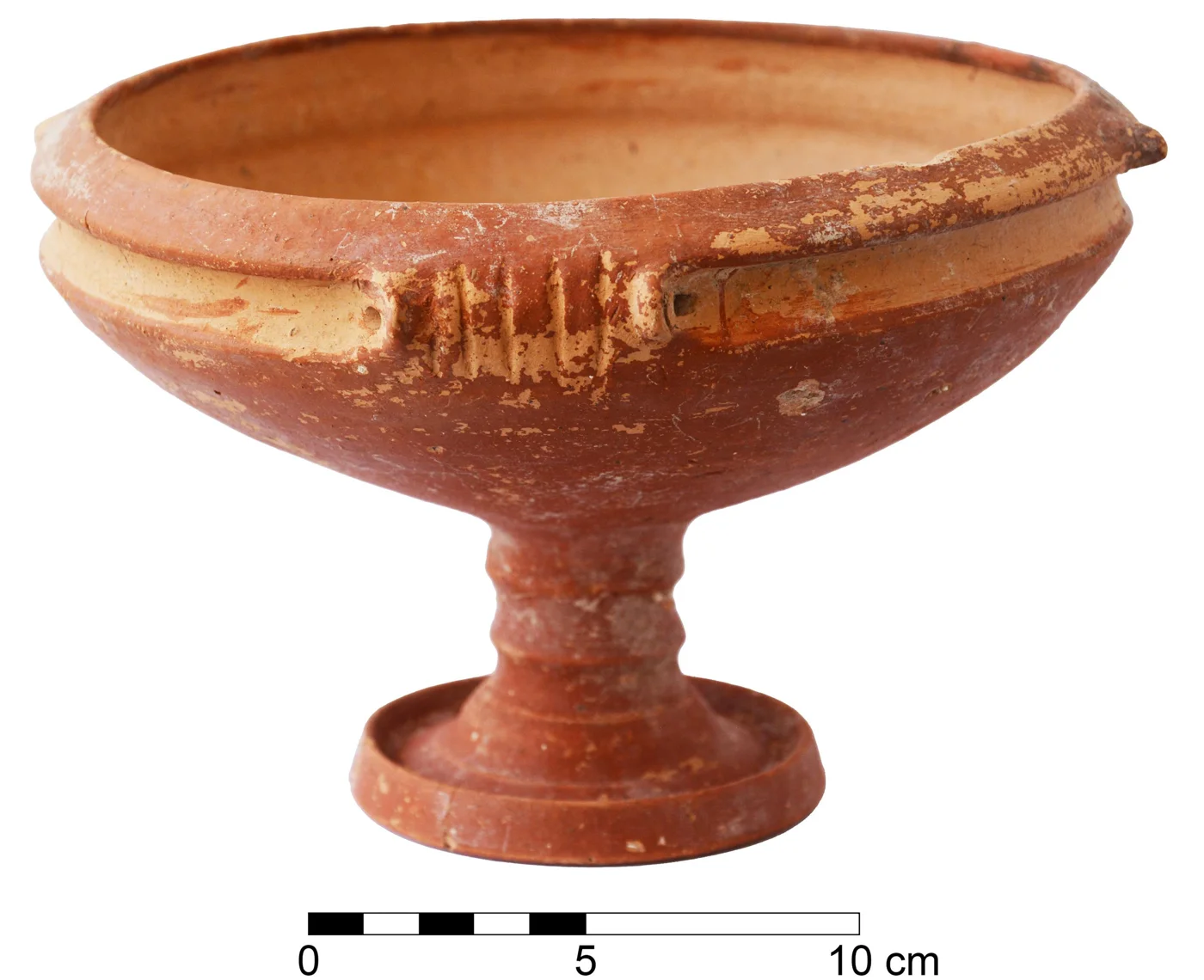
Beside local fine pottery, tools and ornaments lay luxury vessels from the Greek mainland, mostly from Berbati and Tiryns, and from Crete and other Aegean islands, among them a large Minoan octopus krater. From Egypt came ivory and vessels of calcite (alabaster). The Department traces the lapis lazuli to the Sar i-Sang mine in Afghanistan and the carnelian to Gujarat in India; the amber, some of it worked into beads and even a scarab, came from the Baltic. The Department suggests they came through middlemen such as the Mycenaeans, Egyptians and Mesopotamians.
Pottery of Sardinia's Nuragic culture matches the known traffic the other way, when Cypriot copper reached that island as oxhide ingots. Slag heaps, furnaces and crucibles show that Troodos ore was worked inside the town before shipping, and the Department puts the busiest trade between the mid-15th and the late 13th century BCE. Founded around 1650/30 BCE, the town covered at least 25 hectares and was destroyed and abandoned around 1150 BCE. The Department suggests that the tombs belonged to elite families in the copper and long-distance trade, and that a preference for certain foreign goods in particular tombs may point to trading specialities or to migrant communities.
Earlier tombs in Area A
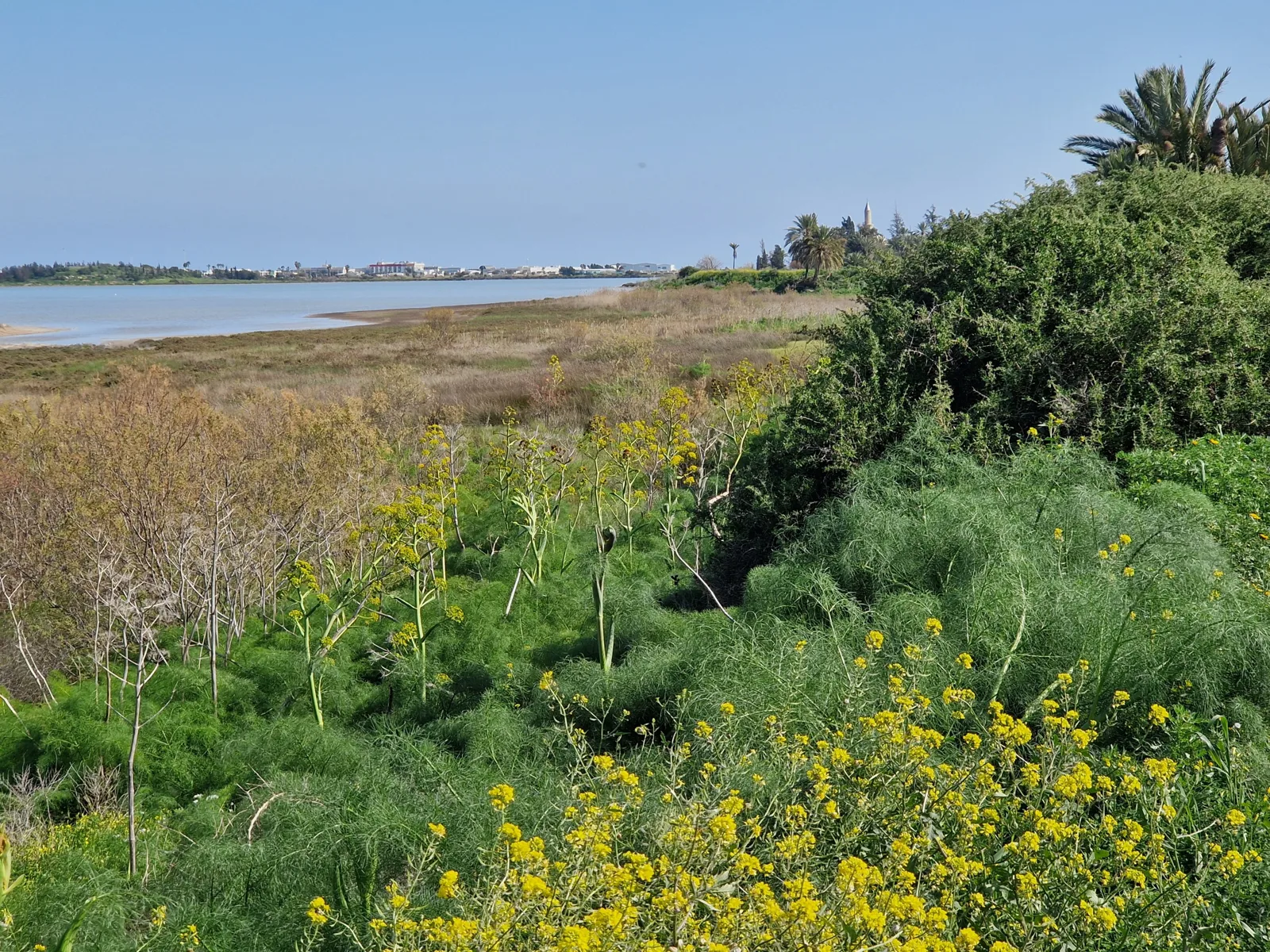
In 1968 Vassos Karageorghis excavated two partly looted tombs of wealthy people just west of the mosque, in what became Area A [2, p. 152]. The New Swedish Cyprus Expedition, digging at the site since 2010, located the cemetery in 2014, when a magnetometer survey picked up more than 100 buried features there [1, p. 98].
Feldbacher and colleagues suggest that the mirror from Tomb XX may be evidence of direct contact between people from Crete and the town [2, p. 152]. Charred plants from four earlier tombs in Area A, published in September 2026, may be burnt offerings, and Bürge's book on the site's wells and pits argues that they were filled on purpose.
Original sources
On ancientcyprus.com
- Excavations
- Hala Sultan Tekke: the New Swedish Cyprus Expedition (2010-), Hala Sultan Tekke: Department rescue of two tombs (1968)
- People
- Vassos Karageorghis, Peter M. Fischer, Teresa Bürge, Rainer Feldbacher, Kirsi O. Lorentz, Yuko Miyauchi
- Institutions
- Department of Antiquities of Cyprus, University of Gothenburg, The Cyprus Institute, Larnaca District Museum
- Periods
- Late Bronze Age
References
- 1.Fischer, P. M. and Bürge, T. (2021). The New Swedish Cyprus Expedition 2020 (The Söderberg Expedition): Excavations in the Cemetery of Hala Sultan Tekke. Ägypten und Levante 31, 97–145.
- 2.Feldbacher, R., Alvarez, L. E., Miyauchi, Y., Lorentz, K. and Fischer, P. M. (2024). An Aegean Mirror from Hala Sultan Tekke, Cyprus. Oxford Journal of Archaeology 43, 152–172.
More in Fieldwork
- Hellenistic quarry under Paphos's Fabrika hill became an unused tomb, then a church
- This Week in Cypriot Archaeology: 31 August–6 September 2026
- Hollows cut into a Bronze Age threshold at Erimi match a senet game board
- This Week in Cypriot Archaeology: 27 July–2 August 2026
- Grape seeds and unfired loom weights found in Bronze Age work complex at Erimi-Pitharka