
Fieldwork·Brief
Grape seeds and unfired loom weights found in Bronze Age work complex at Erimi-Pitharka
The April–May dig near Limassol traced more rooms of the building, among them one at least 7 by 4.30 m with benches, a press weight and a deposit of raw clay.



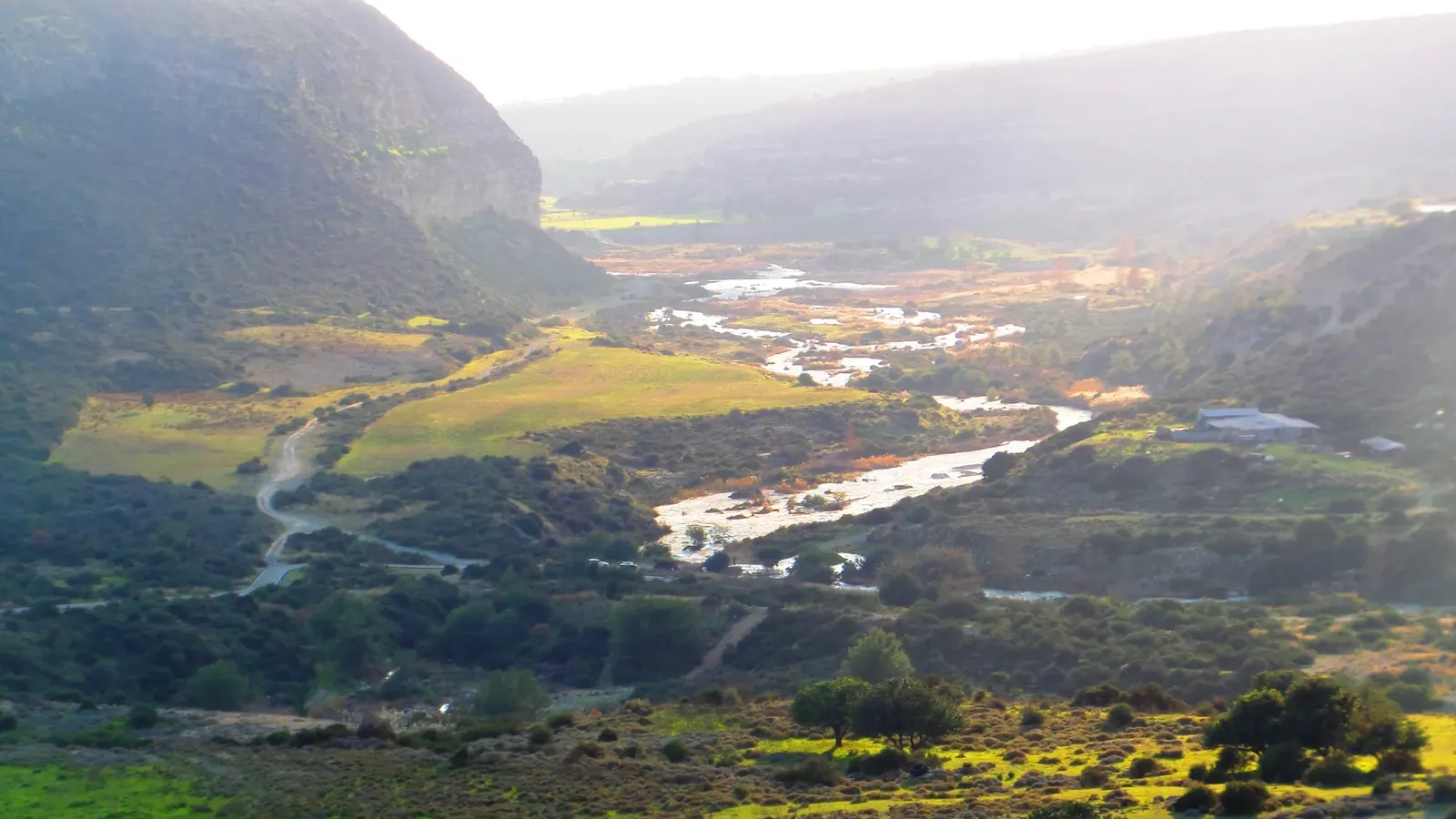
Excavators at Erimi-Pitharka, a Late Bronze Age site in the Kouris valley west of Limassol, found this spring that its main building complex runs further than they knew, with a room holding raw clay and half-made loom weights and, beneath a courtyard, a large quantity of grape seeds. The Department of Antiquities announced the results on 28 July 2026. The international team, directed by Dr Laerke Recht of the Moesgaard Museum in Denmark, dug from 20 April to 22 May.
Rooms to the north and east
New trenches north and east of the explored part of Area I/1A found further rooms and open spaces, some walled with big blocks dressed almost to ashlar, others in dry stone that once carried mudbrick. Into the kafkalla, the hard local bedrock, the builders cut pits and a storage unit and sank a pithos (a large storage jar); they also built walls against it and crushed it for surfaces.
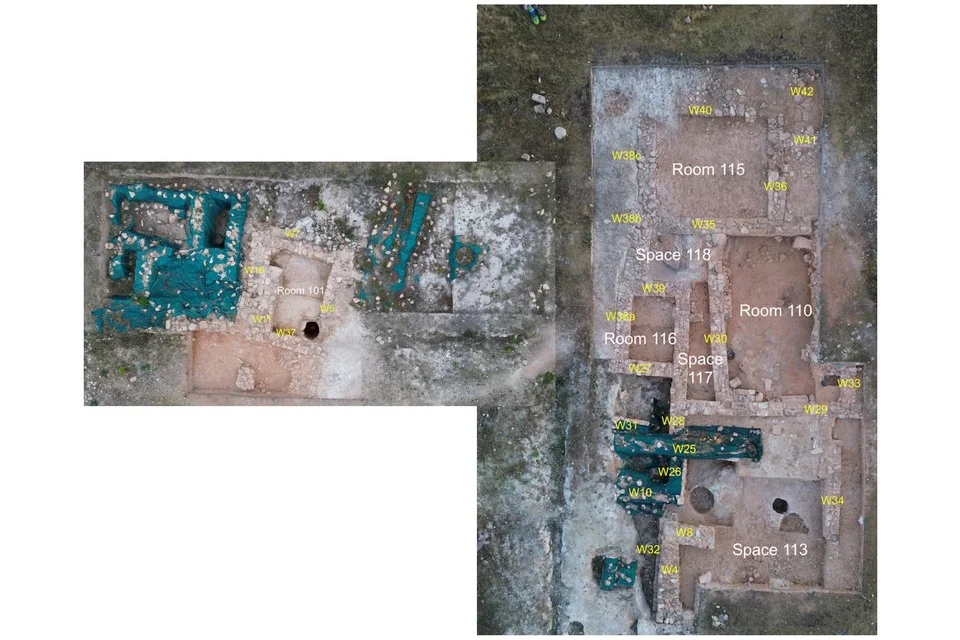
- 1Room 110, the largest yet found: benches, a press weight, raw clay and loom weights
- 2Room 115, another large room, with smaller Spaces 116 to 118 beside it
- 3Courtyard 113: layers below it held grape seeds and a few Ceramic Neolithic sherds
- 4Room 101, with the deep pit of near-complete vessels in its south-eastern corner
The biggest space so far, Room 110, measures at least 7 by 4.30 m. Benches line it, its entrances have marked thresholds, and it held a stone-lined store and a large stone weight from a press. Raw clay lay on its floor with loom weights, some unfired and some lightly fired, which the Department takes as a sign of clay objects being made on the spot and perhaps to textile work. Room 115 beside it is also large, and three small linked rooms (116, 117 and 118) keep plaster floors, steps and a pillar base in places.
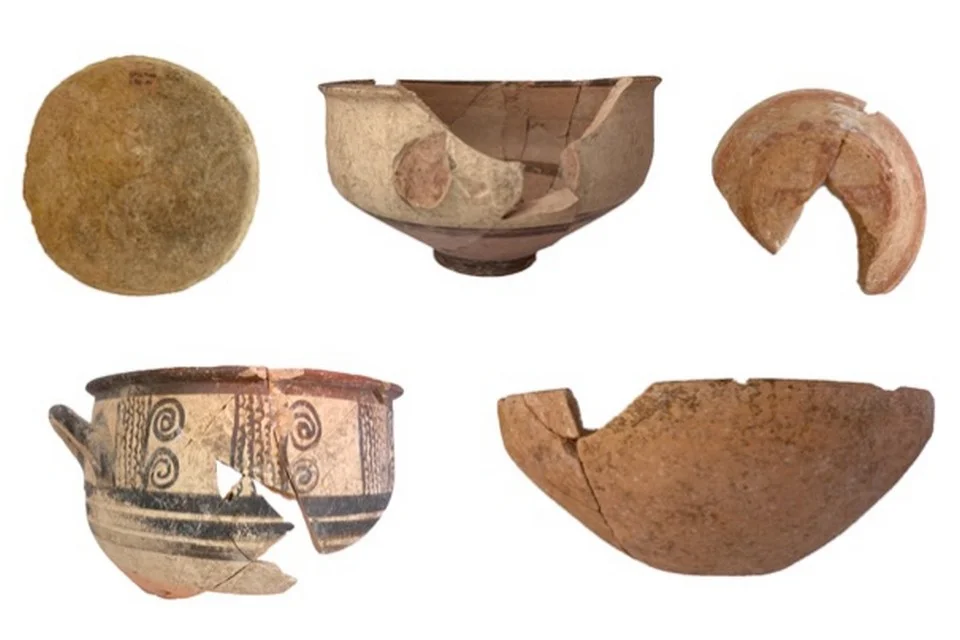
In the east the team finished Room 101, with its smooth plaster floor. A deep pit in one corner held near-complete vessels, among them painted pottery of Aegean type, a bowl with holes made through its base and the base of a Plain White vessel trimmed into a lid. A second deposit just south of the room contained an almost complete Plain White bull figurine, a bronze pin and part of a jug, probably linked to activity in the site's last phase. The season also yielded spindle whorls, more loom weights and bronze pins, and broken animal figurines, one of them a boar's head in Base Ring ware.
South of Room 110, the deposits below Courtyard 113 were dense with pottery and held many grape seeds, a few animal bones and pits filled with refuse. The Department reads them as grape processing, possibly for wine. The deepest levels here and in Room 115 also gave a handful of Ceramic Neolithic sherds, a sign of much earlier activity at or near the spot; every wall exposed so far is Late Bronze Age.
A production centre of the Kouris valley
The Department places Erimi-Pitharka mainly in Late Cypriot IIC–IIIA, late in the Late Bronze Age, and treats it as contemporary with Alassa and Episkopi-Bamboula in the same valley.
In 2001 a bulldozer broke into a group of rock-cut chambers on the site, which the Department went on to excavate. Over 35% of the pottery from the chambers was pithos fragments [1, p. 236]. In 2014 G.-M. Andreou observed that the surface finds around a large building of about 375 m² in Area I, mostly pithos sherds, fit storage better than the administrative role suggested for it [1, p. 236].
Recht's excavations began in 2022, and the report on their 2024 season describes the site as a Kouris valley centre for producing and storing farm produce [2]. The team plans more seasons to find the edges of the complex and to work out how its production and storage areas related. The 2026 work was funded by the A.G. Leventis Foundation, the Curtiss T. and Mary G. Brennan Foundation and the Moesgaard Museum.
Original sources
- Deputy Ministry of Culture: Completion of the 2026 fieldwork season at the Late Bronze Age site of Erimi–Pitharka
Official release·
- Υφυπουργείο Πολιτισμού: Λήξη της ανασκαφικής περιόδου 2026 στην Υστεροκυπριακή θέση Ερήμη-Πιθάρκα
Official release·
- Internet Archaeology 69: Excavations at Late Bronze Age Erimi-Pitharka, Cyprus: The 2024 season
Paper
On ancientcyprus.com
References
- 1.Andreou, G.-M. (2014). Traversing space: Landscape and identity in Bronze Age Cyprus (PhD thesis). University of Edinburgh.
- 2.Recht, L., Zeman-Wiśniewska, K., Clark, B., & Yamasaki, M. (2025). Excavations at Late Bronze Age Erimi-Pitharka, Cyprus: The 2024 season. Internet Archaeology 69. https://doi.org/10.11141/ia.69.1
More in Fieldwork
- Hellenistic quarry under Paphos's Fabrika hill became an unused tomb, then a church
- This Week in Cypriot Archaeology: 31 August–6 September 2026
- Hollows cut into a Bronze Age threshold at Erimi match a senet game board
- This Week in Cypriot Archaeology: 27 July–2 August 2026
- 2026 dig at Kissonerga-Skalia adds to the case for Bronze Age beer, Akamas municipality says