
Lecture·Archaeological Research Unit - University of Cyprus·2018
When Vases Narrate! Attic Vase-Painting as Communication Media of Society
Maria Christidis and Eva Maria Ziegler
A guest lecture in the University of Cyprus series on a subject outside Cyprus.
Chapters
About the lecture
After introductions by Vasiliki Kassianidou and the Austrian Ambassador Eva Maria Ziegler, Maria Christidis of the University of Graz surveys the techniques, shapes and iconography of Attic pottery as a medium of visual narrative. She begins with the history of vase collecting from the Renaissance to Johann Joachim Winckelmann, William Hamilton and Edmond Pottier's founding of the Corpus Vasorum Antiquorum, noting her own project to publish the Attic vases in the Cyprus Museum.
Tracing Greek figured pottery from Bronze Age, Protogeometric, Geometric and Orientalizing styles, she compares the 7th-century Eleusis amphora showing Perseus, the Gorgons and the blinding of Polyphemus with the adoption of the Corinthian black-figure technique in Athens. After outlining the standard vessel shapes for storage, the symposium, cosmetic use and ritual, she follows the Trojan War cycle across black-figure and red-figure vases: Sophilos's signed dinos showing the wedding of Peleus and Thetis, the Judgement of Paris, Troilus, the death and ransom of Hector, Penthesilea, Achilles and Ajax playing a board game (including an oinochoe in the Cyprus Museum), and the sack of Troy on a hydria in Naples, linked to the Persian destruction of Athens in 480 BC.
Christidis then turns to gods, heroes and the Gigantomachy, pairing an intact black-figure amphora with a fragment from Ayios Epiktitos-Vrysi in the Cyprus Museum that she attributes to the same painter. The final section examines Athenian daily life: women weaving and at fountain houses, children, boys' schooling (including Herakles and Linus), and the male symposium, ending with Smikros's self-portrait on a stamnos in Brussels. In the discussion, she addresses the export of Attic vases to Cyprus, local Cypriot black-figure imitations, and their use before deposition in tombs.
From our collection
Pieces in the Drakopoulos collection of the kinds and periods this talk covers: Amphora, Cup.
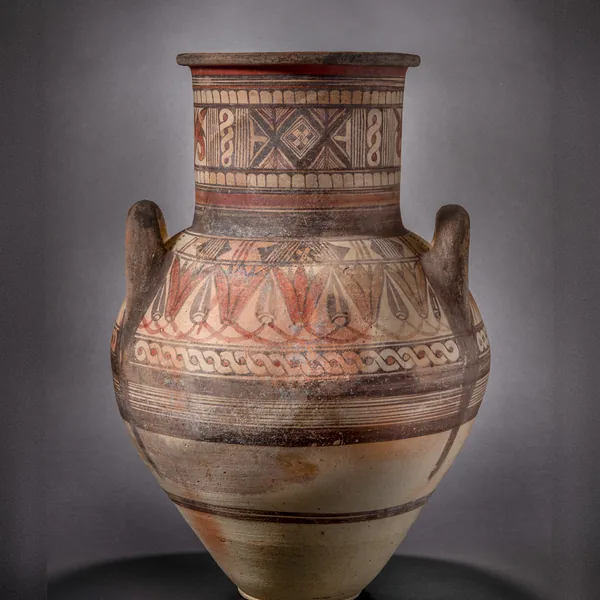
Bichrome IV Amphora with a Lotus-and-Bud Shoulder Frieze
Amphora
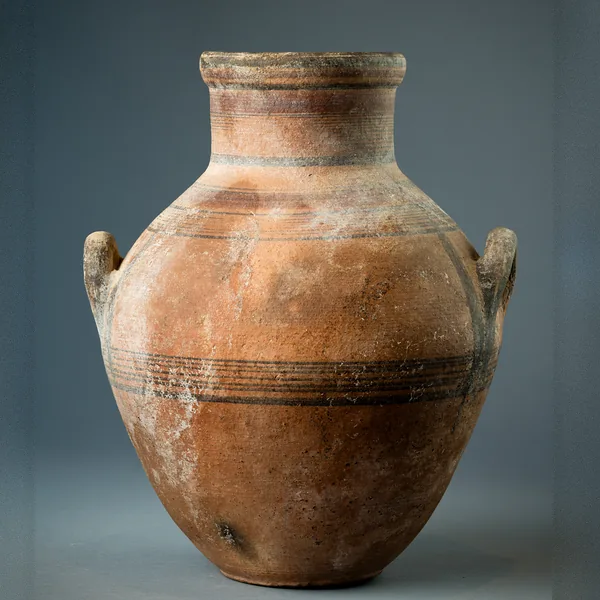
Bichrome IV Amphora with Shoulder Handles and Banded Decoration
Amphora
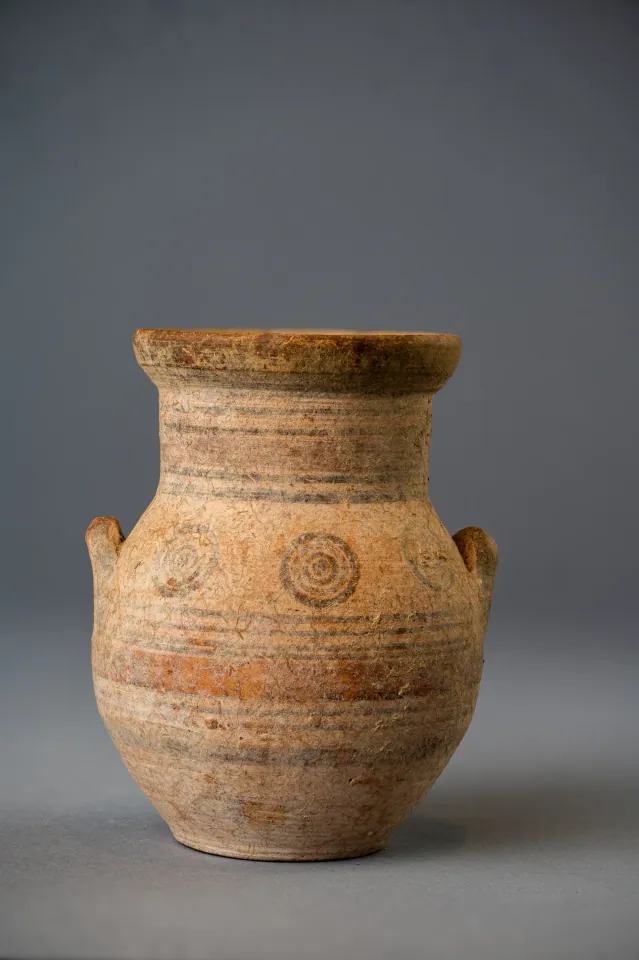
Bichrome IV Amphoriskos with Concentric Circles
Amphora
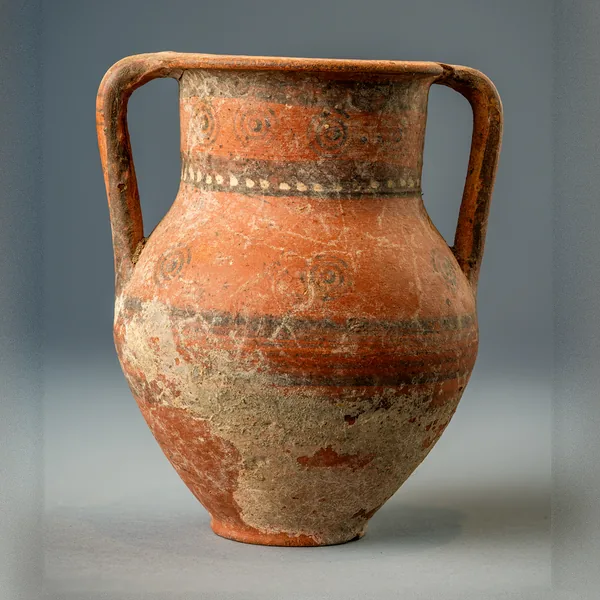
Bichrome Red Amphora with Concentric Circles and a Row of White Dots
Amphora
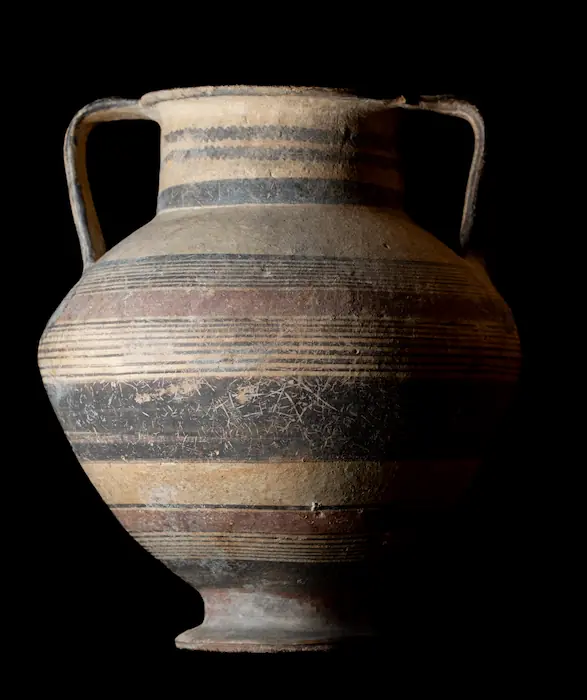
Bichrome Amphora on a Pedestal Foot with Wavy Lines on the Neck
Amphora
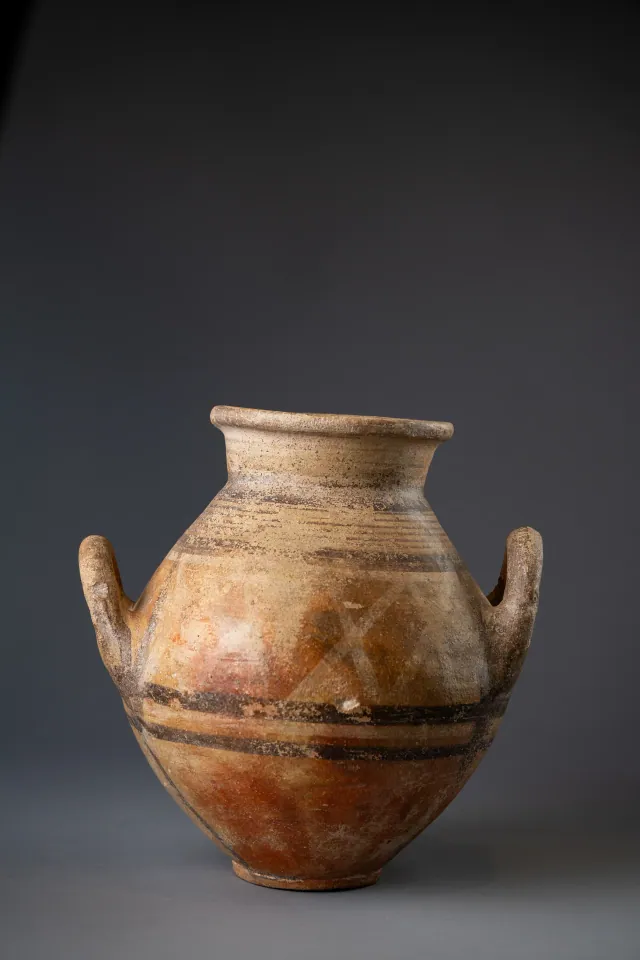
Red-Slipped Amphora with Pale Crosses on the Shoulder, probably Bichrome Red Ware
Amphora
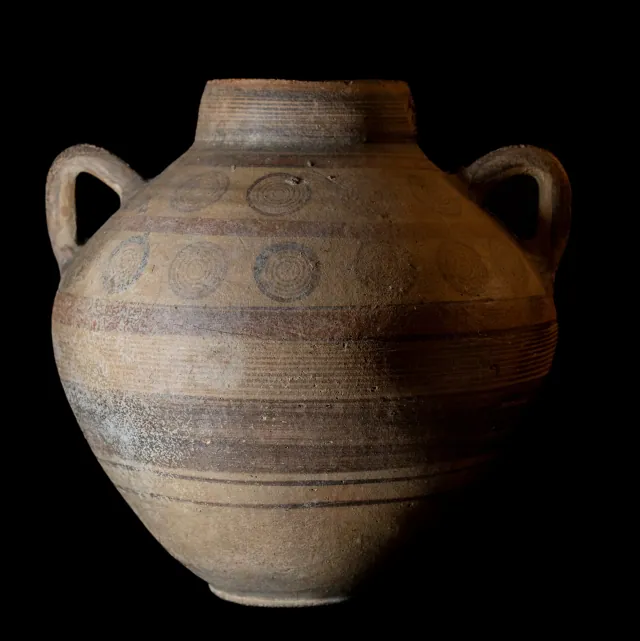
Globular Bichrome Amphora with Two Registers of Concentric Circles
Amphora
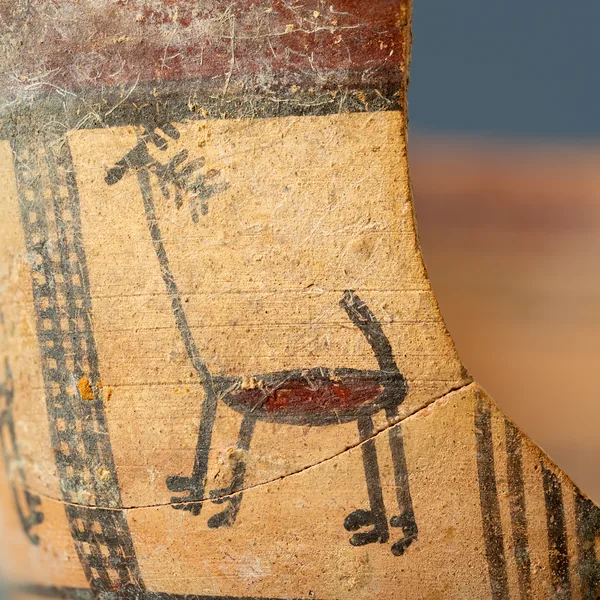
Bichrome Skyphos with Stags in Metopes
Cup
Background
Where to read more on this site before or after watching.

In the compendium
Greek Pottery in Cyprus
Greek painted and black-gloss pottery reached Cyprus from the late tenth century BCE, rising from a few Euboean and Attic cups to a flood of Attic ware by the fifth century.
In the compendium
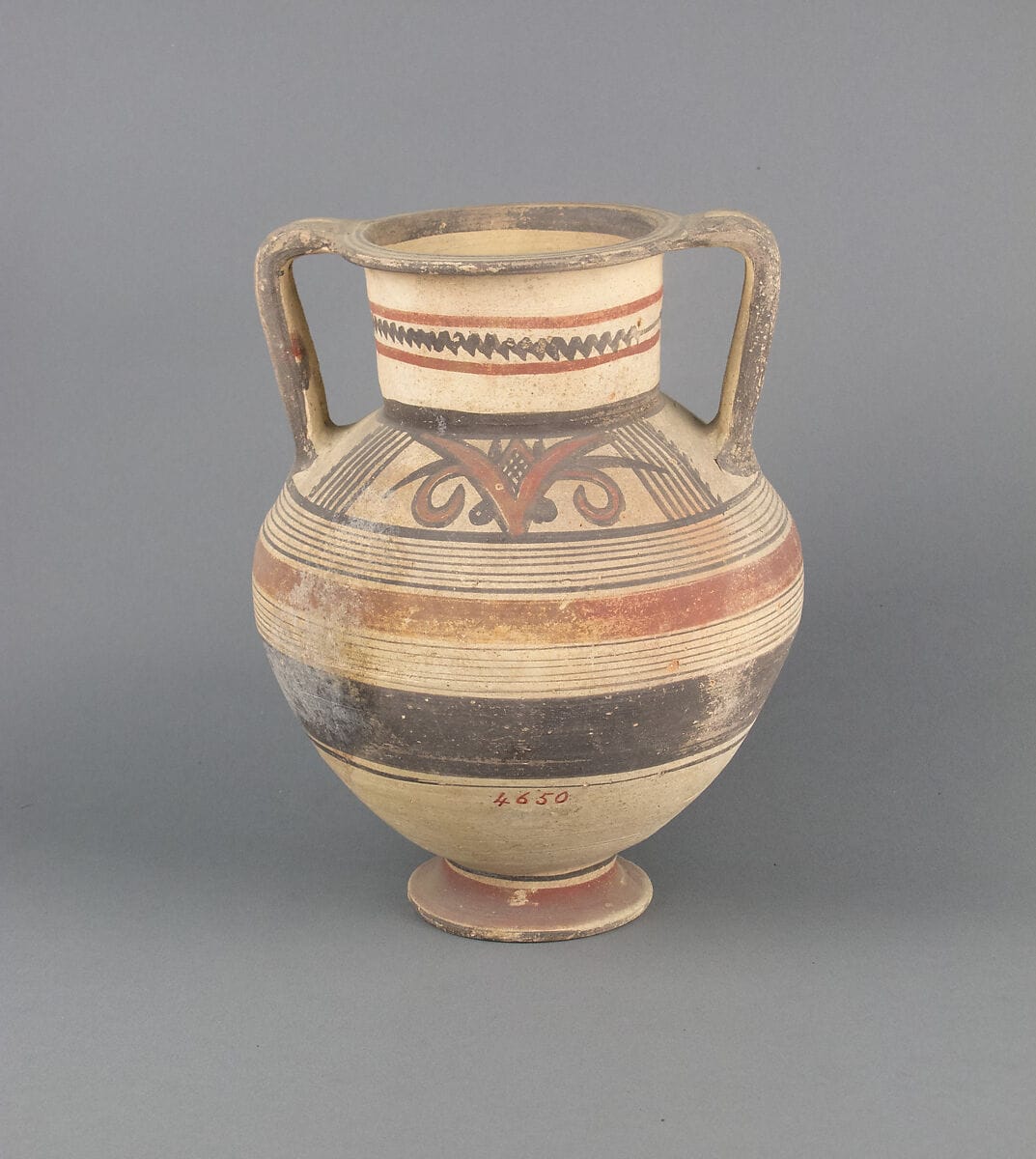
Amphora
A closed jar with two opposed handles, made in Cyprus in belly-handled and vertical-handled painted series and as a basket-handled transport jar.
In the compendium
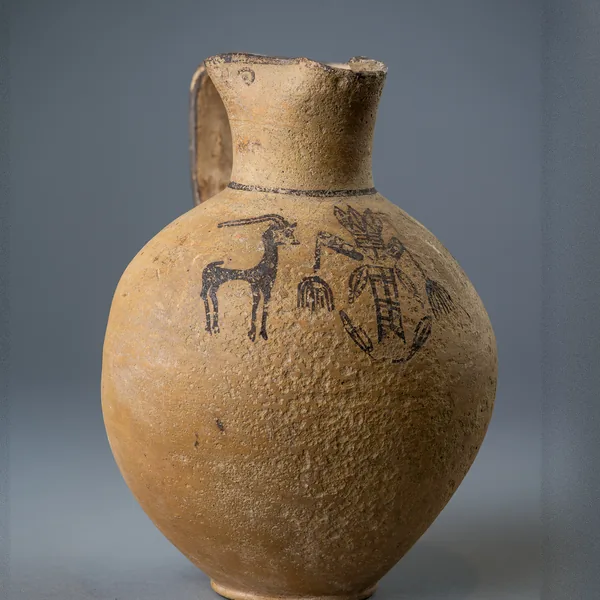
Kraters
A large open vessel for mixing and serving drink, imported from the Aegean and made locally in Cyprus from the Late Bronze Age onwards.
The period
Cypro-Archaic
The age of the Cypriot city-kingdoms, c. 750–475 BCE, under Assyrian, Egyptian and Persian overlordship, with rural sanctuaries and regional pottery styles.