
Lecture·Archaeological Research Unit - University of Cyprus·2023
Landscape Archaeology and the Medieval Countryside in Greece
Effie Athanassopoulos
A guest lecture in the University of Cyprus series on a subject outside Cyprus.
Chapters
About the lecture
Effie Athanassopoulos of the University of Nebraska-Lincoln examines how regional survey has reshaped the study of the medieval and post-medieval countryside in Greece and the Aegean, with a case study from the Nemea Valley in the Peloponnese.
She begins by tracing the growth of Mediterranean surface survey from the 1950s South Etruria project and the Minnesota Messenia Expedition to the intensive surveys of the 1980s and 1990s in Boeotia, the Argolid, Laconia and the islands. These projects shifted attention from major Byzantine monuments to rural settlements and off-site pottery scatters, raising questions about dispersed versus nucleated settlement and ceramic visibility. Athanassopoulos notes how glazed tablewares shifted from centralized Constantinopolitan white wares in the 9th to 11th centuries to urban and rural workshops in the 12th and 13th centuries, evidenced by kiln rods and stacking devices from Thessaloniki, Chalkidiki and Nemea.
Turning to the Nemea Valley Archaeological Project and the University of California, Berkeley excavations at the Sanctuary of Zeus, she presents the 12th- and 13th-century revival of the valley: a rural kiln site (Site 510), large village scatters (Site 600), farming plots around the temple, and refuse pits in the stadium and over the Early Christian basilica filled with sgraffito, amphorae, flasks, cooking pots, pithoi and a terracotta wine siphon. She relates this growth to large estates and Italian trade before and after 1204. In the late 13th to 15th centuries, open villages gave way to fortified hilltop settlements (castra) such as Polyphengi. She closes by comparing the sparse archaeological trace of the Ottoman period in Corinthia with Ottoman tax registers in Boeotia, Pylos and Nemea, before discussing late 13th-century pottery and settlement shifts with Athanasios Vionis.
From our collection
Pieces in the Drakopoulos collection of the kinds and periods this talk covers: Amphora.
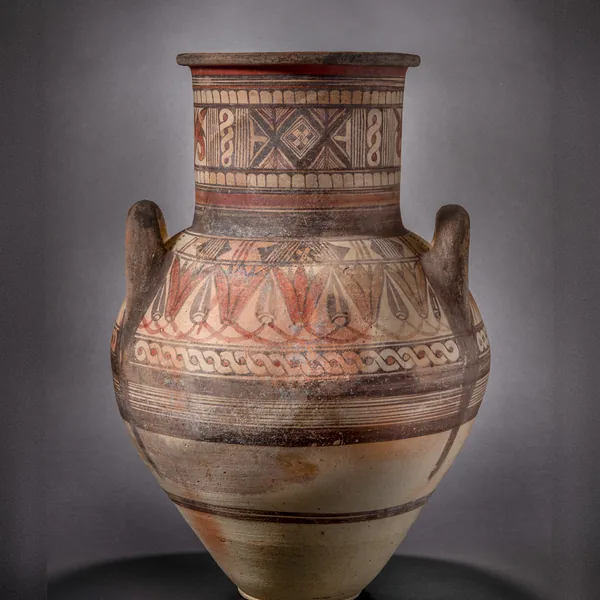
Bichrome IV Amphora with a Lotus-and-Bud Shoulder Frieze
Amphora
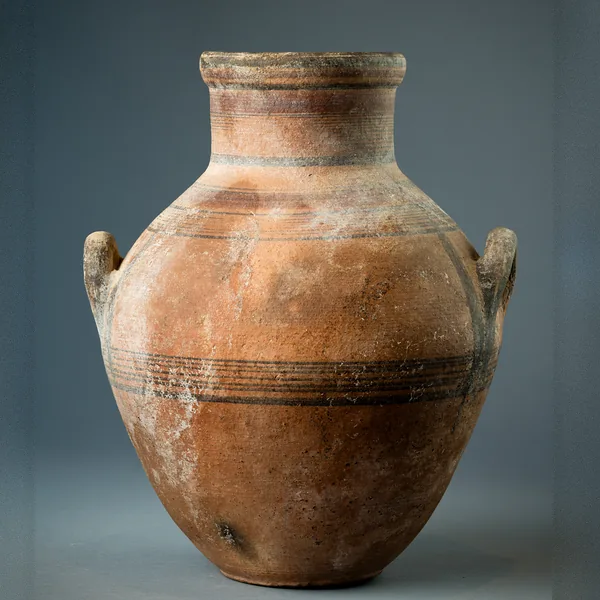
Bichrome IV Amphora with Shoulder Handles and Banded Decoration
Amphora
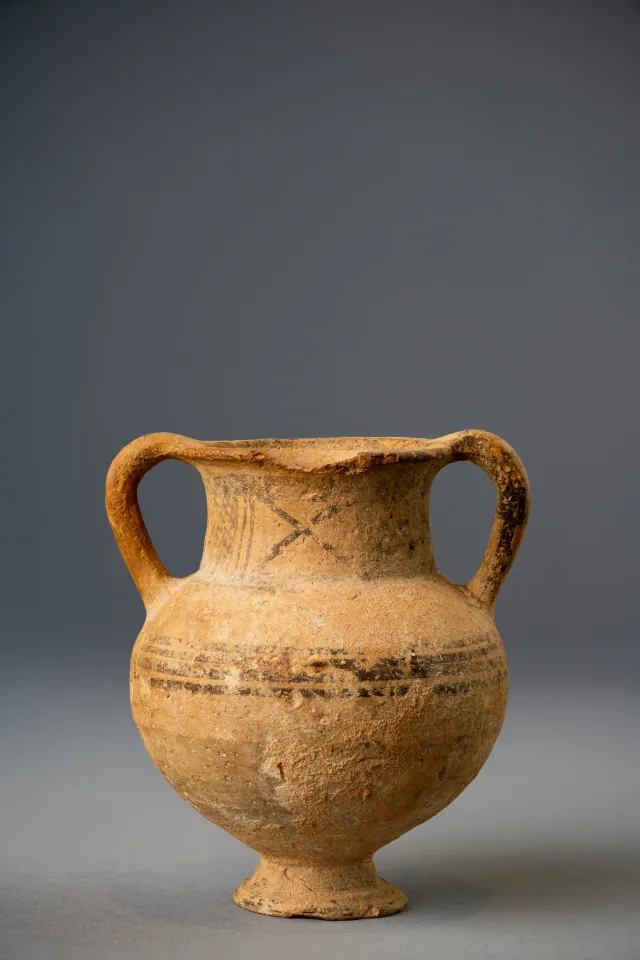
White Painted Amphoriskos on a Conical Foot
Amphora
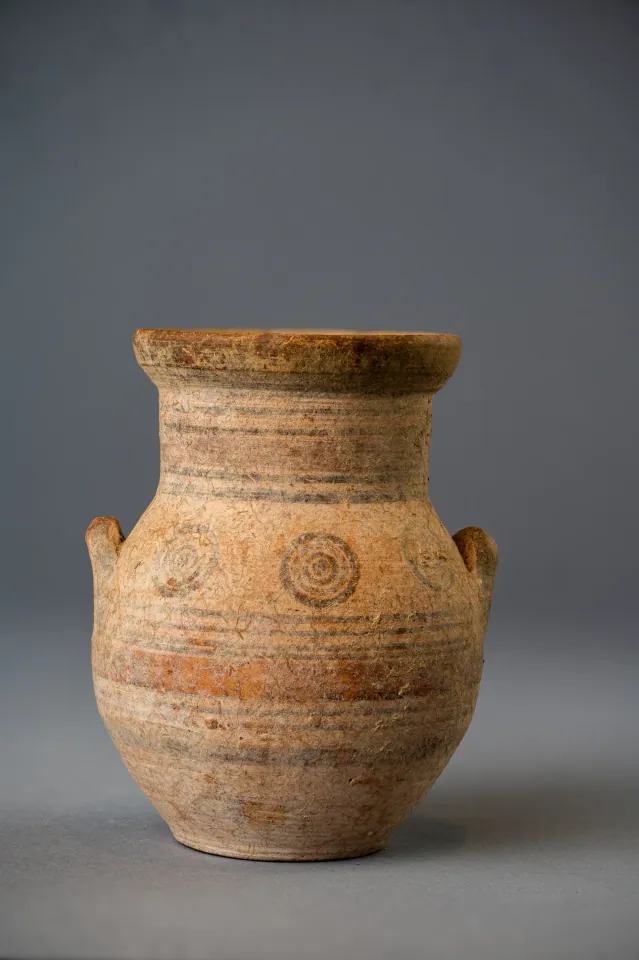
Bichrome IV Amphoriskos with Concentric Circles
Amphora
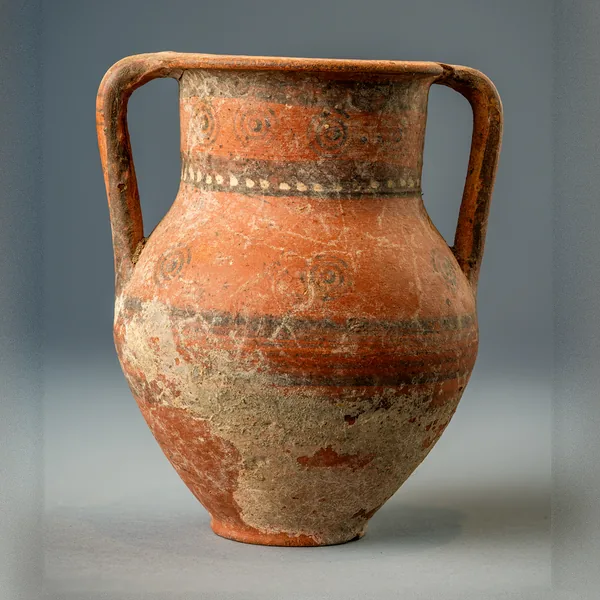
Bichrome Red Amphora with Concentric Circles and a Row of White Dots
Amphora
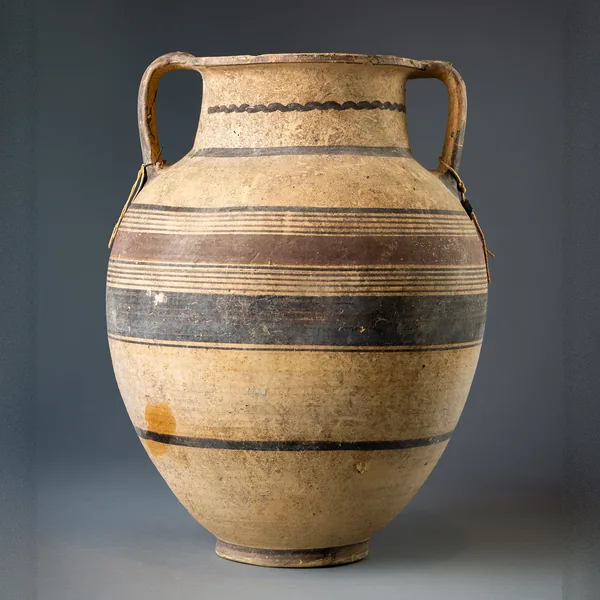
Large Bichrome Amphora with a Wavy Line on the Neck
Amphora
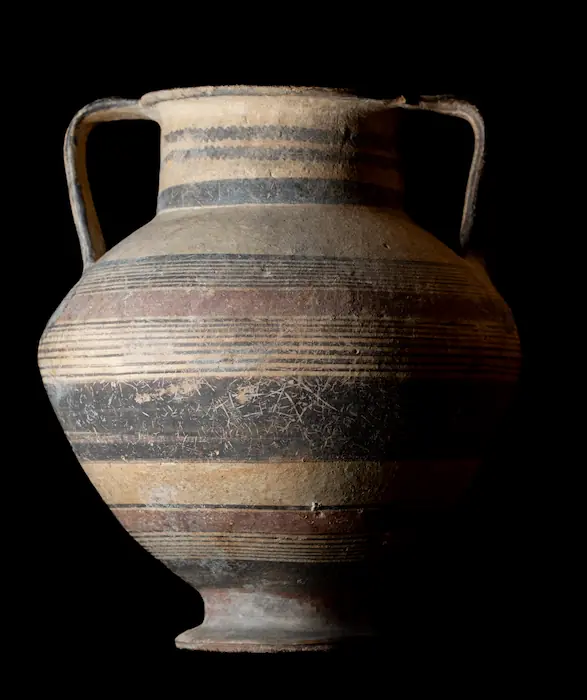
Bichrome Amphora on a Pedestal Foot with Wavy Lines on the Neck
Amphora
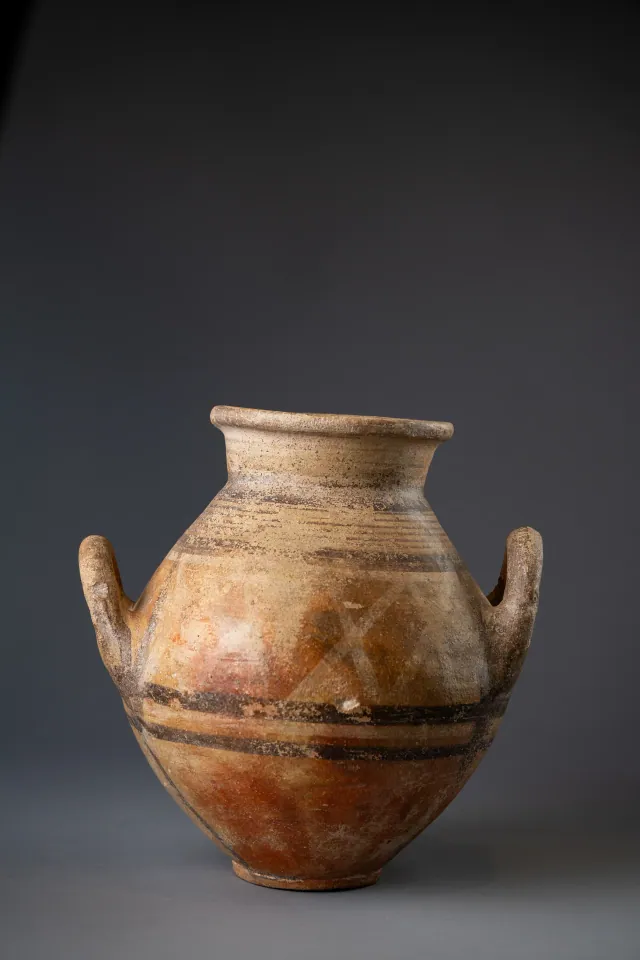
Red-Slipped Amphora with Pale Crosses on the Shoulder, probably Bichrome Red Ware
Amphora
Background
Where to read more on this site before or after watching.
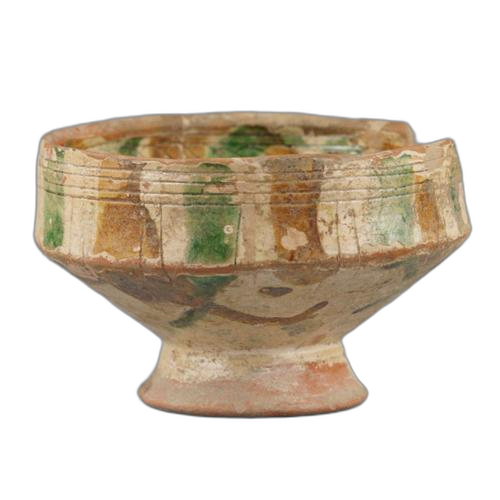
In the compendium
Medieval Glazed Sgraffito Ware
Wheel-made red-clay tableware coated in white slip, incised through the slip and lead-glazed, made in Cypriot workshops from the 13th to the 16th century AD.
In the compendium
Amphora
A closed jar with two opposed handles, made in Cyprus in belly-handled and vertical-handled painted series and as a basket-handled transport jar.
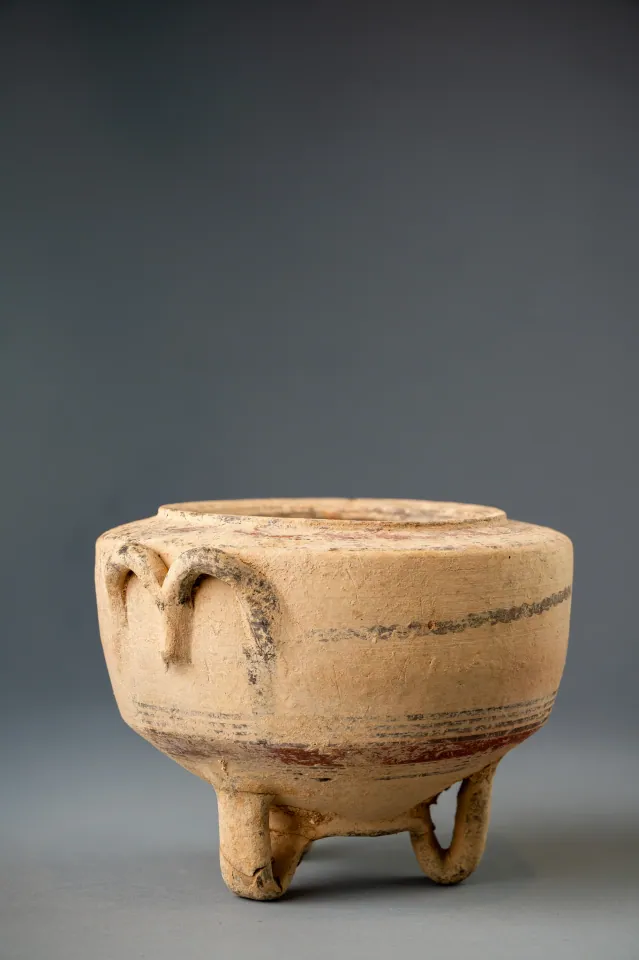
In the compendium
Jars and Pithoi
A symmetrical wide-necked vessel, the family of Cypriot storage and transport jars, pithoi and painted jars, including the amphora.