
Lecture·Archaeological Research Unit - University of Cyprus·2026
Faience, Glass, and Painted Palaces: Piramesse, Colourful Capital City of Egypt in the Late Bronze Age
Henning Franzmeier
A guest lecture in the University of Cyprus series on a subject outside Cyprus.
Chapters
About the lecture
Henning Franzmeier presents the history and archaeology of Pi-Ramesse, modern Qantir in the eastern Nile Delta, the capital of Egypt for roughly 150 to 200 years during the Late Bronze Age. Drawing on fieldwork that he has directed since 2015 after 35 years of excavations under Edgar Pusch, and on a project at the Cyprus Institute examining coloured materials, the lecture outlines the rise, workshops, monuments, and abandonment of the city founded by Ramesses II just north of the earlier Hyksos capital at Tell el-Dab'a (Avaris).
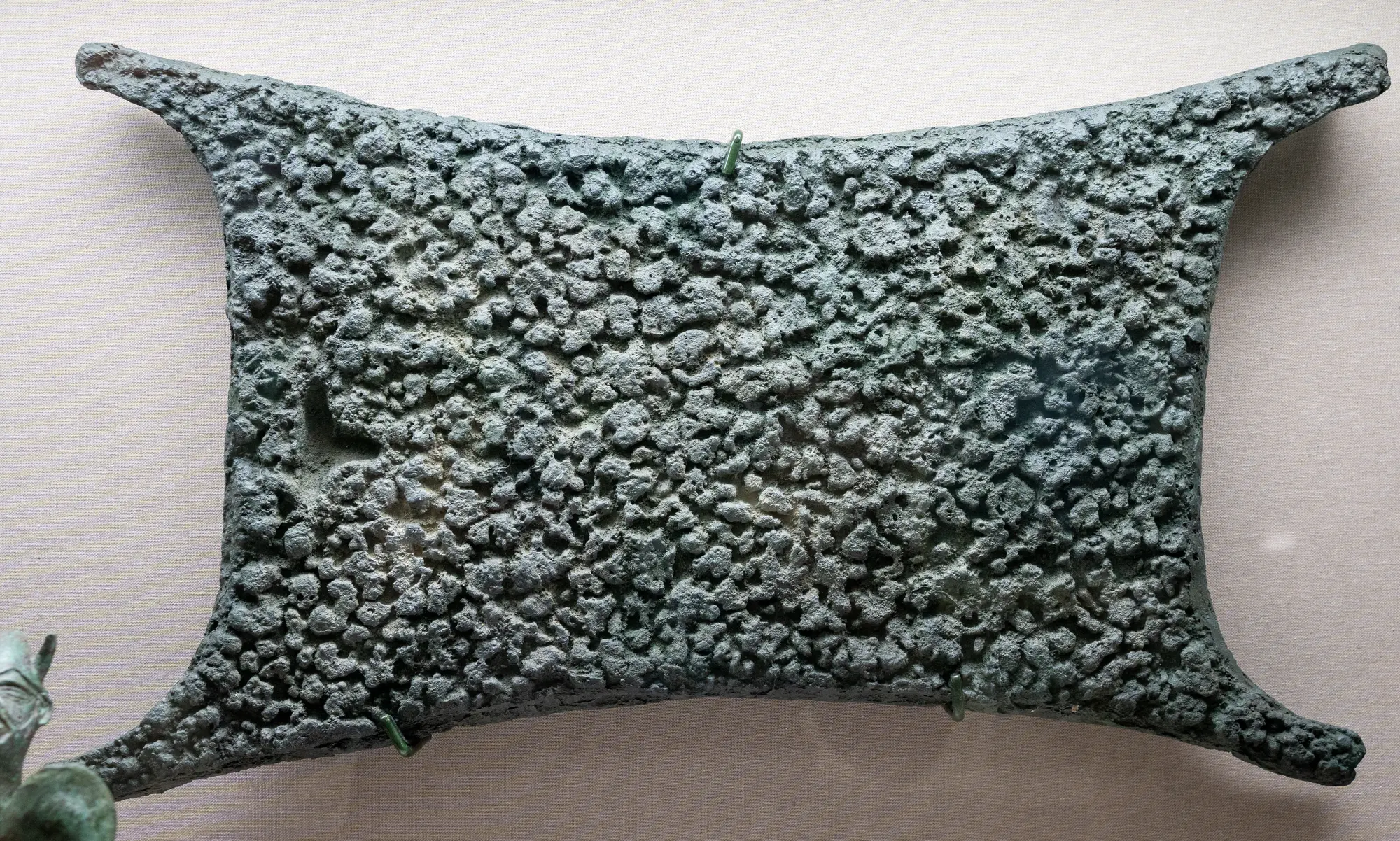
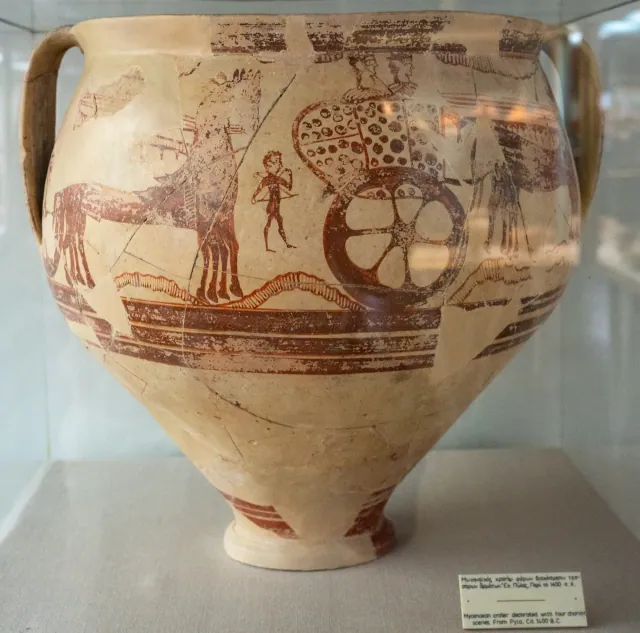
Franzmeier explains the reasons for moving the residence to an island on the easternmost Nile branch: access to the Mediterranean and the Ways of Horus into the Levant, ties to the local cult of Seth, and separation from the old elites of Memphis and Thebes. The city centred on the cult of the living king and housed the administration, archives, and foreign office. Its place in eastern Mediterranean exchange networks appears in imported Canaanite jars, Mycenaean pottery including a chariot krater fragment, a Cypriot copper oxhide ingot fragment alongside copper attributed to Oman, a cuneiform tablet fragment, and a Sidonian official's doorway.
The talk examines the limestone-columned royal stables for hundreds of horses and the industrial workshops that melted bronze for weapons, worked bone and leather, and produced coloured materials: thousands of faience moulds, the only complete ancient Egyptian ingot of ruby-red glass, Egyptian blue pigment and vessels, and worked agate and jasper.
After tracing the city's history from Merenptah through Ramesses III to its quarrying around 1000 BC for Tanis and its memory in the biblical Exodus, the lecture closes with excavations since 2016 of two superimposed palaces. The upper foundation trenches match the Palace of Merenptah at Memphis, while the razed palace beneath yielded over fifty boxes of painted plaster with rosette motifs comparable to Malqata and Tiryns.
From our collection
Pieces in the Drakopoulos collection of the kinds and periods this talk covers: Jar, Late Cypriot (Late Bronze Age).
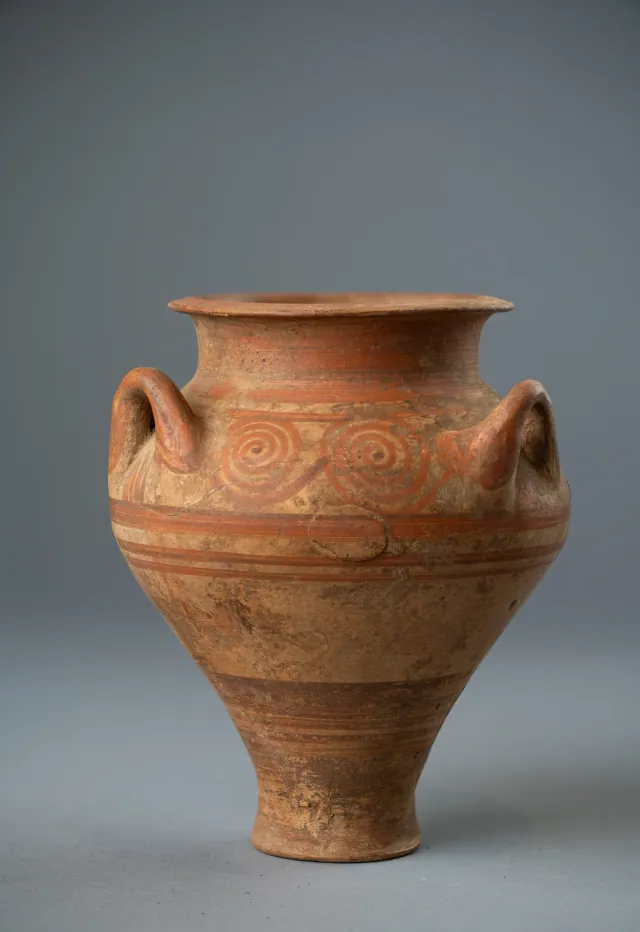
Cypriot Three-Handled Jar in the Mycenaean Style with Running Spirals
Jar
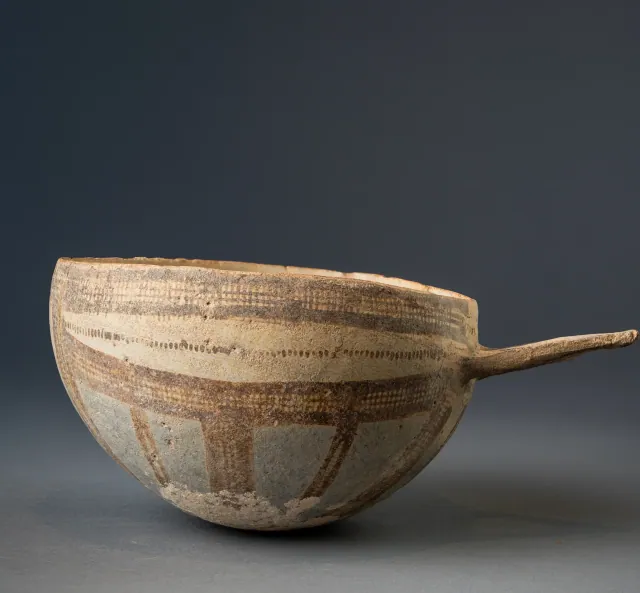
White Slip II Hemispherical Bowl with Wishbone Handle
Late Cypriot (Late Bronze Age)
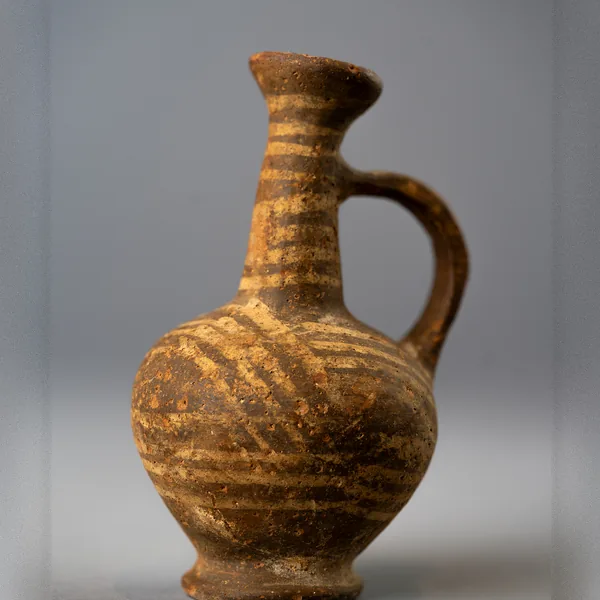
Base Ring II Bilbil Juglet with White-Painted Bands
Late Cypriot (Late Bronze Age)
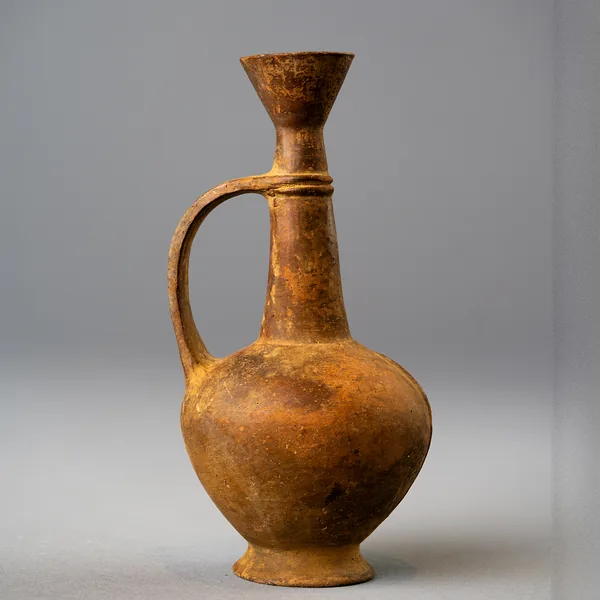
Base Ring Bilbil Juglet with Funnel Mouth and Neck Ridge
Late Cypriot (Late Bronze Age)
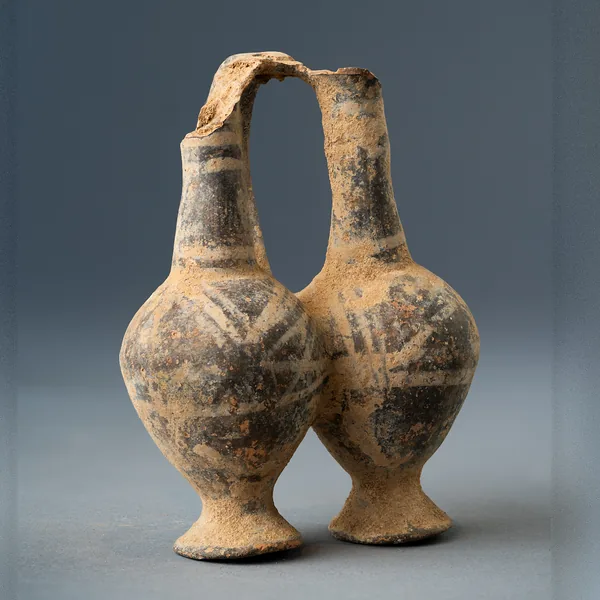
Base Ring II Double Juglet with White-Painted Decoration
Late Cypriot (Late Bronze Age)
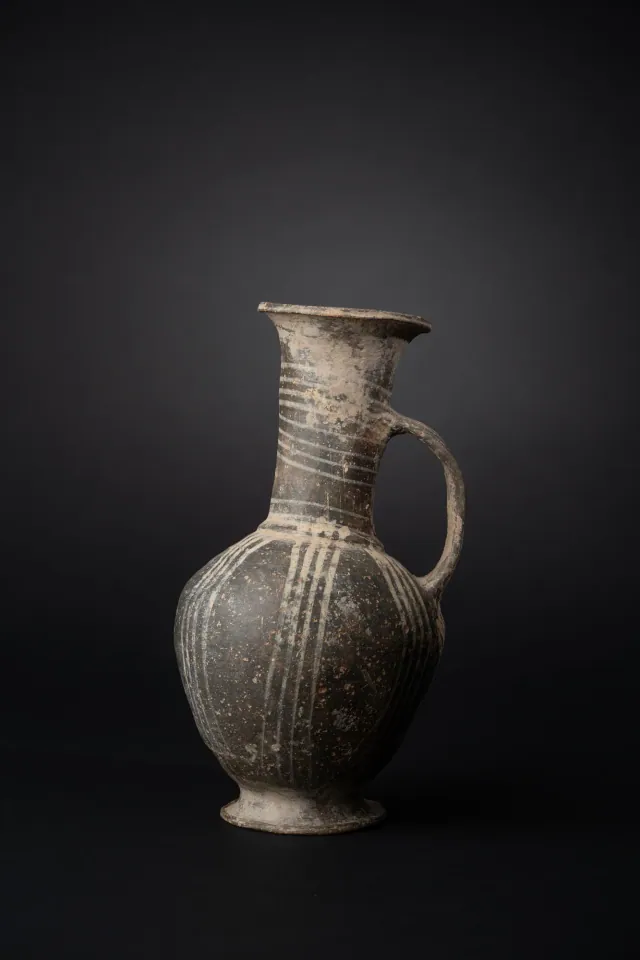
Base Ring II Jug with White-Painted Lattice Bands
Late Cypriot (Late Bronze Age)
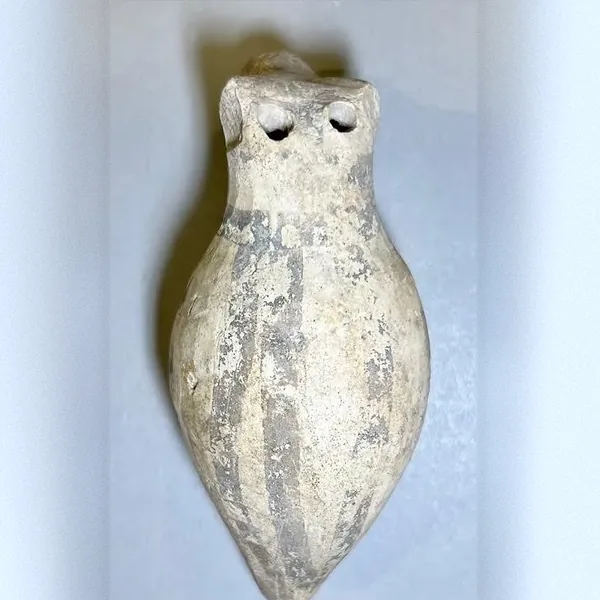
White Painted VI Owl-Headed Rattle
Late Cypriot (Late Bronze Age)
Background
Where to read more on this site before or after watching.
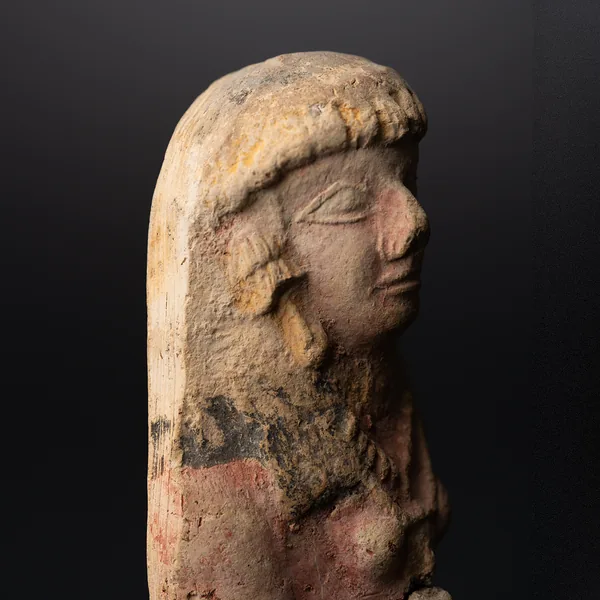
In the compendium
Egypt
Ancient Egypt, Cyprus's partner in copper, pottery and prestige goods from the Middle Kingdom to the Ptolemies, who annexed the island.
In the compendium
Hittite Empire and Cyprus
The Late Bronze Age Anatolian empire that claimed Alashiya as a tributary but left almost no material trace on Cyprus.
In the compendium
The Mycenaeans and Cyprus
The palatial Late Bronze Age societies of mainland Greece, whose pottery flooded Cypriot coastal towns in the 14th and 13th centuries BCE.

The period
Late Bronze Age
The Late Cypriot period, c. 1650–1050 BCE, when copper exports made Cyprus an urban, literate trading power before the crisis around 1200 BCE.