
Panel·Archaeological Research Unit - University of Cyprus·2022
1st Graduate Forum for Mediterranean Archaeology: Ritual, Burial Practices and Funerary Beliefs
Ritual, Burial Practices and Funerary Beliefs
Amy Ferguson, Elisavet Stefani, Jérémie Vosges and Marianna Negro
Chapters
About the video
This session of the 1st Graduate Forum for Mediterranean Archaeology, hosted by the Archaeological Research Unit of the University of Cyprus, presents four papers on ritual, burial practices, and museum collections, preceded by the closing discussion of an earlier session on medieval frescoes.
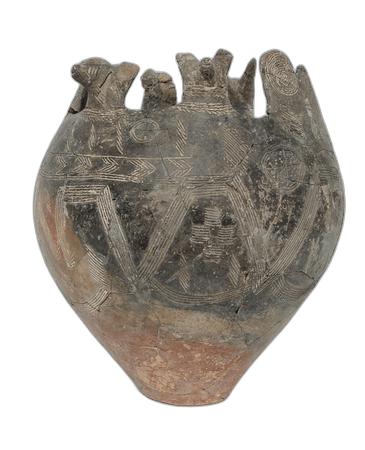
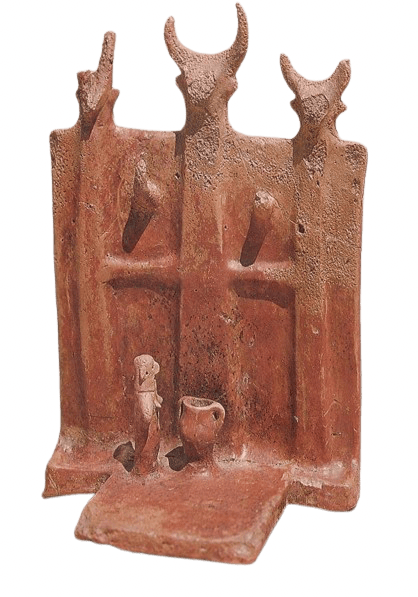
Amy Ferguson (University of Wales) examines the Early Bronze Age Kotchati clay shrine model, dated to c. 2600 to 2000 BC and possibly derived from the area of Marki or the north coast. The model shows a tripartite facade of three horned pilasters, two bovine and one she identifies as a caprid, facing a small female figure standing before a large jar. Comparing the arrangement to jars placed in the dromoi of tombs at Bellapais-Vounous and the Vounous bowl, Ferguson applies Michel Foucault's concept of heterotopia to ask whether the model depicts a threshold space for offerings and funerary ritual.
Elisavet Stefani (Department of Antiquities, Cyprus) presents her doctoral research, supervised by Maria Iacovou, on the mortuary topography, architecture, and burial practices of the Eastern, Northern, and Western necropoleis of Amathus from the Cypro-Geometric to the Late Roman period. Drawing on early digs by Luigi Palma di Cesnola, the British Museum, and the Swedish Cyprus Expedition, as well as rescue excavations of over 900 tombs during coastal construction after the Turkish invasion of 1974, she maps the expansion of the cemeteries from Cypro-Geometric I through their Cypro-Archaic peak to Cypro-Classical and Hellenistic reuse. She classifies six tomb types: rock-cut chamber tombs, shaft tombs (including corbel-vaulted examples), royal built tombs, cist graves, above-ground Roman structures, and rock-cut pits for cremation urns. She then surveys inhumation, secondary burial in amphorae, stone and anthropoid sarcophagi, rare cremations, and Euboean and Syro-Palestinian imports, concluding that the millennium-long stability of the cemeteries reflects the continuity of the urban centre and port of Amathus.
Jérémie Vosges (Université Paris 1) studies flint and Melian obsidian arrowheads from Shaft Graves Delta and Lambda in Grave Circle B and Shaft Grave IV in Grave Circle A at Mycenae. Through macroscopic analysis and experimental replication with deer antler and copper or bronze tools, he shows that Mycenaean knappers achieved thicknesses down to two millimetres without leaving use-wear traces, suggesting the points were deposited unused to mark the deceased as archers.
Marianna Negro (University of Cambridge) traces the global dispersal of Italic and Etruscan votive bronze figurines, focusing on the collections of the British Museum and the Metropolitan Museum of Art. She argues that nineteenth- and twentieth-century cataloguing privileged naturalistic figurines as imitations of Greek sculpture while dismissing local schematic examples as primitive, decontextualising votive deposits.
In the discussion, the speakers address funerary parallels at Marki and bull iconography on Cyprus, the coexistence of inhumation and cremation and unrecorded cist graves (mnemata) at Amathus, replication time and use-wear on Mycenaean arrowheads, and how Italian regional museums display Italic bronzes compared with national and foreign collections.
From our collection
Pieces in the Drakopoulos collection of the kinds and periods this talk covers: Bull and cattle, Cypro-Archaic, Hellenistic.
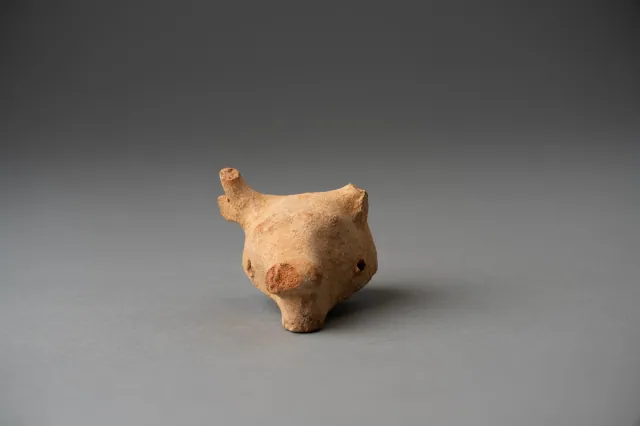
Head of a Terracotta Bull Figurine
Bull and cattle
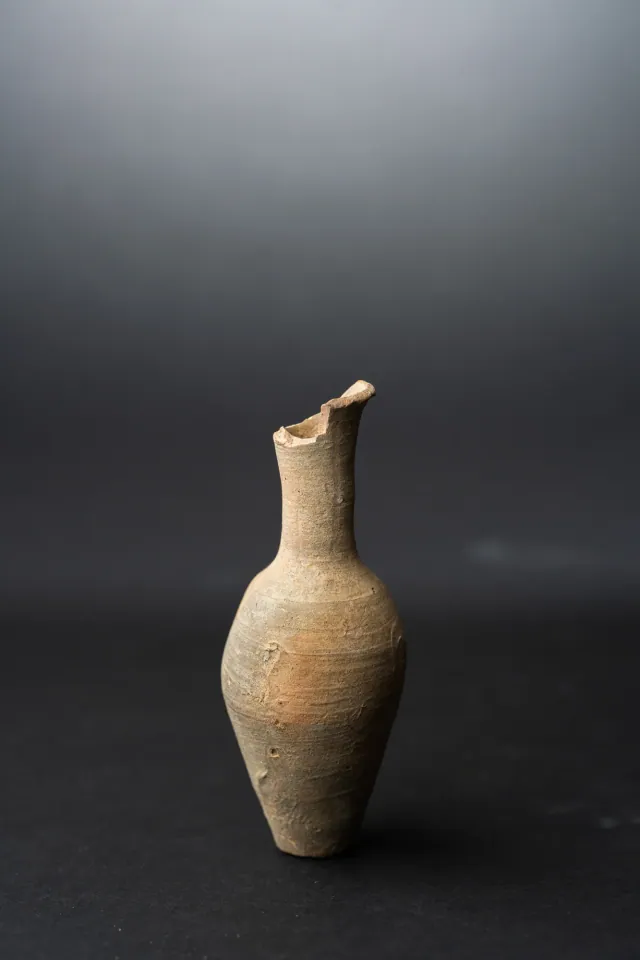
Fusiform Unguentarium
Hellenistic
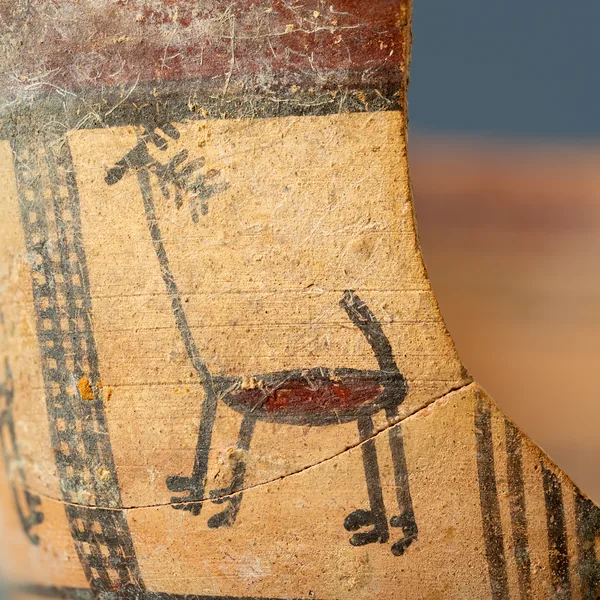
Bichrome Skyphos with Stags in Metopes
Cypro-Archaic
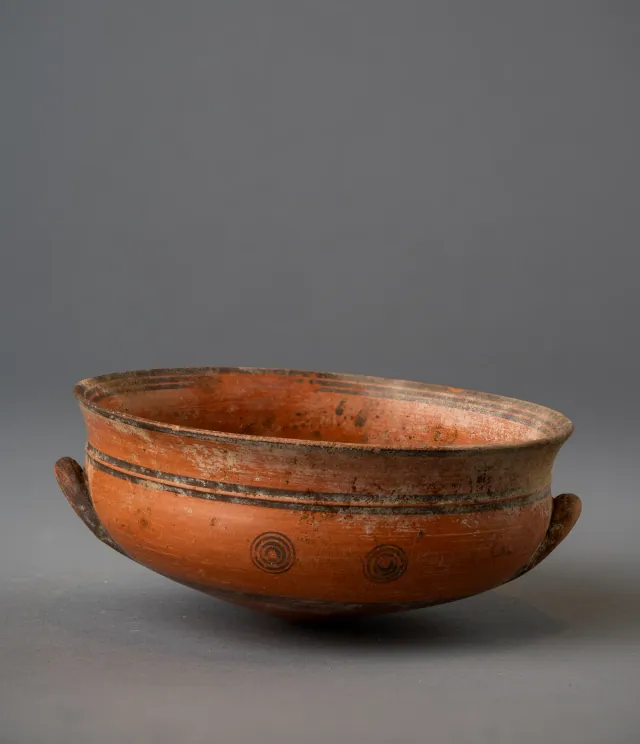
Black-on-Red Two-Handled Bowl with Raised Flaring Rim
Cypro-Archaic
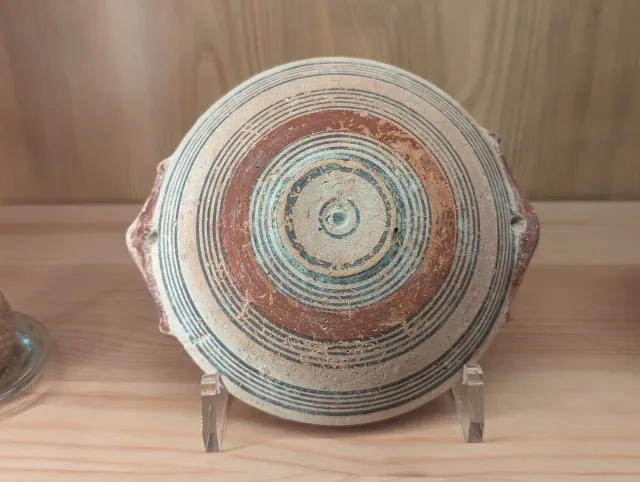
Bichrome IV Bowl with Red-Painted Pierced Lug Handles
Cypro-Archaic
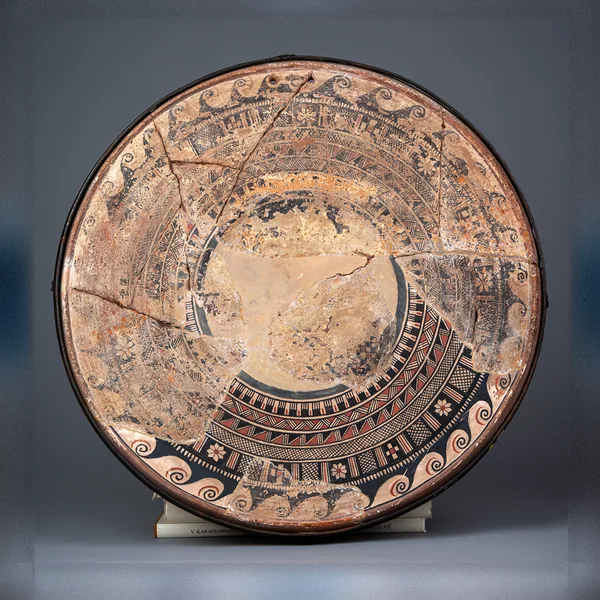
Large Bichrome Plate from Salamis with a Wave Band and Rosette Metopes
Cypro-Archaic
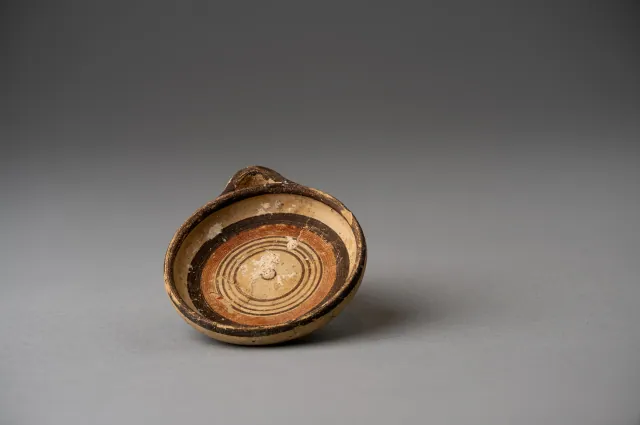
Miniature Bichrome Plate with Concentric Circles
Cypro-Archaic
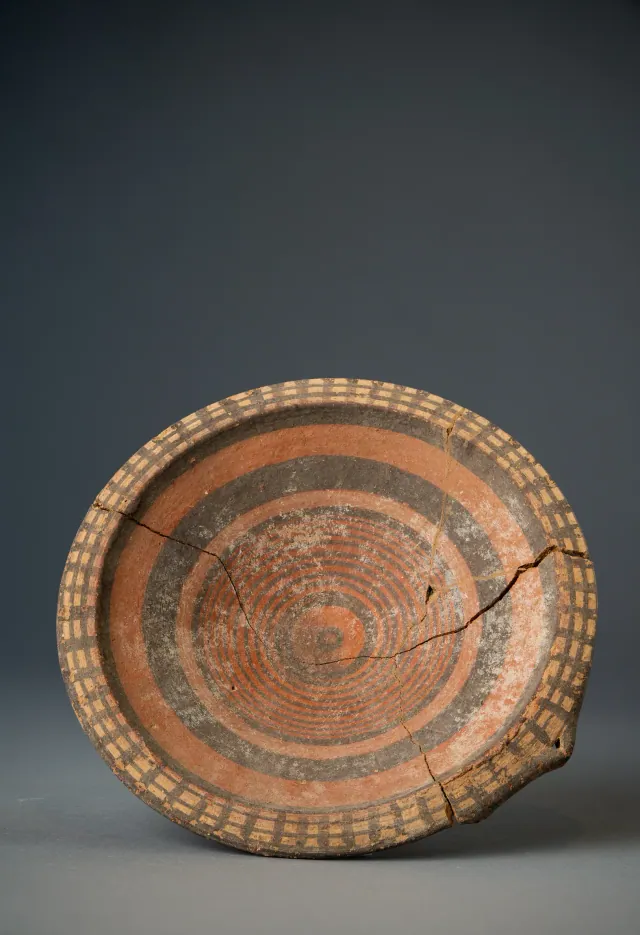
Black-on-Red Plate with Barred Rim and Concentric Circles
Cypro-Archaic
Found at the places discussed
Objects in our catalogue, in museum collections, recorded as found at these sites.


Background
Where to read more on this site before or after watching.
The site
Bellapais Vounous
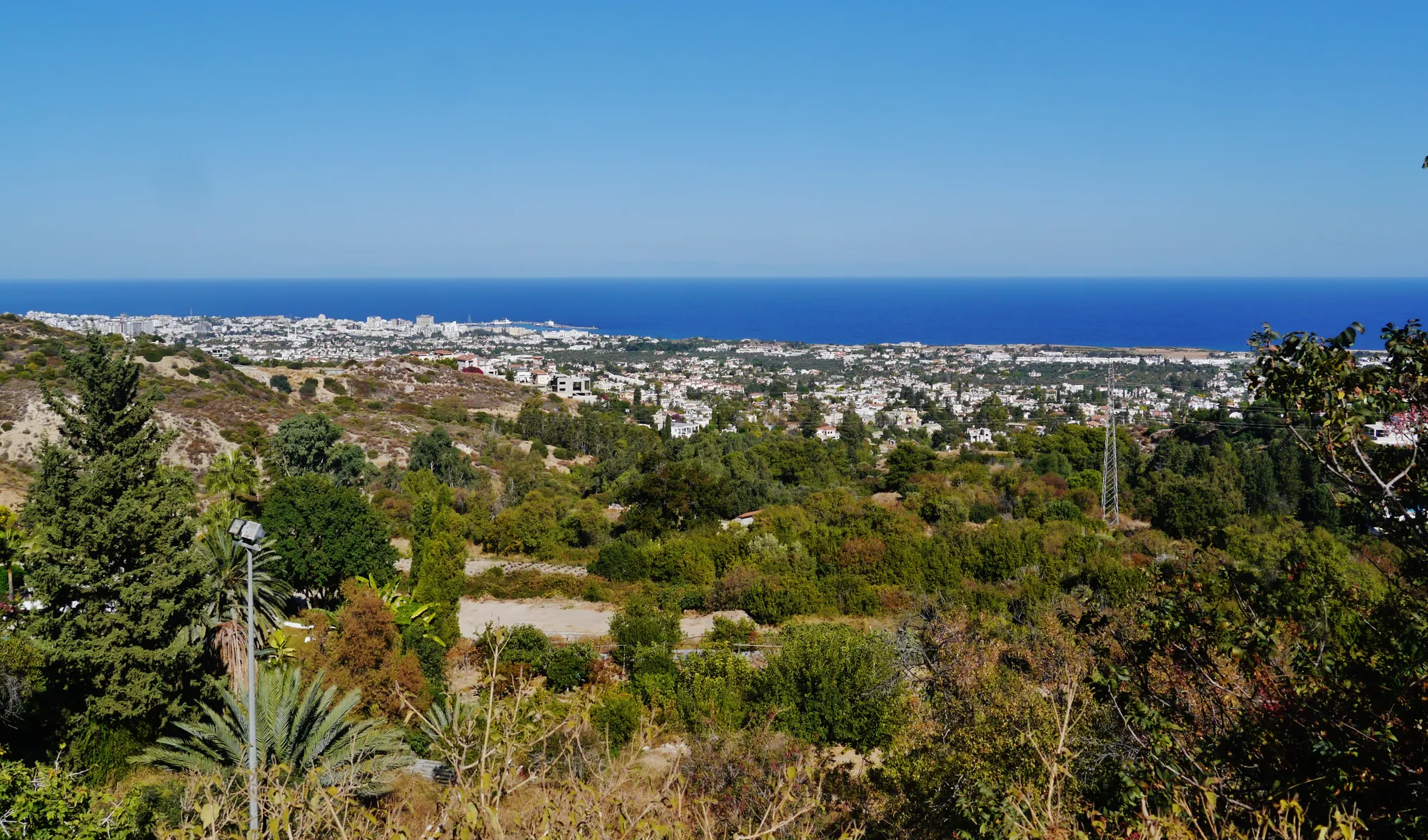
Vounous is a cemetery of rock-cut chamber tombs on a low hill between Bellapais and the north coast, used from about 2350 to 1700 BC. Its 164 excavated tombs, dug between 1931 and 1938, are the largest group of Early Bronze Age tombs known in Cyprus. The settlement that buried its dead here has never been found, so the community is known almost entirely from its burials, its figured Red Polished pottery and clay models such as the Vounous Bowl.
In the compendium
Clay Models
Freestanding miniature models of buildings, cult places, work scenes, boats, vehicles and furniture made in Cyprus from the Chalcolithic to the Cypro-Archaic period.
In the compendium
Bulls and Cattle
Bulls and cattle in Cypriot art, modelled on Red Polished cult vessels, made as Base Ring rhyta and dedicated as Archaic votives in clay and stone.
In the compendium
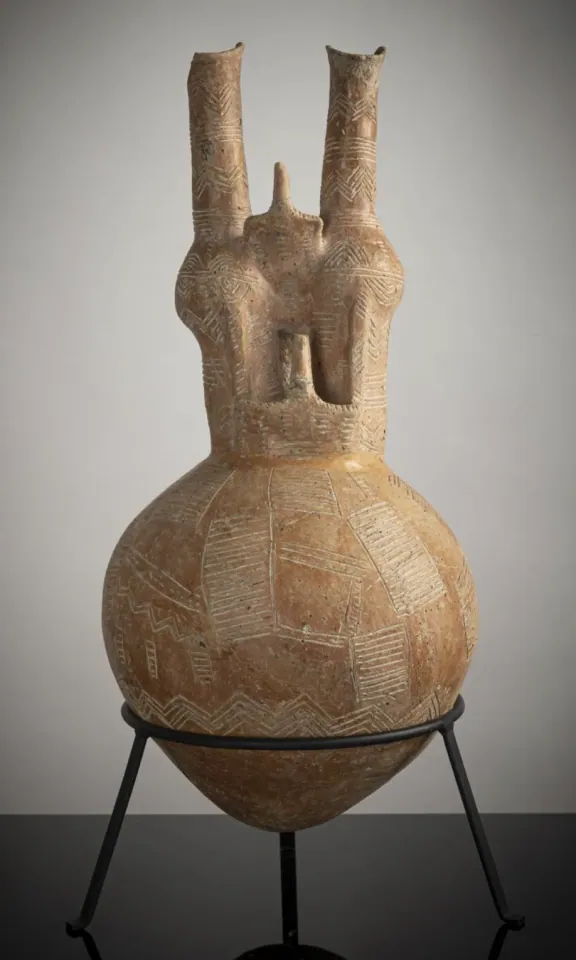
Vounous and Early Bronze Age Burial
Bellapais-Vounous is a north-coast cemetery of rock-cut chamber tombs whose figured Red Polished grave goods define Early Bronze Age burial in Cyprus.
Map of Cyprus
Places discussed in the talk
- Has a page on this site
- Other places
- Ground above 200, 500, 1,000 m