
Conference paper·Archaeological Research Unit - University of Cyprus·2017·In Greek
2nd Annual ARU Study Day, Session 4: Nea Paphos, Byzantine and Frankish Studies, and Ottoman Watermills
Δεύτερη Ετήσια Ημερίδα Ερευνητικής Μονάδας Αρχαιολογίας: «Το Αρχαιολογικό Έργο του Πανεπιστημίου Κύπρου»
Demetrios Michaelides, Vasiliki Lysandrou, Maria Parani, Michalis Olympios and Euphrosyne Rizopoulou-Egoumenidou
Chapters
About the video
This fourth and final session of the Second Annual Study Day of the Archaeological Research Unit of the University of Cyprus, given in Greek, presents five papers on ongoing research projects, followed by closing remarks.
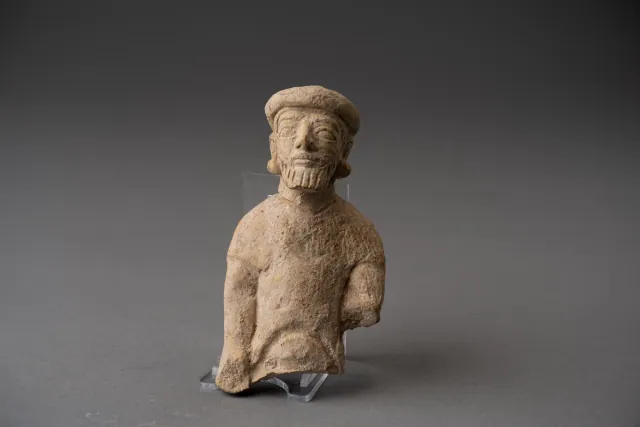
Demetrios Michaelides, presenting joint work with Giorgos Papantoniou and Maria Dikomitou-Eliadou funded by the A. G. Leventis Foundation, reports on a study of more than 400 fragments of Hellenistic and Roman terracotta figurines excavated from the House of Orpheus at Nea Paphos. Because Hellenistic and Roman Cypriot terracottas have mainly been studied from sanctuaries and tombs, this domestic assemblage offers evidence for household use. The project combined stylistic study with portable XRF and neutron activation analysis in collaboration with NCSR Demokritos to distinguish local Paphian workshops from imports, alongside experimental clay reproductions and 3D digital reconstructions at the Cyprus University of Technology.
Vasiliki Lysandrou introduces a postdoctoral project coordinated with George Papasavvas and Athos Agapiou applying Geographic Information Systems (GIS) to the Eastern Necropolis of Nea Paphos. Focusing on rescue excavations conducted between 1983 and 1990 by the Department of Antiquities under Michaelides south of Poseidonos Avenue, the project digitises over ten excavation notebooks and maps 493 recorded contexts into a CAD and GIS database to analyse tomb typology, spatial distribution, and funerary topography outside the city walls.
Maria Parani presents a collaborative project with Michael Jeffreys on Vaticanus Graecus 1851, an illustrated Byzantine manuscript poem in fifteen-syllable political verse describing the arrival in Constantinople of a young Western bride for the emperor's son. Parani outlines plans for a full critical edition and examines the miniatures, which depict the imperial messenger, the dark-complexioned emperor wearing a large ruby, the empress, and the ceremonial dressing of the young princess. In the discussion, she notes her preliminary hypothesis identifying the emperor as Manuel I Komnenos.
Michalis Olympios examines the thirteenth-century Dominican church of Agia Paraskevi in Chalkis (medieval Negroponte). Drawing on unpublished Venetian notarial deeds of the 1320s and the 1346 will of the Swiss knight Richard de Prez, he focuses on the sculpted corbels and the triumphal arch of the Cappella Maggiore. He shows that the thirty-nine voussoirs of the inner arch follow late thirteenth-century Parisian Gothic models and were meant to form a symmetrical pattern of foliage and figures, including Saints Dominic and Peter Martyr and a hybrid figure wearing a pointed Jewish hat, disrupted by an assembly error.
Euphrosyne Rizopoulou-Egoumenidou, working with Philon Mavrovouniotis, investigates the watermills, water rights, and millstones recorded in the 1794 property register of the Dragoman Hadjigeorgakis Kornesios. She traces his mill and orchard at Nikokleia in Paphos and his five mills fed by the Kephalovrysos spring at Kythrea, explaining how water shares were measured in hours and how millstones were assembled from volcanic stone pieces imported from Melos. She concludes with a brief presentation of a completed project and book on urban dress in Larnaca between 1870 and 1920 based on the Phoebus Stavrides Foundation photographic archive. Maria Iacovou closes the study day.
From our collection
Pieces in the Drakopoulos collection of the kinds and periods this talk covers: Hellenistic.
The Drakopoulos collection →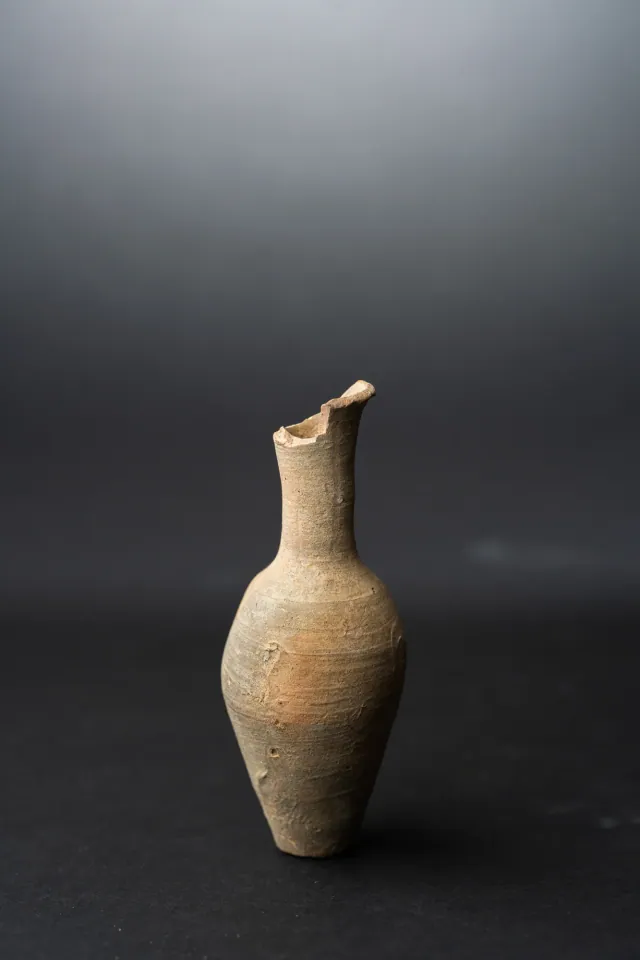
Background
Where to read more on this site before or after watching.
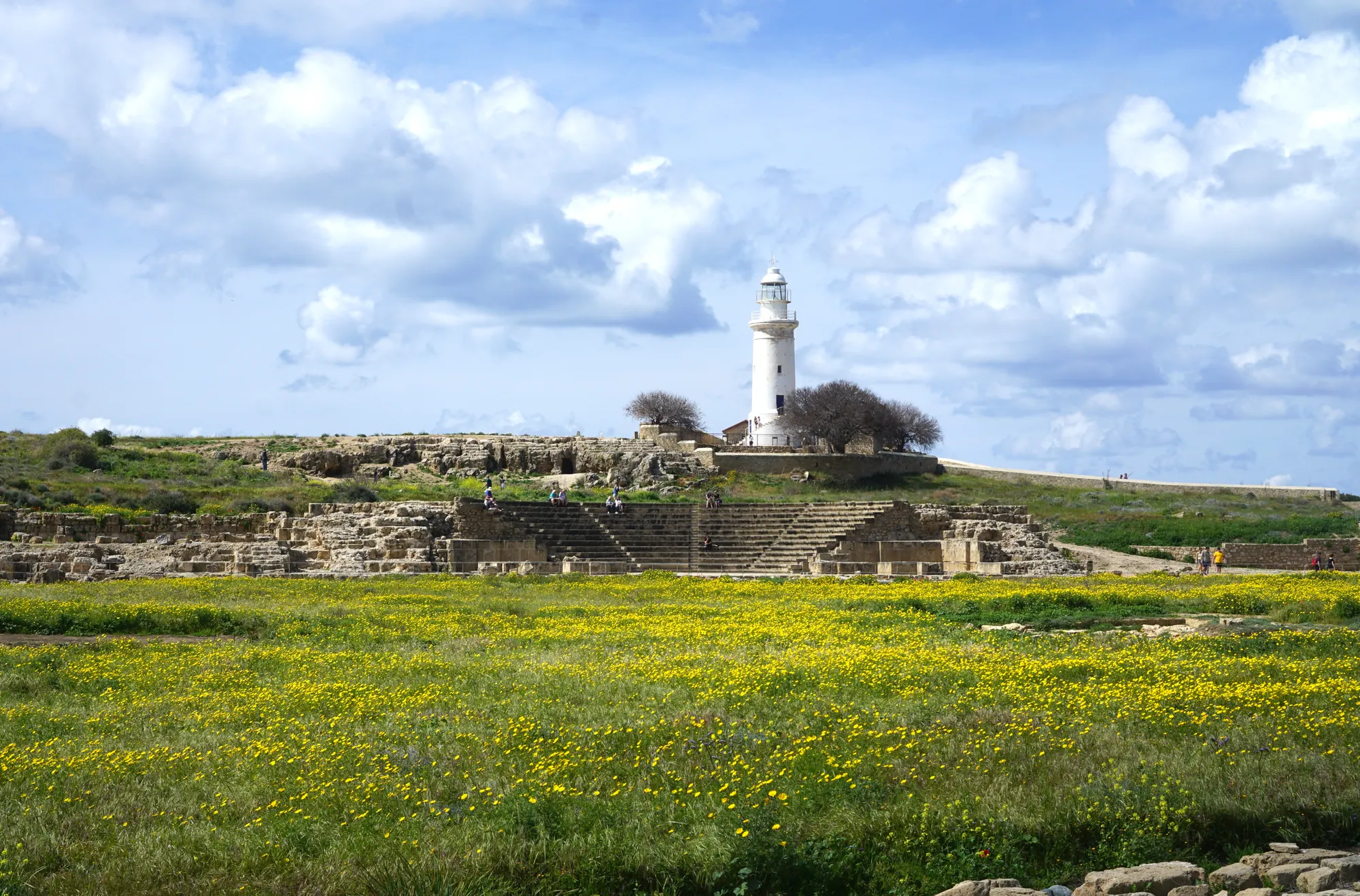
The site
Nea Paphos
Nea Paphos, New Paphos, lies under Kato Paphos on the south-west coast of Cyprus. Founded about 320 BC as a harbour town for the kingdom of Paphos, it became the seat of the Ptolemaic governors of the island and then the capital of the Roman province until the 4th century AD. Its walls, theatre, civic centre, mosaic-floored houses and rock-cut tombs are part of the UNESCO World Heritage Site of Paphos, inscribed in 1980.
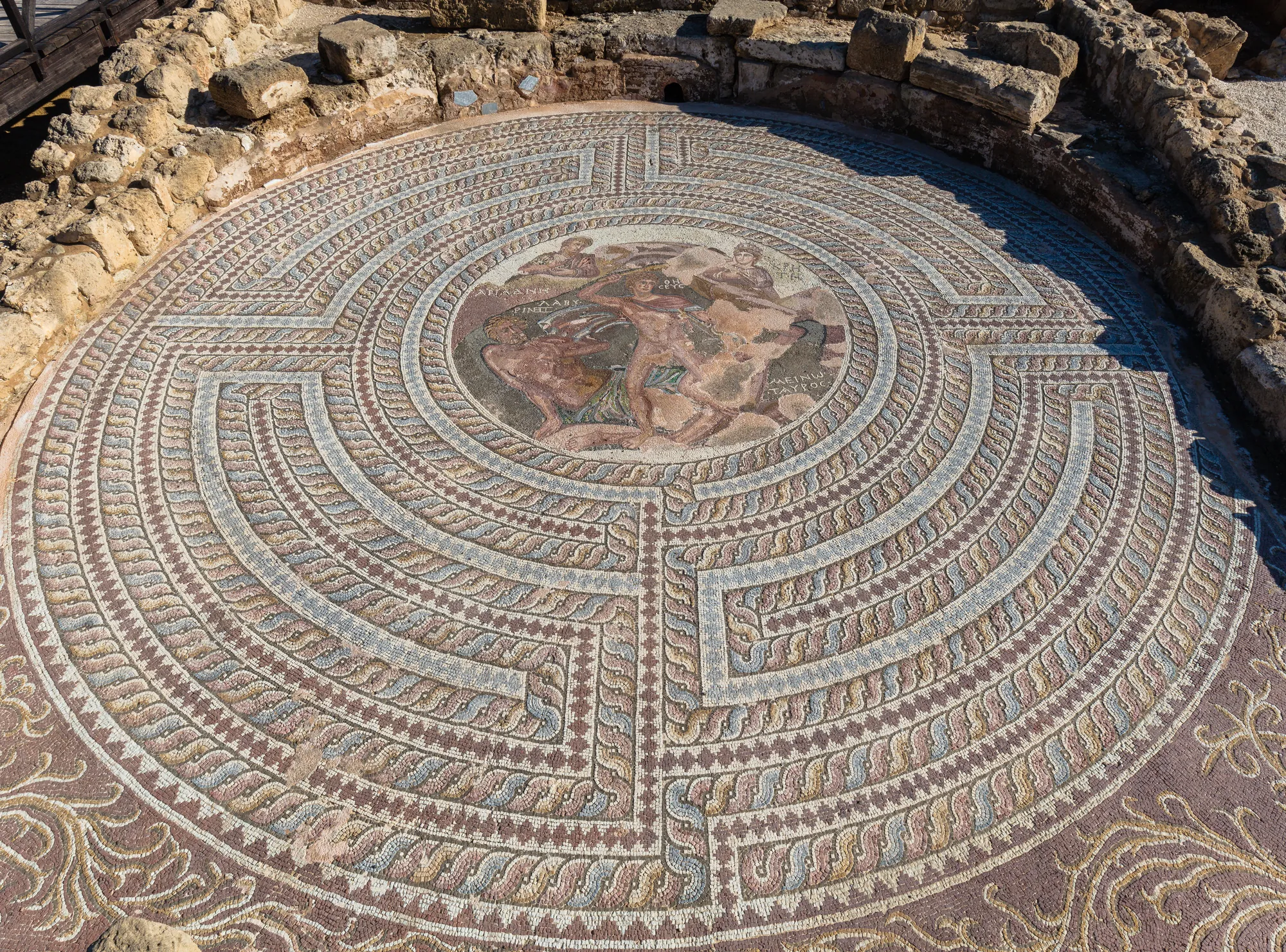
In the compendium
Hellenistic and Roman Houses
Town houses on Cyprus from the founding of Nea Paphos in the late 4th century BC to the earthquakes of the 4th century AD, from mosaic-floored peristyle houses to a mudbrick house at Kourion.
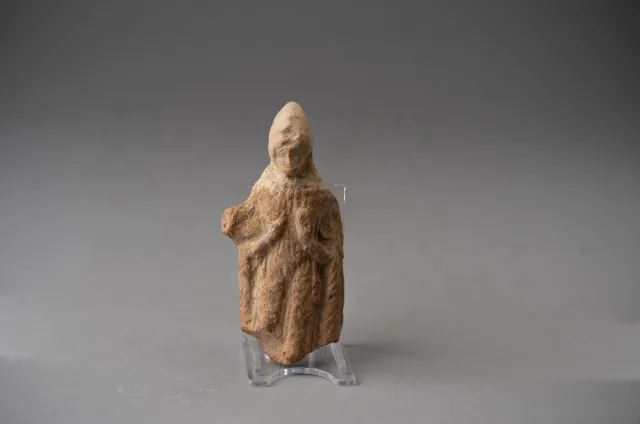
In the compendium
Terracotta Figurines
Small clay figures made in Cyprus by hand, on the wheel or in moulds, from Chalcolithic birthing figures to the Cypro-Archaic sanctuary votives.
The period
Hellenistic
The Ptolemaic period in Cyprus, c. 310–31 BCE, when the city-kingdoms were abolished and the island was governed as one province from Nea Paphos.
Map of Cyprus
Places discussed in the talk
- Has a page on this site
- Other places
- Ground above 200, 500, 1,000 m
Places
- 1Nea Paphos
- 2Nikokleia (approx.)
- 3Kythrea (approx.)