
Conference paper·Archaeological Research Unit - University of Cyprus·2019·In Greek
Works and Days 2018 at the Heraion of Samos and Liman Tepe in Izmir
'Έργα και Ημέραι' 2018 στο Ηραίον Σάμου και το Liman Tepe Σμύρνης
A guest lecture in the University of Cyprus series on a subject outside Cyprus.
Chapters
About the video
Given in Greek, this paper by Ourania Kouka of the University of Cyprus presents the 2018 fieldwork and post-excavation study at two prehistoric sites in the eastern Aegean and western Anatolia: the Heraion on Samos and Liman Tepe near Izmir. Kouka notes at the outset that these regions, together with southern Anatolia, contributed to Cyprus's transition into the Early Bronze Age in the mid-third millennium BC.
The first part covers the Heraion of Samos, where Kouka directed excavations north of the Sacred Way from 2009 to 2013 at the invitation of Wolf Niemeier and the German Archaeological Institute at Athens. That fieldwork identified a Chalcolithic settlement, a fortified Early Bronze Age I to II town, a reorganised settlement of c. 2750 BC, and six Middle Bronze Age building phases. In 2018 the team completed macroscopic and microscopic studies of the ceramic sequence with Sergios Menelaou, comparing samples from Kastro Tigani and the Pythagoreion Museum plot. Radiocarbon dates processed by Yannis Maniatis at Demokritos place the start of the Samian Early Bronze Age at 2900 BC and align the Middle Bronze Age phases with Protopalatial Minoan Crete. Kouka also shows a 3D simulation of the reburied remains and notes Giorgos Bourogiannis's study of Late Geometric and Early Archaic material from the sanctuary border, including Cypriot bronze and limestone figurines.
The second part reports on the 2018 excavation at Liman Tepe (ancient Klazomenai), directed by Hayat Erkanal of Ankara University. Opening Sector P9 to investigate the Early Bronze Age lower town, the team uncovered an earlier Late Bronze Age fortification wall protecting housing and pottery kilns, two infant jar burials outside the wall, and a stone and mudbrick house containing Anatolian Grey Ware alongside Protogeometric pottery.
From our collection
Pieces in the Drakopoulos collection of the kinds and periods this talk covers: Stone sculpture.
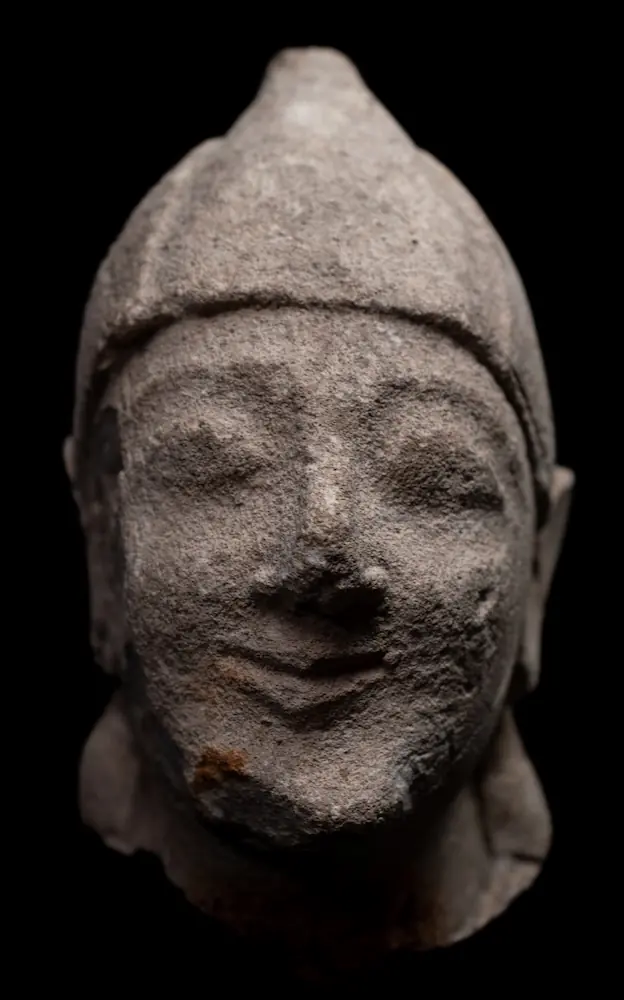
Limestone Head of a Beardless Votary in a Conical Helmet
Stone sculpture
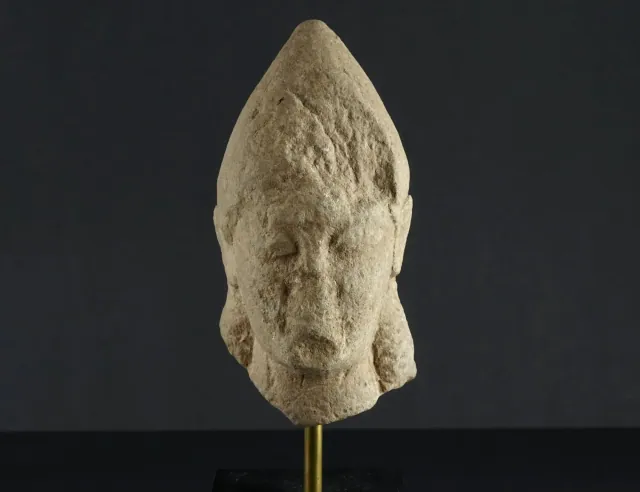
Weathered Limestone Head of a Votary in a Tall Pointed Cap
Stone sculpture
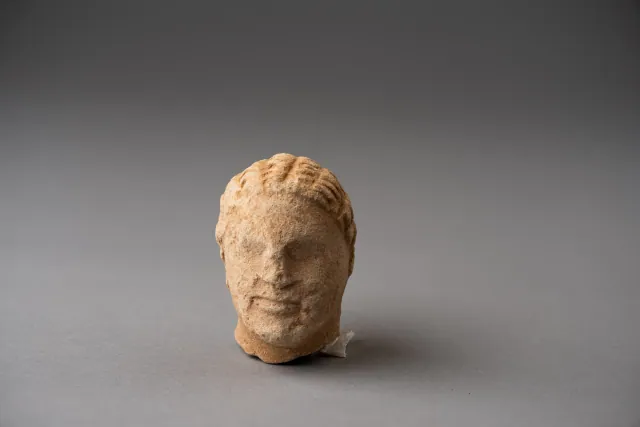
Limestone Head of a Boy, probably from a Temple Boy Statuette
Stone sculpture
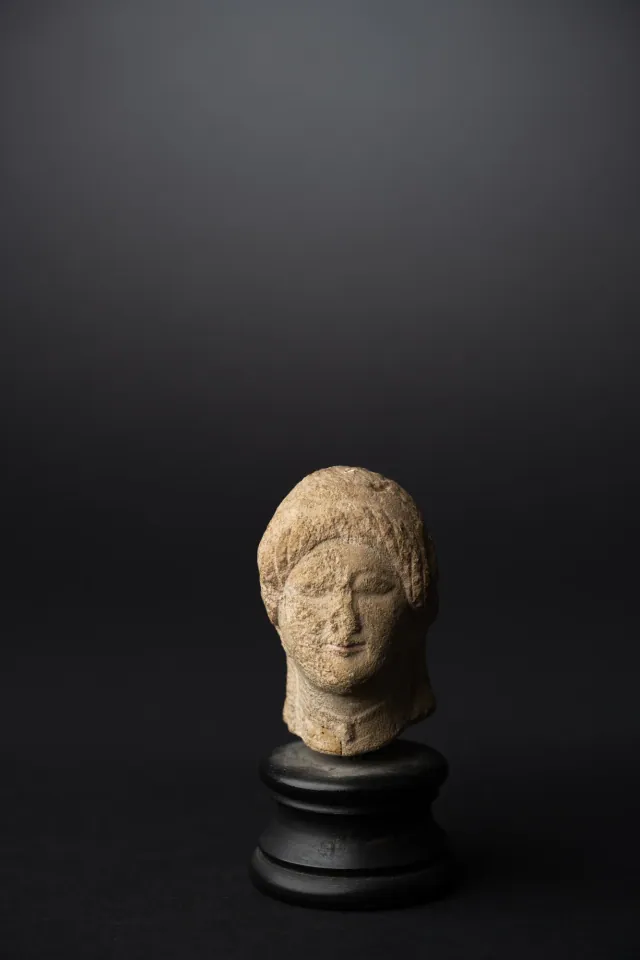
Limestone Head of a Votary with a Wreath
Stone sculpture
Background
Where to read more on this site before or after watching.