
Conference paper·CAARI Cyprus·2021
Between Classicism and Orientalism: Collecting, Classifying, and Displaying Cypriot Sculpture, 1860–1900
Chapters
About the video
Catherine Olien presents findings from her doctoral dissertation on how Cypriot sculpture was collected, classified, and displayed between 1860 and 1900. Focusing on Cypro-Archaic and Cypro-Classical votive statuary, she examines the difficulties these works posed for 19th-century scholars and curators who sought to arrange ancient art into linear narratives of progress culminating in Classical Greece.
Olien first outlines the intellectual context of the mid-19th century, when excavations in the Ottoman Empire by figures such as Austen Henry Layard and Paul-Émile Botta brought Assyrian and other Near Eastern antiquities into European museums. She illustrates the prevailing evolutionary hierarchy of art through James Stephanoff's 1845 watercolour Assemblage of Works of Art from the Earliest Period to the Time of Phidias, which placed non-Western and pre-classical traditions as lower steps leading up to the Parthenon marbles. Entering European collections from the 1860s onward, Cypriot sculpture combined stylistic traits linked to Egypt, Phoenicia, Assyria, and Greece. Olien argues that 19th-century responses established three lasting habits in Cypriot studies: describing the island's sculptural style through foreign influences and as derivative, tying elements of dress and iconography to periods of foreign political domination, and treating local traits as markers of an indigenous identity.
The paper compares how the Louvre and the British Museum classified nearly identical Cypriot statues. Collecting from the 1860s, the Louvre placed Cypriot sculpture alongside Phoenician and Assyrian material in its Department of Oriental Antiquities, founded in 1881. The British Museum, which expanded its purchases in the 1870s and excavated on the island in the 1880s and 1890s, assigned Cypriot works to its Department of Greek and Roman Antiquities, alongside East Greek monuments from Xanthos and Halicarnassus. Olien notes that British perceptions of ancient Cyprus shifted toward the Greek tradition after the establishment of British administration in 1878.
In art-historical surveys, Cyprus was initially treated as a passive conduit passing artistic ideas from Egypt and the Near East to Greece. By the 1880s, however, scholars increasingly rejected Cypriot sculpture as Greek, comparing its mixed style to what Arthur Milchhöfer termed Mischkunst in Mycenaean art, or using it, as Jane Ellen Harrison did in 1885, to define what Greek art had shed. Around 1900, discoveries in Minoan Crete and the pre-classical Aegean replaced Cyprus as the preferred precursor to Classical Greek art in scholarly surveys.
From our collection
Pieces in the Drakopoulos collection of the kinds and periods this talk covers: Figurine or sculpture.
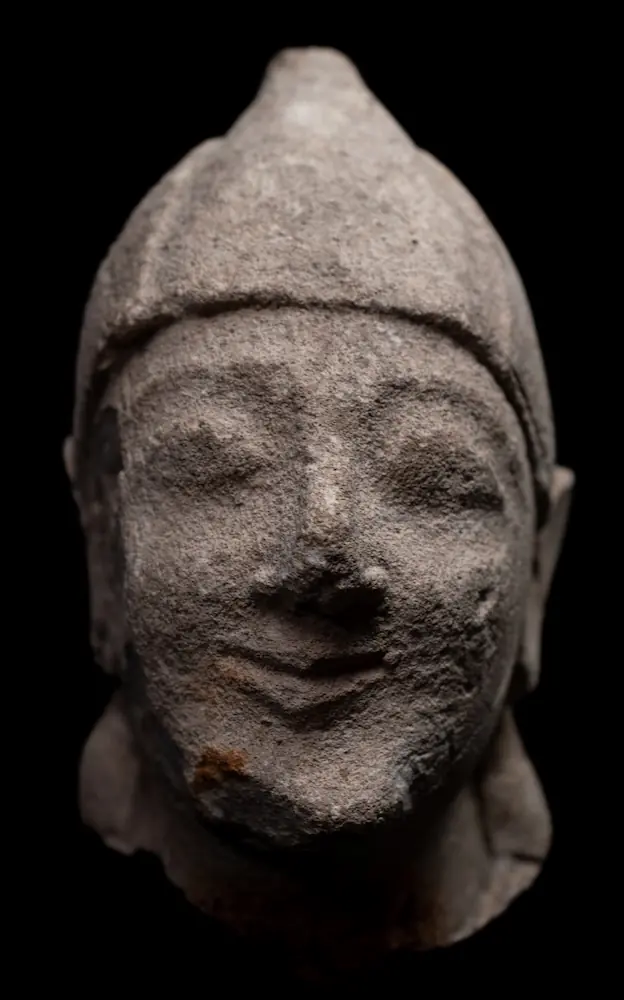
Limestone Head of a Beardless Votary in a Conical Helmet
Figurine or sculpture
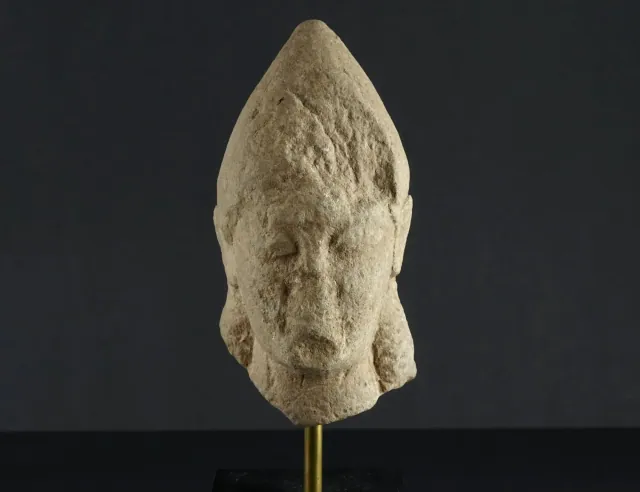
Weathered Limestone Head of a Votary in a Tall Pointed Cap
Figurine or sculpture
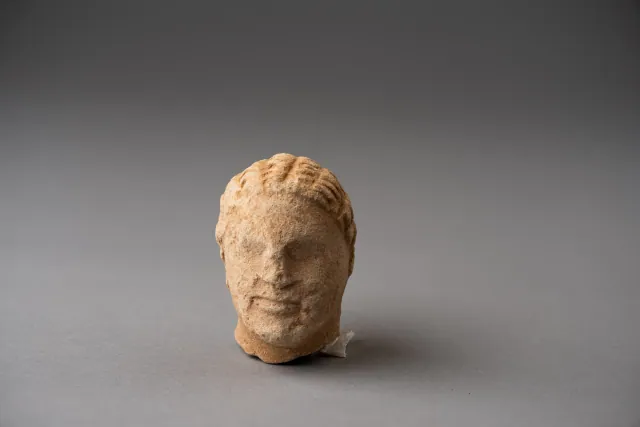
Limestone Head of a Boy, probably from a Temple Boy Statuette
Figurine or sculpture
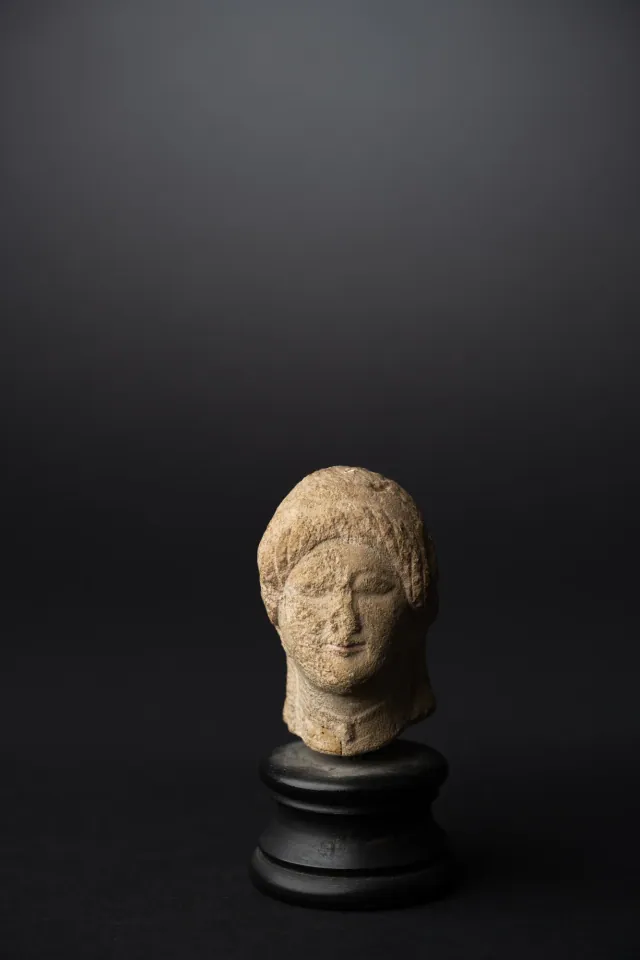
Limestone Head of a Votary with a Wreath
Figurine or sculpture
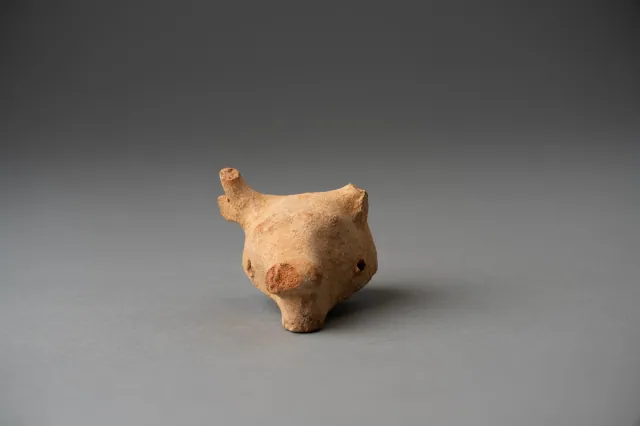
Head of a Terracotta Bull Figurine
Figurine or sculpture
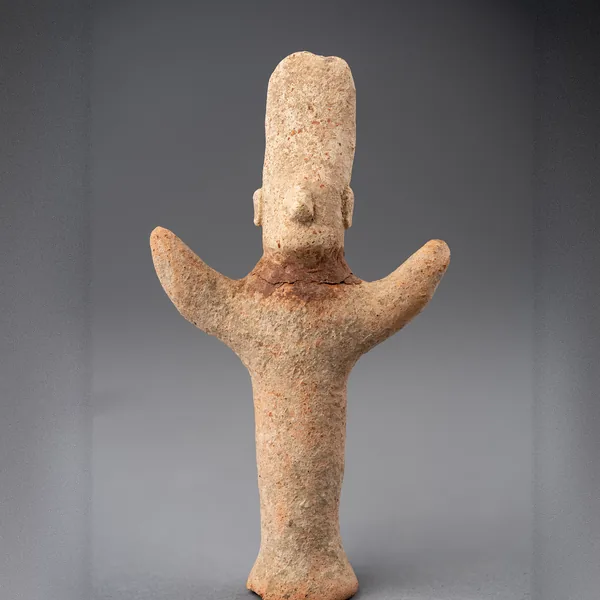
Terracotta Figure with Upraised Arms and Tall Cylindrical Headdress
Figurine or sculpture
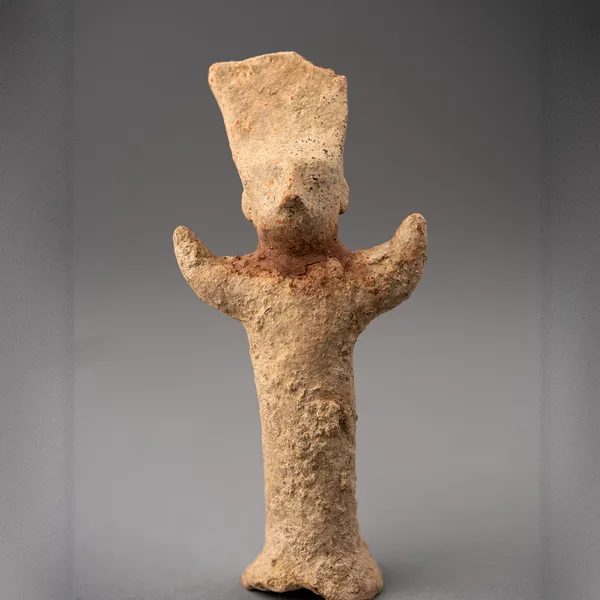
Terracotta Figure with Upraised Arms and Flaring Headdress
Figurine or sculpture
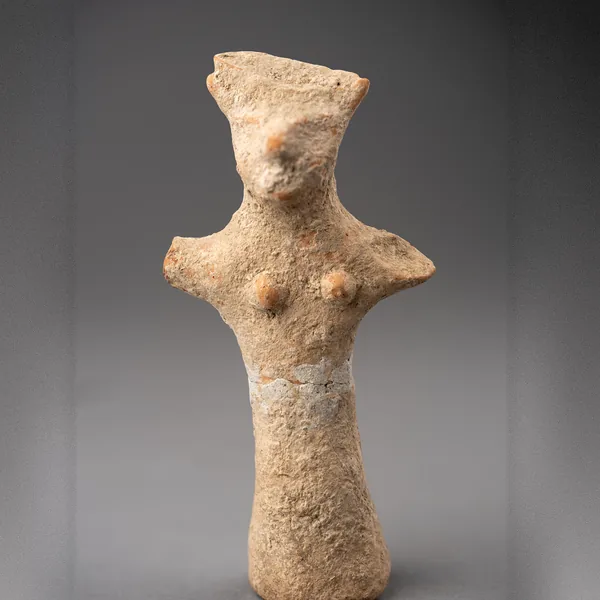
Terracotta Female Figure with Outstretched Arms
Figurine or sculpture
Background
Where to read more on this site before or after watching.
In the compendium
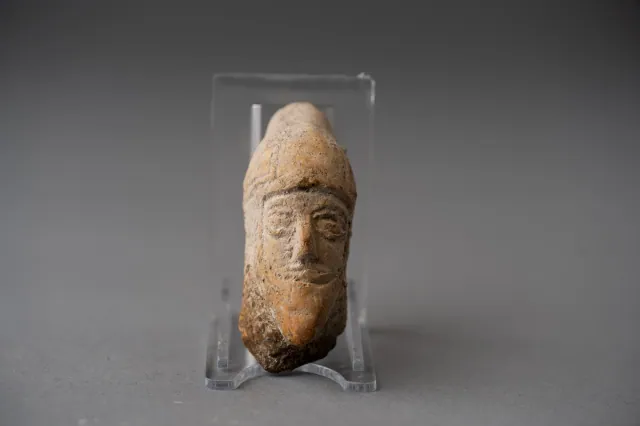
Archaic Limestone Statues
The limestone votive statues and statuettes dedicated in Cypriot sanctuaries of the Cypro-Archaic period, many in Egyptianizing dress.
In the compendium
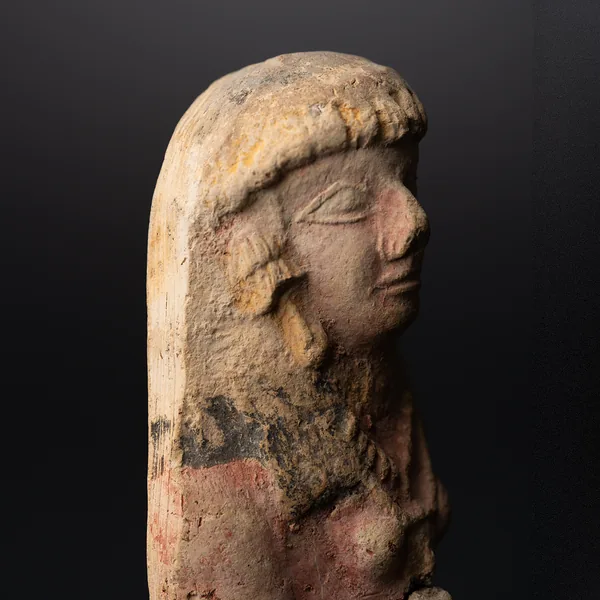
How Cypriot Figurines Are Classified
The overlapping systems that classify Cypriot figurines and statues, from Winkelmann's N and C numbers to Karageorghis's Coroplastic Art and Gjerstad's styles.
In the compendium
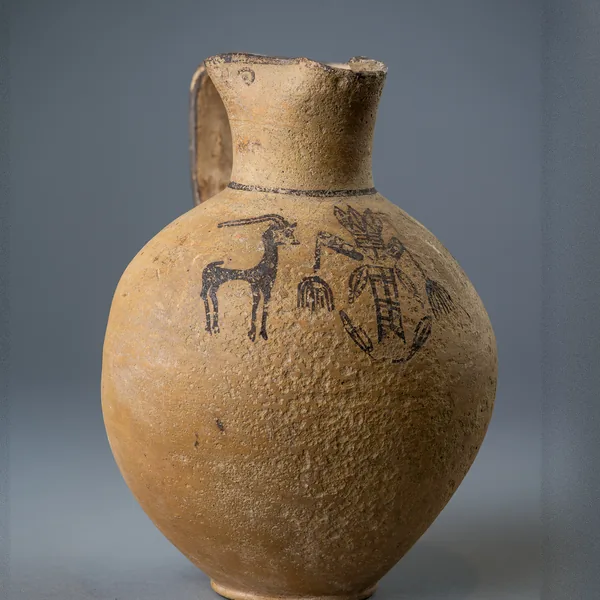
Egypt
Ancient Egypt, Cyprus's partner in copper, pottery and prestige goods from the Middle Kingdom to the Ptolemies, who annexed the island.
The period
Cypro-Archaic
The age of the Cypriot city-kingdoms, c. 750–475 BCE, under Assyrian, Egyptian and Persian overlordship, with rural sanctuaries and regional pottery styles.