
Video essay·Wanax TV·2026
Who Were the Teresh? (Sea Peoples and the Late Bronze Age Collapse)
Who were the Teresh? (Sea Peoples & Late Bronze Age Collapse)
This video covers more than Cyprus. The description below concentrates on its Cypriot parts, the first of which begins at 8:00.
Chapters
About the video
In this livestream episode from Wanax TV, the presenter examines the Teresh, one of the groups named in Egyptian records among the Sea Peoples during the Late Bronze Age collapse. The talk surveys the two coalitions that attacked Egypt under Merneptah around 1208 to 1207 BC and under Ramesses III around 1178 to 1175 BC, and then reviews hypotheses identifying the Teresh with the Trojans (linked to Hittite Taruisa) or with the Tyrsenians of Lemnos and Etruria.
Cyprus enters the discussion as the kingdom of Alashiya, described as a wealthy trading power destroyed during the early 12th-century BC campaigns attributed to the Sea Peoples. In the opening overview (from 0:04:01), the presenter notes that after Alashiya fell and did not recover, ten to twelve Greek city-kingdoms later rose on the island, including Paphos, Kition, and Salamis.
The main Cypriot section comes in the account of Ramesses III's reign (from 0:24:00), covering correspondence between Ugarit and Alashiya around 1180 to 1178 BC. Occupied with defending the island, Alashiya did not send forces to aid the Hittites or Ugarit. When Ugarit's ruler Ammurapi pleaded for help from Carchemish and Alashiya, a high official of Alashiya warned that Ugarit's own soldiers were joining raids against Ugarit, Alashiya, and the Hittites. Both Ugarit and Alashiya were destroyed shortly afterwards. Returning to the aftermath (at 0:28:00), the presenter states that Mycenaean Greek settlers replaced Alashiya and founded the Iron Age and Classical Greek Cypriot city-states, and later notes briefly (at 0:39:59) that Submycenaean pottery was produced on Cyprus alongside Philistia and Rhodes.
From our collection
Pieces in the Drakopoulos collection of the kinds and periods this talk covers: Late Cypriot (Late Bronze Age), Cypro-Geometric.
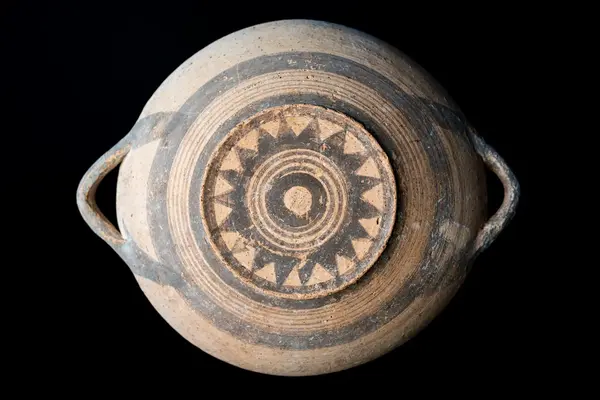
White Painted Plate with a Sawtooth Star on the Underside
Cypro-Geometric
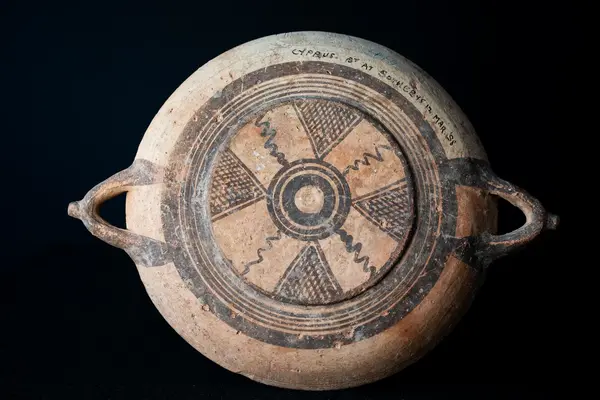
White Painted Plate with Latticed Triangles and Wavy Lines on the Underside
Cypro-Geometric
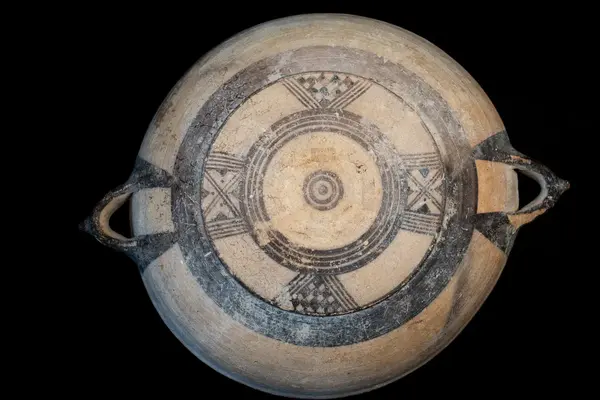
Large White Painted Plate with Knobbed Handles and a Four-Armed Cross on the Underside
Cypro-Geometric
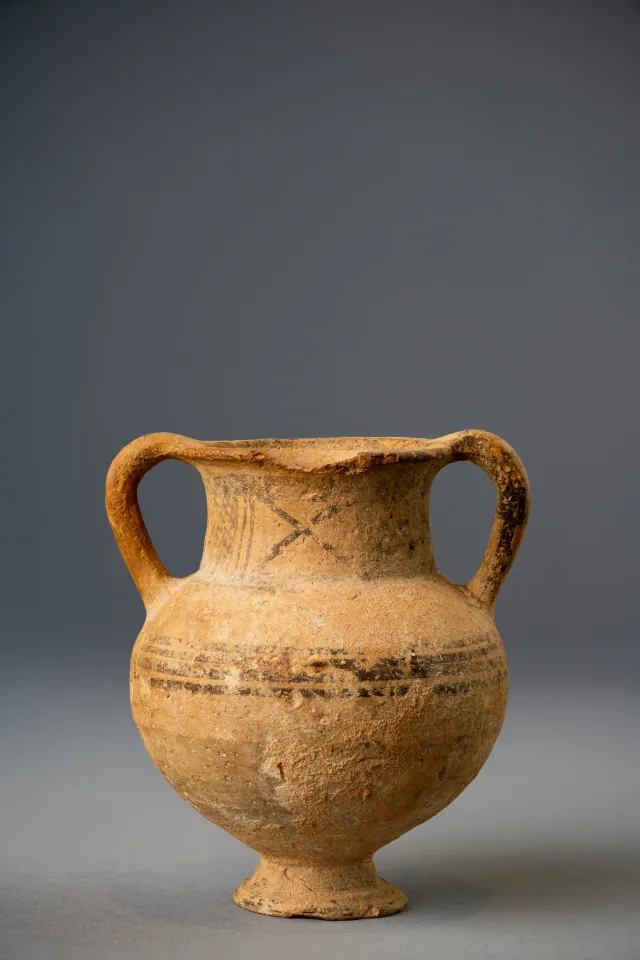
White Painted Amphoriskos on a Conical Foot
Cypro-Geometric
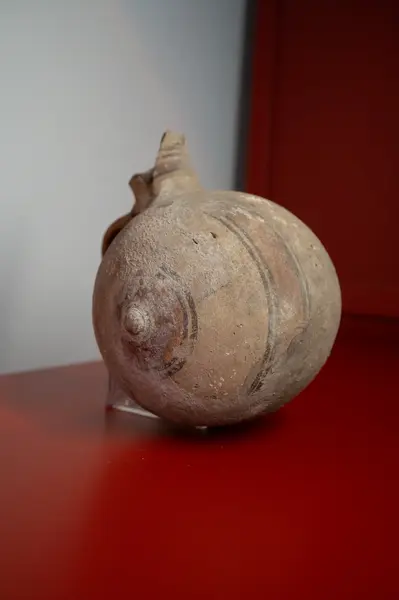
Bichrome Barrel Jug with Circled End-Knobs
Cypro-Geometric
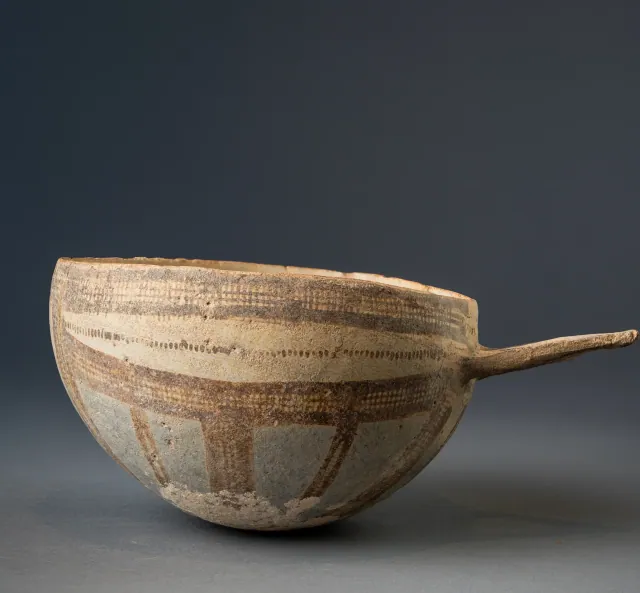
White Slip II Hemispherical Bowl with Wishbone Handle
Late Cypriot (Late Bronze Age)
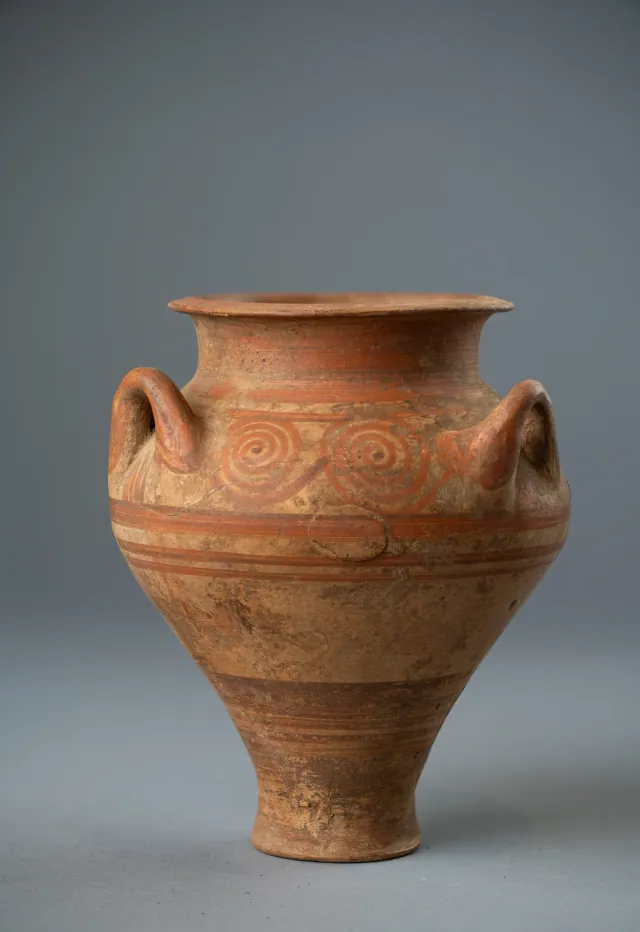
Cypriot Three-Handled Jar in the Mycenaean Style with Running Spirals
Late Cypriot (Late Bronze Age)
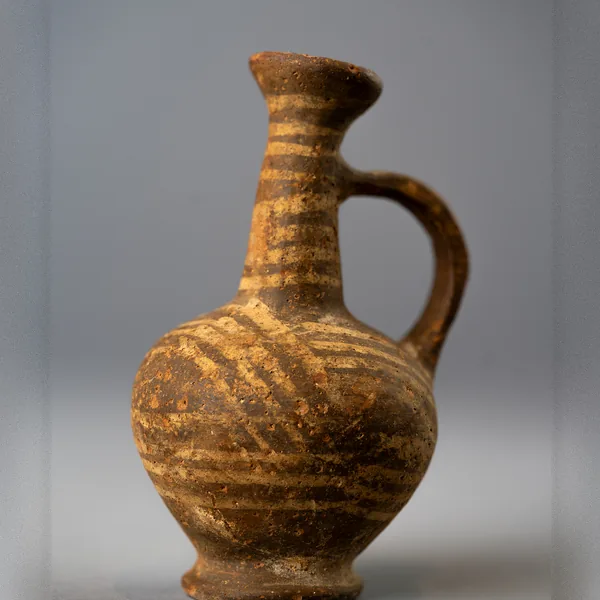
Base Ring II Bilbil Juglet with White-Painted Bands
Late Cypriot (Late Bronze Age)
Background
Where to read more on this site before or after watching.
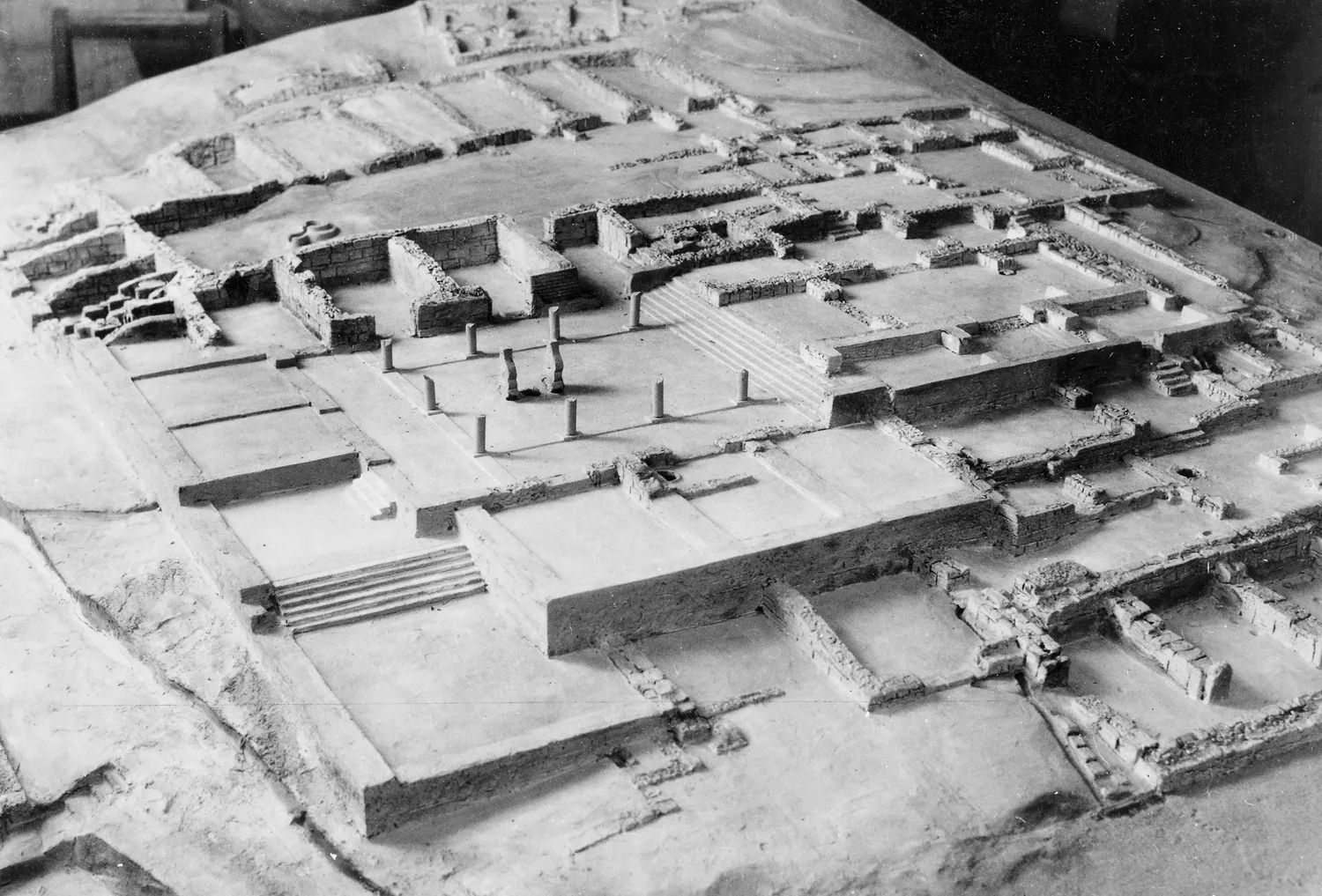
In the compendium
Iron Age Cities and Palaces
The capitals of the Iron Age kingdoms of Cyprus, their palaces at Vouni, Amathus, Idalion and Palaepaphos, their houses, and the volute and Hathor capitals of the period.
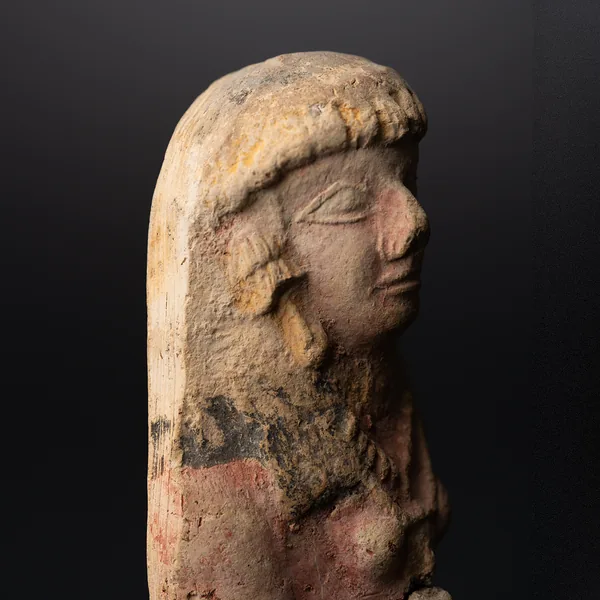
In the compendium
Egypt
Ancient Egypt, Cyprus's partner in copper, pottery and prestige goods from the Middle Kingdom to the Ptolemies, who annexed the island.
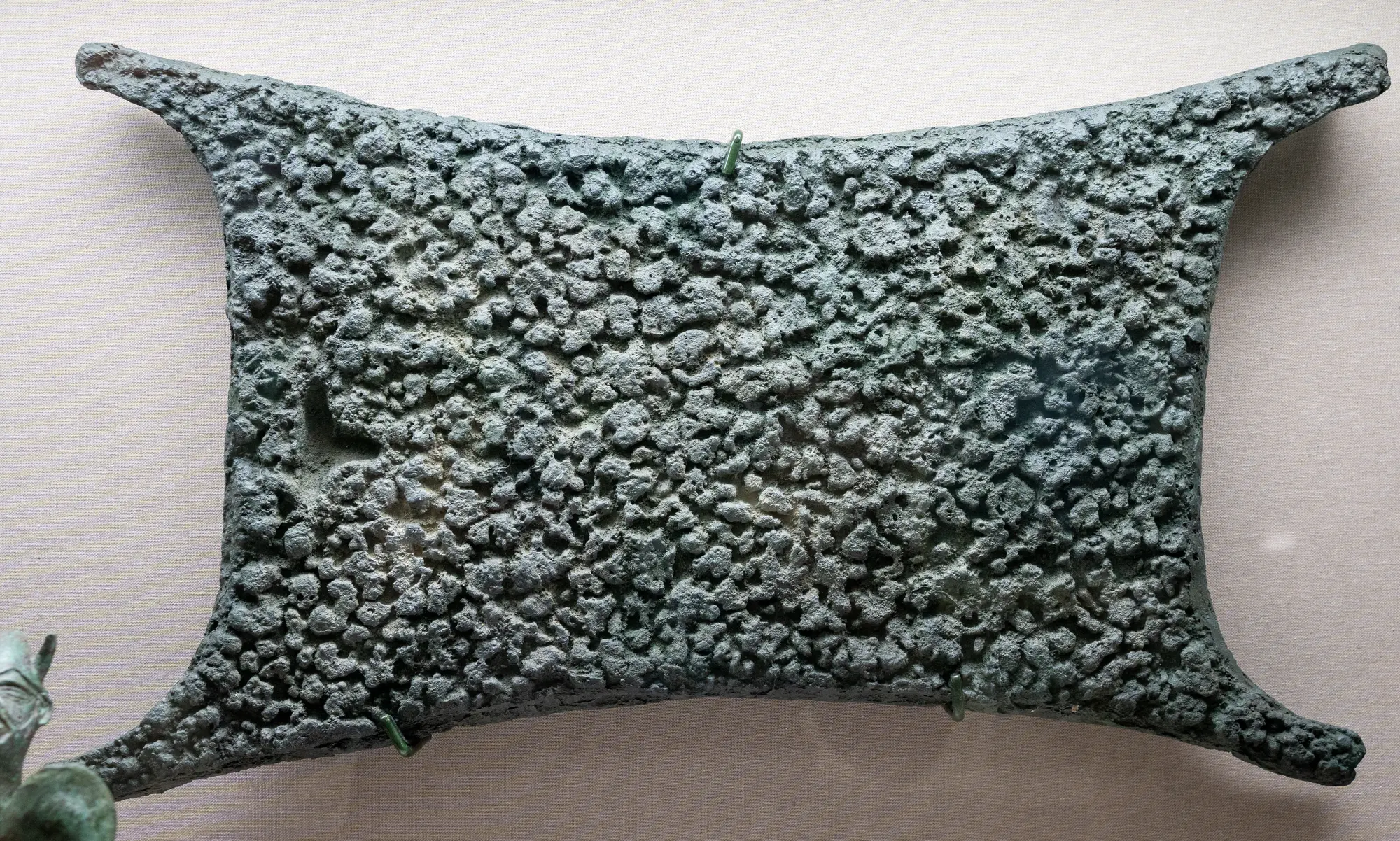
In the compendium
Hittite Empire and Cyprus
The Late Bronze Age Anatolian empire that claimed Alashiya as a tributary but left almost no material trace on Cyprus.

The period
Late Bronze Age
The Late Cypriot period, c. 1650–1050 BCE, when copper exports made Cyprus an urban, literate trading power before the crisis around 1200 BCE.