
Documentary·CAARI Cyprus·2020
Women Potters of Cyprus
Chapters
About the video
Filmed in 1986 with a follow-up study in 1999 and 2000, this ethnoarchaeological documentary by Gloria London records the last generation of traditional female potters in southern Cyprus. London opens with historical accounts of rural pottery production by Giovanni Mariti in 1769, John Thomson in 1878, Emile Deschamps in 1898, and Joan du Plat Taylor in the late 1920s. Between 1986 and 1999, the number of active potters across four villages dropped from nearly twenty-five to ten, with all remaining practitioners over fifty-five years old.
The film compares the pottery cooperative established in the early 1950s in the foothills village of Kornos with private potters working at home in Kornos and the Troodos mountain villages of Kaminaria, Ayios Dhimitrios, and Phini. At the cooperative, clay is excavated mechanically and processed with an electric pulverizer and pug mill. Private potters and their husbands dig clay manually, pounding and crushing it with a bent branch and mixing it with water using a wooden shovel. Using slow-moving wooden turntables rotated by hand or foot, the potters coil-build jugs, juglets, jars, ovens, and flowerpots in an interrupted sequence that allows the wet clay to dry between stages.
London demonstrates how regional and individual styles can be distinguished through tools and manufacturing sequences. Lowland Kornos potters use square turntable heads, support wet vessel walls with string, and apply rouletted or combed decoration before attaching handles, which smudges the pattern. Mountain potters use circular turntable heads, wrap vessels in cloth, and apply incised stippled patterns only after the handles are in place. To build heavy ovens and large jars that cannot be lifted back onto the turntable, potters walk backwards around the stationary vessels while adding coils. After drying further, all vessels are inverted so their thick bases can be scraped thin and rounded with an iron strip.
The final part of the documentary follows kiln loading and firing. Kornos kilns have permanent domed roofs, whereas mountain kilns are top-loading with temporary covers of wood, bark, tiles, and metal. Firing 100 to 400 vessels at a time over several hours, the potters achieve a loss rate of only three percent across forty recorded firings. By 1999, individual decorative variation in Kornos had largely disappeared as cooperative members adopted uniform combed bands, selling their wares primarily to Cypriot buyers for gardens and traditional cooking.
From our collection
Pieces in the Drakopoulos collection of the kinds and periods this talk covers: Vessel.
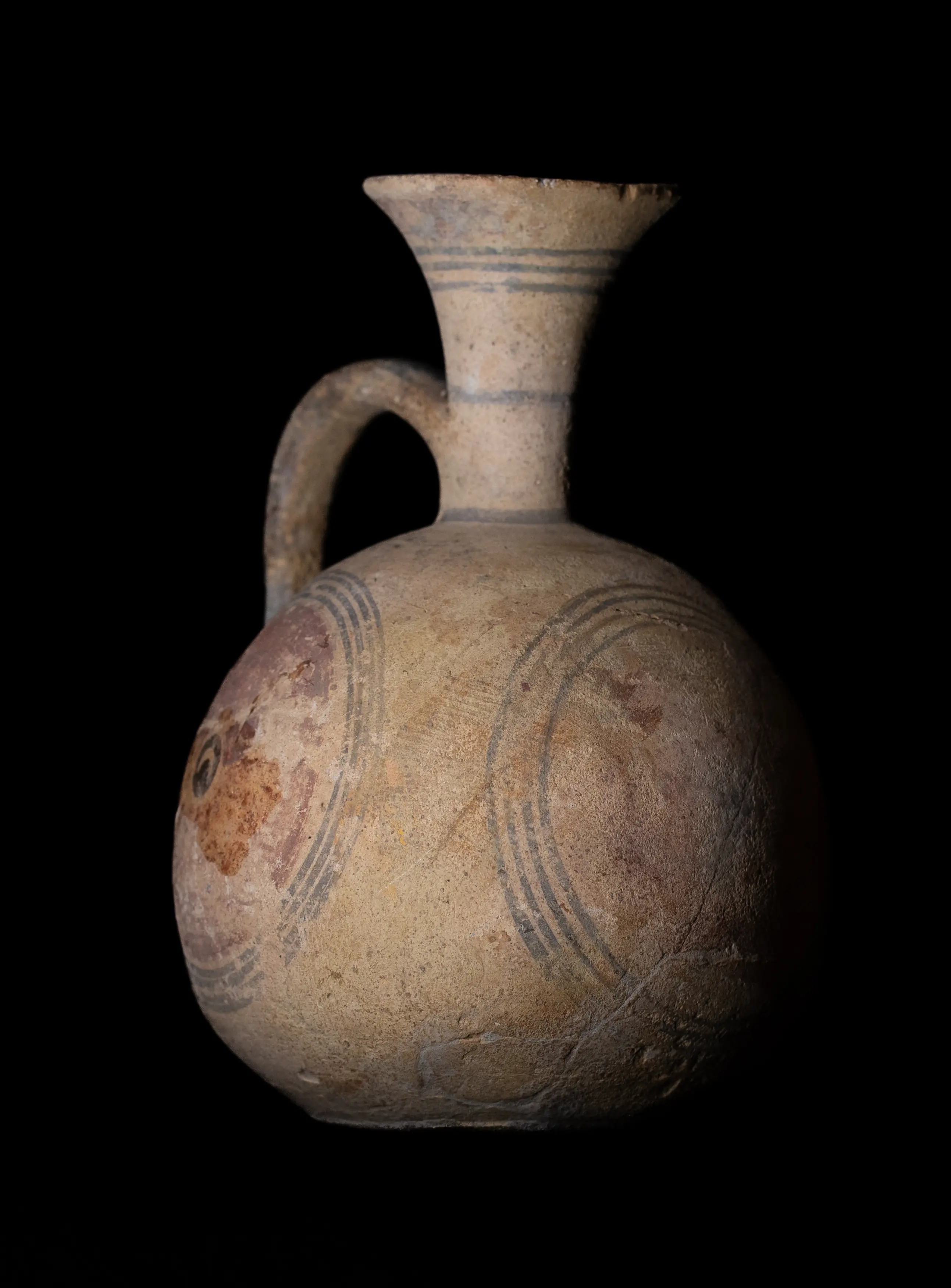
Bichrome Juglet
Vessel
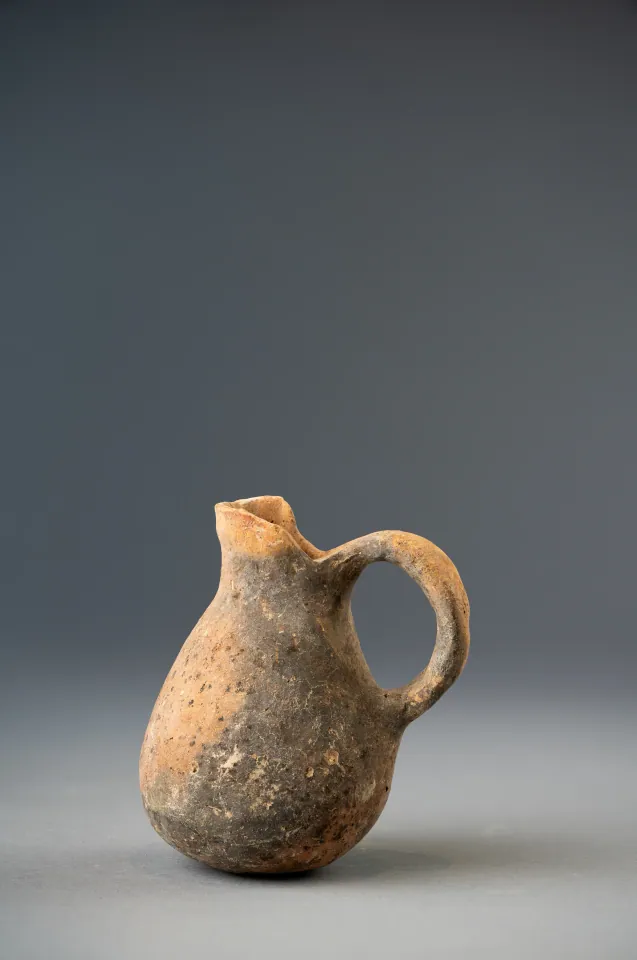
Plain Handmade Bronze Age Juglet
Vessel
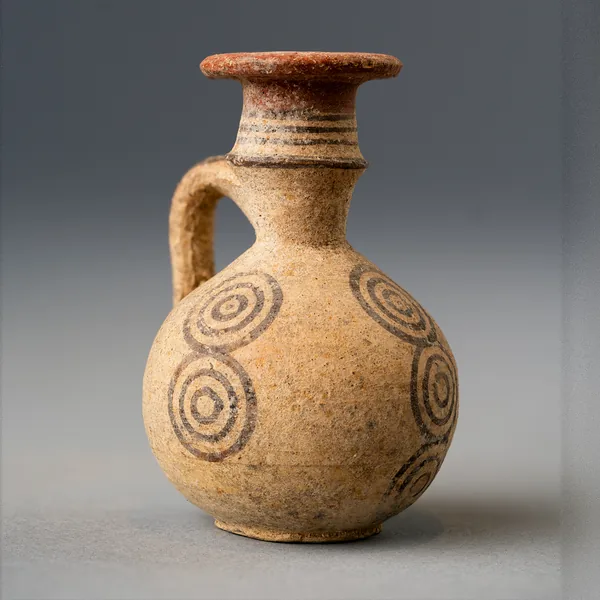
Bichrome IV Handle-Ridge Juglet with Rows of Concentric Circles
Vessel
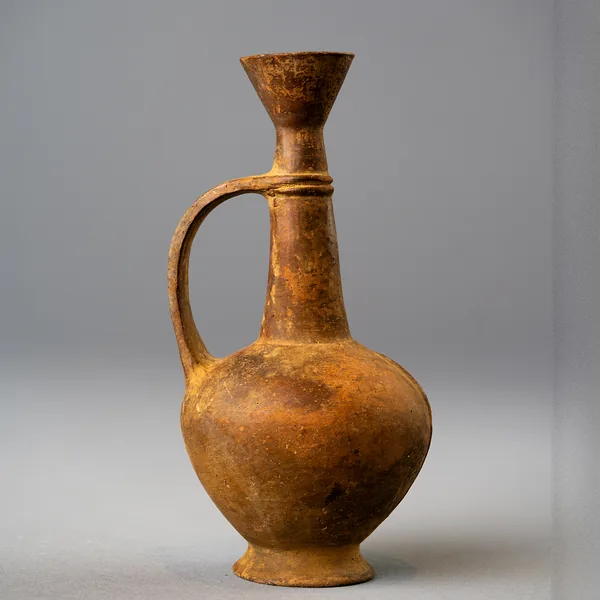
Base Ring Bilbil Juglet with Funnel Mouth and Neck Ridge
Vessel
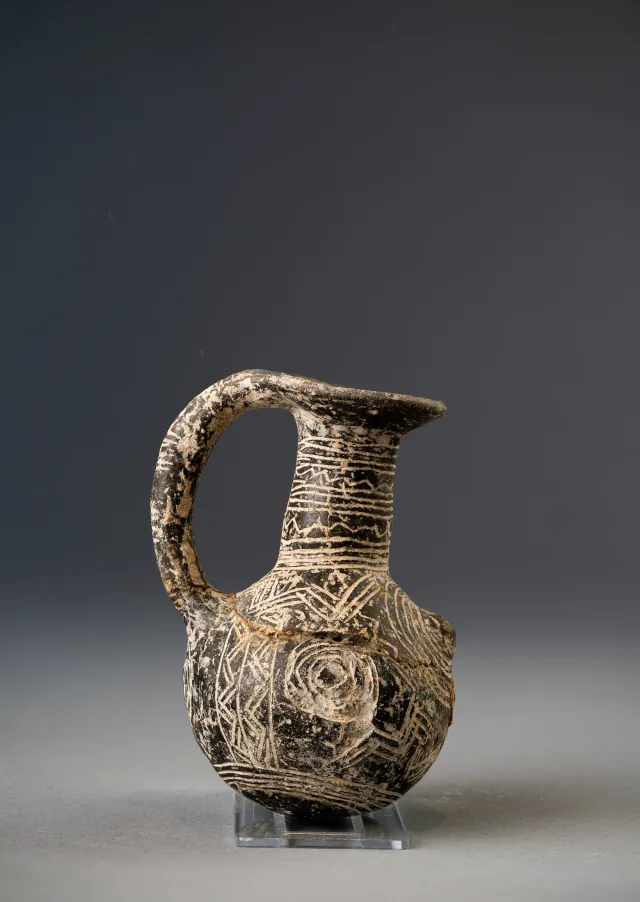
Black Polished Juglet with Incised Decoration and Circled Bosses
Vessel
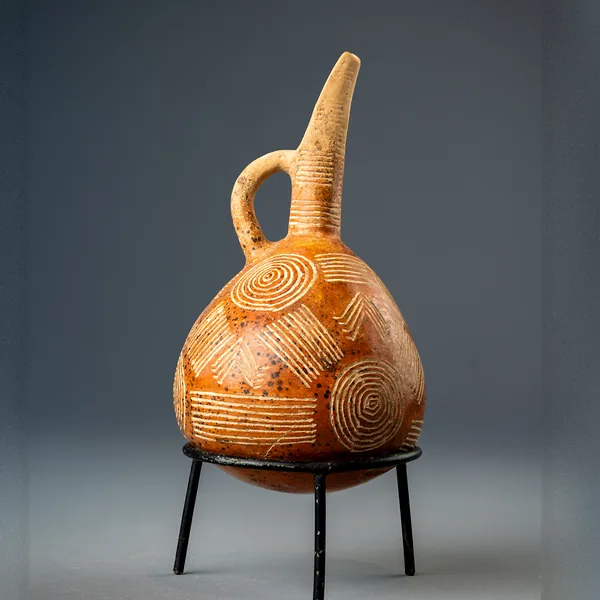
Red Polished Beak-Spouted Juglet with Incised Circles
Vessel
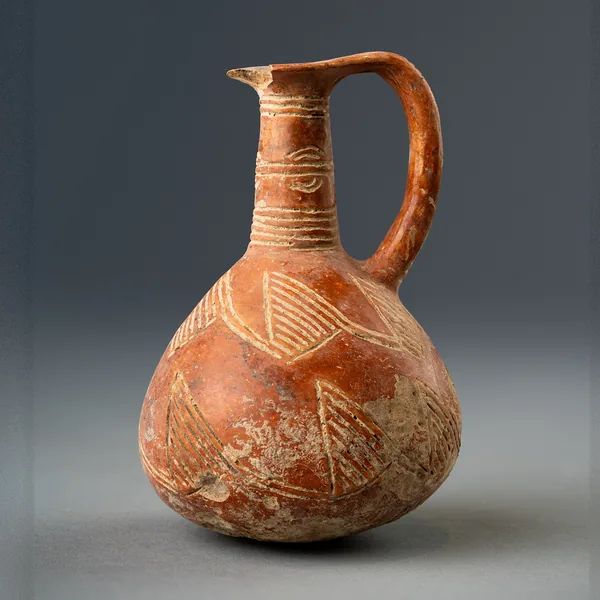
Red Polished Juglet with Hatched Triangles
Vessel
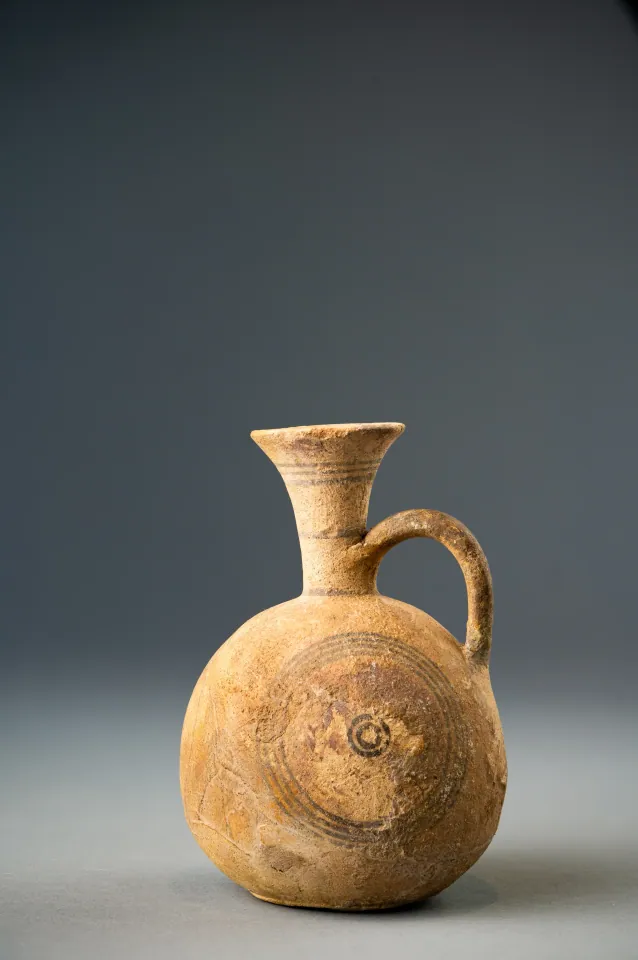
White Painted Juglet with Funnel Mouth and Side Circles
Vessel
Background
Where to read more on this site before or after watching.
In the compendium
Jars and Pithoi
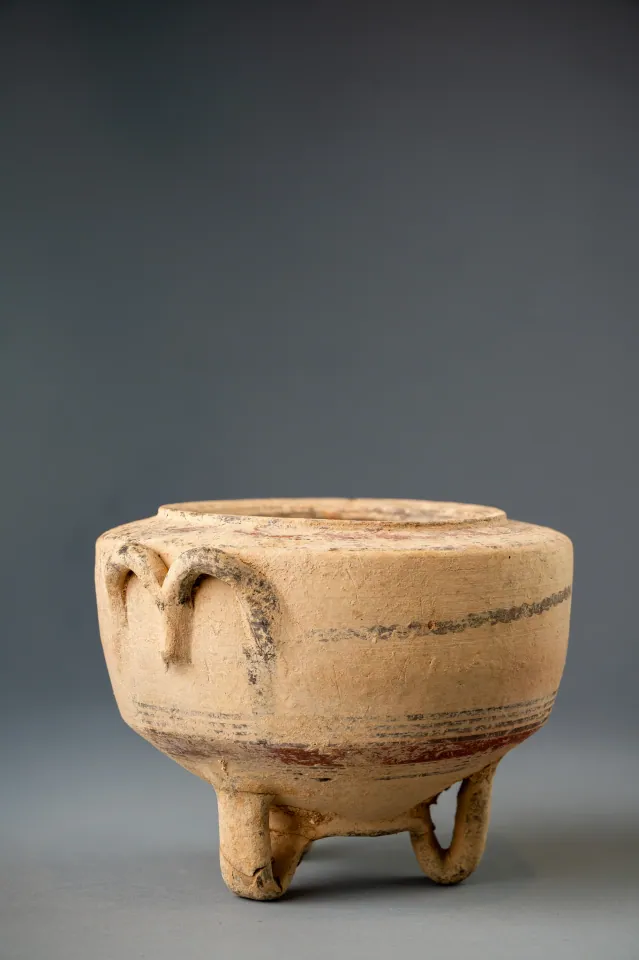
A symmetrical wide-necked vessel, the family of Cypriot storage and transport jars, pithoi and painted jars, including the amphora.
In the compendium
Jugs and Juglets
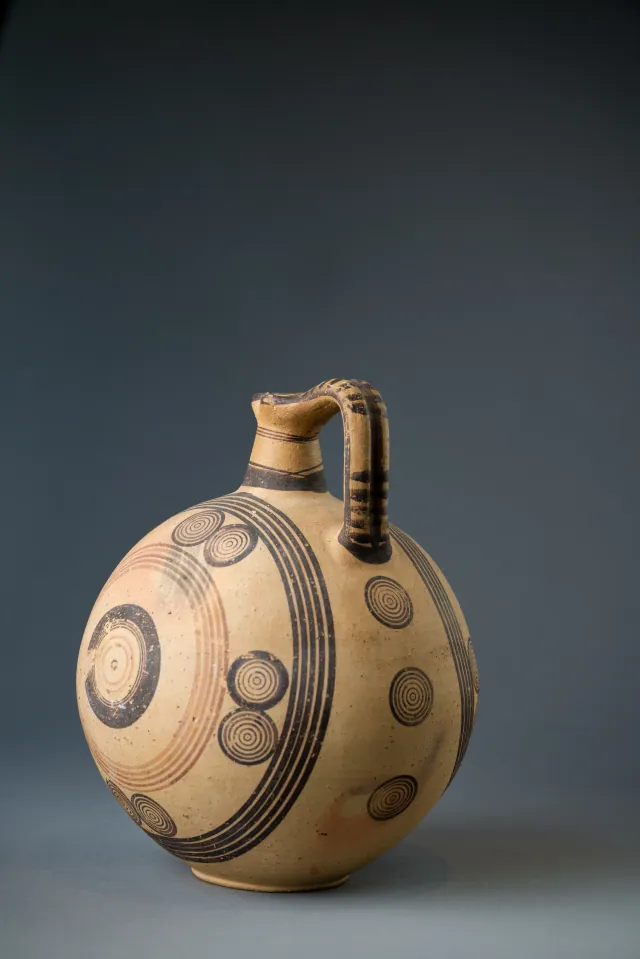
A one-handled vessel with a neck, the commonest closed shape in Cypriot pottery, made from the start of the Bronze Age to the Cypro-Classical period.
In the compendium
Juglets
A juglet is a small one-handled jug with a narrow neck, made in Cyprus in most wares and widely exported as a container for perfumed oil.
Map of Cyprus
Places discussed in the talk
- Ground above 200, 500, 1,000 m
Places
- 1Kornos (approx.)
- 2Ayios Dhimitrios