
Lecture·Archaeological Research Unit - University of Cyprus·2019
Reaching to the Core: An In-Depth Analysis of Core-Formed Glass
Artemios Oikonomou
A guest lecture in the University of Cyprus series on a subject outside Cyprus.
Chapters
About the lecture
Artemios Oikonomou of the Cyprus Institute presents an archaeometric study of Mediterranean core-formed glass vessels of the first millennium BC, drawing on postdoctoral research at the University of Nottingham. He opens with the history of glassmaking from third-millennium BC plant-ash glass to first-millennium BC natron glass and the Roman model of primary tank furnaces in Egypt and the Levant.
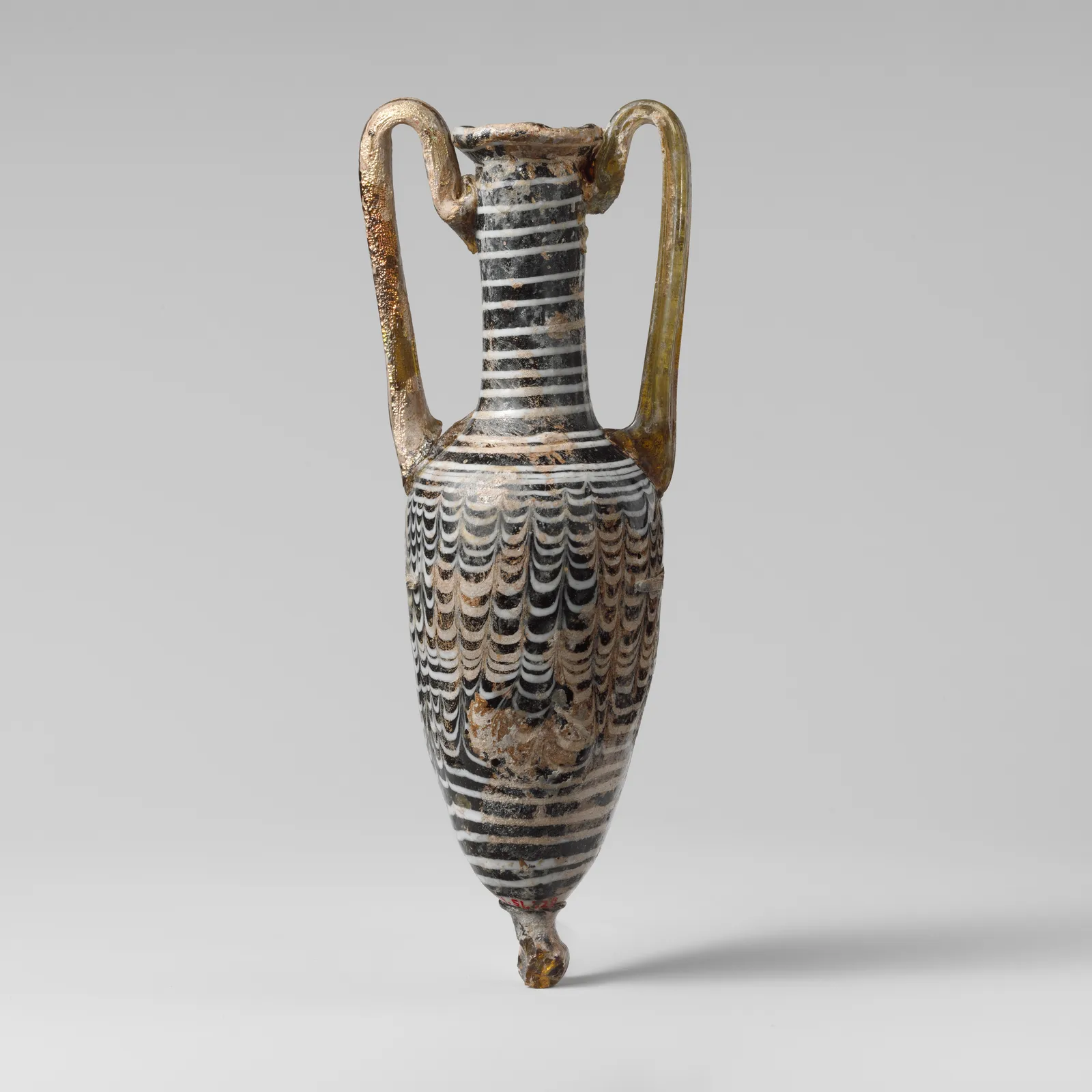
After explaining how core-formed vessels for scented oils and cosmetics were shaped around a soil and dung core on a metal rod and decorated with trailed glass, Oikonomou outlines the three chronological groups of first-millennium BC Mediterranean bottles, whose forms imitate Greek alabastra, amphoriskoi, oinochoai, aryballoi and unguentaria: Group I (late sixth to early fourth century BC), Group II (mid-fourth to late third century BC) and Group III (mid-second century BC to early first century AD), for which Cyprus and the Syro-Palestinian coast have been proposed as production areas.
Two case studies use scanning electron microscopy and LA-ICP-MS to determine the technology and provenance of Hellenistic vessels. Analysis of 53 Group II fragments and three beads from a votive deposit at Satricum in Latium distinguishes three groups made with one natron source: Satricum A, probably imported from Egypt; Satricum B, matching Italian sand compositions and earlier glass from Spina, Bologna and Sicily, and coloured in a second stage with cobalt; and Satricum C, chemically close to Rhodian samples. A second study of 40 Late Hellenistic Group II and III fragments from Dodona, Kassope, Amvrakia, Elea, Gitana and Dymokastron in Epirus shows that they cluster with the Italian and Egyptian groups at Satricum rather than earlier Macedonian and Rhodian glass. The discussion afterwards addresses lead-antimony colourants, Phoenician and Cypriot glass, and Roman glassblowing.
From our collection
Pieces in the Drakopoulos collection of the kinds and periods this talk covers: Bottle.
The Drakopoulos collection →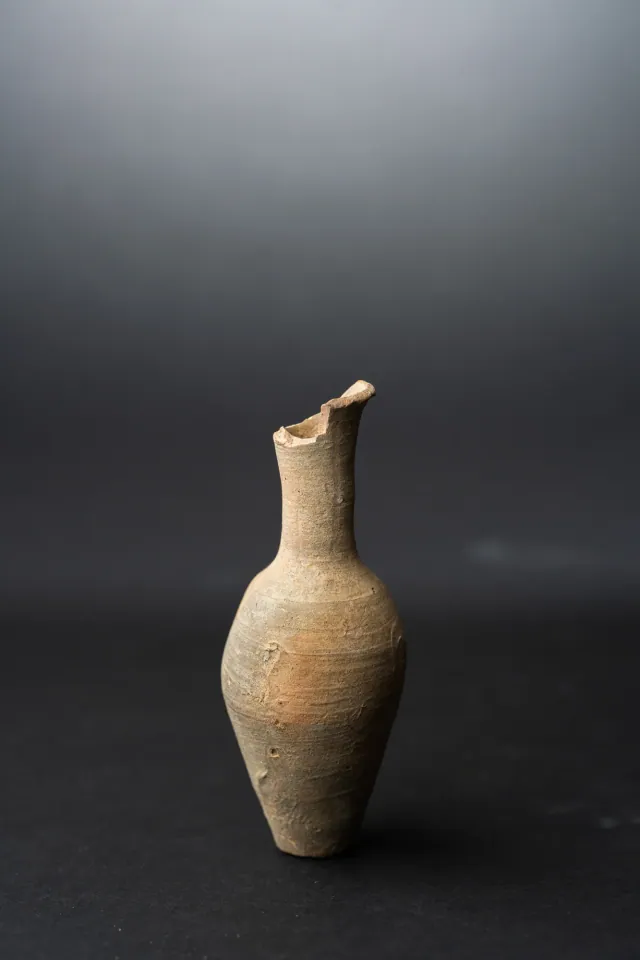
Background
Where to read more on this site before or after watching.
In the compendium
Glass in Ancient Cyprus
Glass vessels found on Cyprus from the Late Bronze Age to the Roman period, mostly from tombs, with local workshops argued but never excavated.
In the compendium
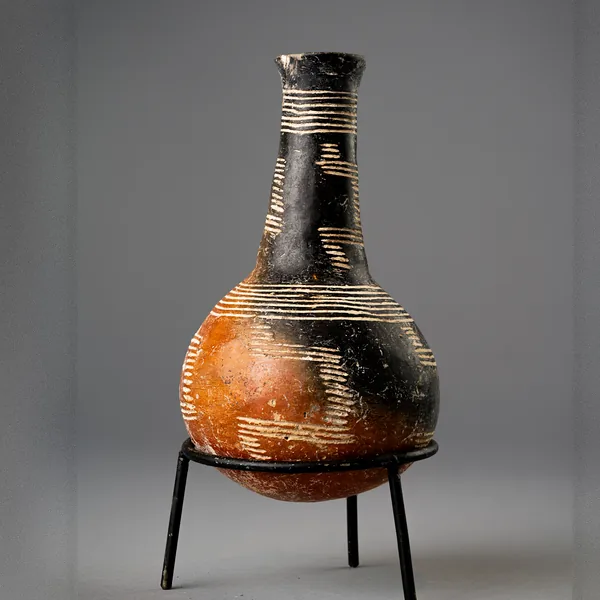
Bottles
A narrow-necked closed vessel with no handle or with two, made in Cyprus from the Early Bronze Age to the Hellenistic period, mostly as a small container for liquids.
In the compendium
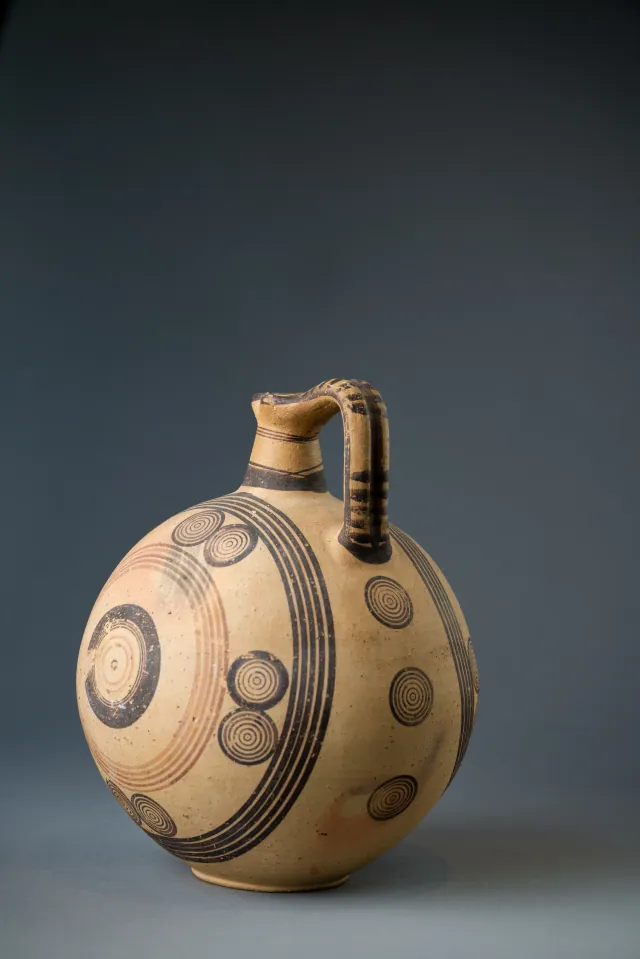
Jugs and Juglets
A one-handled vessel with a neck, the commonest closed shape in Cypriot pottery, made from the start of the Bronze Age to the Cypro-Classical period.
The period
Hellenistic
The Ptolemaic period in Cyprus, c. 310–31 BCE, when the city-kingdoms were abolished and the island was governed as one province from Nea Paphos.