
Lecture·Archaeological Research Unit - University of Cyprus·2017
King Solomon's Mines? New Discoveries from Timna Valley, Israel
Erez Ben-Yosef
A guest lecture in the University of Cyprus series on a subject outside Cyprus.
Chapters
About the lecture
Erez Ben-Yosef of Tel Aviv University presents results from the Central Timna Valley Project, begun in 2012 in the southern Arabah Valley of Israel, following an introduction noting his collaboration on the Cyprus Archaeomagnetic Project at Skouriotissa.
Ben-Yosef reviews the research history of the Arabah copper deposits at Timna and Faynan. In 1934 Nelson Glueck dated the smelting camps to the 10th century BCE and linked them to King Solomon, whereas Beno Rothenberg, after excavating an Egyptian shrine of Hathor with 19th and 20th Dynasty inscriptions at Timna in 1969, redated the smelting enterprise to New Kingdom Egypt. New radiocarbon and archaeomagnetic dates from Site 30 and Site 34 (Slaves' Hill) show that while production began under Egyptian oversight in the 13th century BCE, peak production occurred between the 11th and 9th centuries BCE, with Slaves' Hill active in the 10th century BCE.
At Slaves' Hill, excavations of the slag mounds and gatehouse yielded uncharred organic remains: donkey stables with dung containing Mediterranean grape pips and hay pollen, date seeds, grains, bones of sheep, goat and Mediterranean fish, and dyed wool and linen textiles. Charcoal analysis indicates depletion of local acacia and white broom fuel until smelting ceased in the 9th century BCE. Ben-Yosef argues that skilled metalworkers held high status within a semi-nomadic early Edomite kingdom.
In the discussion, Ben-Yosef notes that Cypriot dominance in copper metallurgy during the Middle Bronze Age and the Late Bronze Age coincided with a hiatus in the Arabah; after Late Bronze Age trade collapsed, Arabah copper reached Olympia and Delphi in the 10th and 9th centuries BCE alongside continued 10th-century smelting at Skouriotissa.
From our collection
Pieces in the Drakopoulos collection of the kinds and periods this talk covers: Middle Cypriot (Middle Bronze Age), Late Cypriot (Late Bronze Age).
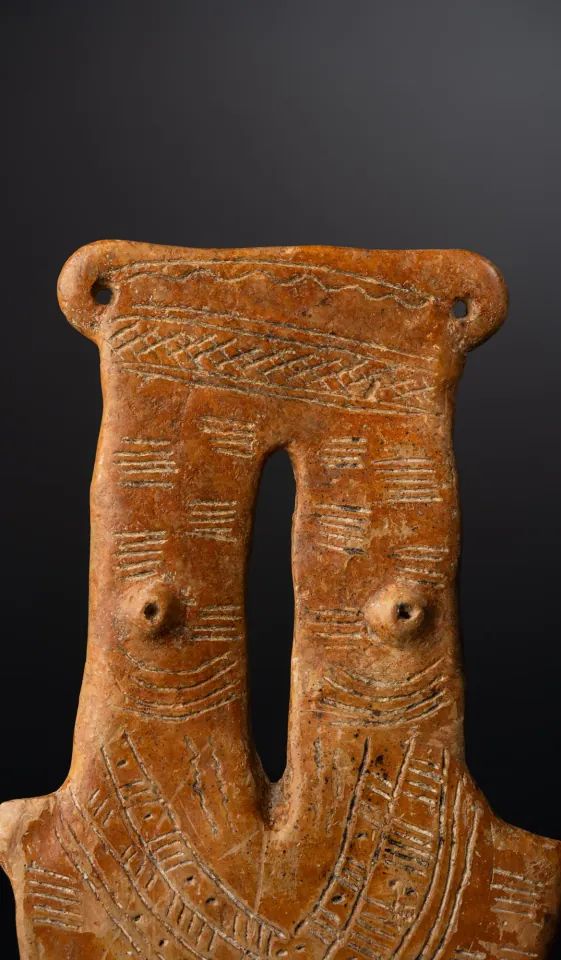
Red Polished Two-Necked Plank Figure
Middle Cypriot (Middle Bronze Age)
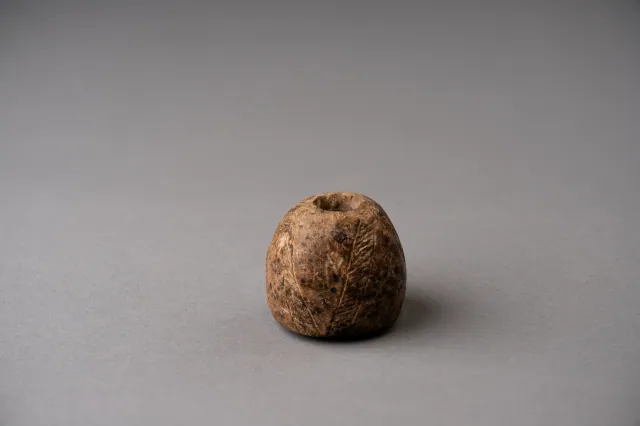
Spindle Whorl with Incised Herringbone Bands
Middle Cypriot (Middle Bronze Age)
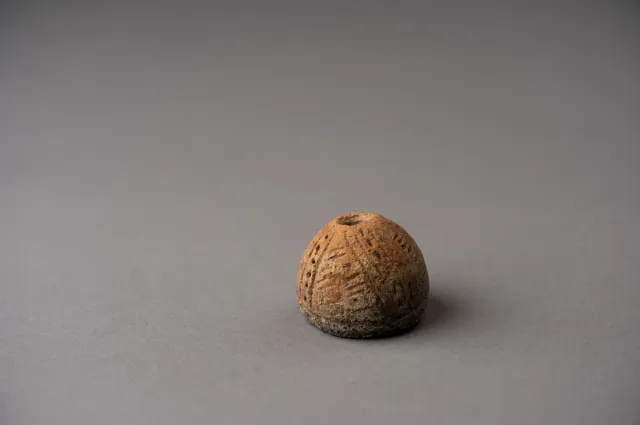
Red Polished Spindle Whorl with Incised Lattice and Dotted Bands
Middle Cypriot (Middle Bronze Age)
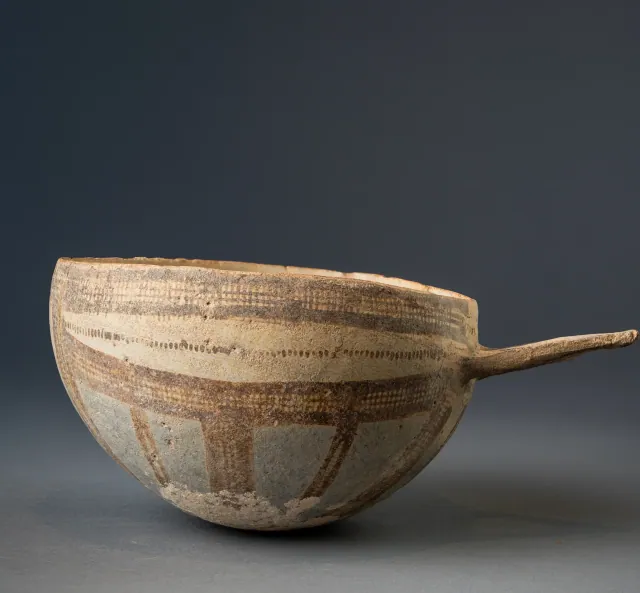
White Slip II Hemispherical Bowl with Wishbone Handle
Late Cypriot (Late Bronze Age)
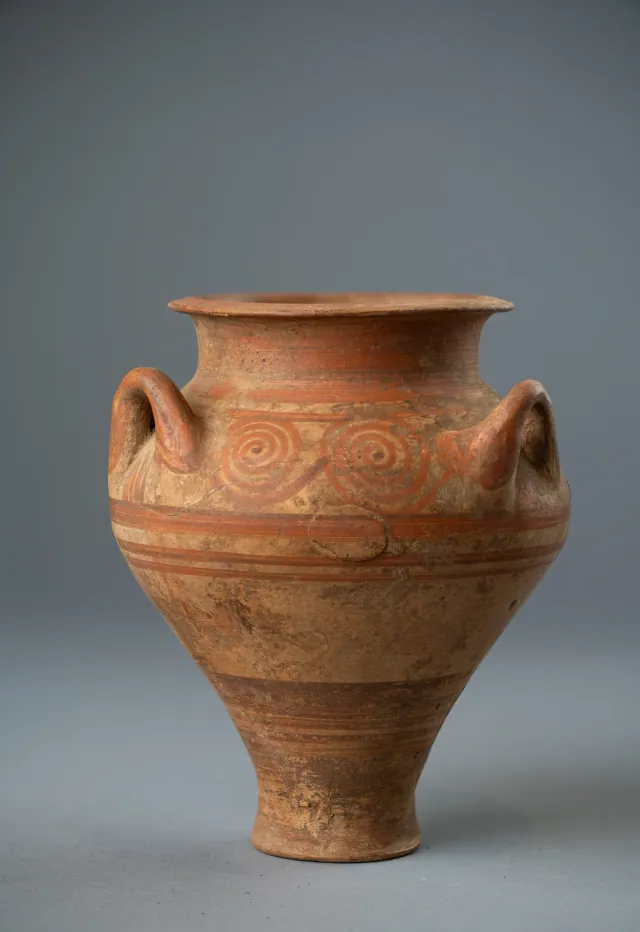
Cypriot Three-Handled Jar in the Mycenaean Style with Running Spirals
Late Cypriot (Late Bronze Age)
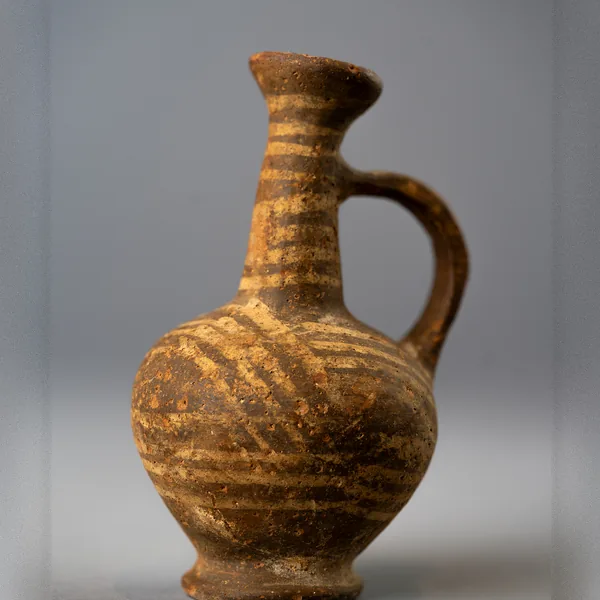
Base Ring II Bilbil Juglet with White-Painted Bands
Late Cypriot (Late Bronze Age)
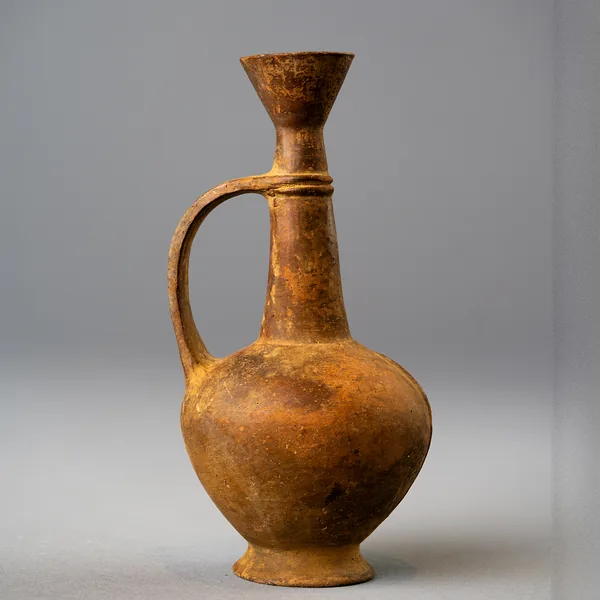
Base Ring Bilbil Juglet with Funnel Mouth and Neck Ridge
Late Cypriot (Late Bronze Age)
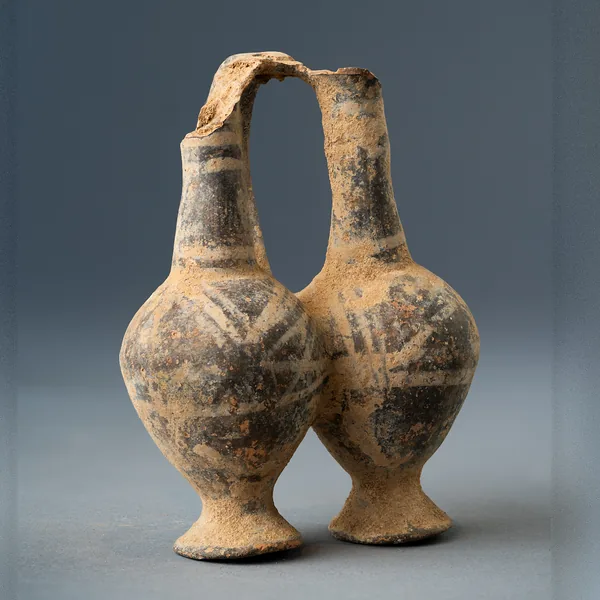
Base Ring II Double Juglet with White-Painted Decoration
Late Cypriot (Late Bronze Age)
Background
Where to read more on this site before or after watching.
In the compendium
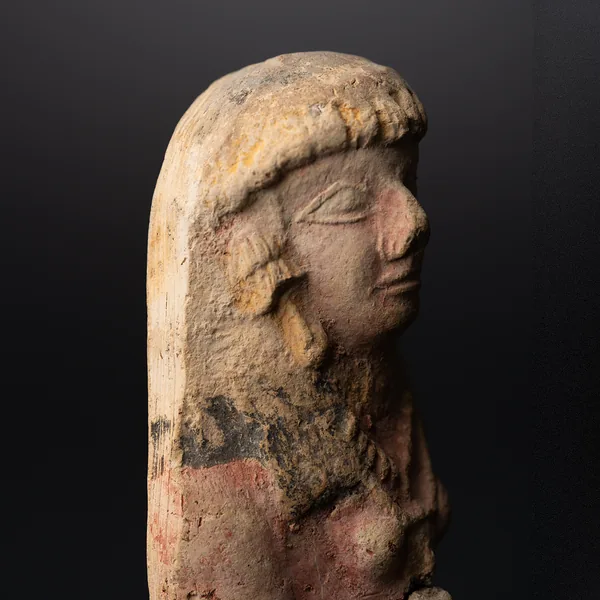
Egypt
Ancient Egypt, Cyprus's partner in copper, pottery and prestige goods from the Middle Kingdom to the Ptolemies, who annexed the island.
In the compendium
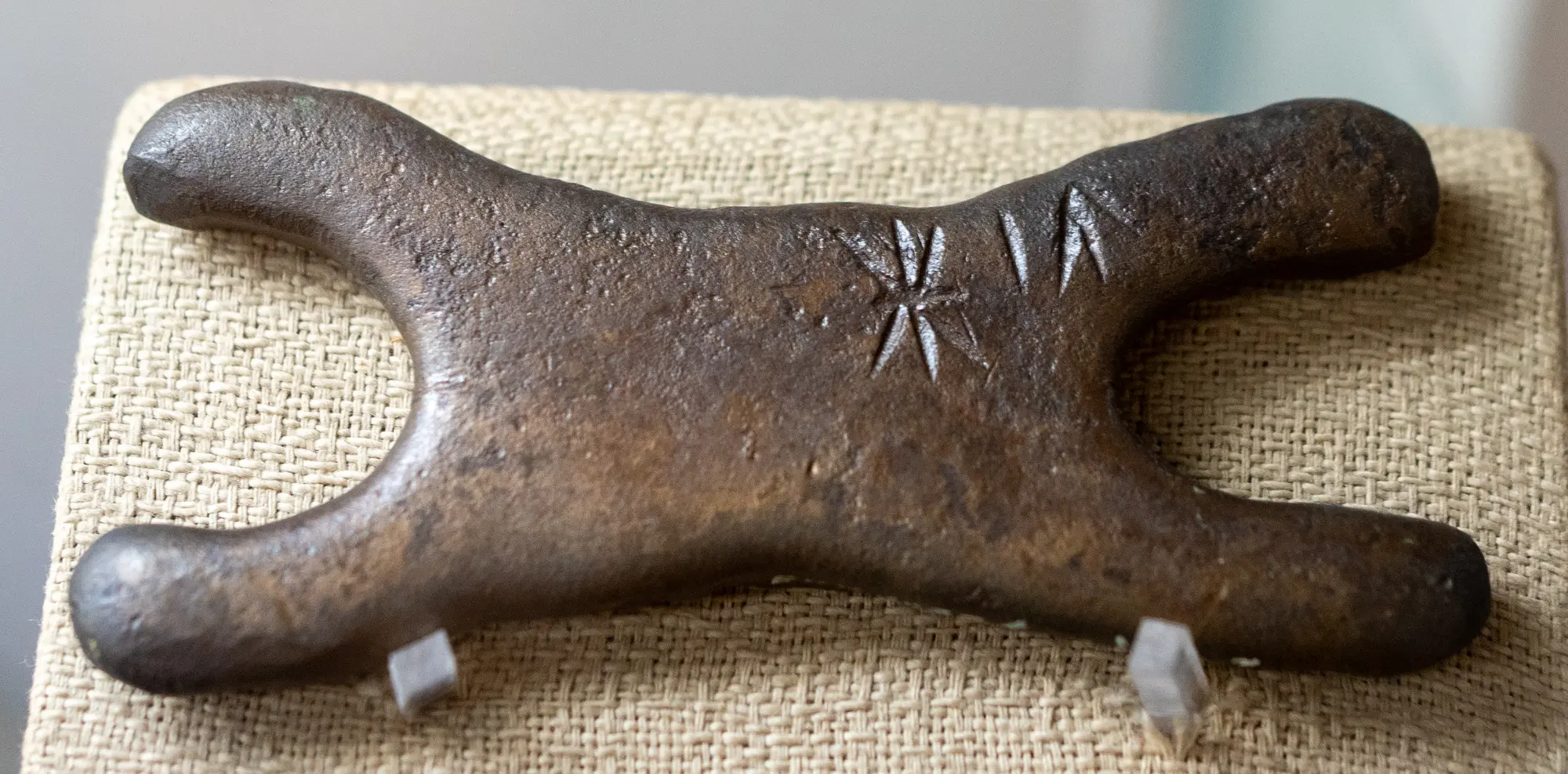
Copper Metallurgy in Ancient Cyprus
The mining, smelting and casting of the Troodos sulphide ores, from hammered Chalcolithic native copper to Late Bronze Age oxhide ingots and Archaic slag heaps.
In the compendium
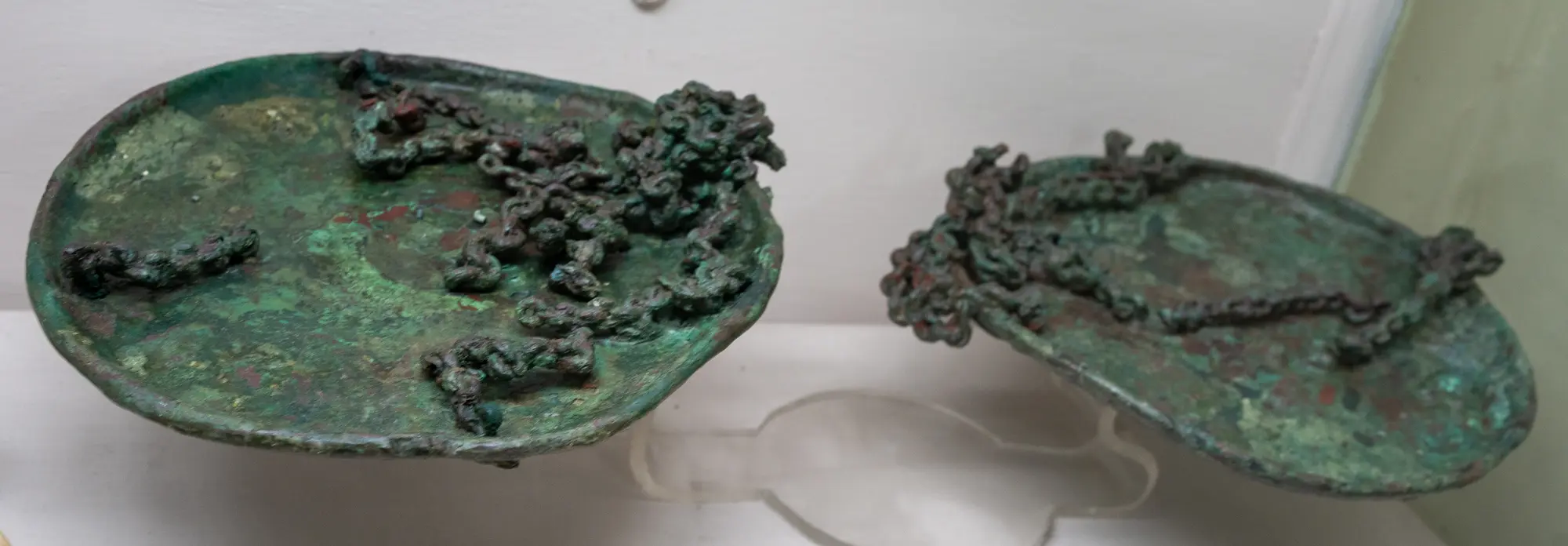
Weights and Ingots
Copper ingots, miniature votive ingots, balance weights and scale pans in Cyprus, from the Late Bronze Age into the Cypro-Geometric and Cypro-Archaic periods.
The period
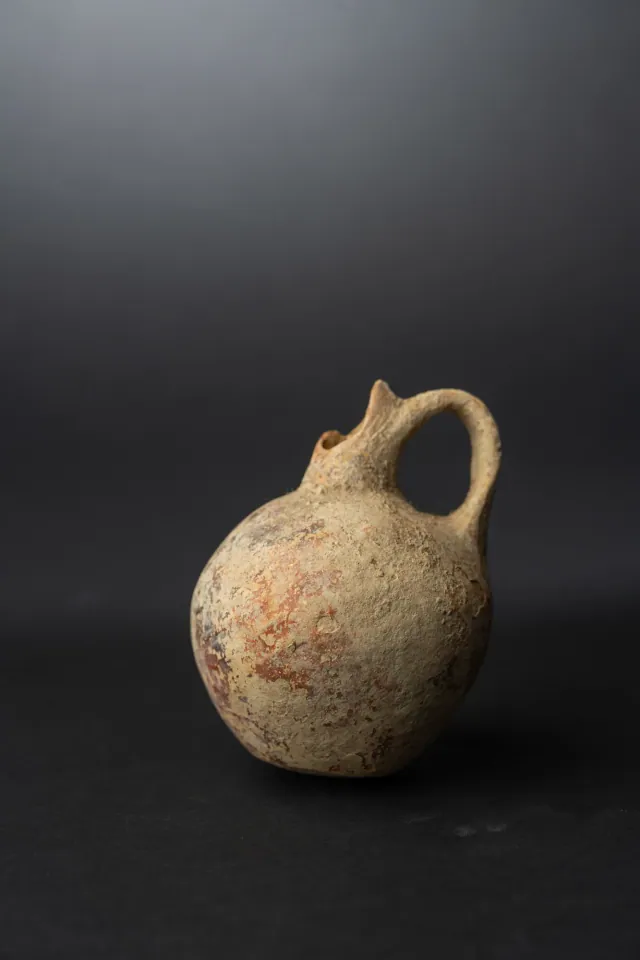
Middle Bronze Age
The Middle Cypriot period, c. 1950–1650 BCE, of multi-roomed village houses, White Painted pottery, growing copper production and the first overseas trade.