
Workshop·CAARI Cyprus·2026
Halloumi and the Archaeology of Cheesemaking
Chapters
About the video
Delivered as the introductory lecture to a practical demonstration at the CraftCY Workshop, this talk examines the chemistry and history of halloumi alongside the archaeological methods used to identify milk exploitation and cheesemaking in antiquity.
The speaker begins with the basic principles of turning milk into cheese through coagulation, using either animal rennet from the abomasum of a young ruminant or plant-based coagulants such as thistles and artichokes to separate solid curd from liquid whey. In Cypriot tradition, heating the leftover whey produces anari, while halloumi is distinguished from most other cheeses because the pressed curd is cooked a second time. Converting milk into cheese extends its shelf life and separates out the lactose, an important factor given ancient DNA research by Evershed and colleagues showing that prehistoric populations were largely lactose intolerant well into the Bronze Age.
Turning to the global origins of dairying, the talk reviews Andrew Sherratt's secondary products revolution hypothesis, which placed systematic milk use in the fourth and third millennia BC, alongside Peter Bogucki's argument that dairy processing began with the earliest Neolithic domesticates. Examples of preserved ancient cheese include Early Bronze Age kefir cheese from China and late second-millennium BC cheese from a tomb at Memphis in Egypt, while Iron Age foodways are attested by cheese graters from Lefkandi. For Cyprus itself, prehistoric ceramic vessels from the Early Bronze Age and Iron Age have been proposed as cheese tools, though none have yet been confirmed by residue analysis. Drawing on the historical synthesis of Euphrosyne Rizopoulou-Egoumenidou, the speaker traces written testimonies of Cypriot cheese from Lucian in the Roman period and Agios Neophytos in the twelfth century to the first appearance of the term halloumi in mid-sixteenth-century texts and the monastic cheese economy of the eighteenth century.
The lecture then surveys how archaeologists detect ancient dairying: faunal mortality profiles in the Balkans, ceramic sieves from Central Europe and the Harappan world, Indo-European linguistic reconstructions of words for rennet and curdling, and third-millennium Mesopotamian administrative archives from Ur, Umma, and Girsu. Direct biomolecular proof comes from lipid residue analysis of pottery from northwest Anatolia and sixth-millennium Poland, and more recently from palaeoproteomics, such as work by Miranda Evans that distinguishes curds from whey through casein and beta-lactoglobulin proteins in vessels from Poland and Çatalhöyük.
The talk concludes with the speaker's own ethnoarchaeological study of his grandparents, Kyriakos and Panayiota, who established a family herd and halloumi workshop in Cyprus in the 1970s. Recording their four-hour production sequence shows how cheesemaking fits into a diversified household economy, allowing other domestic tasks during waiting periods and relying on village social networks rather than formal markets for distribution.
From our collection
Pieces in the Drakopoulos collection of the kinds and periods this talk covers: Neolithic, Early Cypriot (Early Bronze Age).
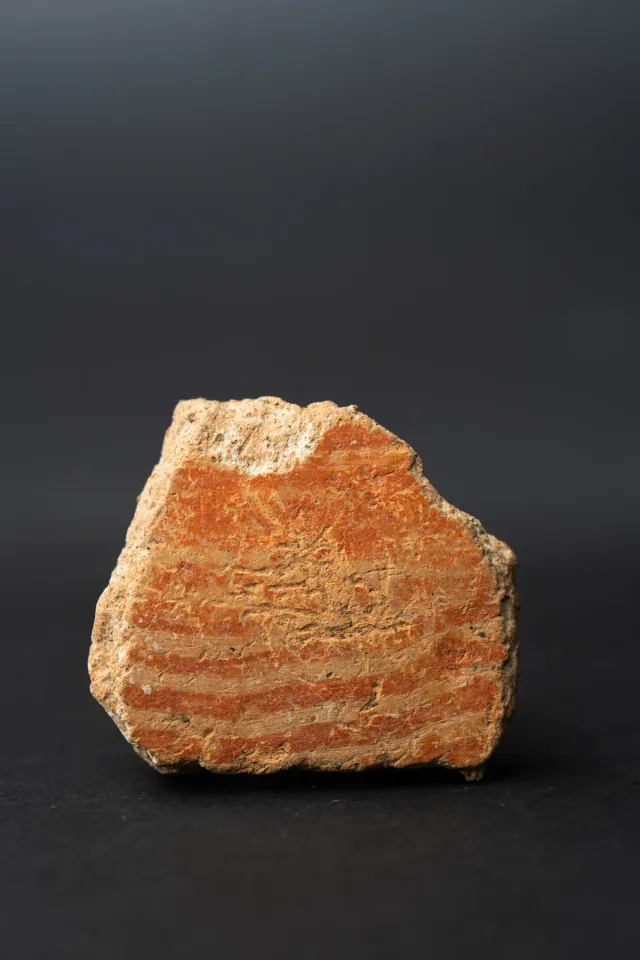
Combed Ware Bowl Fragment with Parallel Bands
Neolithic
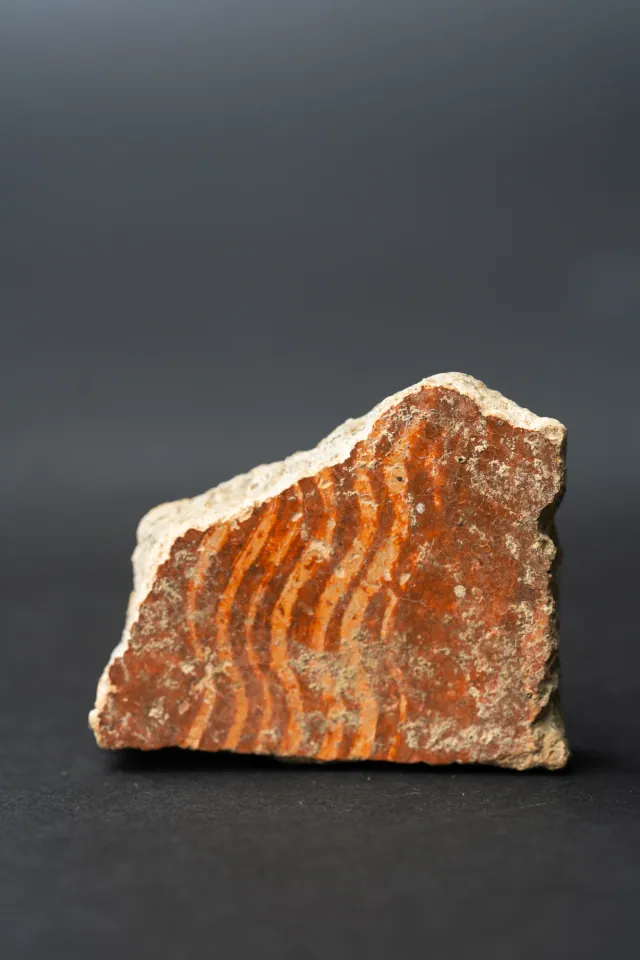
Combed Ware Bowl Fragment with Multiple Wavy Bands
Neolithic
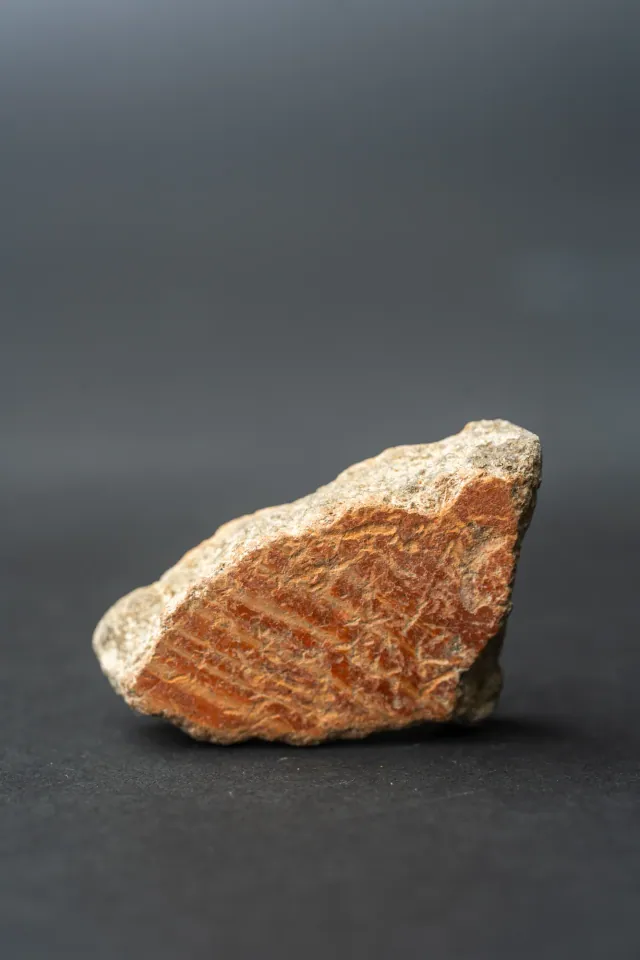
Combed Ware Bowl Fragment with Oblique Bands
Neolithic
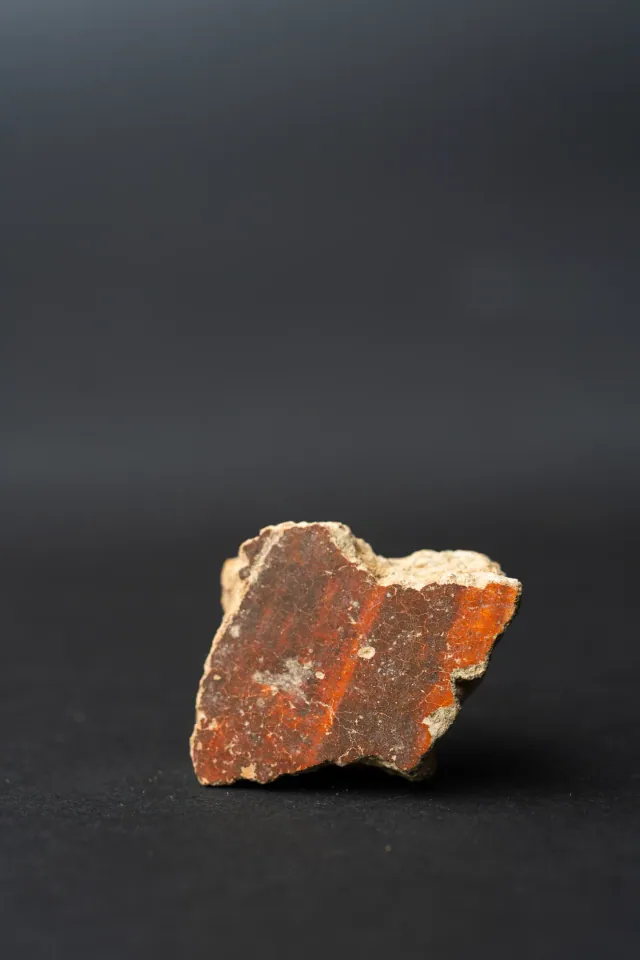
Red Lustrous Ware Body Sherd with Fire-Mottled Slip
Neolithic
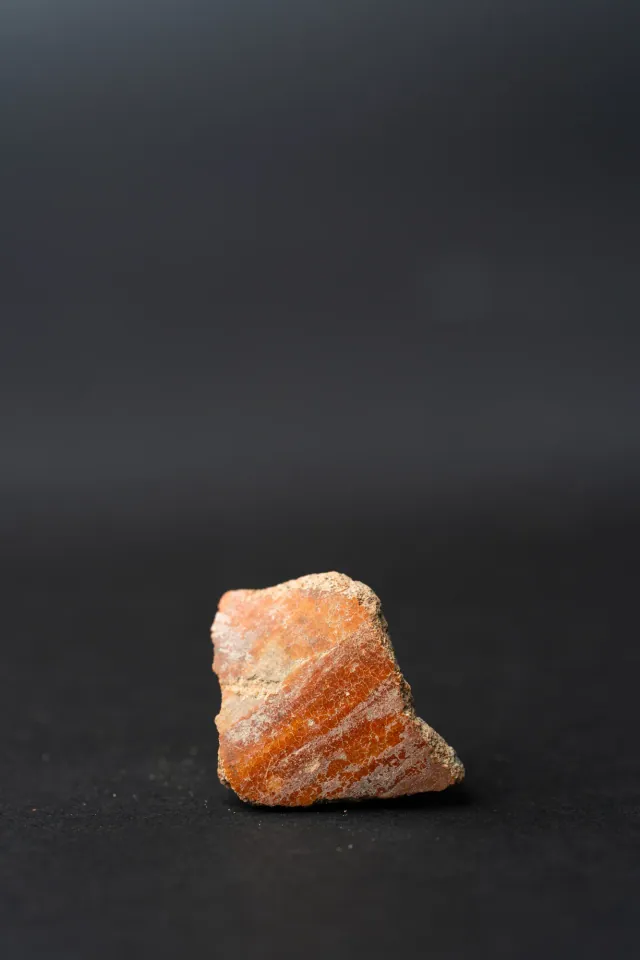
Red Slip Ware Body Sherd with Streaked Slip
Neolithic
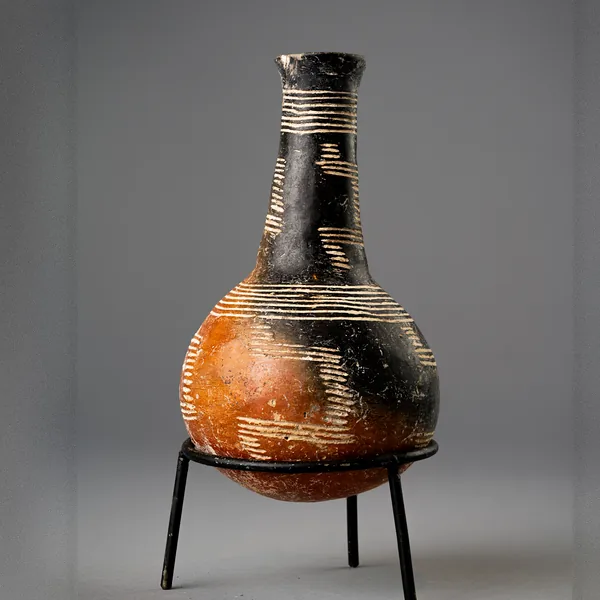
Red Polished Black-Topped Bottle with Stepped Incised Bands
Early Cypriot (Early Bronze Age)
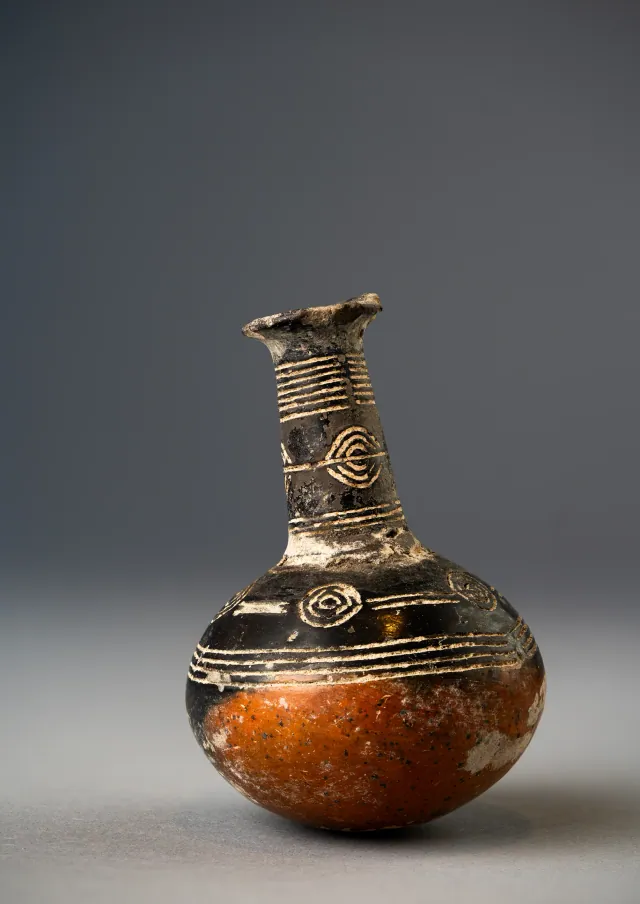
Red Polished Black-Topped Bottle with Incised Concentric Circles
Early Cypriot (Early Bronze Age)
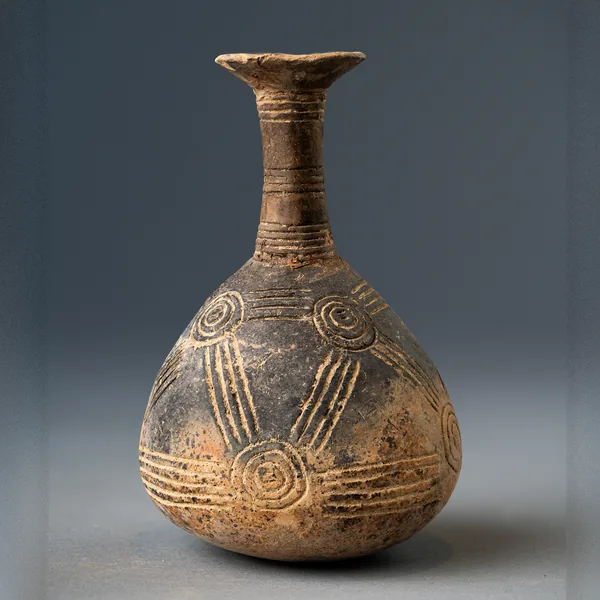
Red Polished Bottle with Linked Concentric Circles
Early Cypriot (Early Bronze Age)
Background
Where to read more on this site before or after watching.
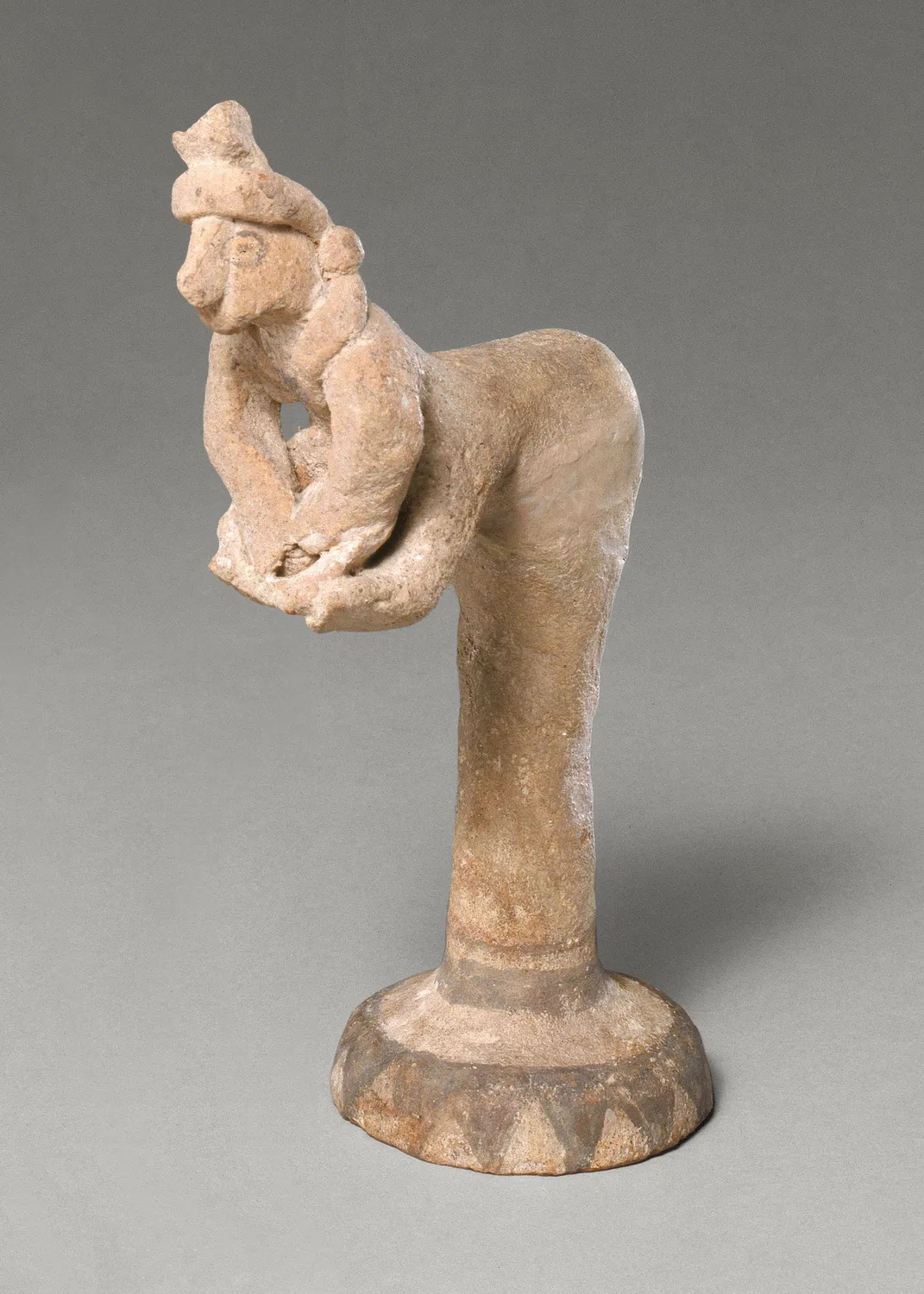
In the compendium
Food and Diet in Ancient Cyprus
What Cypriots grew, herded, hunted, cooked and drank from the first Neolithic villages to the end of the Cypro-Archaic period.
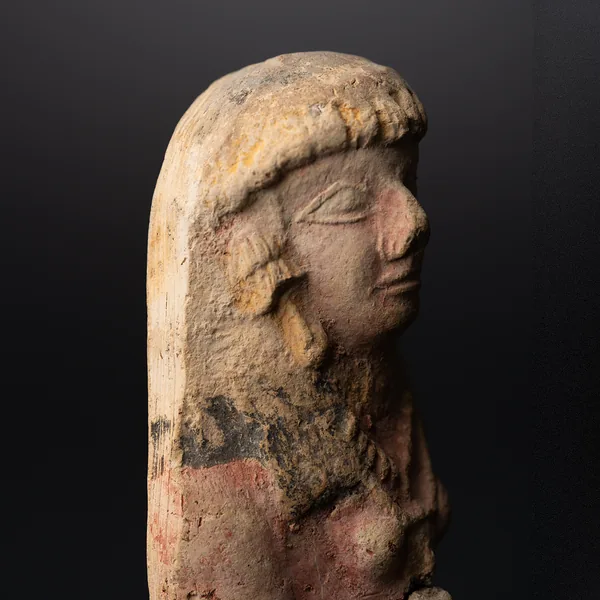
In the compendium
Egypt
Ancient Egypt, Cyprus's partner in copper, pottery and prestige goods from the Middle Kingdom to the Ptolemies, who annexed the island.
The period
Neolithic
The period c. 9000–3900 BCE in which farmers from the mainland settled Cyprus, built villages of circular houses, and later adopted pottery.