
Lecture·The Institute for the Study of Ancient Cultures·2022
Ancient Pottery for Beginners: Why Archaeologists Study Ceramics
This video covers more than Cyprus. The description below concentrates on its Cypriot parts, the first of which begins at 22:14.
Chapters
About the lecture
James Osborne of the Oriental Institute, University of Chicago outlines why archaeologists study ancient ceramics, grouping the subject under chronology, spatial distribution, and social organization, before showing vessels and sherds from the museum's storage.
Two parts of the lecture concern Cypriot pottery. In the section on spatial distribution and trade, Osborne examines Iron Age pottery excavated in the 1930s in the Amuq Valley, territory of the kingdom of Patina (c. 950–700 BCE). Among roughly 4,000 early first-millennium BCE sherds in the Chicago collections from the capital at Tell Tayinat, the second-tier town of Chatal Höyük, and the village of Tell Judeideh, about 150 belong to Bichrome ware of the Cypro-Geometric and Cypro-Archaic periods. Using neutron activation analysis on sherds from the three sites (77 from Tell Tayinat, 19 from Chatal Höyük, and 15 from Tell Judeideh) and comparing them with local Amuq clays and clay samples from Cyprus, Osborne and his colleague identified two chemical groups: Group Alpha, originating on Cyprus, and Group Beta, made of local Amuq Valley clay. Contrary to Osborne's expectation that the small village of Tell Judeideh would produce cheap local copies, the Cypriot-style imitations occurred at the capital, Tell Tayinat, where he suggests demand for Cypriot vessels exceeded the imported supply.
During the object handling session at the end, Osborne shows a Late Bronze Age Cypriot bilbil juglet (c. 1400–1300 BCE). He notes the older hypothesis that such juglets carried opium because the inverted vessel resembles a poppy head, and explains that organic residue analysis has shown they instead held oils, perfumes, and unguents.
From our collection
Pieces in the Drakopoulos collection of the kinds and periods this talk covers: Bichrome ware (Iron Age).
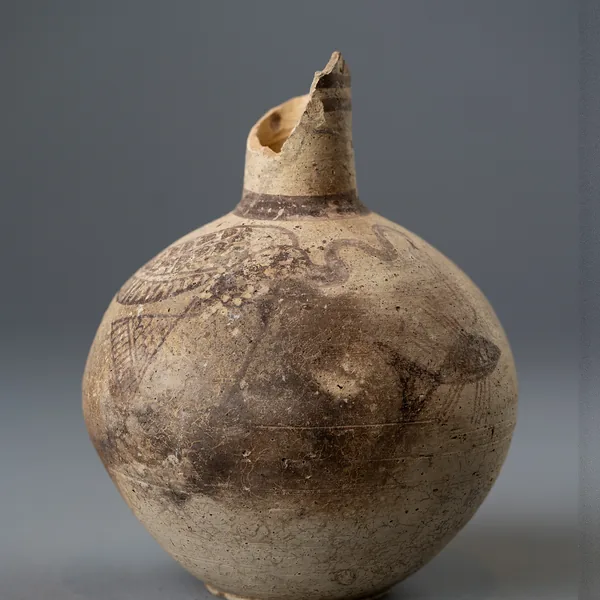
Bichrome IV Jug with a Waterfowl Catching a Fish
Bichrome ware (Iron Age)
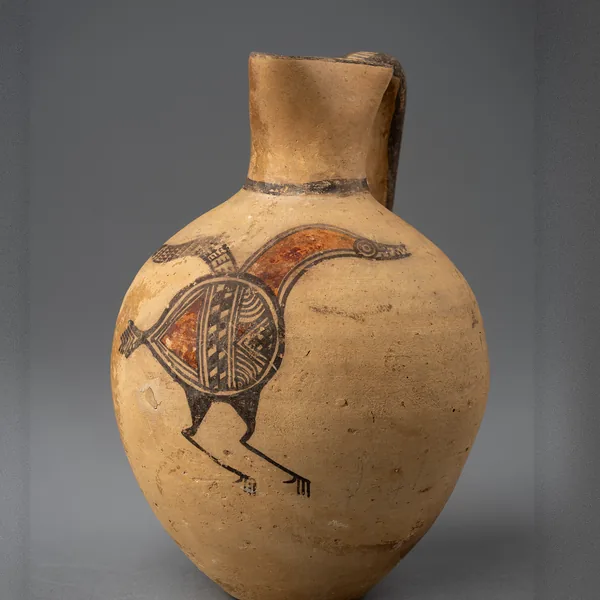
Bichrome IV Trefoil Jug with a Striding Bird
Bichrome ware (Iron Age)
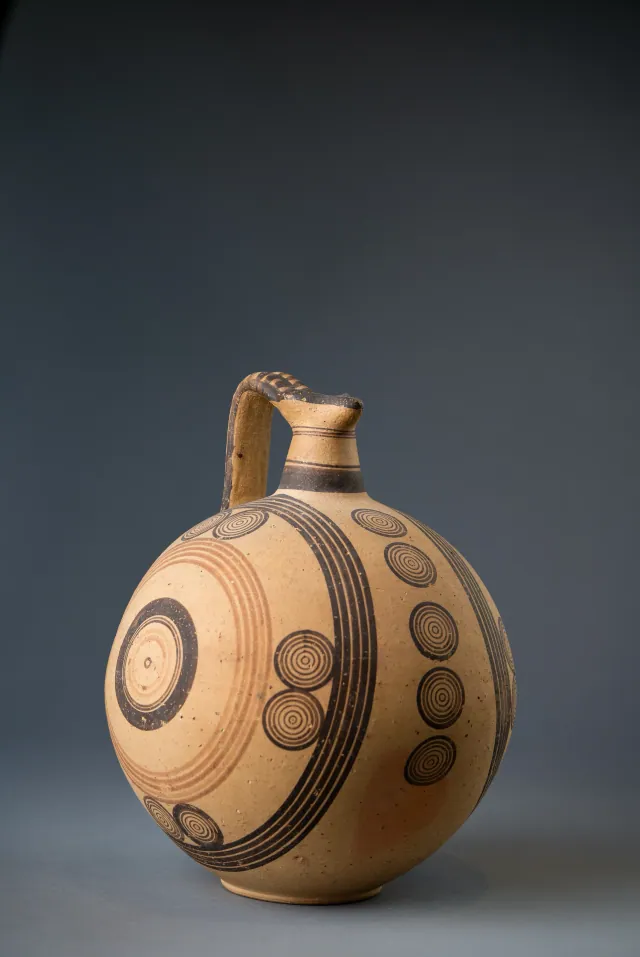
Large Bichrome IV Jug with Vertical Circle Systems
Bichrome ware (Iron Age)
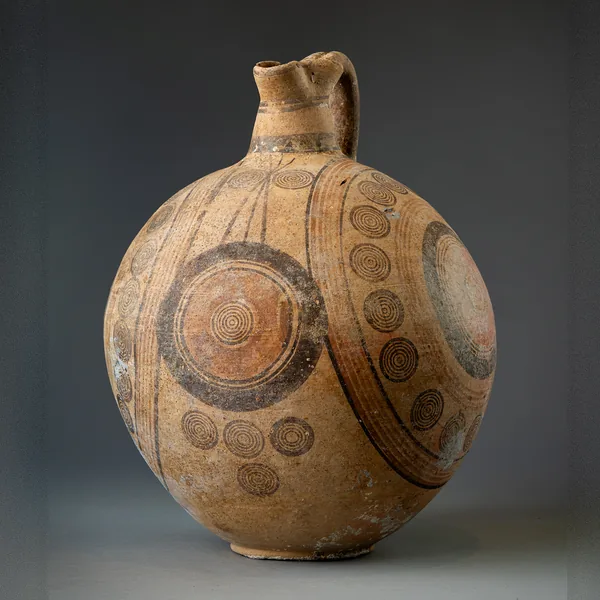
Bichrome IV Jug with Wreathed Circle Systems
Bichrome ware (Iron Age)
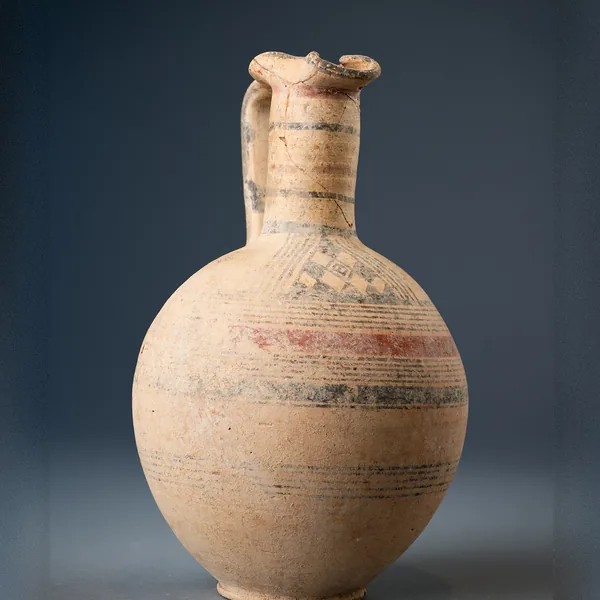
Bichrome IV Trefoil Jug with a Chequer Panel
Bichrome ware (Iron Age)
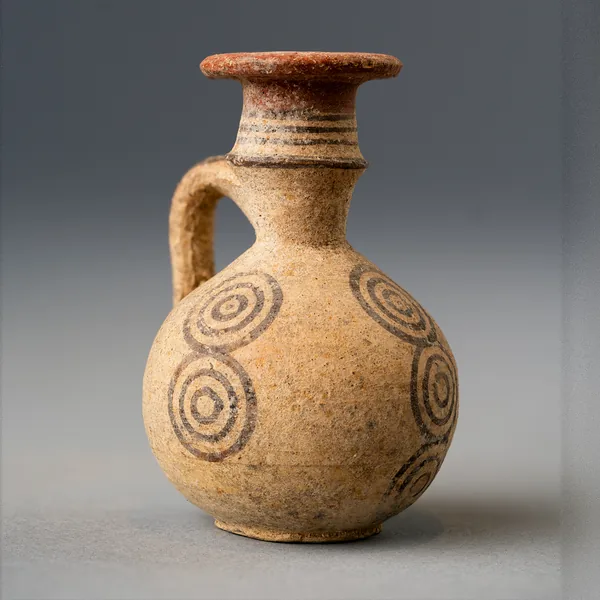
Bichrome IV Handle-Ridge Juglet with Rows of Concentric Circles
Bichrome ware (Iron Age)
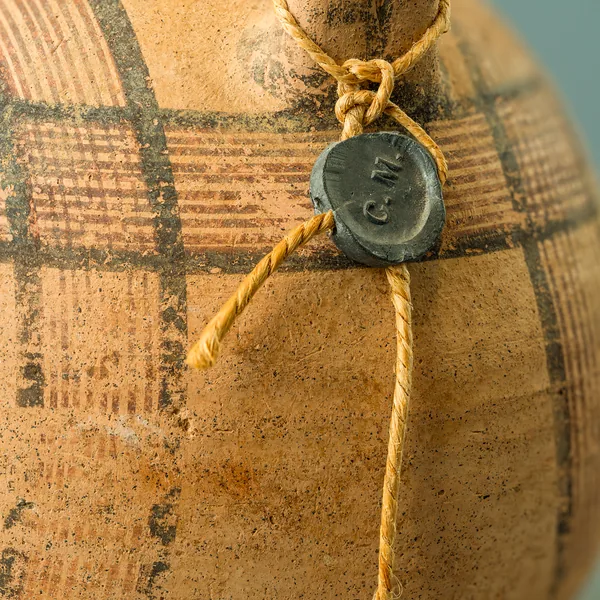
Bichrome IV Trefoil Jug with Intersecting Circles and Cyprus Museum Lead Seal
Bichrome ware (Iron Age)
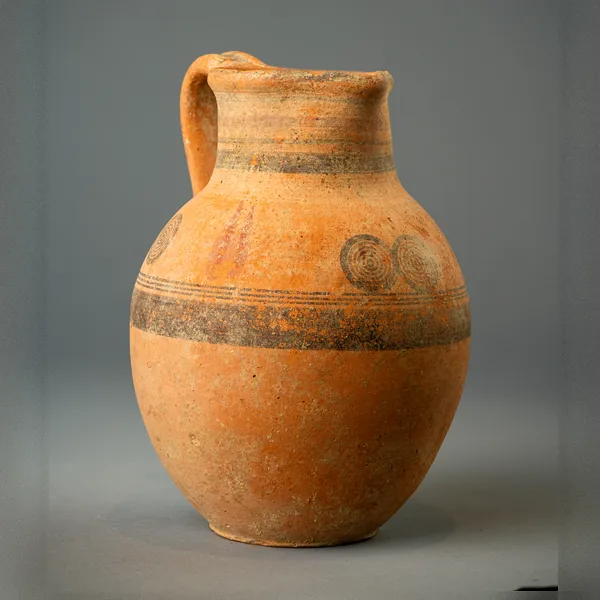
Bichrome Jug with Wide Neck, Shoulder Circles and Red Strokes
Bichrome ware (Iron Age)
Background
Where to read more on this site before or after watching.
In the compendium
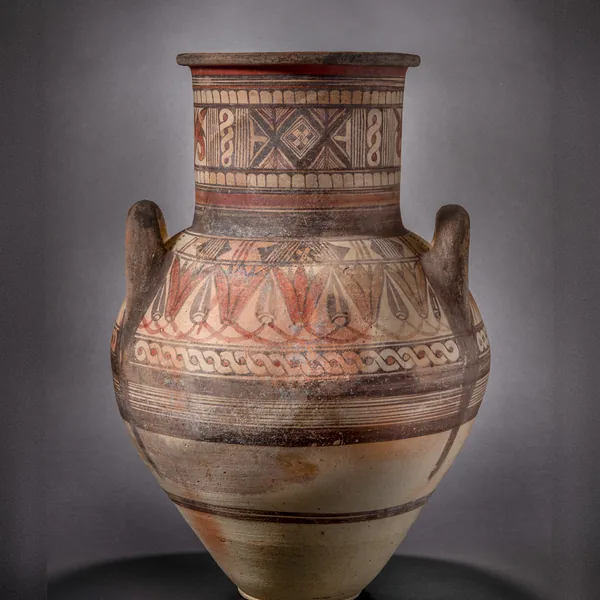
Bichrome Ware
Bichrome is Cypriot pottery painted in black and red on a light surface, first a Late Bronze Age export ware and later a long-lived Iron Age class.
In the compendium
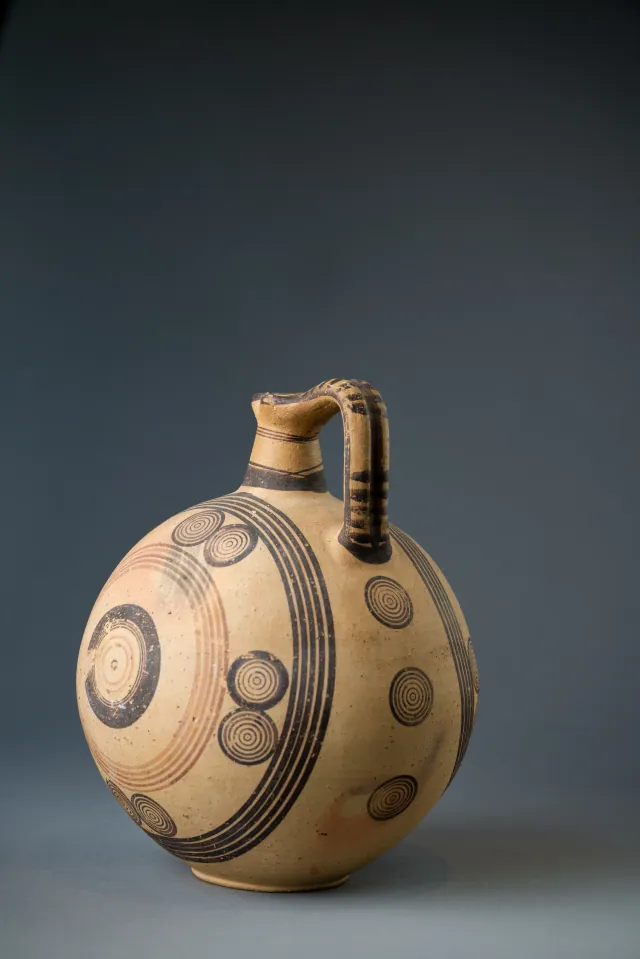
Jugs and Juglets
A one-handled vessel with a neck, the commonest closed shape in Cypriot pottery, made from the start of the Bronze Age to the Cypro-Classical period.
In the compendium
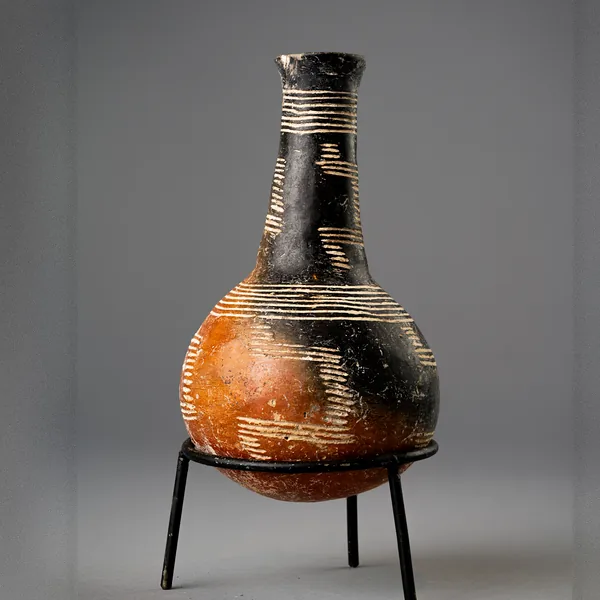
Bottles
A narrow-necked closed vessel with no handle or with two, made in Cyprus from the Early Bronze Age to the Hellenistic period, mostly as a small container for liquids.

The period
Late Bronze Age
The Late Cypriot period, c. 1650–1050 BCE, when copper exports made Cyprus an urban, literate trading power before the crisis around 1200 BCE.