
Contents
Between the intercommunal violence of December 1963 and the end of 1973, the largest private collections of Cypriot antiquities on the island were formed with the knowledge and agreement of the state. The Director of Antiquities, Vassos Karageorghis, called the policy a "silent accord", described it in a letter written in 1975 and printed in an international journal in 1976, and had every object in the collections recorded on a card with a photograph before the end of 1973. Much of what those collectors bought had been dug illicitly, a good part of it from cemeteries in the Turkish Cypriot enclaves, where the Republic's Department of Antiquities could not go, and some of it from places the Republic did control. This page sets out what the policy was, the law it worked under, the Museum's own buying in the same years, the strongest case against it, made by Samuel Hardy, and what the registration record shows about the objects. The photograph at the head of the page shows the cabinets of the Severis collection in the family's house in Nicosia, one of the three collections Karageorghis named as the most important of the period.
The crisis of 1963 and the enclaves
Fighting between the two communities broke out on 21 December 1963. Over the following months much of the Turkish Cypriot population withdrew into armed enclaves, controlled by the Turkish Resistance Organisation (TMT) and closed to the Republic's officials, while the Greek Cypriot administration and its own irregular forces held the ground around them. The Department of Antiquities lost access to the sites and museums inside the enclaves. Its report for 1964, as Hardy quotes it, stated that the "anomalous conditions in the island did not make it possible to achieve" the end of illicit digging and trading that the Department had set itself as a goal at independence [5].
The enclaved population was poor, and antiquities were one of the few things it could sell. Peter Hopkirk, reporting for The Times in 1971 and 1972, described the looters as "most... extremely poor", and wrote of "thousands of tombs" opened (as quoted by Hardy [4, p. 462]). Karageorghis named the main areas of digging in the Severis catalogue: the Chalcolithic cemetery of Souskiou, "a Turkish village near Kouklia-Palaepaphos"; the Early and Middle Bronze Age cemeteries at Marki and Kotchati south of Nicosia; and the eleventh-century BCE cemetery of Alaas, north-east of Salamis in the Famagusta District [2, p. 17]. The material went to whoever could reach it and pay. According to the memoirs Karageorghis published in 2007, as Hardy quotes them, it "[was] bought mainly by Greek Cypriots and by diplomats" [7, p. 102].
This was not the first illicit digging on the island. Illicit digging under British rule had been widespread in the nineteenth and early twentieth centuries, and A. H. S. Megaw had reported almost none in 1955, a year of full employment (as cited by Hardy [4, p. 462]). The digging of 1963 to 1973 followed the poverty of the enclaves.
The policy in the Director's own words
The accord was described by the man who ran it, and in public. In 1975 the editors of Antiquity, prompted by sales of Cypriot antiquities in London, wrote to Karageorghis, and the journal printed his reply in 1976:
During the period 1963–1973 a number of important private collections of Antiquities have been formed in Cyprus, with the silent accord of the Department of Antiquities, which considered this to be the best policy to follow in view of the anomalous political conditions prevailing in Cyprus. All these collections have been registered (there is a card with a description and photograph of every single item). This gigantic work ended in December 1973. [1, p. 233]
The letter was written after the Turkish invasion of 1974: it records that the jewellery and small objects of the Famagusta District Museum "were looted last summer" [1, p. 234], which dates it to 1975. Its purpose was to ask foreign buyers not to buy Cypriot antiquities, and it cites the registration as the reason the Republic could identify what it had lost: "We have complete records of all antiquities which have been left in the occupied part of Cyprus" [1, p. 234].
Karageorghis gave a fuller account in the preface to the catalogue of the Severis collection in 1999. The collection, he wrote, was formed mainly in the decade from the early 1960s to the early 1970s, "when a considerable amount of looting was taking place in Turkish Cypriote villages", and then:
With the agreement of the Ministry of Communications and Works, the Department of Antiquities at that time decided to follow a policy of "silent accord", allowing Cypriots who had access to the Turkish enclaves to buy the "spoils" of looting so that these should remain in the country and not be exported abroad; there were others who were then buying from the looters (foreign diplomats, members of foreign missions and others), who enjoyed immunity. [2, pp. 16–17]
Three points in that passage define the policy. It was a decision of a government department with the agreement of its ministry, not the private arrangement of an official. Its stated aim was retention: the objects were already being dug, and the choice was between Cypriot buyers who would keep them on the island and buyers with diplomatic immunity who could take them off it. And Karageorghis did not describe the objects as anything other than loot; he put "spoils" in quotation marks himself. The Pierides catalogue of 1985 described the same arrangement as a "policy by which Greek Cypriots were allowed to buy antiquities looted by Turkish Cypriots.... in consultation with the Department of Antiquities" (as quoted by Hardy [10, p. 14; 4, p. 464]).
Registration and the declaration window of 1973
The accord ended with a declaration. The collections, Karageorghis wrote, were ones "which their owners were asked to declare to the Department of Antiquities during the last six months of 1973". He named the most important as the Hadjiprodromou collection in Famagusta, the Pierides collection in Larnaca and the Severis collection in Nicosia [2, p. 17]. In the memoirs he called the measure "a period of grace to all private collectors" (as quoted by Hardy [7, p. 102; 4, p. 464]). The Department's report for 1974, as Hardy quotes it, recorded "the prompt collaboration of the collectors" [5].
What the declaration produced was a record. Each object received a card with a description and a photograph, and the work was finished in December 1973 [1, p. 233]. The cards later did what the letter of 1975 said they would. They are how objects from the Hadjiprodromou collection, looted from the owner's house in occupied Famagusta after the invasion, could be recognised when they reached the London salerooms [1, p. 234], and how the marks on the objects seized in 1975 at the Morphou mayor's shop were matched to a registered collection.
The declaration of 1973 is sometimes called an amnesty. Hardy uses that word, and in 2012 described it as a measure under which collectors could declare their antiquities "without being prosecuted for acquiring them" [5]. No statute or decree of 1973 has been found. The sources describe an administrative window under the existing law: owners were "asked to declare" in the second half of the year [2, p. 17], the registration "ended in December 1973" [1, p. 233], and Karageorghis's own phrase was a "period of grace" [7, p. 102]. The legal basis was already there. Private collections had been lawful on the island since 1935, provided they were declared.
The law the collections were formed under
The laws of 1905 and 1935 are treated on their own page, and the full sequence from the firmans to 1996 is in the legal export of Cypriot antiquities. Three provisions matter here. The Antiquities Law of 1935 vested undiscovered antiquities in the government, required a licence for excavation and for export, licensed dealers, and let private individuals keep collections they had declared. Karageorghis wrote in 2010 that the Severis and Phylactou collections were formed "at a time when private collectors could collect antiquities, something that was allowed by the provisions of the Antiquities Law of 1935" [11].
The amendment of 1964 abolished the division of excavated finds, so that nothing from a licensed excavation could pass into private hands. It left the rest in place: "dealing, collecting and exporting antiquities was still allowed for those who had a licence, thus facilitating the creation of several major private collections in those years", as Fehlmann summarises it [12, p. 155]. Licensed export from the Republic continued until 1996 [12, p. 156]. In 1983 Karageorghis set out the rule that tied export to the registration of 1973: objects "legally acquired and duly registered by December 31, 1973, and which are not needed by the Cyprus Museum, can be exported with a permit from the Department of Antiquities" [13, p. 364].
The law therefore drew a line that the accord did not cross. Digging without a licence was an offence throughout. Buying, holding and declaring a collection was lawful. A declared object had a lawful owner, and could later be exported by permit, whoever had first taken it out of the ground. How that worked in practice for the licensed dealers and the registered collections is the subject of licensed dealers and registered collections.
The Cyprus Museum's own purchases across the line
The state bought from the same market. In his memoirs Karageorghis described how, between 1970 and 1974, he crossed into the Turkish Cypriot sector of Nicosia on the pretext of supervising the UNESCO restoration of the cathedral of St Sophia, in the car of the UNESCO conservator Carlo Musso:
During the period from 1970 to 1974, under the pretext of supervising the work of the UNESCO experts at St. Sophia, I would often cross the "border" in the car of [UNESCO conservator Dr.] Carlo Musso…. I bought for the Cyprus Museum a good number of important objects…. I did not pay cash… I would bring them a government cheque from the Central Bank. (as quoted by Hardy [7, pp. 102–103; 5])
The Director paid with the Republic's money, by cheque, for objects that had come out of the enclaves. No itemised list of what he bought has been published. These purchases, with the Museum's buying before and after 1974, are set out in the state as buyer. They belong on this page because they show that the accord was the state's policy in both senses: it allowed private collectors to buy, and it bought for the national collection on the same terms and with the same aim of keeping the objects on the island.
The case against the accord: Hardy, Hadjisavvas and Fehlmann
The strongest evidence against reading the accord as a rescue comes from inside the Department. Sophocles Hadjisavvas, Director of Antiquities a generation later, wrote in 2001 that the trade of these years was "so intense that there was even close collaboration between Turkish [Cypriot] looters and Greek [Cypriot] mediators and collectors" and that the antiquities collected were "illegal in the sense that they all came from illicit excavations". He added that a "well-known collector in the Famagusta District" had hired looters "to obtain rare antiquities of a specified date", and, as Hardy reports him, that more than a thousand people took the opportunity to begin collections (all as quoted by Hardy [6, p. 135; 5; 4, p. 462]). This is the place for his distinction: an object lawfully registered, and later lawfully exported, is not thereby an object lawfully excavated. Merrillees has written the same of the Hadjiprodromou collection, which was bought from the people who dug the objects up, not from licensed dealers (see the Hadjiprodromou collection).
Samuel Hardy, in a paper of 2014, made the fullest case. He described the accord as a "secret agreement with the state" for collections "which supposedly comprised only antiquities that had been looted by Turkish Cypriots beyond state control", and wrote that "almost half were antiquities that had been looted by Greek Cypriots within state control" [4, p. 460]. Citing Hadjisavvas, he wrote that "at least one collector had organised teams of illicit diggers, and more than 1250 people had become collectors, to take advantage of the unprecedented opportunity", and that the state ended the programme with "the legalisation of its silent partners' illicit collections through an amnesty in 1973" [4, p. 462]. He argued that goods leaving the enclaves must have passed through TMT, so that the buyers' money reached an armed organisation [4, p. 462]. In 2012 he concluded that the "rescue" of looted objects in these years had funded the looting [5]. Fehlmann, writing from Eastern Mediterranean University in occupied Famagusta, endorsed Hardy's work and went further: in his summary the Department condoned systematic looting under "a policy of double standards", the Famagusta collector acted "with the blessing of the Department", and "more than 1,250 new private collections were added" by 1974 [12, pp. 155–156].
Each of these claims needs stating with its evidence, because the evidence is narrower than the claims:
- Secret. The policy was described by its author in a letter to Antiquity written in 1975 and printed in 1976 [1, p. 233], repeated in the Pierides catalogue of 1985 [10, p. 14], the Severis catalogue of 1999, reprinted in 2010 [2, pp. 16–17] and the memoirs of 2007 [7, p. 102]. Hardy also writes that Karageorghis "coined the term 'silent accord'" in the Severis catalogue of 1999 [4, p. 464]; the phrase is in the letter printed in 1976. No law authorised the policy, and in that sense it was informal; it was not concealed.
- Amnesty. As above, the sources describe a declaration window under the law of 1935, not a statute.
- 1,250. Hardy's figure counts people who "had become collectors", not registered collections, and it comes from Hadjisavvas's page, not from a Department count [4, p. 462]. Fehlmann's "1,250 new private collections" [12, p. 156] is a change of wording, not a second source. No published figure for the number of collections registered by December 1973 has been found.
- Almost half. The figure is a share of the objects with a recorded find-spot, not of the collections. In the Severis catalogues Hardy counts 288 objects, of which 211 have no find-spot; of the remaining 77, he assigns 35 to Greek Cypriot diggers and 42 to Turkish Cypriot ones [4, p. 470]. The 35 are about 12 per cent of the catalogued objects. Thirty-one of the 35 come from one cemetery, Alaas, which Hardy assigns to Greek Cypriot diggers because the nearest villages, Gastria and Ayios Theodoros, were Greek Cypriot [4, pp. 470, 472]; none of the sources he quotes says who dug there. He calls his method "crude" [4, p. 459], writes that "each set of numbers is unreliable in and of itself" [4, p. 471], and states that the article "does not assume, accept or imply that whole communities engaged in looting" [4, p. 460]. His statement that dealers and collectors were "actively incentivised to place origins in Turkish Cypriot enclaves, because that would secure them licences" [4, p. 471] is given without a source, and the law did not make the registration of a declared collection depend on where its objects had been found.
- The enclaves. On the same data Hardy concludes that, "to some extent, this analysis corroborates the official (Greek Cypriot) history of looting in Cyprus": Turkish Cypriot participation "increased significantly, and possibly constituted the majority of the looting, during the civil war" [4, p. 471]. His point stands that the collections contain objects from places under the Republic's control, and that the official account had attributed the digging too exclusively to the enclaves.
- Payments to TMT. This is an inference from who controlled the enclaves. Hardy wrote in 2012 that "it is not clear whether, before 1974, TMT fighters were smuggling and dealing themselves, or whether they were taxing or taking bakşiş" [5]. No document of payment is cited.
- Buying back. Hardy's later argument that buying looted objects from the market creates a market for objects to be bought back [14] is made chiefly about church art from the occupied north, a different trade with different buyers, and it uses the collections of 1963 to 1973 only as an example.
The Alaas case shows what can and cannot be said. Karageorghis wrote in 1975, as Hardy quotes him, that the cemetery was looted in 1973, that collectors "bought" from the looters, and that they then helped the Department find the site, which it excavated [9, pp. 1, 4; 4, p. 472]. In his report on the years 1971 to 1973 he wrote: "A few tombs have been excavated by the present writer, but more were opened earlier by looters. Fortunately, all the material found in them has been saved" [8]. Hardy notes that the Hadjiprodromou collection held 93 objects from the site and the Severis collection 27, against the Department's 116 [4, p. 472]. Alaas was dug illicitly, very probably by people from the area; the objects went to two declared collections; the collectors' information led the Department to the cemetery;, and the whole group was published.
Illicit digging and trade
Lawful collecting and the state
- Fighting begins on 21 December; the Department loses access to sites and museums in the enclaves [5].1963
Illicit digging and tradeFighting begins on 21 December; the Department loses access to sites and museums in the enclaves [5].
- The Department reports that the "anomalous conditions" prevent the end of illicit digging [5].1964The amendment abolishes the excavator's share; licensed dealing, collecting and export continue [12, p. 155].
Illicit digging and tradeThe Department reports that the "anomalous conditions" prevent the end of illicit digging [5].
Lawful collecting and the stateThe amendment abolishes the excavator's share; licensed dealing, collecting and export continue [12, p. 155].
- Cemeteries at Souskiou, Marki, Kotchati and Alaas are dug illicitly [2, p. 17].1963–1973Collectors buy with the "silent accord" of the Department and the agreement of its ministry [2, pp. 16–17].
Illicit digging and tradeCemeteries at Souskiou, Marki, Kotchati and Alaas are dug illicitly [2, p. 17].
Lawful collecting and the stateCollectors buy with the "silent accord" of the Department and the agreement of its ministry [2, pp. 16–17].
- Diplomats with immunity also buy from the looters [2, p. 17].1970–1974The Director buys for the Cyprus Museum across the line, paying by government cheque [7, pp. 102–103].
Illicit digging and tradeDiplomats with immunity also buy from the looters [2, p. 17].
Lawful collecting and the stateThe Director buys for the Cyprus Museum across the line, paying by government cheque [7, pp. 102–103].
- The Times reports thousands of tombs opened [4, p. 462].1971–1972
Illicit digging and tradeThe Times reports thousands of tombs opened [4, p. 462].
- Alaas is looted [9, p. 4]; collectors buy the material from the looters [9, p. 1].1973Collectors lead the Department to Alaas, which it excavates [9, p. 1; 8].
Illicit digging and tradeAlaas is looted [9, p. 4]; collectors buy the material from the looters [9, p. 1].
Lawful collecting and the stateCollectors lead the Department to Alaas, which it excavates [9, p. 1; 8].
- 1973Owners declare their collections in the second half of the year; registration with card and photograph ends in December [2, p. 18; 1, p. 233].
Lawful collecting and the stateOwners declare their collections in the second half of the year; registration with card and photograph ends in December [2, p. 18; 1, p. 233].
- After the Turkish invasion, registered collections in Famagusta and Kyrenia are cut off; Hadjiprodromou objects reach London [1, pp. 233–234].1974The Pierides collection in Larnaca becomes the Pierides Foundation Museum.
Illicit digging and tradeAfter the Turkish invasion, registered collections in Famagusta and Kyrenia are cut off; Hadjiprodromou objects reach London [1, pp. 233–234].
Lawful collecting and the stateThe Pierides collection in Larnaca becomes the Pierides Foundation Museum.
- 1983Objects registered by 31 December 1973 and not needed by the Museum remain exportable by permit [13, p. 364].
Lawful collecting and the stateObjects registered by 31 December 1973 and not needed by the Museum remain exportable by permit [13, p. 364].
What became of the collections
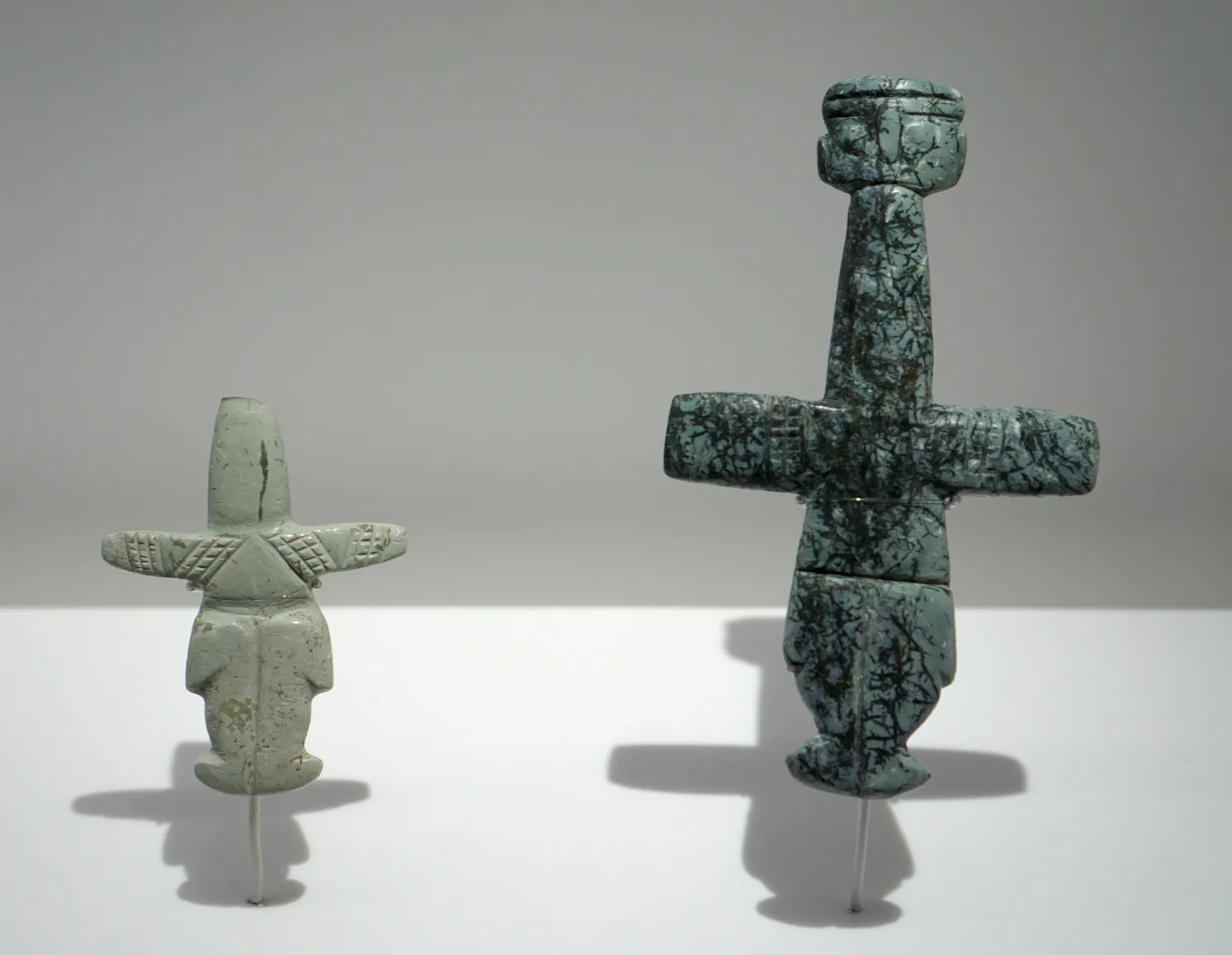
The policy's stated aim was that the objects should "remain in the country" [2, p. 16]. The main collections did. The Pierides collection, begun by the Pierides family of Larnaca in the nineteenth century and enlarged by Demetrios Z. Pierides in these years, became the Pierides Foundation Museum in 1974 and was published in 1985 [11] (see the Pierides family collection). The Severis collection had "over 2,500 pieces, all carefully numbered and inventoried" by July 1974 [3]; it was published in 1999 and again in 2010, and went on long-term loan, with the Phylactou collection, to the Leventis Municipal Museum in Nicosia, whose new galleries for the two opened in January 2010 [11]. The Giabra Pierides collection went to the Cultural Foundation of the Bank of Cyprus and was published in 2002 [11], and the Lyssarides collection, which Karageorghis recorded as duly registered, was largely given to the Cyprus Museum in 1984. One piece in this site's collection, a Cypro-Archaic Bichrome IV amphora, descends from the Severis collection. Collection by collection, the outcome is set out in the island collections.
Karageorghis wrote these catalogues himself, under a programme of the A. G. Leventis Foundation, and gave his verdict on the collectors in the Phylactou volume: "some private collectors in Cyprus, especially those who were active during the troubled period between 1963 and 1974, have made a positive contribution by preserving within the Island objects which otherwise would have found their way to the illicit market of antiquities abroad. Not all collectors, however, were scrupulous, as we know" [11].
The collections' losses came in 1974, with the invasion. The Severis family lost "about 600 pieces", which were "looted and disappeared for ever" [3]. The Hadjiprodromou collection in Famagusta was dispersed: Chalcolithic objects from it were on sale in London by 1975 [1, p. 234], and Karageorghis wrote in 2010 that "a large number of objects were stolen after the Turkish invasion of 1974 and have since found their way to the illicit market", and that the rest was kept at the Monastery of St Barnabas near Salamis [11]. The registration of 1973 is what allowed the Republic to name those objects when they surfaced.
What this means for an object on the market today
An object with a documented history in one of the registered collections of 1973 has a status the law recognised: it was declared, photographed and recorded by the Department before the end of 1973, and, if it later left the island, it could do so only by permit. That is a lawful history of ownership and export. It is not evidence of lawful excavation, and for objects of these years the presumption runs the other way: most were dug without a licence, in the enclaves or elsewhere. A catalogue find-spot such as "Marki or Kotchati" usually records what a seller told a collector, not what an archaeologist saw.
A registered object can also have been stolen afterwards. Pieces from collections left in the occupied north after 1974 are listed by the Republic, and an object from the Hadjiprodromou or another northern collection that has no record of a lawful transfer after 1974 can be claimed by the Republic on the strength of its cards. Objects that passed into the published catalogues of the Severis, Pierides and Phylactou collections, or that left the island with a permit before 1996, are among the best documented Cypriot antiquities on the market. How the market treats the rest is the subject of the 1974 presumption.
References
- 1.Karageorghis, V. (1976). The illicit sale of Cypriot antiquities [Letter]. Antiquity, 50(199–200), 233–234. https://doi.org/10.1017/S0003598X00108336
- 2.Karageorghis, V. (2010). Ancient Cypriote art in the Severis Collection (2nd ed.). Costakis and Leto Severis Foundation. First edition 1999.
- 3.Severis, D. C. (2010). Prologue. In V. Karageorghis, Ancient Cypriote art in the Severis Collection (2nd ed.). Costakis and Leto Severis Foundation.
- 4.Hardy, S. A. (2014). Using open-source data to identify participation in the illicit antiquities trade: A case study on the Cypriot civil war. European Journal on Criminal Policy and Research, 20(4), 459–474. https://doi.org/10.1007/s10610-014-9250-x
- 5.Hardy, S. A. (2012). Destruction, theft and rescue of archaeological artefacts in Cyprus, 1963–1974: From the intercommunal conflict until the foreign invasions. Author's postprint; published in A. Jacobs & P. Cosyns (Eds.), Cypriot material culture studies, from picrolite carving to proskynitaria analysis (pp. 329–345). VUB Press.
- 6.Hadjisavvas, S. (2001). The destruction of the archaeological heritage of Cyprus. In N. Brodie, J. Doole & C. Renfrew (Eds.), Trade in illicit antiquities: The destruction of the world's archaeological heritage (pp. 133–139). McDonald Institute for Archaeological Research. (Passages quoted by S. A. Hardy.)
- 7.Karageorghis, V. (2007). A lifetime in the archaeology of Cyprus: The memoirs of Vassos Karageorghis. Medelhavsmuseet. (Passages quoted by S. A. Hardy.)
- 8.Karageorghis, V. (1974). Late Bronze Age news from Cyprus, 1971–1973. Kadmos, 13. https://doi.org/10.1515/kadmos-1974-0211
- 9.Karageorghis, V. (1975). Alaas: A Protogeometric necropolis in Cyprus. Department of Antiquities, Cyprus. (Passages quoted by S. A. Hardy.)
- 10.Karageorghis, V., Rizopoulou-Egoumenidou, E., Bakirtzi, D., & Elliott, C. (1985). Ancient Cypriote art in the Pierides Foundation Museum. Pierides Foundation. (Passage quoted by S. A. Hardy.)
- 11.Karageorghis, V. (Ed.). (2010). Cypriote antiquities in the Phylactou Collection. A. G. Leventis Foundation.
- 12.Fehlmann, M. (2014). Looting and losing the archaeological heritage of Cyprus. In Ö. Çaykent & L. Zavagno (Eds.), Islands of the Eastern Mediterranean: A history of cross-cultural encounters (pp. 144–170). I.B. Tauris. https://doi.org/10.5040/9780755608331
- 13.Herscher, E. (1983). The antiquities market: News and commentary on the illicit traffic in antiquities. Journal of Field Archaeology, 10(3), 349–369. https://doi.org/10.1179/009346983791504327
- 14.Hardy, S. A. (2021). Conflict antiquities' rescue or ransom: The cost of buying back stolen cultural property in contexts of political violence. International Journal of Cultural Property. https://doi.org/10.1017/S0940739121000084