
Traveller / antiquarian · Consular staff · Donor
Giovanni Mariti
1736–1806 · Italy
Florentine who lived in Cyprus from 1760 to 1767, wrote the Viaggi per l'isola di Cipro, published plans of ancient Kition and gave Cypriot coins found there to the Accademia Etrusca at Cortona.
Biography
Giovanni Mariti was a Florentine of merchant training who lived in Cyprus from 1760 to 1767, wrote the Viaggi per l'isola di Cipro and published plans of ancient Kition at Larnaca1,13,14.
Florence, Livorno and Larnaca
Mariti was born in Florence on 4 November 1736, the son of Marcantonio di Luigi, chancellor of the Capitani di Orsanmichele, and Alessandra Moriani15. His father died early, and his stepfather, a Volterra merchant named Calvani, saw to his education in Florence and Livorno15. At Livorno he came into contact with the foreign "nations", above all the British, learned English and French and studied natural history15.
Cobham calls him "the Abbé Giovanni Mariti", and the sources disagree on whether he was a cleric1. The dictionary of F.-X. de Feller (1849 edition) says he took holy orders, and George Jeffery in 1918 called him "an Italian priest"16,17. Renato Pasta's entry in the Dizionario Biografico degli Italiani says he married twice: in 1776 Teresa Bonacchi, who gave him three daughters and a son, Francesco, born in 1784, and in December 1791, after her death, Anna Gargani of Livorno, from whom he separated15.
In January 1760 Mariti left Livorno for Cyprus with the English merchant Ottavio Watson, as his agent13,15. The sources differ on his first months: Claude Delaval Cobham gives his arrival in Cyprus as 2 February 1760, while Pasta (2021) has him reach Acre in February 1760 and kept there in isolation for five months by the plague1,13. His time at Acre is given as two years by Luca Bombardieri and as a year and a half by Luigi Silvano14,18.
He then settled at Larnaca in the retinue of the British consul Timothy Turner, who was also vice-consul of the Grand Duke of Tuscany14. Accounts of his post vary: Cobham calls him "for some years an official of the Imperial and Tuscan Consulates"1. Pasta (2008) and Silvano make him chancellor of the British consulate and representative of the Empire and of Tuscany, and Bombardieri in one note says Turner appointed him vice-consul of the Tuscan consulate14,15,18. Bombardieri also writes that Mariti became chancellor in place of Antonio Mondaini of Livorno, and elsewhere that he was appointed chancellor of Tuscany as early as 176014. Pasta (2021) says Turner gave him delicate tasks during the bloody anti-Turkish revolt of 1764-176613. On 31 January 1762 Mariti was the first witness listed at Mondaini's wedding to Thomasine Barthélemy in the Latin church of Santa Maria delle Grazie at Larnaca14.
A letter of 6 July 1767 from Larnaca was addressed to him at Beirut18. He left Cyprus in October 1767, Cobham giving the day as 6 October1,13. Before he reached home at the start of 1768 he was in Syria and Palestine15.
The ruins of Kition
Mariti wrote that nothing of ancient Citium was visible but the foundations of its walls and a building or two, and that large stones dug from the fields every day went into new buildings at Salines and Larnaca1. Through all his years in Cyprus, he wrote, the foundations of old structures kept being uncovered, most of them large dressed stones reused in Larnaca14. The MUSINT volume of 2011 notes that he described only those chance finds he had seen himself11.
Bombardieri says Mariti did not promote excavations, but in the Viaggi and later in the Dissertazione gave a first archaeological map of Kition, more precise than the one Richard Pococke made in 174314. Marguerite Yon calls the Viaggi sketch rather simplified but a little more plausible than Pococke's, and notes that its wall with bastions has left no trace today19. The sources disagree on the date of the book: Yon gives 1767, Cobham and Pasta 17691,15,19. In July 1766 Mariti went over the visible remains with Carsten Niebuhr, whose plan of Kition he published in the Viaggi and the Dissertazione, according to Bombardieri14. With Niebuhr he also had an Armenian named Ambarsun look at copies of inscriptions near St Lazarus, which the man said were Armenian1.
In 1766, Mariti wrote, many sarcophagi were found north of Larnaca on land of Signor Zambelli, a Venetian shopkeeper, when bricklayers were laying a house's foundations14. The Turks claimed that Zambelli had disturbed Muslim dead, but once the bodies were shown to be very ancient the matter was calmed with a few gifts14. Bombardieri judges that the description plausibly fits two Cypro-Archaic chamber tombs marked "ancient sepulchres" on Mariti's 1787 map, the Phaneromeni tomb and another probably in the Sotiros district14.
The Caracalla head and the Cortona coins
In 1767 Mariti came upon a stone-quarrying dig at Kition where workmen found a white marble head of Caracalla1,14. In the Dissertazione of 1787 he wrote that he was present when it was unearthed10. Near it lay many Greek coins of Septimius Severus, Caracalla and Julia Domna with the temple of Paphos and KOINON KYPRION on the reverse, some with Caracalla on one side and Geta on the other1. Head and coins passed to Turner, who sent the head to England10.
Mariti's two accounts of the coins differ: the Viaggi of 1769 says only that "some of the medals remain with me"14. The Dissertazione says Turner shared the medals among his friends in Cyprus, gave not a few to Mariti, and Mariti made a new distribution on his return to Tuscany, above all to the museum of the Etruscan Academy at Cortona10,14. Cobham's English of 1909, for which he recast Chapter III with the help of the Dissertazione, names the Cortona gift1.
The minutes of the Accademia Etrusca for 12 August 1776 call Mariti "our Etruscan academic" and record three bronze coins of his gift, of Caracalla, Geta and Julia, with the temple on the reverse; Bombardieri takes them to fix the date and nature of the donation14. He adds that Mariti's friendship with the antiquarian Lodovico Coltellini "undoubtedly influenced" the gift14.
The sources disagree on whether the coins survive: the MUSINT volume found no coins of Cypriot provenance in the 1927 and 1974 catalogues of the Cortona collection and suggested they may have been given up by the Accademia before 180211. Bombardieri (2024) identifies at least one survivor, a coin of Geta with the temple of Aphrodite at Paphos and KOINON KYPRION, inventory 9980114. He judges that Mariti thereby became the intermediary for the first documented acquisitions of Cypriot antiquities in Italy14.
The Dissertazione and its quarrel
Back in Tuscany Mariti joined the Florentine health tribunal in 1768, and the Viaggi came out in nine volumes between 1769 and 1776, first at Lucca and then at Florence15. Del vino di Cipro followed in 1772, the year he became a corresponding member of the Accademia dei Georgofili15. In 1782 he became lieutenant, and from 1784 captain, of the lazaretto of San Jacopo at Livorno15.
The Dissertazione istorico-critica sull'antica città di Citium appeared at Livorno in 1787, dedicated to Coltellini14,15. Bombardieri describes it as a public reply to a "friend from Aix" who had doubted where the Viaggi placed Kition, and he identifies that friend as Mondaini14. Mariti wrote that his critic found it strange that he took ancient Citium away from the village of Kiti, and attacked him "more with sarcasm than reason"14. Mariti also set the Dades promontory at Cape Pyla, against his friend's Cape Kiti, citing a chart drawn in Minorca in 135814. He reported that his cousin Domenico Sestini, back from his journeys in 1783, assured him that new ancient evidence, especially Roman inscriptions, had been traced there14.
Bombardieri reads the Mondaini friendship in three phases: until at least 1770 Mondaini was Mariti's main source for the Viaggi; between 1770 and 1775-76 Mariti published Mondaini's works in agreement with him; and from 1775 to at least 1785-87 it broke down when Mondaini moved away from the agreed site of Kition14. Bombardieri judges Mariti's reaction "totally unhinged"14.
Readers and judgements
Pasta says the Viaggi won European success for its readability, with German (1777, 1791), English (1791-93) and French (1791) versions, and that the French one, perhaps by J.-B. Robinet or J.-L. Castilhon, sharpened its anti-despotic and irreligious tone15. Cobham found that the French translator scarcely followed Mariti's text and that the English one rendered the French without having seen the Italian1. Cobham judged that the work owed little to earlier writers and relied almost entirely on Mariti's own notes of what he had seen and heard1. Pasta (2021) calls the Cyprus volume a compact monograph and its account of the island among the most up to date then available13.
Edward Daniel Clarke wrote in 1812 that the position of Citium was "strongly confirmed by the Abbé Mariti", and credited him with showing that the error began with Stephen de Lusignan, misled by the village name Kiti20. Bombardieri sees in Mariti "the collector's vanity", calls him "an archetypal collector", and concludes that "extractive archaeology has found its cradle"14.
From 1790 Mariti reordered the archives of the Reali Possessioni and then of the Camera delle Comunità in Florence, a task he held until his death15. The sources disagree on when he died: Pasta (2008) gives Florence, 13 September 1806, and Feller "about 1798"15,16. His papers are at the University of Bologna15.
Life and work
1760
2 February
Arrived in Cyprus from Leghorn (Cobham's introduction).LarnacaGiovanni Mariti (1909). Travels in the Island of Cyprus. Cambridge, Cambridge University Press
1760–1767
Lived in Cyprus from 1760 to 1767 and wrote on its populationSir J. T. Hutchinson and Claude Delaval Cobham, A Handbook of Cyprus (1907), p. 58
1760–1767
Resided at Larnaka 1760 to 1767; reported on the Stavro Vouni monastery and its monks: «the Abbé Mariti, who resided at Larnaka riedecnyp., from 1760 to»D.D. the Rev. J. Hackett, History of the Church of Cyprus (1901), p. 453
1762
1762–1776
Chancellor of the English consulate at Larnaca from c.1762; intermediary for the first documented Cypriot antiquities in Italy; gave coins to the Accademia Etrusca di Cortona in 1776.
1767
- Saw the quarrying at Kition in 1767 that turned up a white marble head of Caracalla and Greek Imperial coins reading KOINON KYPRION. In his Travels (English 1792) the head went to the British consul Timothy Turner and the medals were given to Mariti, who kept the most curious. In his 1787 Dissertazione Turner is said to have sent the head to England and distributed the medals among his Cypriot friends, giving Mariti not a few; Mariti redistributed them after returning to Tuscany, notably to the Museum of the Accademia Etrusca, Cortona.
KitionGiovanni Mariti (1792). Travels through Cyprus, Syria, and Palestine; with a general history of the Levant. London (English translation), vol. 1; Giovanni Mariti (1909). Travels in the Island of Cyprus. Cambridge, Cambridge University Press; A. M. Jasink, G. Tucci, L. Bombardieri (eds) (2011). MUSINT. Le collezioni archeologiche egee e cipriote in Toscana. Ricerche ed esperienze di museologia interattiva, pp. 24-25
6 October
Left Cyprus for Florence.LarnacaGiovanni Mariti (1909). Travels in the Island of Cyprus. Cambridge, Cambridge University Press
- A postscript to a letter of 6 July 1767 from Giovanni Rossiotti at Larnaca to Mariti reports that a mutual acquaintance, Fontani, could not sell his coins or medals, which Mariti had examined and which Rossiotti judged worthless; Silvano reads this as showing an incipient traffic in antiquities on the island.
1769
- Viaggi per l'isola di Cipro (Lucca), the best account of the island in the third quarter of the 18th century in Cobham's judgement; translated by C. D. Cobham 1909.
Giovanni Mariti (1909). Travels in the Island of Cyprus. Cambridge, Cambridge University Press
- Cited among the 18th-century travellers who described Kouklia (Viaggi per l'isola di Cipro, 1769).
Maier & Karageorghis 1984, Paphos: History and Archaeology, n. 5 p. 21
1787
- Published the Dissertazione istorico-critica sull'antica città di Citium (Livorno), which describes the 1767 finds at the Borgo delle Saline in more detail than the Viaggi.
After 1806
2019
2019–2020
Said in the recorded talk «Το Αρχαιολογικό Έργο του Πανεπιστημίου Κύπρου, 2019» (Archaeological Research Unit - University of Cyprus, 2020-02-08): Stated that cochineal was present on the island in small quantity.
2022
- Said in the recorded talk «1st Graduate Forum for Mediterranean Archaeology: Medieval Tombstones, Museum Display, 19th-Century Prehistory and Underwater Heritage Law» (Archaeological Research Unit - University of Cyprus, 2022-12-11): Antiquarian and historian who gave an testimony on Saint Sophia's slabs in Nicosia.
Undated
n.d.
- Named in 2 records of the CVAR (Costas and Rita Severis Foundation, Nicosia) collections (1 as creator, 1 as named), of Netherlands, 1772–2019.
- Said in the recorded talk «Women Potters Of Cyprus» (CAARI Cyprus, 2020-12-15): Italian priest who came to Cyprus to study wine production and storage in 1769 and wrote about potters at Kornos.
- Said in the recorded talk «Μαγεία και λαϊκή ιατρική: Γητειές στο κατάστιχο του Δραγομάνου Χατζηγεωργάκη Κορνέσιου» (Archaeological Research Unit - University of Cyprus, 2019-02-21): Traveller who described the plague of 1760 and the Cypriot snake-bite healing family.
- The London Quarterly Review (1879) reported: Published a book on Cyprus describing the modern history of the island, the salt-works, and wine making and burying: «Nearly twenty years after Pococke, in 1790, the Abbé Mariti published an interesting book, which was translated into French and English.»
«Cyprus», The London Quarterly Review 51 no. 102 (January 1879), pp. 372-404, p. 373
- Italian priest who lived in Larnaca and published a dissertation on ancient Citium in 1787: «East " appeared in 1745. Shortly after the time of Pococke, an Italian priest named Giovanni Mariti passed several years as a resident in Larnaca. " II»
- Landed in Cyprus in 1760; later chancellor of the English consulate in Larnaca; published travel and historic works on Cyprus: «Having landed in Cyprus in 1760, Mariti initially went on to Acri in Palestine»; Reported on sarcophagi found north of Larnaca and produced an archaeological map of Citium area in Viaggi and Dissertazione: «through first-hand participation and translated into practice in the field. Mariti does not actively promote excavations, but invents himself capable of»; Witnessed 1767 discovery at Larnaca of marble head and medals; distributed coins from the find, including to Accademia Etrusca in Cortona: «by Mariti in very similar terms, both in the Viaggi: I myself, in the year 1767, came upon an excavation that was being carried out for the purpose of»; Appointed chancellor of the kingdom of Tuscany in Cyprus under British consulate, c.1760: «We know that Giovanni Mariti was appointed chancellor of the kingdom of Tuscany in Cyprus»; Archaeological expertise in Larnaca; donated small Cypriot collection to Accademia Etrusca di Cortona in 1776: «The discovery of the context, as is the case with Mariti's archaeological expertise in Larnaca»; Travelled in Cyprus 1760-1768 and reported on Citium ruins and excavation finds: «Giovanni Mariti, Viaggi per l’isola di Cipro e per la Soria»
- Italian priest who passed several years in Larnaca and published a dissertation on ancient Kition: «The Italian priest, Giovanni Mariti, who passed several years in Larnaca»
Through their hands
2 records- 1767Gift
GiftMariti donated a collection of medallions from Cyprus to the Cortona Academy.
Gave to Museum of the Etruscan Academy at CortonaMariti 1909, p. 24Soldi 2025, p. 98
- 1767Acquisition
AcquisitionAbbé Mariti received the medals found in the quarry and kept the most curious of them.
Roman medals of Septimus Severus, Antoninus Caracalla, Julia Domna, and ClaudiusCitiumMariti 1792, p. 41
In the Archive
1 item1 photograph in the field.
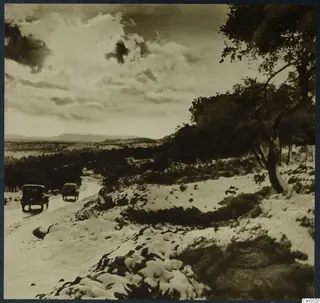
Photographs: Swedish Cyprus Expedition, Medelhavsmuseet, Stockholm (CC0)
Connections
10 peopleSales, gifts & bequests
- Gave to Timothy Turnerhead of Caracalla; marble head of Caracalla Abbé Mariti, Cyprus, Syria, Palestine: With a General History of the Levant (1792), p. 4; Mariti, Giovanni, 1736-1806; Robinet, J. B. (Jean Baptiste), 1735-1820, supposed tr; Castillon, Jean, 1718-1799, supposed tr, Voyages dans l'isle de Chypre, la Syrie et la Palestine, avec l'histoire générale du Levant; (1791)1767
Fieldwork & employment
- Employed by Timothy TurnerServed first under the British consul Timothy Turner at Larnaca; Turner also received the Kition Caracalla head in 1767 and passed medals to Mariti Carlotta Brignone; Lorenzo Calvelli; Giulia Gollo (eds), 2025, A Land for Strangers: Non-Native Individuals and Communities in Cyprus, Silvano appendix; Giovanni Mariti, 1792, Travels through Cyprus, Syria, and Palestine; with a general history of the Levant, vol. 1, Citium chapter1760–1767
- Employed by William TurnerLarousse, Grand dictionnaire universel du XIXe siècle, vol.10 (1866)1763–1776
Scholarship
- Corresponded with Domenico SestiniRiflessi d’Oriente - Esperienze e memorie di due viaggiatori toscani in Levante (1760-1792) (2021)1760–1779
- Corresponded with Antonio Mondaini99 Mondaini letters in the Fondo Mariti, Bologna; Mariti drew on him for the Viaggi Luca Bombardieri, 2024, From Exploration to Exploitation. Giovanni Mariti, Domenico Sestini, Antonio Mondaini, and the Early History of Cypriote Archaeology, p. 49, p. 571762–1790
- Published material of Domenico SestiniMariti published the four inscriptions from Sestini’s notes. Masson 1986, p. 41787
- Material published by Claude Delaval CobhamEnglish translation of Mariti's Travels; Translation, Nicosia 1895 G. Mariti (tr. C. D. Cobham), 1909, Travels in the Island of Cyprus; L. Scherman (ed.), 1898, Orientalische Bibliographie, vol. 11 (for 1897), no. 1596a1895–1909
Colleagues & contacts
- Connected with Antonio Mondainichancellor of the consulate Luca Bombardieri, From Exploration to Exploitation: Giovanni Mariti, Domenico Sestini, Antonio Mondaini and the Early History of Cypriote Archaeology (2024)1760
- Connected with MM. Porydescribed by Mariti in his Travels Giovanni Mariti (tr. C. D. Cobham), 1909, Travels in the Island of Cyprus1760–1769
- Connected with Signor Andronico CaridisSt. Marina chapel icons Rupert Gunnis, Historic Cyprus: A Guide to its Towns and Villages, Monasteries and Castles (1947), p. 1531760
- Met Carsten NiebuhrSt Lazarus inscriptions, Larnaca Giovanni Mariti (tr. C. D. Cobham), 1909, Travels in the Island of Cyprus, p. 891766
- Met Timothy TurnerMariti saw the 1767 excavation; the head went to Turner Giovanni Mariti, tr. C. D. Cobham, 1909, Travels in the Island of Cyprus (translation of Viaggi per l'isola di Cipro, Lucca 1769)1767
- Connected with Domenico SestiniLuca Bombardieri, From Exploration to Exploitation: Giovanni Mariti, Domenico Sestini, Antonio Mondaini and the Early History of Cypriote Archaeology (2024); Luca Bombardieri, 2024, From Exploration to Exploitation. Giovanni Mariti, Domenico Sestini, Antonio Mondaini, and the Early History of Cypriote Archaeology, pp. 361783
- Connected with Edward Daniel ClarkeLarnaca antiquities debate Annales des voyages de la g�eographie et de l'histoire ; ou, Collection des Voyages Nouveaux ... (1813)1813
- Connected with Claude Delaval CobhamTravels in Cyprus in 1769 (1909 edition edited by Cobham) Ian Robertson, Cyprus (The Blue Guides) (1981), p. 351901–1909
- Connected with Luca BombardieriBombardieri's studies of Mariti (2013, 2019, 2024) L. Bombardieri, 2024, From Exploration to Exploitation. Giovanni Mariti, Domenico Sestini, Antonio Mondaini, and the Early History of Cypriote Archaeology2013–2024
Recording and study
4 records- Drew4
1767Giovanni Mariti drew a plan of the ancient city of Citium in his 1767 book.
schéma de la ville antique de CitiumYon 2011, p. 37
1787Giovanni Mariti made a more elaborate plan showing ancient Citium in relation to contemporary settlements.
plan de la cité antique et des agglomérations contemporainesLarnacaYon 2011, p. 37
Giovanni Mariti drew a plan showing Kition’s walls and harbour.
plan of Kition’s walls and harbourKarageorghis 1976, p. 175
Giovanni Mariti made a plan showing Kition’s city wall and harbour.
plan of Kition’s city wall and harbourKarageorghis 1976, p. 20
Objects
Greek Imperial coins ('medaglie') of Septimius Severus, Caracalla, Julia Domna, Geta and Claudius reading KOINON KYPRION, from the 1767 quarrying at Kition; Mariti's share, the most curious of which he kept
From Kition1767
Giovanni Mariti (1792). Travels through Cyprus, Syria, and Palestine; with a general history of the Levant. London (English translation), vol. 1; A. M. Jasink, G. Tucci, L. Bombardieri (eds) (2011). MUSINT. Le collezioni archeologiche egee e cipriote in Toscana. Ricerche ed esperienze di museologia interattiva, p. 24
Some of the Kition coins ('medaglie'), presented to the Museum of the Accademia Etrusca, Cortona
From KitionMuseo dell'Accademia Etrusca, Cortona1768–1789
White marble head of Antoninus Caracalla found with the coins
From Kition1767
Giovanni Mariti (1792). Travels through Cyprus, Syria, and Palestine; with a general history of the Levant. London (English translation), vol. 1; A. M. Jasink, G. Tucci, L. Bombardieri (eds) (2011). MUSINT. Le collezioni archeologiche egee e cipriote in Toscana. Ricerche ed esperienze di museologia interattiva, p. 24; E. D. Clarke (1816). Travels in various countries of Europe, Asia and Africa, pp. 43-44
Mentioned in
34 mentionsDocuments · 17
- Travels in the Island of Cyprus
Gift · 1767 · p. 24
Mariti donated a collection of medallions from Cyprus to the Cortona Academy.
Mariti 1909
Also in Soldi 2025
- Conférence inaugurale : Larnaca et Kition aux XVIIIe et XIXe siècles
1767 · p. 37
Giovanni Mariti drew a plan of the ancient city of Citium in his 1767 book.
Yon 2011
- Cyprus, Syria, Palestine: with a General History of the Levant
Acquisition · 1767 · p. 41
Abbé Mariti received the medals found in the quarry and kept the most curious of them.
Mariti 1792
- Domenico Sestini à Larnaca en 1782 et quatre inscriptions de Chypre
Published · 1787 · p. 4
Mariti published the four inscriptions from Sestini’s notes.
Masson 1986
- The story of Umm Haram
1897
source on the shrine's buildings
Cobham 1897
- Kition: Mycenaean and Phoenician Discoveries in Cyprus
1976 · p. 175
Giovanni Mariti drew a plan showing Kition’s walls and harbour.
Karageorghis 1976
Lectures and videos · 2
- Magic and Folk Medicine: Incantations in the Ledger of Dragoman Hadjigeorgakis Kornesios
2019
Rizopoulou-Egoumenidou 2019
- 1st Graduate Forum for Mediterranean Archaeology: Medieval Tombstones, Museum Display, 19th-Century Prehistory and Underwater Heritage Law
2022
Mavromatis et al. 2022
On Ancient Cyprus · 1
Institutions · 2
- Imperial and Tuscan consulates, Larnaca
Official (1760–1767) · 1760
Giovanni Mariti lived in Cyprus from his arrival from Leghorn on 2 February 1760 to his departure for Florence on 6 October 1767, "for some years an official…
Mariti 1909
- Museo dell'Accademia Etrusca e della Città di Cortona (MAEC)
Donor (1767) · 1767
Giovanni Mariti reports that he gave some of the KOINON KYPRION Roman Imperial coins found at Kition in 1767 to the museum of the Etruscan Academy at Cortona.
Mariti 1909
News · 3
- People · 9listed under Connections
- Archivelisted under In the Archive
Sources
- 1.Giovanni Mariti (1909). Travels in the Island of Cyprus. Cambridge, Cambridge University Press.
- 2.Giovanni Mariti, Wikidata Q3767688 / GND 117552003. Online
- 3.F. G. Maier, V. Karageorghis (1984). Paphos: History and Archaeology. 383 pp.. Nicosia, A. G. Leventis Foundation.
- 4.V. Karageorghis (1976). Kition: Mycenaean and Phoenician Discoveries in Cyprus. London, Thames and Hudson.
- 5.L. P. di Cesnola (1878). Cyprus: Its Ancient Cities, Tombs, and Temples.
- 6.F. W. Hasluck (1929). Christianity and Islam under the Sultans, vol. 2.
- 7.E. D. Clarke (1816). Travels in various countries of Europe, Asia and Africa.
- 8. (1989). Past Present: The Village Potters of Cyprus. p. 229.
- 9.Giovanni Mariti (1792). Travels through Cyprus, Syria, and Palestine; with a general history of the Levant. London (English translation).
- 10.Giovanni Mariti (1787). Dissertazione istorico-critica sull'antica città di Citium nell'isola di Cipro. Carlo Giorgi.
- 11.A. M. Jasink, G. Tucci, L. Bombardieri (eds) (2011). MUSINT. Le collezioni archeologiche egee e cipriote in Toscana. Ricerche ed esperienze di museologia interattiva.
- 12.Carlotta Brignone; Lorenzo Calvelli; Giulia Gollo (eds) (2025). “A Land for Strangers: Non-Native Individuals and Communities in Cyprus”. Studi ciprioti 5, 3-16.
- 13.Renato Pasta (2021). “Riflessi d'Oriente. Esperienze e memorie di due viaggiatori toscani in Levante (1760-1792)”. Biblioteca di storia 39. Firenze University Press.
- 14.Luca Bombardieri (2024). From Exploration to Exploitation. Giovanni Mariti, Domenico Sestini, Antonio Mondaini, and the Early History of Cypriote Archaeology. Venice, Edizioni Ca' Foscari. Online
- 15.Renato Pasta (2008). “MARITI, Giovanni”. Dizionario Biografico degli Italiani 70. Istituto della Enciclopedia Italiana. Online
- 16.F.-X. de Feller (1849). “Mariti (Jean)”. Biographie universelle, ou Dictionnaire historique des hommes qui se sont fait un nom 5.
- 17.George Jeffery (1918). A Description of the Historic Monuments of Cyprus. Government Printer, Nicosia.
- 18.Luigi Silvano (2025). “Preface. Stranger for a Day, Cypriot for a Lifetime. By Way of a Foreword”. C. Brignone, L. Calvelli, G. Gollo (eds), A Land for Strangers: Non-Native Individuals and Communities in Cyprus (Studi ciprioti 5), 3-16. Edizioni Ca' Foscari.
- 19.Marguerite Yon (2011). “Conférence inaugurale : Larnaca et Kition aux XVIIIe et XIXe siècles”. Cahiers du Centre d'Études Chypriotes 41.
- 20.Edward Daniel Clarke (1812). Travels in Various Countries of Europe, Asia and Africa. Part the Second: Greece, Egypt and the Holy Land, Section the First.
- 21.Sebastiano Soldi (2025). “The Italian entomologist Giacomo Cecconi and Cyprus: a step towards the formation of the Cypriot collection in the National Archaeological Museum of Florence”. Empire & Excavation: Critical perspectives on archaeology in British-period Cyprus, 1878-1960, 93-.
- 22.Olivier Masson (1986). “Domenico Sestini à Larnaca en 1782 et quatre inscriptions de Chypre”. Cahiers du Centre d'Études Chypriotes 6. Online
- 23.Abbé Mariti (1792). Cyprus, Syria, Palestine: with a General History of the Levant. Dublin.
- 24.Marguerite Yon (2011). “Conférence inaugurale : Larnaca et Kition aux XVIIIe et XIXe siècles”. Cahiers du Centre d'Études Chypriotes 41, 21-52. Online
- 25.V. Karageorghis (1976). View from the Bronze Age: Mycenaean and Phoenician Discoveries at Kition. New York, E. P. Dutton.
- 26.Maier & Karageorghis 1984, Paphos: History and Archaeology, n. 5 p. 21.
- 27.Luca Bombardieri, 2024, From Exploration to Exploitation. Giovanni Mariti, Domenico Sestini, Antonio Mondaini, and the Early History of Cypriote Archaeology.
- 28.Sir J. T. Hutchinson and Claude Delaval Cobham, A Handbook of Cyprus (1907).
- 29.Centre of Visual Arts and Research (CVAR), Costas and Rita Severis Foundation, Nicosia, online catalogue: ARF_00506, “Istoria della Guerra Accesa nella Soría l'Anno 1771: Dalle Armi di Aly-Bey Dell' Egitto e Continovazione del Successo a Detto Aly-Bey Fino a Quest' Anno 1772”, 1772, ARF_00897, “Ed era stesso presente” Giovanni Mariti fra Cipro e l’Italia: una scoperta a Larnaca ed una donazione all’Accademia Etrusca di Cortona (1767-1776)”, 2019. Online
- 30.Gloria London, «Women Potters Of Cyprus», recorded documentary film, CAARI Cyprus, published on YouTube 2020-12-15, at 0:00:00. Online
- 31.Demetrios Michaelides, Maria Parani, Euphrosyne Rizopoulou-Egoumenidou and Irini Katsouri, «Το Αρχαιολογικό Έργο του Πανεπιστημίου Κύπρου, 2019», recorded conference paper, Το Αρχαιολογικό Έργο του Πανεπιστημίου Κύπρου 2019, Το Έργον, Archaeological Research Unit - University of Cyprus, published on YouTube 2020-02-08, at 0:53:40. Online
- 32.Euphrosyne Rizopoulou-Egoumenidou, «Μαγεία και λαϊκή ιατρική: Γητειές στο κατάστιχο του Δραγομάνου Χατζηγεωργάκη Κορνέσιου», recorded conference paper, Το Αρχαιολογικό έργο του Πανεπιστημίου Κύπρου, 2018, Archaeological Research Unit - University of Cyprus, published on YouTube 2019-02-21, at 0:12:24. Online
- 33.Savvas Mavromatis, Ayşe Güçlü, Katerina Argyropoulou and Andreas Georgalis, «1st Graduate Forum for Mediterranean Archaeology: Medieval Tombstones, Museum Display, 19th-Century Prehistory and Underwater Heritage Law», recorded conference paper, 1st Graduate Forum for Mediterranean Archaeology, Archaeological Research Unit - University of Cyprus, published on YouTube 2022-12-11, at 0:10:01. Online
- 34.«Cyprus», The London Quarterly Review 51 no. 102 (January 1879).
- 35.G. Jeffery, A Description of the Historic Monuments of Cyprus. Studies in the archaeology and architecture of the island, with illustrations from measured drawings and photographs (1918).
- 36.D.D. the Rev. J. Hackett, History of the Church of Cyprus (1901).
- 37.Luca Bombardieri, From Exploration to Exploitation. Giovanni Mariti, Domenico Sestini, Antonio Mondaini, and the Early History of Cypriote Archaeology (2024).
- 38.Archaeologia 66 (1915).
- 39.Luca Bombardieri, From Exploration to Exploitation: Giovanni Mariti, Domenico Sestini, Antonio Mondaini and the Early History of Cypriote Archaeology (2024).
- 40.Giovanni Mariti (tr. C. D. Cobham), 1909, Travels in the Island of Cyprus.
- 41.G. Mariti (tr. C. D. Cobham), 1909, Travels in the Island of Cyprus.
- 42.L. Scherman (ed.), 1898, Orientalische Bibliographie, vol. 11 (for 1897).
- 43.Ian Robertson, Cyprus (The Blue Guides) (1981).
- 44.Riflessi d’Oriente - Esperienze e memorie di due viaggiatori toscani in Levante (1760-1792) (2021).
- 45.Annales des voyages de la g�eographie et de l'histoire ; ou, Collection des Voyages Nouveaux ... (1813).
- 46.Olivier Masson, 1986, Domenico Sestini à Larnaca en 1782 et quatre inscriptions de Chypre.
- 47.Carlotta Brignone; Lorenzo Calvelli; Giulia Gollo (eds), 2025, A Land for Strangers: Non-Native Individuals and Communities in Cyprus, Silvano appendix; Giovanni Mariti, 1792, Travels through Cyprus, Syria, and Palestine; with a general history of the Levant, vol. 1, Citium chapter.
- 48.Giovanni Mariti (tr. C. D. Cobham), 1909, Travels in the Island of Cyprus (translation of Viaggi per l'isola di Cipro, Lucca 1769), 2nd ed..
- 49.Rupert Gunnis, Historic Cyprus: A Guide to its Towns and Villages, Monasteries and Castles (1947).
- 50.Larousse, Grand dictionnaire universel du XIXe siècle, vol.10 (1866).
- 51.L. Bombardieri, 2024, From Exploration to Exploitation. Giovanni Mariti, Domenico Sestini, Antonio Mondaini, and the Early History of Cypriote Archaeology.
- 52.Giovanni Mariti, tr. C. D. Cobham, 1909, Travels in the Island of Cyprus (translation of Viaggi per l'isola di Cipro, Lucca 1769).
- 53.Abbé Mariti, Cyprus, Syria, Palestine: With a General History of the Levant (1792).
- 54.Mariti, Giovanni, 1736-1806; Robinet, J. B. (Jean Baptiste), 1735-1820, supposed tr; Castillon, Jean, 1718-1799, supposed tr, Voyages dans l'isle de Chypre, la Syrie et la Palestine, avec l'histoire générale du Levant; (1791).
Corrections and additions
Did you know this person?
We would like to hear from relatives, colleagues and anyone who knows more about this person's life and work.
Missing from this record
- No photograph
We would like to hear about
- Dates and places of birth and death
- Other spellings or names they used
- Photographs, letters or papers
- Their work, collections or excavations
- A mistake in what we say
If this page is about you, write to us and we will correct it or take it down. Tell us if you would like to be thanked by name on the page.