
Video essay·Wanax TV·2025
The Philistines after the Bronze Age Collapse
Philistines (Peleset) - Sea Peoples after Bronze Age Collapse
This video covers more than Cyprus. The description below concentrates on its Cypriot parts, the first of which begins at 12:36.
Chapters
About the video
In this live presentation, Wanax TV surveys the history of the Philistines, the Peleset of Egyptian records, from their appearance among the Sea Peoples in the early 12th century BC through their settlement in southern Canaan, their wars with the Israelites, and their subjugation by Egypt, the Neo-Assyrian Empire, and Babylon.
Cyprus enters the account during the discussion of the Late Bronze Age collapse and the origins of the Philistine settlers. Drawing on sources from Ugarit, Carchemish, and Alashiya, the presenter describes how the kingdom of Alashiya on Cyprus was destroyed alongside Hatti and Ugarit in the 12th century BC. He states that the island was immediately settled by Greek migrants from the Aegean, giving rise to the Cypriot city-kingdoms of Salamis, Paphos, Kition, and Marion, with Salamis chief in the east and Paphos in the west. In response to a viewer's comment, he notes that Phoenicians also settled at Kition, where Greeks and Phoenicians lived side by side.
The presenter links the early material culture of the five Philistine city-states (Ashkelon, Ashdod, Ekron, Gaza, and Gath) to Cyprus and the Aegean. Locally produced Philistine pottery of c. 1150 to 1050 BC is described as nearly identical to Submycenaean wares in the Aegean and the Greek city-states on Cyprus. Discussing early Philistine writing between the 12th and 10th centuries BC, he compares their linear script with the transition on Cyprus from Cypro-Minoan to the Cypriot syllabary (which he calls Linear C), used to write Greek alongside the Greek alphabet. In the segment on rebellions against Sargon II in 713 BC, he adds that the rebel ruler Yamani of Ashdod bore a name related to Yauna, the Assyrian term for Ionians, Greeks, and Cypriots.
From our collection
Pieces in the Drakopoulos collection of the kinds and periods this talk covers: Cypro-Geometric, Cypro-Archaic.
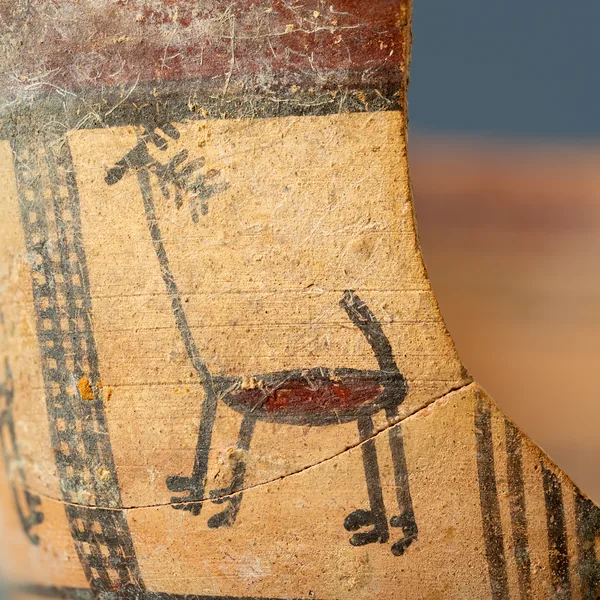
Bichrome Skyphos with Stags in Metopes
Cypro-Archaic
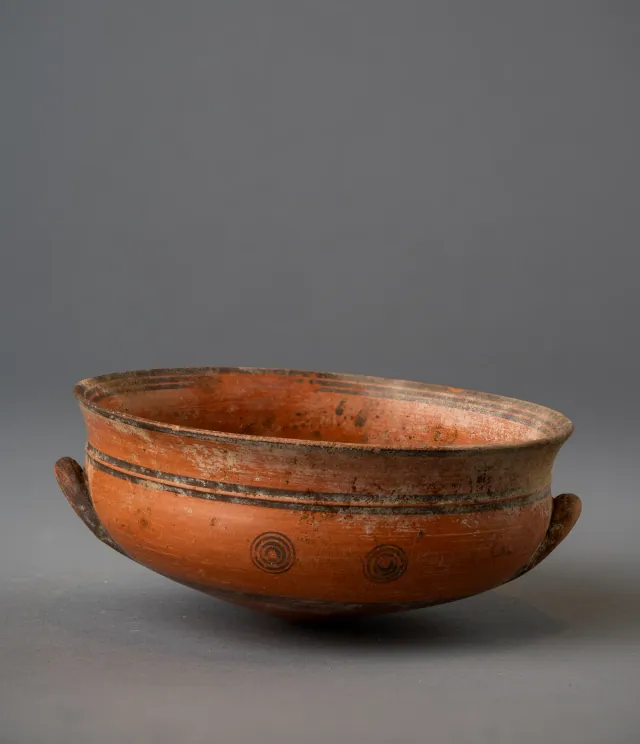
Black-on-Red Two-Handled Bowl with Raised Flaring Rim
Cypro-Archaic
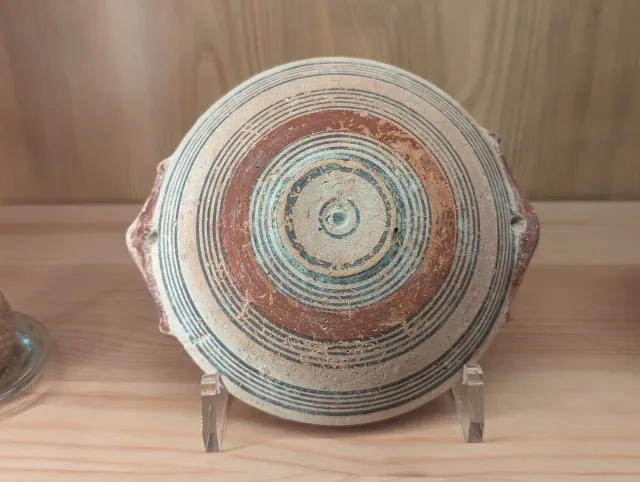
Bichrome IV Bowl with Red-Painted Pierced Lug Handles
Cypro-Archaic
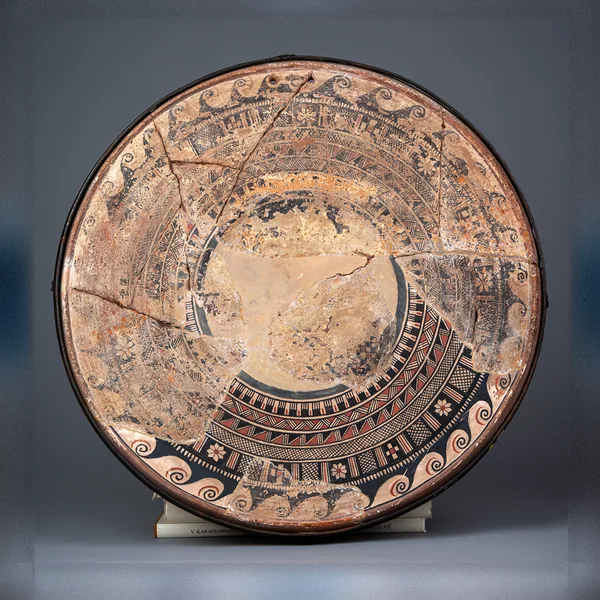
Large Bichrome Plate from Salamis with a Wave Band and Rosette Metopes
Cypro-Archaic
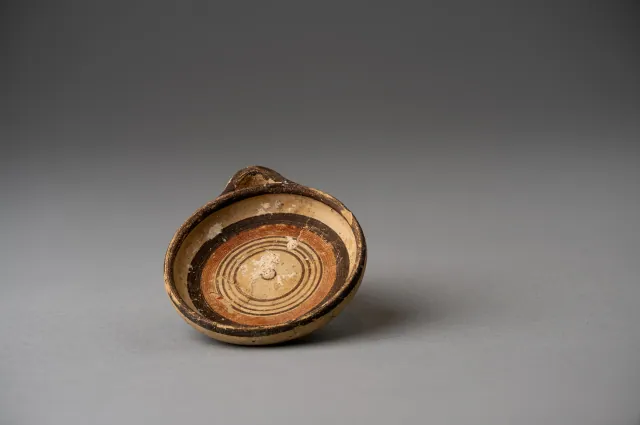
Miniature Bichrome Plate with Concentric Circles
Cypro-Archaic
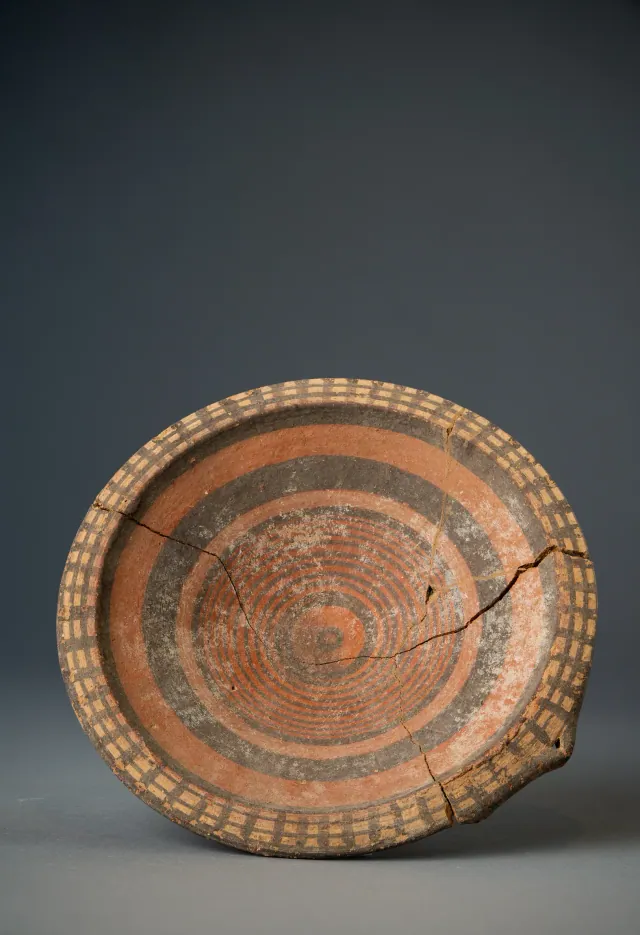
Black-on-Red Plate with Barred Rim and Concentric Circles
Cypro-Archaic
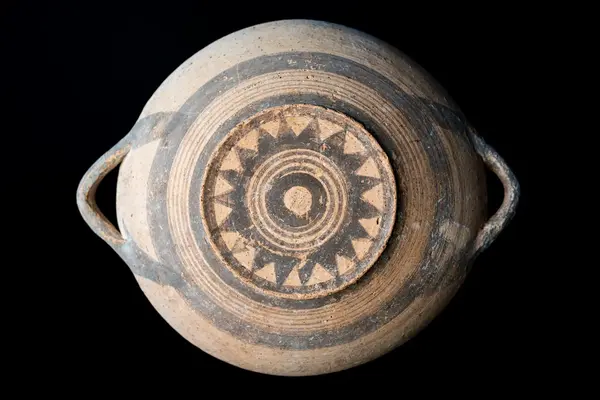
White Painted Plate with a Sawtooth Star on the Underside
Cypro-Geometric
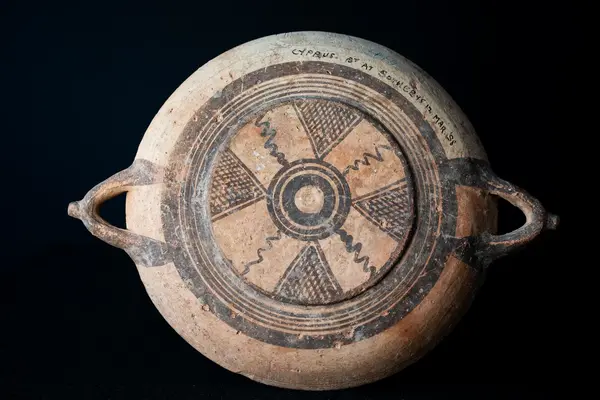
White Painted Plate with Latticed Triangles and Wavy Lines on the Underside
Cypro-Geometric
Found at the places discussed
Objects in our catalogue, in museum collections, recorded as found at these sites.


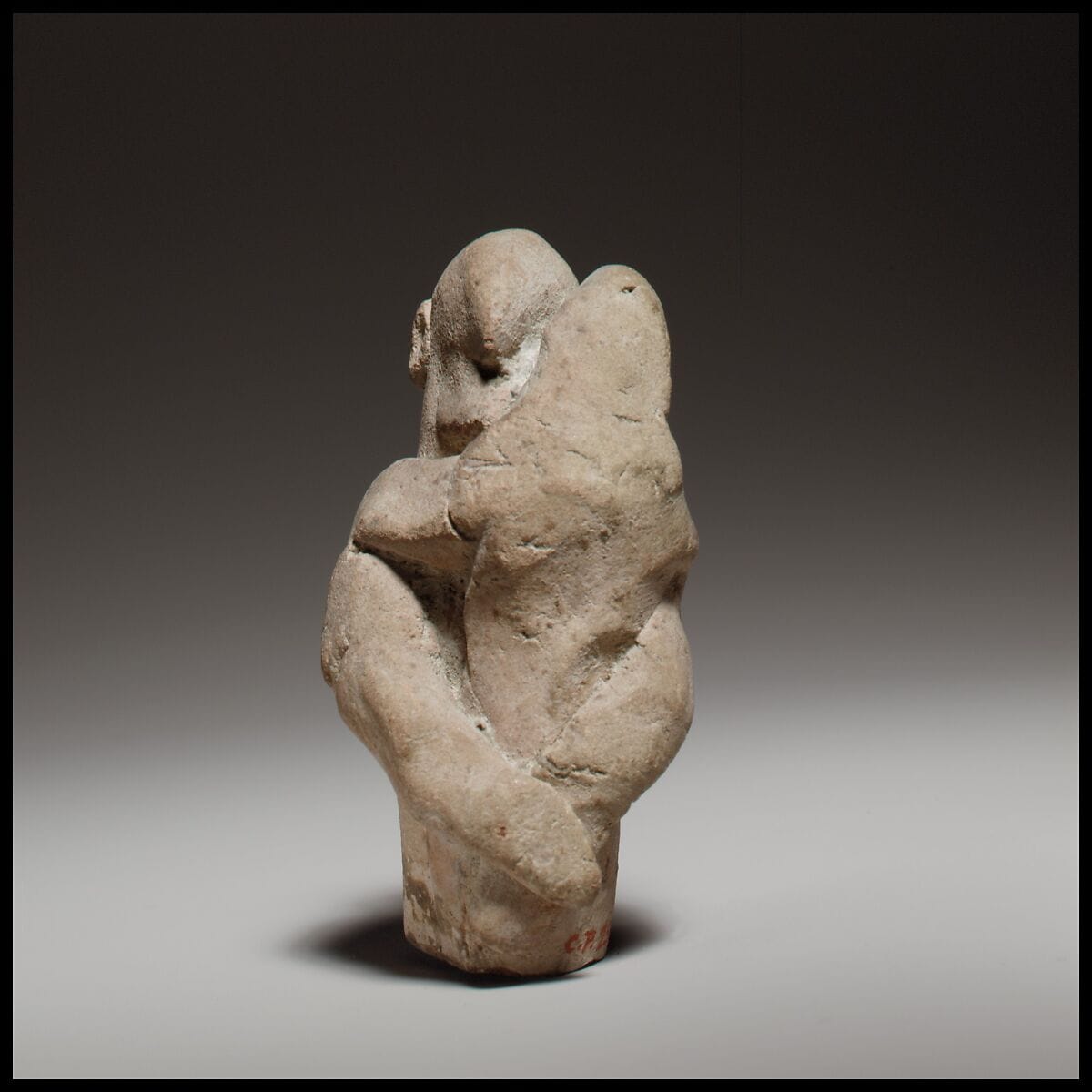
Background
Where to read more on this site before or after watching.
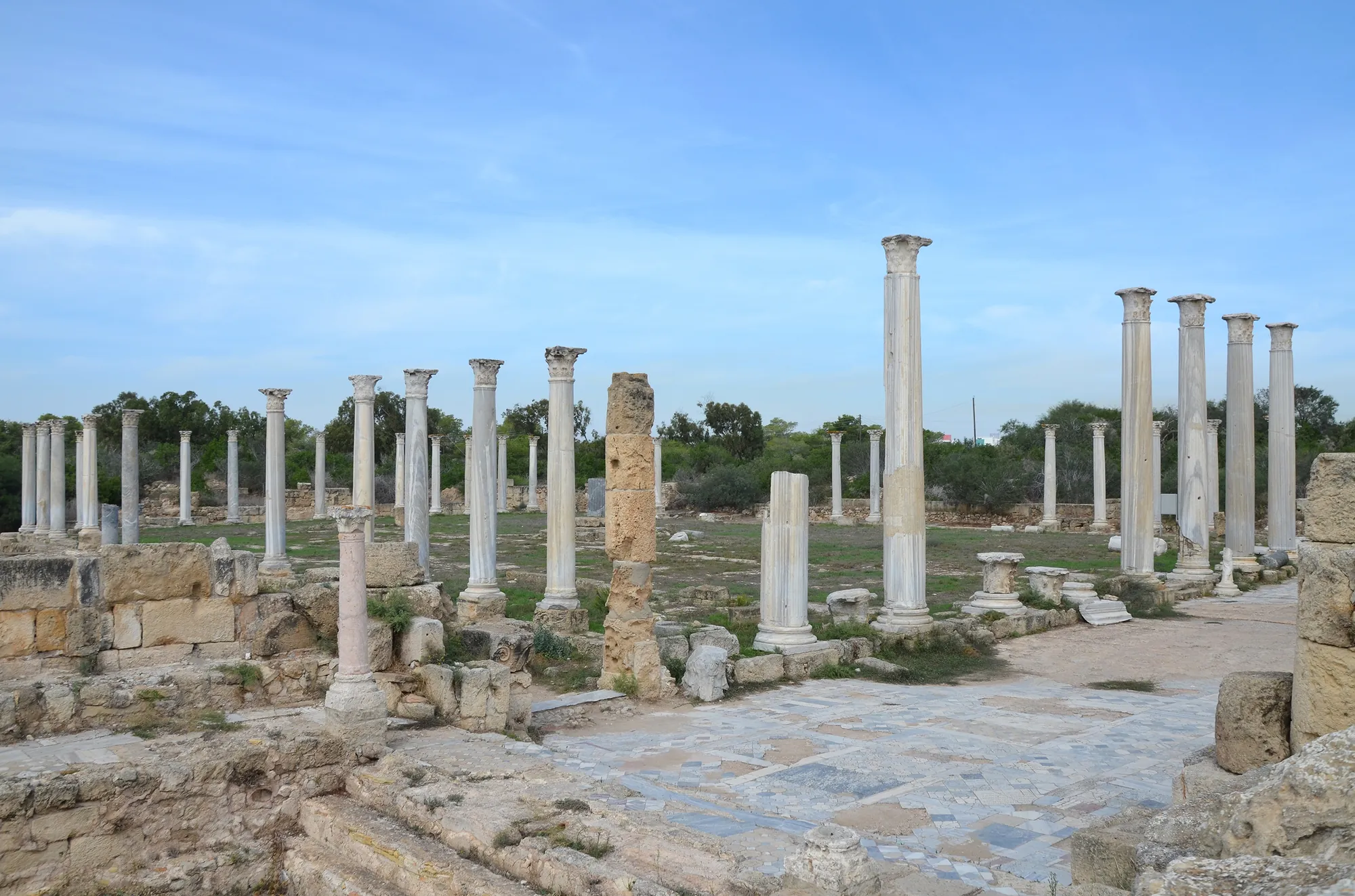
The site
Salamis
A city on the east coast of Cyprus at the mouth of the Pedieos river, founded in the 11th century BC and one of the leading city-kingdoms of the island until 311/310 BC. It is known for the Royal Tombs with their sacrificed horses and chariots, for its Roman gymnasium, baths and theatre, and as Constantia, seat of the bishops of Cyprus from the 4th century AD. The site lies in the north of the island; the Cypriot and French excavations stopped in 1974.
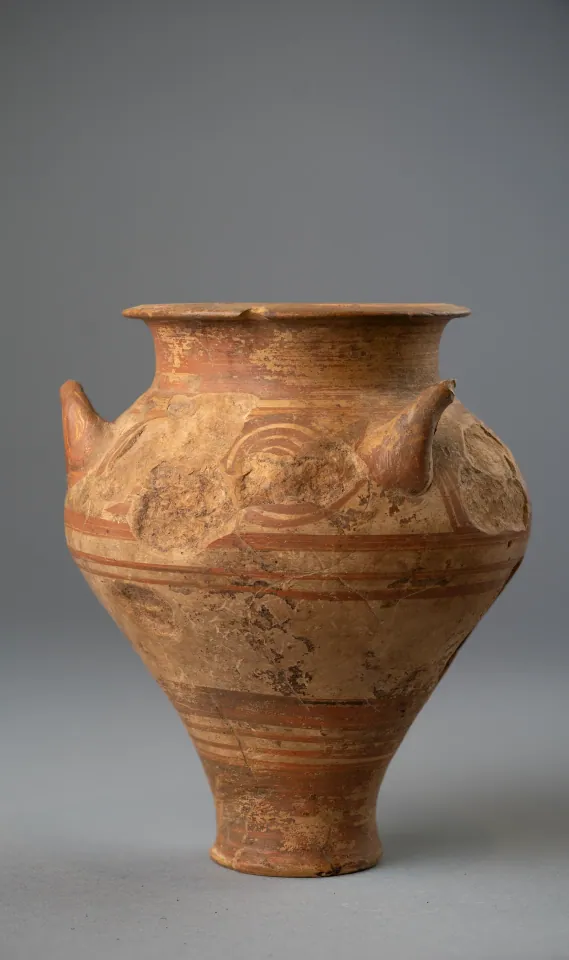
In the compendium
The Philistines
The 12th-century BCE newcomers to the southern Levantine coast, whose Aegean-style pottery, hearths and houses derive most directly from Cyprus.
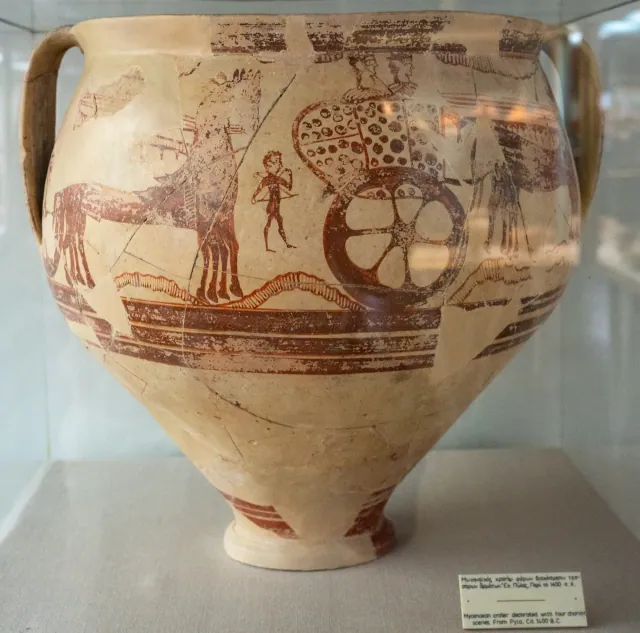
In the compendium
The Mycenaeans and Cyprus
The palatial Late Bronze Age societies of mainland Greece, whose pottery flooded Cypriot coastal towns in the 14th and 13th centuries BCE.
In the compendium
The Phoenicians
The Iron Age city-states of the Levantine coast, whose traders and settlers made Kition a Phoenician kingdom and shared a hybrid culture with Cyprus.
Map of Cyprus
Places discussed in the talk
- Has a page on this site
- Other places
- Ground above 200, 500, 1,000 m