
Conference paper·Archaeological Research Unit - University of Cyprus·2017
Under the Mediterranean: Shipwrecks of the Aegean, Egypt and Sicily
Peter Campbell, George Koutsoflakis, Christos Agouridis, Myrto Michalis, Xanthi Argyri, Damian Robinson, Carlo Beltrame and Timmy Gambin
A guest lecture in the University of Cyprus series on a subject outside Cyprus.
Chapters
About the video
This session on shipwrecks from the 2017 Honor Frost Foundation conference, chaired by Deborah Cvikel, brings together six papers on underwater surveys and excavations in the Aegean, Egypt and Sicily.
Peter Campbell, presenting work co-directed with George Koutsoflakis, reports on the survey of the Fournoi archipelago between Samos and Ikaria, where 53 wrecks from the Archaic to the Early Modern period were located in three seasons with the help of sponge divers and fishermen. Focusing on six wrecks off the cliffs of Asprakavos, he shows cargoes of Samian, Pontic and Sinopean amphorae alongside a spike in Late Roman wrecks carrying Late Roman 1, 2 and 3, Africana II and Spanish amphorae. He links the concentration to Fournoi's sheltered bays on a major shipping channel and to the supply of troops on Samos under Justinian.
Christos Agouridis and Myrto Michalis of the Hellenic Institute of Marine Archaeology present the excavation of a Late Helladic IIIB–C wreck (end of the 13th to 12th century BC) at 25 to 38 metres off the rocky islet of Modi near Poros in the Saronic Gulf. Working beneath fallen boulders and thick biogenic concretion on a steep slope, the team has recovered eleven large two-handled transport jars (one with a Linear B sign), two handleless pithoi, 36 hydrias, jugs, psi-type figurines and a bronze blade, adjacent to a contemporary settlement on the islet.
Xanthi Argyri of the Ephorate of Underwater Antiquities describes two wrecks relocated in 2010 in the Dodecanese: a Late Antique cargo of about 33 monolithic columns and stone slabs at 43 to 52 metres off Arki, and a looted 2nd-century BC cargo of over 200 stamped Knidian and Koan amphorae off Lipsi.
Damian Robinson (with Franck Goddio) examines Ship 11 at Thonis-Heracleion, a ten-metre crescentic boat built entirely of sycamore fig with fine pegged mortise-and-tenon joinery. Dated between c. 400 and 325 BC, the vessel was deliberately scuttled by removing a section of its keel at the western entrance of the Grand Canal, surrounded by over 120 simpula (long-handled ladles) and offering dishes; drawing on Egyptian funerary texts and the Canopus Decree, Robinson interprets it as a Neshmet barque used in the waterborne mysteries of Osiris during the month of Khoiak.
Carlo Beltrame presents the Routes of Marble project on 3rd- and 4th-century AD wrecks off Calabria and Sicily (Punta Scifo D, Marzamemi 1, Capo Granitola and Isola delle Correnti, where ten 20-ton blocks were looted after 1959). Photogrammetric and isotopic analyses show cargoes of up to 350 tons of mainly Proconnesian marble, which Beltrame suggests may have been redistributed from imperial stockpiles at Portus toward North African cities such as Leptis Magna.
Finally, Timmy Gambin (with Cristina Bazzano and Roberto La Rocca) presents the Messina 1 wreck at 95 metres north of the Straits of Messina, a 4th-century AD cargo mixing Lusitanian Almagro 50 and Tunisian Africana IIC and Dressel 30 amphorae, and argues in discussion that systematic side-scan sonar survey still confirms A. J. Parker's chronological distribution of Mediterranean wrecks.
From our collection
Pieces in the Drakopoulos collection of the kinds and periods this talk covers: Amphora.
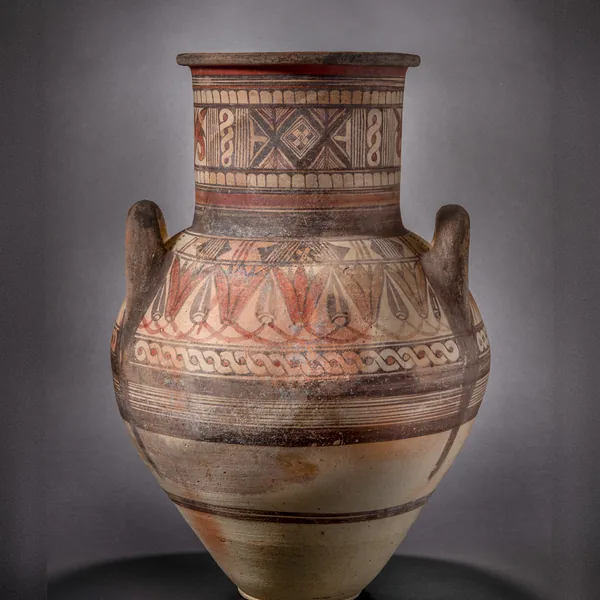
Bichrome IV Amphora with a Lotus-and-Bud Shoulder Frieze
Amphora
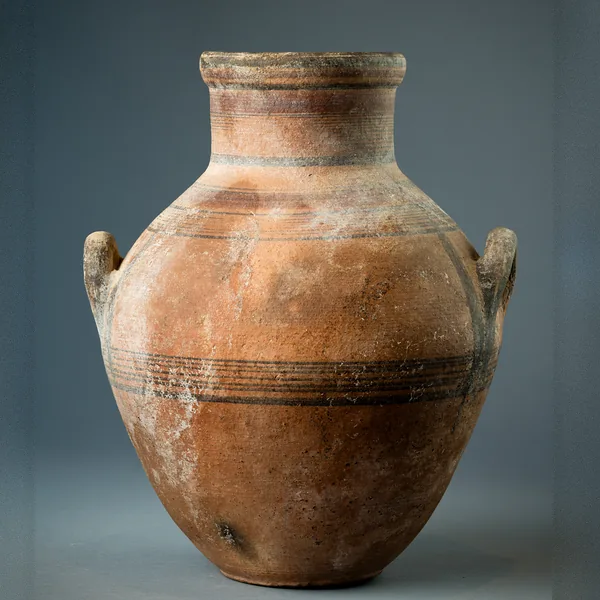
Bichrome IV Amphora with Shoulder Handles and Banded Decoration
Amphora
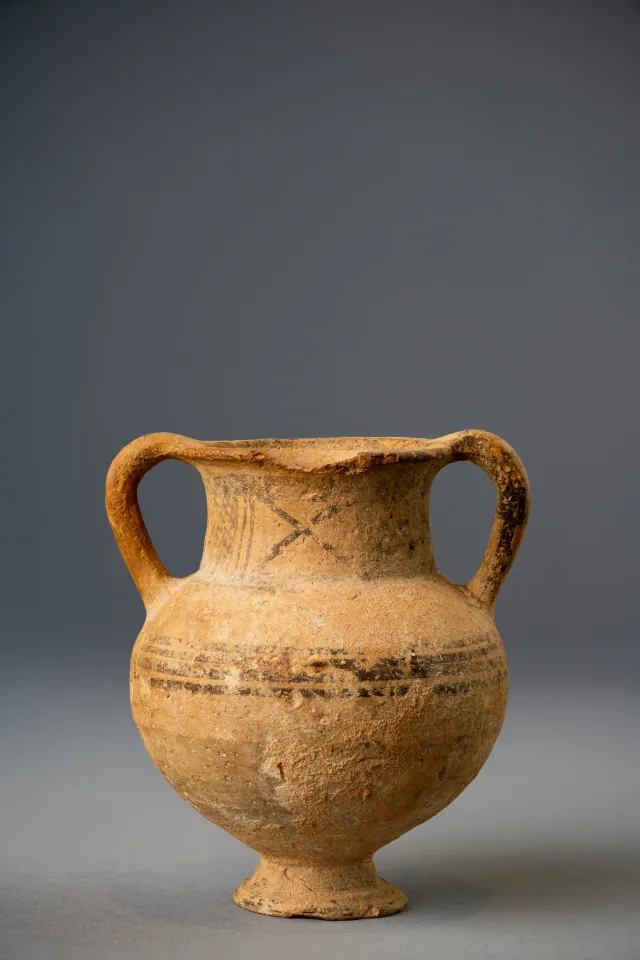
White Painted Amphoriskos on a Conical Foot
Amphora
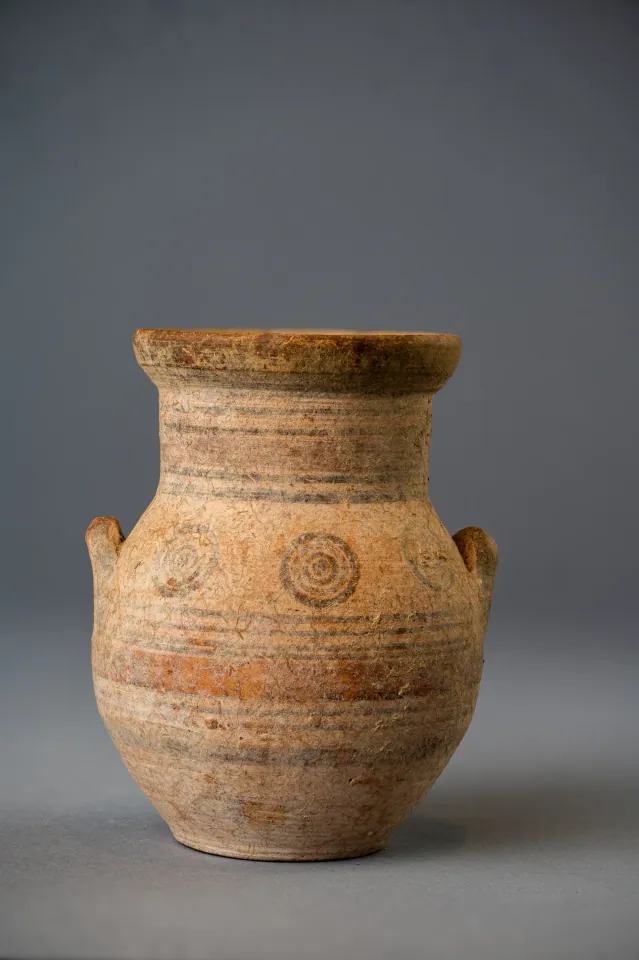
Bichrome IV Amphoriskos with Concentric Circles
Amphora
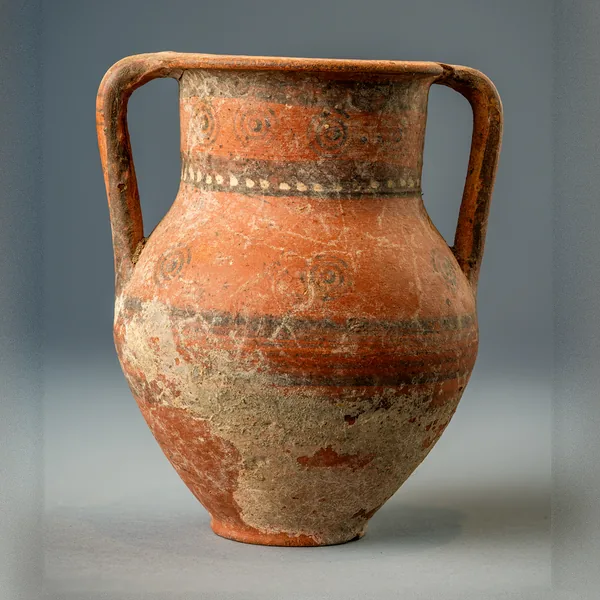
Bichrome Red Amphora with Concentric Circles and a Row of White Dots
Amphora
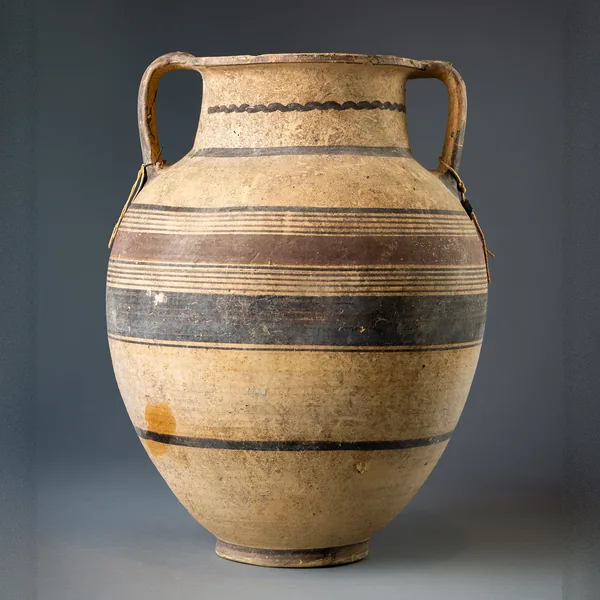
Large Bichrome Amphora with a Wavy Line on the Neck
Amphora
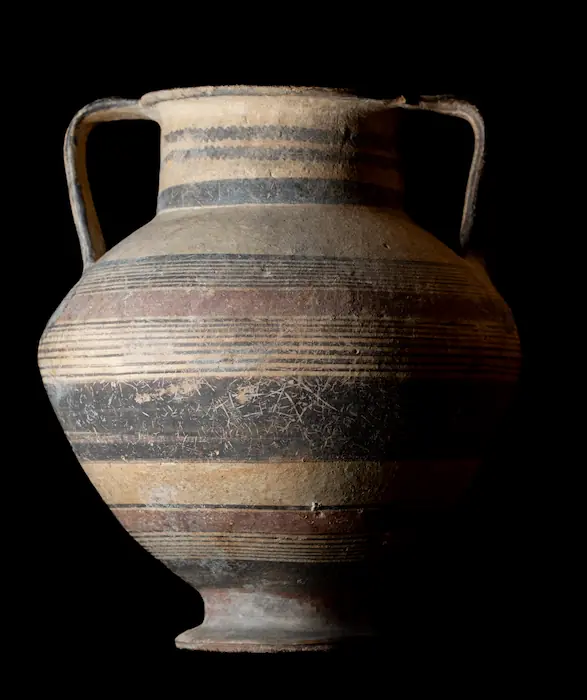
Bichrome Amphora on a Pedestal Foot with Wavy Lines on the Neck
Amphora
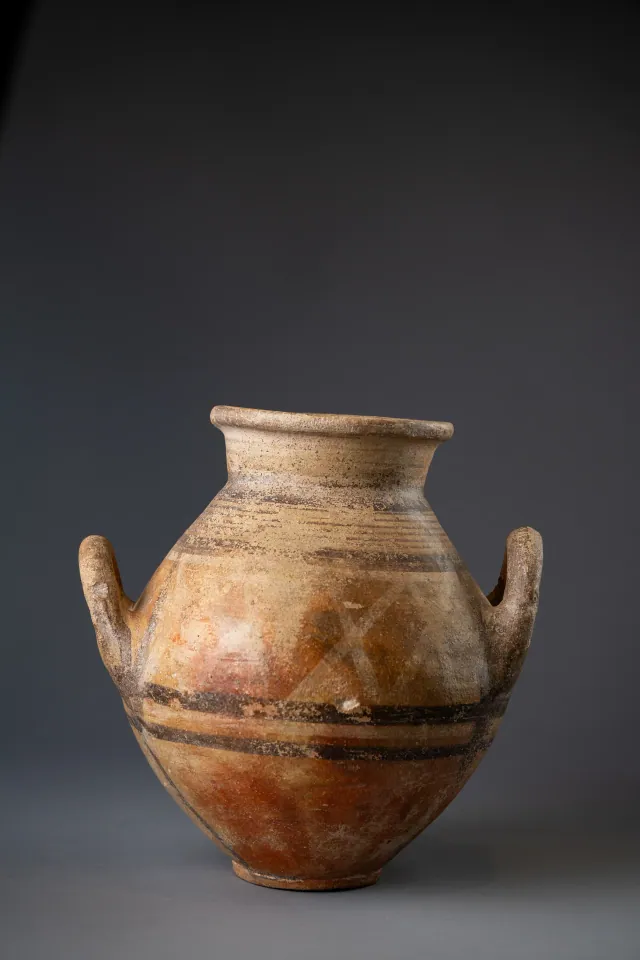
Red-Slipped Amphora with Pale Crosses on the Shoulder, probably Bichrome Red Ware
Amphora
Background
Where to read more on this site before or after watching.
In the compendium
Amphora
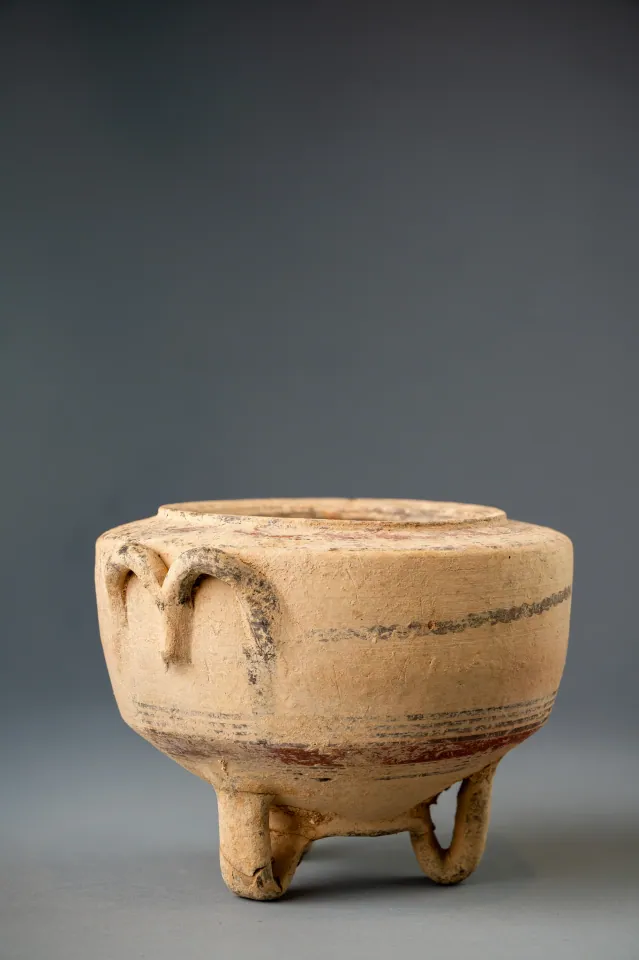
A closed jar with two opposed handles, made in Cyprus in belly-handled and vertical-handled painted series and as a basket-handled transport jar.
In the compendium
Jars and Pithoi
A symmetrical wide-necked vessel, the family of Cypriot storage and transport jars, pithoi and painted jars, including the amphora.
In the compendium
Egypt
Ancient Egypt, Cyprus's partner in copper, pottery and prestige goods from the Middle Kingdom to the Ptolemies, who annexed the island.